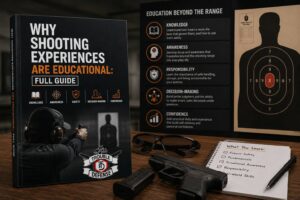
Why Shooting Experiences Are Educational experiences are educational because they deliver structured training in firearm safety, marksmanship fundamentals, situational awareness, and ethical responsibility. This combination makes range time far more than a recreational activity. Whether you are a first-time shooter at a Trouble Defense LLC beginner course in Fairfax, VA, or a seasoned carrier refining tactical skills, the learning that happens on the range transfers directly into real-world confidence and decision-making. The educational value of shooting sports is recognized by programs from the NRA and 4-H to state-funded hunter education curricula, all of which treat the range as a classroom.
Why Shooting Experiences Are Educational for all
Shooting experiences are educational because they require you to master a layered set of skills simultaneously. Safety rules, body mechanics, mental focus, and legal knowledge all operate at once. That combination creates a learning environment few other activities can match.
The industry term for this structured approach is firearms education, which covers everything from basic safety certification to advanced defensive shooting courses. The phrase “shooting experience” is the everyday way people describe it, but the underlying framework is a formal educational system with measurable outcomes.
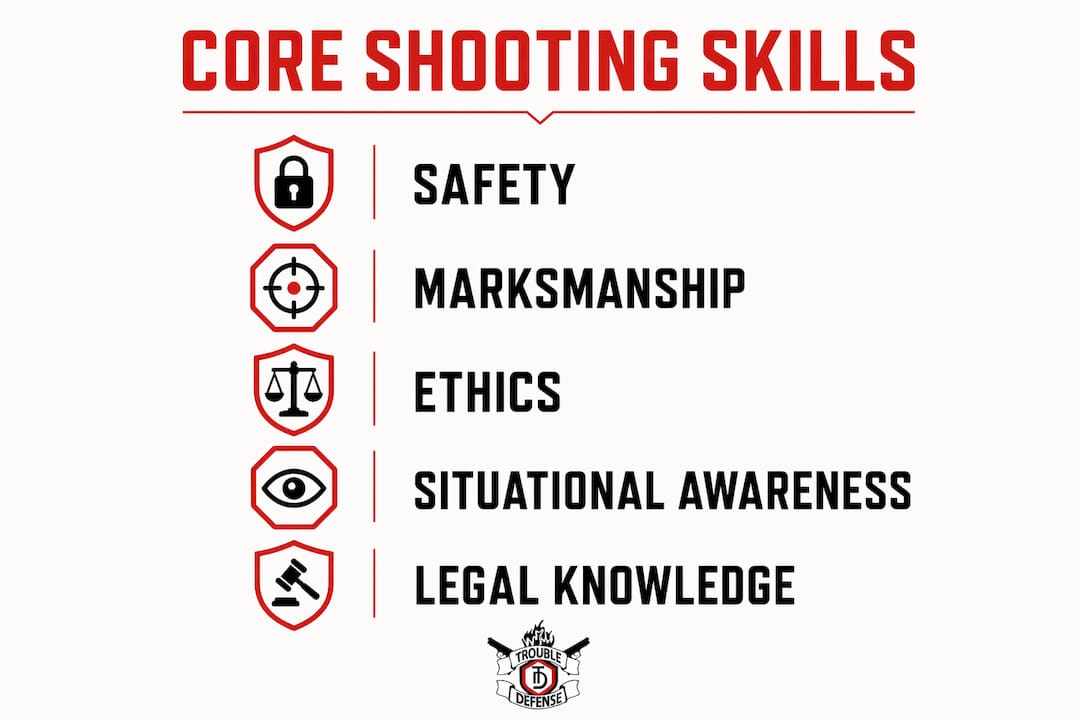
Three core pillars define why shooting ranges are educational:
- Safety training teaches you to treat every firearm as loaded, control the muzzle, keep your finger off the trigger until ready, and know your target and what is beyond it. These four rules are the foundation of every certified course.
- Skill development builds grip, stance, breath control, and trigger discipline through repetition and instructor feedback.
- Situational awareness sharpens your ability to read your environment, anticipate threats, and make sound decisions under pressure.
Certified instructors at programs like those offered by Trouble Defense LLC are the delivery mechanism for all three pillars. Without qualified instruction, practice can reinforce bad habits rather than correct them.
What core skills do educational shooting experiences teach?
The benefits of shooting experiences start with the four fundamental safety rules, but they extend well beyond them. Every certified course builds on a progression from static fundamentals to dynamic application.
Firearm safety and handling
Safety is the non-negotiable first lesson. You learn to treat every firearm as loaded at all times, never point the muzzle at anything you are unwilling to destroy, keep your finger indexed off the trigger until your sights are on target, and identify your target plus what lies beyond it. These rules are not suggestions. They are the operating system of every safe shooter.
Marksmanship fundamentals
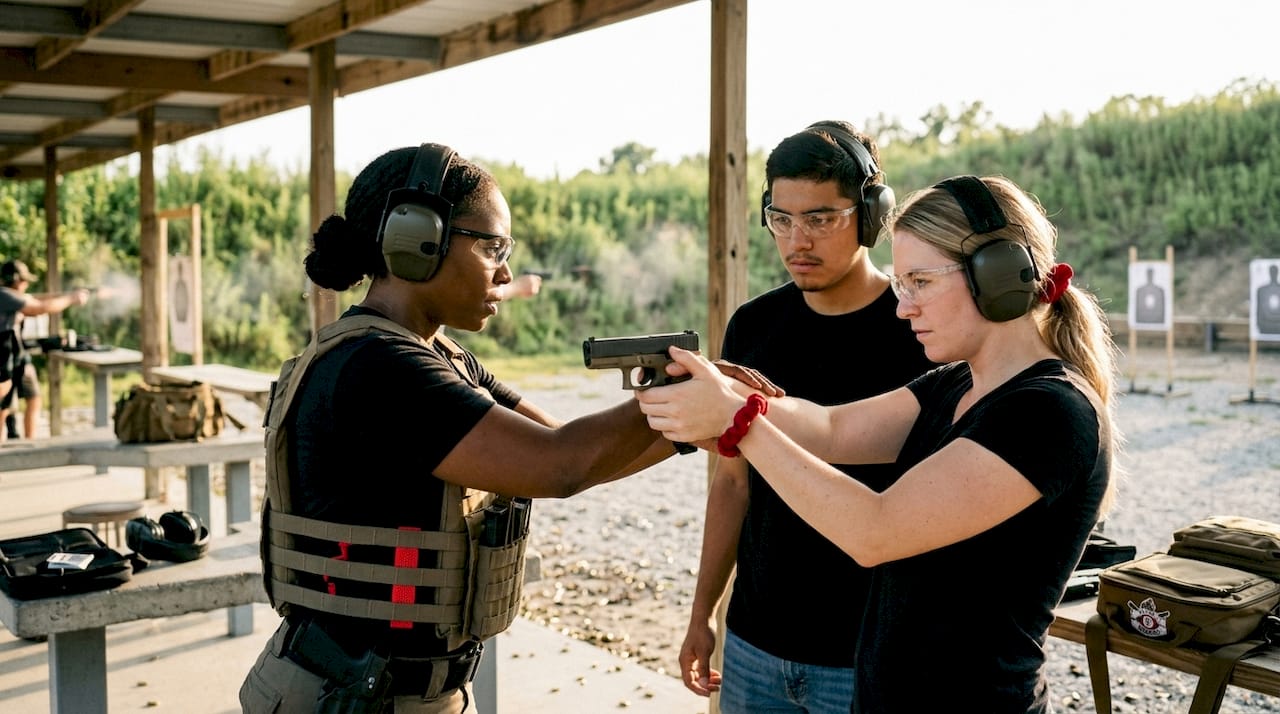
Grip, stance, sight alignment, sight picture, breath control, and trigger squeeze are the building blocks of accurate shooting. True marksmanship mastery results from years of repetitive practice on these fundamentals. That fact underscores why shooting education is a long-term discipline, not a one-session event.
Ethical and legal responsibility
Hunter education instructor Scott Ball uses the term “hunter education” deliberately over “safety” because the curriculum covers ethical responsibility and broader knowledge beyond safe handling. The same principle applies to all shooting education. You learn when it is legal to use a firearm, what your obligations are as a carrier, and how to make responsible decisions before, during, and after any defensive situation.
Pro Tip: Ask your instructor to walk you through a dry-fire drill on your first session. Dry-fire practice builds trigger discipline without ammunition, and it is one of the fastest ways to accelerate your fundamentals.
Skills progress from static range drills to dynamic scenarios as you advance. Trouble Defense LLC structures its courses exactly this way, moving students from basic firearm safety certification into self-defense application at a pace that matches each student’s readiness.
How do shooting experiences build situational awareness and mental focus?
The cognitive benefits of shooting are among the most underappreciated reasons why shooting ranges are educational. The mental demands of the range go far beyond pulling a trigger.
Shooting sports induce a focused mental state similar to mindfulness called flow, which suppresses anxiety and improves attention. Flow is the psychological state where your full cognitive capacity locks onto a single task. On the range, that task is executing a perfect shot. The result is a measurable reduction in stress and rumination.
“Shooting training induces a psychological flow that parallels mindfulness meditation, reducing stress by tightly focusing attention on the task.” — G2 Precision
This is not a minor side effect. Shooting sports provide measurable skill progression that enhances psychological well-being and produces genuine mastery experiences. Each time you tighten your group on a target, your brain registers a concrete achievement. That feedback loop builds confidence in a way that passive activities cannot replicate.
Situational awareness is the practical application of this mental focus. On the range, you learn to scan your environment before drawing, identify safe backstops, and process multiple variables at once. Those habits carry over into everyday life. You become more observant, more deliberate, and more calm under pressure.
Socializing at ranges stimulates attention and neural networks, adding a community dimension to the cognitive benefits. Group shooting activities at places like Trouble Defense LLC create shared learning environments where students reinforce each other’s progress and normalize the process of asking questions.
What educational shooting programs exist for different age groups?
Formal shooting education is available at every age and skill level. The structure, cost, and focus vary, but the educational framework is consistent across programs.
| Program | Age Group | Format | Cost |
|---|---|---|---|
| Hunter Education Courses | 10+ | Coursework plus [4-hour field day](https://nbcmontana.com/news/local/hands-on-hunter-education-class-in-missoula-teaches-more than-firearm-safety/) | Low to free |
| Ohio 4-H Shooting Camps | Youth and seniors | Multi-day intensive | $275–$400 |
| Community BB Gun Courses | Ages 7+ | 60-minute free session | Free |
| Beginner Firearm Courses | Adults | Half-day to full-day | Varies by provider |
| CCW Certification Courses | Adults 21+ | Multi-hour classroom and range | Varies by state |
Hunter education programs are a strong example of how learning through shooting sports extends beyond marksmanship. These courses cover wildlife management, conservation ethics, and legal compliance alongside safe firearm handling.
Youth shooting programs emphasize experiential learning to build self-confidence, ethics, and personal responsibility over competition. The Georgia 4-H SAFE program and Ohio 4-H shooting camps both prioritize character development as a core outcome. That focus makes youth shooting education one of the most well-rounded extracurricular options available.
For families in the DMV area, Trouble Defense LLC offers youth firearms training designed specifically to teach safe handling, respect for firearms, and foundational marksmanship in a structured, age-appropriate environment.
Key program features to look for in any educational shooting activity:
- Certified instructors with NRA or equivalent credentials
- Age-appropriate curriculum with clear learning objectives
- A structured progression from safety to application
- A supportive environment that normalizes beginner questions
- Clear legal and ethical content alongside technical skills
How does shooting education apply to self-defense and CCW training?
The importance of shooting education becomes most concrete when it connects to real-world application. Basic safety and marksmanship training are the prerequisites for every advanced course, including concealed carry licensing.
State agencies use federal Pittman-Robertson funds to support hunter education, youth shooting leagues, and safe range access. This funding creates a clear development pipeline from introductory programs to advanced participation. The same pipeline logic applies to personal defense training.
Trouble Defense LLC builds on this progression directly. Students move from beginner firearm handling into self-defense shooting courses and then into Virginia CCW certification, Maryland Wear and Carry training, or DC concealed carry programs depending on their jurisdiction. Each step reinforces the last.
Special programs expand access to shooting education for demographics that traditional ranges often overlook:
- Women’s firearm training at Trouble Defense LLC creates a focused environment where female students can learn without the social pressure common in mixed settings.
- Adaptive shooting programs serve individuals with disabilities, including blind and low-vision participants, with modified instruction that prioritizes safety and independence.
- Youth safety education introduces responsible firearm handling to younger students before they encounter firearms unsupervised.
- Tourist shooting experiences give visitors to the DMV area a structured, safe introduction to American shooting culture under certified supervision.
Pro Tip: If you are pursuing a CCW permit in Virginia or Maryland, complete a basic safety course first. Students who arrive at CCW classes with foundational skills progress faster and retain more from the legal and tactical content.
Successful newcomer training programs reduce anxiety through compassionate instruction that normalizes beginner questions. Trouble Defense LLC’s approach, backed by over 300 five-star Google reviews, reflects exactly this philosophy. The goal is not just certification. The goal is confidence.
Key takeaways
Shooting experiences are educational because they combine safety training, marksmanship skill-building, and cognitive development into a structured, progressive learning system that produces measurable real-world results.
| Point | Details |
|---|---|
| Safety is the foundation | Every certified course begins with the four firearm safety rules before any live fire occurs. |
| Marksmanship takes years | True accuracy requires repetitive mastery of grip, breath control, and trigger discipline over time. |
| Shooting builds mental focus | The flow state achieved during range practice reduces stress and sharpens situational awareness. |
| Programs exist for every age | From free 60-minute BB gun courses to multi-day 4-H camps, structured options cover ages 7 and up. |
| Education leads to application | Basic shooting education is the prerequisite for CCW licensing, self-defense training, and advanced courses. |
Why i think shooting education is more valuable than most people realize
People walk into their first shooting session expecting a physical experience. What surprises almost everyone is how much of it happens in their head.
I have watched students arrive at the range visibly tense, convinced they will do something wrong. Within 20 minutes of structured instruction, that tension shifts. Not because the firearm became less serious, but because they understood it. Knowledge replaces fear. That is the core of what makes shooting education work.
The mistake I see most often is treating a single range visit as the destination rather than the starting point. One session gives you exposure. A structured course gives you a framework. Repeated practice gives you competence. Those are three very different things, and only the third one actually protects you or your family.
What I find most compelling about shooting education is the ethical layer that good instructors build into every lesson. The best courses do not just teach you how to shoot. They teach you when not to shoot, what your legal obligations are, and how to carry that responsibility seriously. That ethical grounding is what separates a trained shooter from someone who simply owns a firearm.
Accessibility matters more than most people in the industry admit. Programs designed for women, youth, adaptive learners, and complete beginners are not niche offerings. They are how you build a community of responsible, educated gun owners. The more people who receive proper instruction, the safer everyone becomes.
— Dee Parker
Start your shooting education at trouble defense LLC
Trouble Defense LLC translates every principle covered in this article into hands-on training that produces real results. The veteran-owned academy in Fairfax, VA serves students across Virginia, Maryland, Washington DC, and the broader DMV area with programs built for every experience level.
From beginner firearm courses for first-time shooters to Virginia CCW certification, Maryland Wear and Carry training, women’s firearm training, youth safety education, and adaptive programs, Trouble Defense covers the full educational spectrum. Every course is led by certified NRA instructors who prioritize your confidence as much as your certification. Check the upcoming training calendar and register for the class that fits your goals. Safety, skill, and confidence are built one session at a time.
FAQ
What makes shooting experiences educational?
Shooting experiences are educational because they teach firearm safety rules, marksmanship fundamentals, legal responsibility, and situational awareness through structured, instructor-led practice. These skills build progressively from basic handling to advanced defensive application.
Are there shooting education programs for beginners and youth?
Yes. Programs range from free 60-minute community BB gun courses for ages 7 and up to multi-day 4-H shooting camps costing $275–$400 for youth. Trouble Defense LLC also offers dedicated beginner and youth firearm safety courses in the DMV area.
How does shooting training improve mental focus?
Shooting sports induce a flow state that suppresses anxiety and sharpens attention, functioning similarly to mindfulness meditation. This focused mental state reduces stress and improves decision-making both on and off the range.
Do i need prior experience to take a shooting education course?
No prior experience is required for introductory courses. Programs like the NSSF First Shots initiative and Trouble Defense LLC’s beginner classes are specifically designed to reduce anxiety and normalize the learning process for first-time shooters.
How does shooting education connect to CCW licensing?
Basic firearm safety and marksmanship training are the direct prerequisites for concealed carry licensing courses in Virginia, Maryland, and DC. Students who complete foundational education before CCW classes retain more content and perform better in both the classroom and on the range.