Stress is your body’s physical and emotional response to challenges or change, and in short bursts it can sharpen focus and help you respond to a real threat. The problem is duration: when the response doesn’t switch off, it wears down your heart, immune system, and mood. Start with daily coping steps below, and if stress feels unmanageable, call or text 988 for immediate support.
TL;DR:
- Stress becomes harmful when the body’s stress response remains active for weeks or months, leading to increased health risks.
- Prolonged activation of the HPA axis raises cortisol and adrenaline levels, causing inflammation and weakening the immune and cardiovascular systems.
- Managing stress effectively involves quick relief techniques like diaphragmatic breathing and long-term habits like regular exercise and consistent sleep routines.
- Chronic stress often results from a combination of external pressures and internal thought patterns, with social isolation and financial insecurity intensifying its impact.
- Immediate intervention is needed if stress disrupts daily functioning, involves substance misuse, or triggers suicidal thoughts; support is available through crisis lines and healthcare providers.
Table of Contents
- How the stress response actually works
- Acute, episodic, and chronic stress explained
- Physical, psychological, and behavioral symptoms to watch
- What causes stress and who is most at risk
- How chronic stress harms your body over time
- Evidence-based ways to manage and reduce stress
- When stress becomes an emergency and where to get help
- A simple daily routine you can start today
- Why small habits beat big overhauls
- Bring your focus to the range
- Sources
- FAQ
How the stress response actually works
When your brain perceives a threat, real or imagined, it triggers the hypothalamic-pituitary-adrenal axis, a chain of signals that tells your adrenal glands to release cortisol and adrenaline. Your heart rate climbs, breathing quickens, muscles tighten, and blood sugar rises to fuel quick action. This is the same wiring that helped early humans outrun predators, and it still helps you react to a near miss on the highway or push through a tight deadline.
The system is built for short bursts followed by recovery. Once the threat passes, hormone levels are supposed to drop and your body returns to baseline. Trouble starts when the stress response fires repeatedly with no real recovery window, keeping cortisol and adrenaline elevated for weeks or months. That prolonged activation, not the stress response itself, is what damages long-term health.
Acute, episodic, and chronic stress explained
Not all stress behaves the same way, and naming your pattern helps you pick the right response.
- Acute stress is short-term and tied to a specific event, like a job interview or a near-collision, and it typically resolves once the trigger passes.
- Episodic acute stress happens when acute stress episodes stack up frequently, common in high-pressure jobs or chaotic households, leaving little time for recovery between events.
- Chronic stress is ongoing and often tied to unresolved situations such as a struggling marriage, financial strain, or a demanding caregiving role, and it persists for months or years.
The shift from episodic to chronic often shows up as fading recovery: you stop bouncing back between stressful events, sleep stays disrupted even on calm days, and irritability becomes your default state rather than an occasional reaction. That shift is the signal to intervene before symptoms compound.
Physical, psychological, and behavioral symptoms to watch
Stress rarely announces itself directly. It shows up as symptoms that people often attribute to other causes.
- Physical: headaches, muscle tension, stomach problems, fatigue, and disrupted sleep.
- Psychological: irritability, persistent worry, trouble concentrating, and low mood.
- Behavioral: increased use of alcohol or other substances, social withdrawal, and changes in appetite.
These clusters overlap, and the CDC lists them together as common signs of an overloaded stress response rather than isolated complaints. Recent survey data adds context on scale: the APA’s 2025 Stress in America survey found that 62% of respondents named societal division a significant stressor, and among those reporting high stress from that division, 83% reported physical symptoms compared with 66% of other respondents.
That 17-point gap in physical symptoms between highly stressed and less stressed respondents shows how much a single chronic stressor can amplify bodily wear, even when the trigger is social rather than personal.
What causes stress and who is most at risk
Stress rarely comes from one source. It usually builds from a mix of external pressures and internal patterns that interact and compound.
- External stressors: work demands, financial strain, relationship conflict, health crises, and major life changes like moving or divorce.
- Internal stressors: perfectionistic or catastrophizing thought patterns, unresolved past trauma, and comorbid physical or mental illness.
- Compounding risk: several stressors hitting at once, such as a job loss during a health scare, tend to overwhelm coping capacity faster than any single stressor alone.
Social context matters too. Isolation, lack of financial safety nets, and unstable housing all raise baseline stress load, which means the same external event can hit two people very differently depending on their circumstances and support systems.
How chronic stress harms your body over time
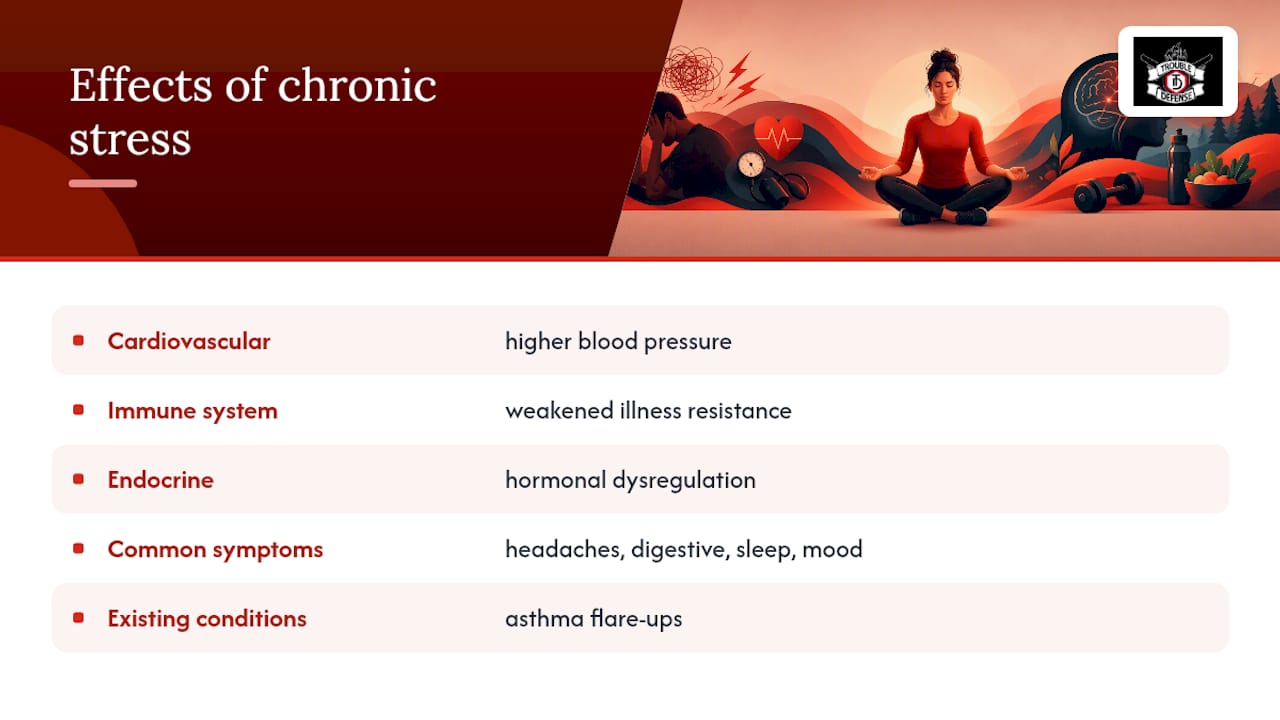
Prolonged HPA-axis activation does more than keep you on edge. Clinical literature ties sustained stress hormone exposure to measurable effects across the cardiovascular, immune, and endocrine systems, largely through ongoing inflammation and hormonal dysregulation.
Over time, this pattern is linked to headaches, digestive disorders, sleep disorders, and worsened depression or anxiety, along with flare-ups in existing conditions like asthma. The heart and immune system take a particular hit: elevated stress hormones are associated with higher blood pressure and a weakened ability to fight off illness, which is part of why stressed people tend to get sick more often and recover more slowly.
None of this makes chronic stress a fixed sentence. It behaves as a modifiable risk factor, meaning consistent management changes its trajectory rather than just masking symptoms.
Evidence-based ways to manage and reduce stress
The most effective approach mixes fast relief techniques with habits that lower your baseline stress load over weeks and months.
For immediate relief:
- Diaphragmatic breathing for two to five minutes slows heart rate and signals your nervous system to stand down.
- Progressive muscle relaxation, tensing and releasing muscle groups, reduces physical tension quickly.
- A five-minute break away from a stressful task, even just stepping outside, interrupts the stress cycle before it escalates.
For ongoing resilience:
- Mindfulness practice and structured programs like Mindfulness-Based Stress Reduction (MBSR) have evidence for lowering stress, anxiety, and improving sleep by training a relaxation response that reduces heart rate and stress hormone levels.
- Regular physical activity, even small amounts, supports mental well-being and helps burn off excess stress hormones.
- Consistent sleep habits and routine, balanced meals stabilize the physical systems stress disrupts most.
When stress interferes with daily functioning despite these steps, cognitive behavioral therapy, medication, or a referral to a specialist are legitimate next moves rather than a last resort.
Pro Tip: Anchor one small habit to something you already do daily, like three breathing cycles before your morning coffee, so the routine survives busy weeks instead of disappearing when motivation dips.
When stress becomes an emergency and where to get help
Most stress responds to the steps above. Some situations need faster, professional intervention.
- Red flags: stress that consistently disrupts work, relationships, or basic functioning.
- Substance misuse: using alcohol or drugs to cope rather than as an occasional choice.
- Suicidal thoughts: any thoughts of self-harm or suicide require immediate action.
If you’re in crisis or worried about someone else, call or text 988 in the United States, or contact emergency services if there’s immediate danger. Beyond crisis lines, primary care doctors, licensed therapists, psychiatrists, employee assistance programs, and community mental health centers all offer paths to sustained support.
A simple daily routine you can start today
A repeatable routine works better than sporadic effort. Try this five to fifteen minute daily structure:
- Two minutes of diaphragmatic breathing before checking your phone in the morning.
- Ten to fifteen minutes of movement, walking counts.
- A consistent bedtime, aiming for the sleep window your body needs to recover.
- One brief check-in with a friend, family member, or coworker.
- A quick log of one trigger from the day: what happened, how your body reacted, and what helped.
Review your log weekly. Keep what reduces your symptoms and drop what doesn’t, since tracking specific triggers and reactions reveals patterns a single subjective stress rating never will.
Why small habits beat big overhauls
The stress advice that sticks is rarely dramatic. A five-minute walk you actually take beats a meditation app you download and abandon. Pick one habit, run it for two weeks, then add another rather than overhauling your whole routine at once.
— Dee Parker
Bring your focus to the range
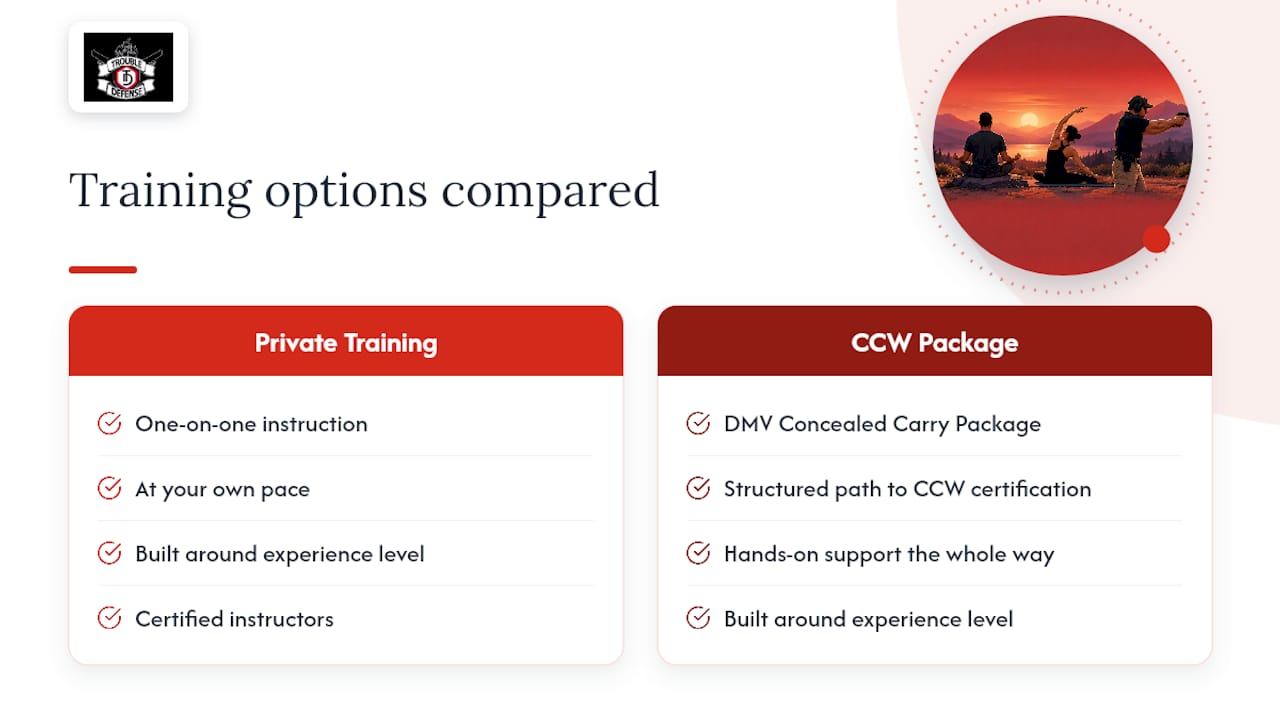
Learning a new skill that demands your full attention is one of the most practical ways to interrupt a stress cycle, and firearm training does exactly that. Our certified instructors build sessions around your experience level, whether you’re a first-time gun owner or a returning veteran sharpening tactical skills, so the training becomes a structured, judgment-free break from stress. Our Private Firearm Training sessions in Fairfax, Virginia, offer one-on-one instruction at your own pace, and our DMV Concealed Carry Training Package gives you a structured path toward CCW certification with hands-on support the whole way. If stress has you looking for a new outlet that builds real, lasting confidence, reach out to Trouble Defense to book a session and see what focused, hands-on training can do for your week.
This article is general information, not a substitute for advice from a qualified doctor. Consult a qualified healthcare professional about your own circumstances before acting on anything here.
Sources
- Managing stress | Mental Health | CDC
- Stress | NCCIH
- Stress, coping, and crisis intervention (NCBI Bookshelf)
- APA news release on Stress in America 2025
FAQ
What does chronic stress feel like?
Chronic stress often feels like persistent fatigue, irritability, and difficulty concentrating that doesn’t ease up even during downtime. Physically, it commonly shows up as headaches, muscle tension, and digestive problems that stick around for weeks or months.
What are the five symptoms of stress?
Common symptoms include irritability, sleep or appetite changes, headaches, difficulty concentrating, and fatigue. The CDC lists these alongside body pain and stomach problems as frequent signs of an overloaded stress response.
What is the definition of stress?
Stress is your body’s physical and emotional response to challenges or change, whether the trigger is a single event or an ongoing situation. The CDC defines short-term acute stress as adaptive, while chronic stress persists and can worsen health over time.
What are seven stress symptoms?
Beyond irritability and fatigue, common symptoms include worry, trouble concentrating, sleep changes, appetite changes, headaches, body pain, and increased substance use. The CDC groups these as typical signs across physical, psychological, and behavioral categories rather than a fixed checklist.

