A CCW permit class is a structured training course required in most states to legally obtain a concealed carry weapon permit. It covers firearm safety, use-of-force law, and live-fire qualification under the supervision of a certified instructor. Completing one isn’t just a bureaucratic checkbox. It’s the foundation for carrying responsibly and staying on the right side of the law.
A typical concealed carry permit class covers:
- Firearm safety rules and safe handling techniques
- Use-of-force law and when lethal force is legally justified
- Situational awareness and conflict avoidance strategies
- Legal interactions with law enforcement while carrying
- Live-fire qualification to demonstrate safe, accurate shooting
- Permit application procedures including documentation requirements
Classes are taught by NRA-certified instructors and state-approved trainers. In states like Florida, the certificate of completion must list your instructor’s name, credentials, and certification number before the state will process your application.
What are the legal requirements for a CCW permit in the U.S.?
Requirements vary significantly by state, but several steps appear almost universally across permit-issuing jurisdictions.
- Background check through the federal National Instant Criminal Background Check System
- Fingerprinting, either on an FBI card or via live-scan at a law enforcement office
- Proof of firearms training from a state-approved or NRA-certified course
- Government-issued photo ID and, for foreign-born applicants, citizenship documentation
- Application fee paid to the issuing agency, typically a county sheriff or state department of public safety
No state issues a permit entirely online. Online training is accepted for the classroom portion only. Fingerprinting, live-fire qualification, and in-person application steps cannot be completed on a website. States like Maryland require a 16-hour in-person firearms safety course for an original application, while New Jersey applicants must complete the CCARE (Civilian Carry Assessment and Range Evaluation) protocol before their application is even accepted.
As of 2026, 29 states have enacted permitless or constitutional carry, meaning adults who can legally possess a handgun may carry it concealed without a formal permit. That does not eliminate the value of training. A permit gives you reciprocity when traveling, and a documented training record can matter significantly if you ever use your firearm in self-defense. Even in permitless carry states, formal training builds a legal record that carries weight in court.
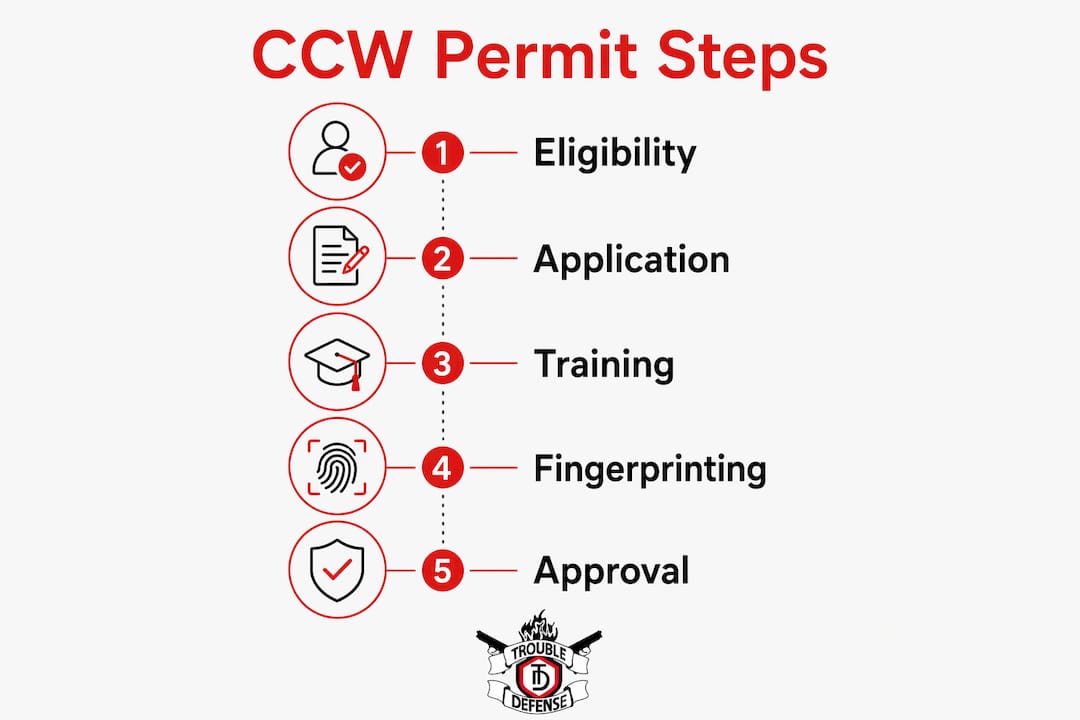
Application fees range from about $25 to over $100 in most states, with processing times running from a few weeks to several months depending on jurisdiction. For DC-specific requirements, Trouble Defense publishes a detailed DC permit application guide that walks through every step.
What does a CCW permit class actually teach you?
A typical course runs 4–10 hours depending on state mandates, split between classroom instruction and range time. Some states, like Illinois, require 16 hours of in-person training from an approved instructor.
The classroom portion covers:
- The four universal firearm safety rules
- State-specific concealed carry statutes and prohibited locations
- Use-of-force principles and the legal threshold for self-defense
- Safe storage practices and transportation laws
- Situational awareness and de-escalation
The range portion is where most students feel the most pressure, but the bar is lower than many expect. Passing requires safe handling and hitting score thresholds usually between 70–80%, not expert marksmanship. Instructors are looking for safe muzzle discipline and trigger control, not competition-level accuracy.
Equipment needs are straightforward. Most ranges require closed-toe shoes and clothing with a high neckline to prevent discomfort from hot shell casings. Many instructors offer rental firearms, though familiarizing yourself with a rental gun before class reduces safety risks and improves performance. Bring your own firearm if you have one.
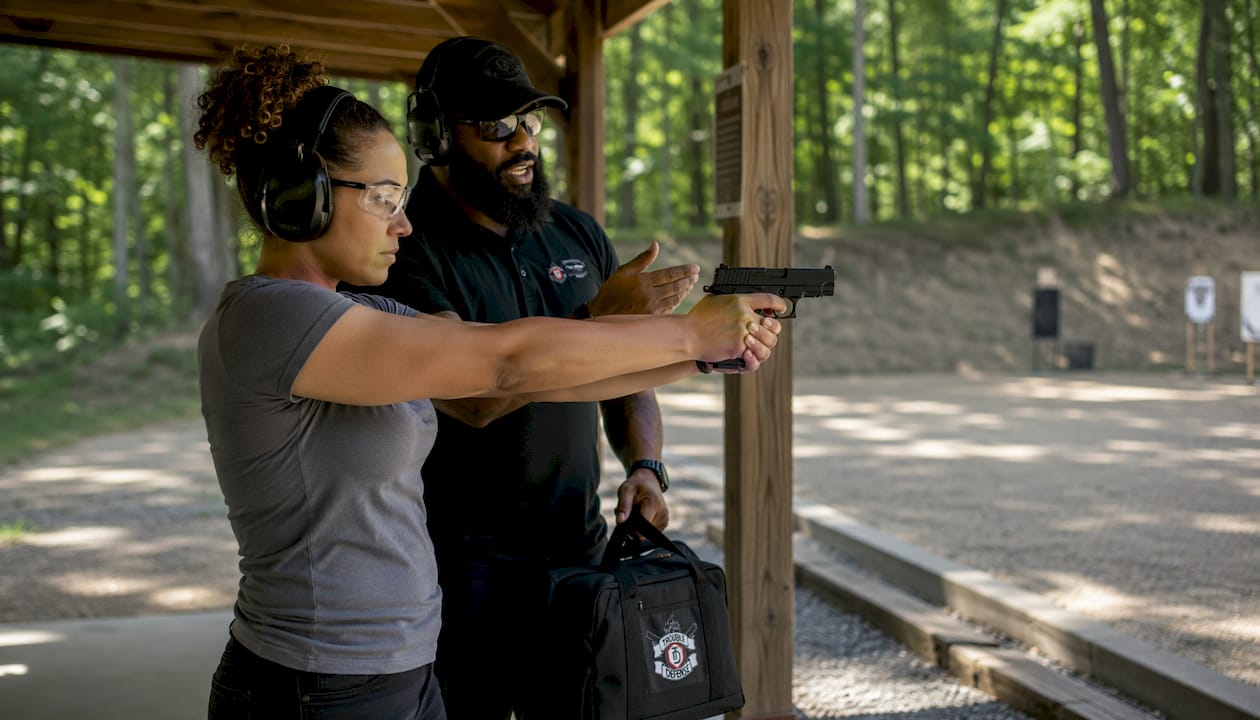
Pro Tip: If you plan to rent a firearm, ask the instructor or range to orient you to that specific model at least briefly before the live-fire portion begins. Unfamiliar controls under pressure are the most common source of unsafe handling habits.
After passing, you receive a certificate of completion. Guard it carefully. Some states will not issue a replacement if you lose the original.
How do you choose the right concealed carry training class?
The single most important factor is state approval. A course that isn’t recognized by your state’s issuing agency is worthless for permit purposes, regardless of how good the instruction is. Certified NRA instructors and state-approved courses are the standard to look for.
Beyond that, consider:
- Class size. Smaller groups mean more individual attention during live-fire coaching.
- Instructor experience. A veteran-owned academy with active-duty or law enforcement background brings real-world context to use-of-force instruction.
- Beginner accommodation. Good programs welcome first-time shooters without rushing them through the range portion.
- Specialized programs. Look for courses designed for women, seniors, or individuals with disabilities if standard formats don’t fit your needs.
- Online hybrid options. Some states accept online classroom work followed by an in-person range session, which can reduce scheduling friction.
Trouble Defense, based in Fairfax, VA, offers Virginia concealed carry classes, Maryland Wear and Carry training, and DC CCW courses taught by NRA-certified instructors with over 300 five-star Google reviews. Their programs include adaptive training for blind and low-vision individuals, women’s firearms training, and youth firearm safety education. For students in the DMV area searching for CCW classes near me, Trouble Defense covers all three jurisdictions.
Pro Tip: Before enrolling, call the instructor and ask two questions: Is this course approved by my state’s issuing agency? And what firearm rentals are available? Both answers tell you a lot about how organized and experienced the operation is.
Continuing education in public safety extends well beyond initial certification. Most states require permit renewal every 4–5 years, and some mandate a refresher course. Staying current with changing use-of-force statutes is as important as the original training.
Does completing a CCW class affect your insurance or liability?
Completing a firearms training class creates a documented record of competency, and that documentation has real legal value. If you ever use your firearm in self-defense, your training certificate is evidence that you acted as a responsible, educated carrier rather than someone who picked up a gun without preparation. Prosecutors and civil attorneys both consider training history when evaluating a self-defense claim.
Some firearm safety documentation also satisfies requirements for self-defense liability insurance programs, which cover legal fees and civil damages following a defensive use of force. Insurers in this space often ask for proof of training as part of the application or underwriting process. Completing a state-approved course from a credentialed instructor strengthens that application.
Key Takeaways
A CCW permit class is the legal and practical foundation for responsible concealed carry, and no state issues a permit without at least some in-person training component.
| Point | Details |
|---|---|
| No fully online permits | Every state requires in-person steps; online training covers the classroom portion only. |
| Many states now allow permitless carry | Even without a permit requirement, formal training builds a legal record valuable in self-defense cases. |
| Course length varies | A typical class runs 4–10 hours depending on state requirements, with some states requiring longer courses. |
| Live-fire passing score | Most states set the qualification threshold at 70–80%, prioritizing safe handling over marksmanship. |
| Documentation matters | Your certificate of completion is required for the permit application and supports insurance and liability claims. |
FAQ
Can I take a concealed carry course entirely online?
You can complete the classroom portion online in some states, but no state issues a permit without in-person steps like fingerprinting or live-fire qualification.
How hard is a CCW permit class to pass?
Most students pass without difficulty. The live-fire qualification typically requires a score of 70–80%, and instructors focus on safe handling habits rather than precision marksmanship.
How much does a CCW class cost?
Course fees vary by state and provider. Application fees paid to the issuing government agency range from about $25 to over $100 in most states, separate from the class tuition itself.
Can I take a concealed carry class online in Florida?
Florida requires live-fire training conducted in the physical presence of a certified instructor, so an online-only course does not satisfy Florida’s permit requirements.
Ready to get certified? Trouble Defense offers firearm safety training for every level, from first-time students to experienced carriers looking to sharpen their legal knowledge. Serving Virginia, Maryland, and Washington DC, with specialized programs including women’s training, adaptive instruction, and same-day CCW certification in Fairfax, VA.
Contact Trouble Defense to find the right class for your state, your schedule, and your experience level.