Tactical shooting training is the deliberate practice of firearm skills that combines marksmanship accuracy, dynamic movement, and real-time decision-making under stress to prepare individuals for defensive and real-world scenarios. Known in professional circles as tactical firearm training, this discipline goes far beyond standing at a static range and punching holes in paper. It develops the physical mechanics and mental sharpness needed to respond effectively when conditions are unpredictable. Institutions like the SIG SAUER Academy and Tactical Firearms Academy have built entire curricula around these principles, and the same methodology drives the programs at Trouble Defense in Fairfax, VA. Whether you are a first-time shooter or a veteran refining your edge, understanding what this training involves is the first step toward genuine readiness.
What is tactical shooting training and its core components
Tactical shooting training is a structured program that develops firearm handling, marksmanship, movement, and situational awareness under conditions that simulate real defensive scenarios. The goal is not perfection on a static target. The goal is performance when your heart rate is elevated, your environment is unpredictable, and a decision must be made in seconds.
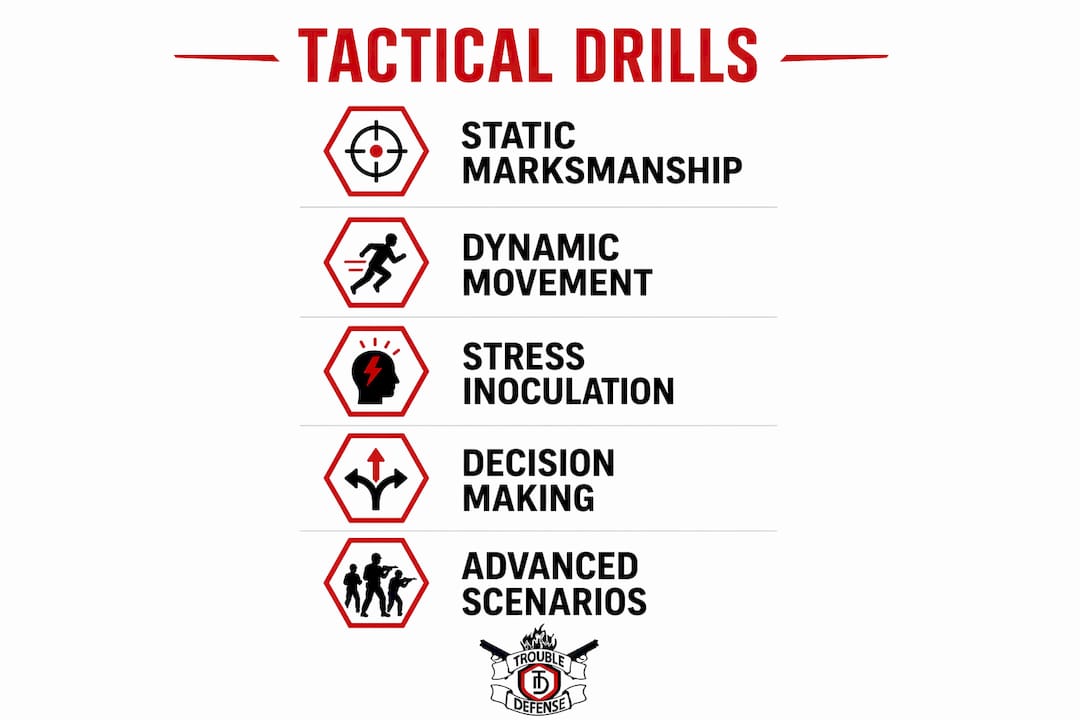
The core components of tactical firearm training basics break down into four interconnected skill areas:
- Marksmanship fundamentals. Point of aim versus point of impact is the starting point for every shooter. You must understand where your round will land relative to your sight picture before you can apply any movement or stress to the equation.
- Shooting on the move. Forward, lateral, and pivoting movement while maintaining accuracy is the defining skill of tactical training. CQB skills development is layered, starting from static marksmanship and progressing to dynamic operational scenarios.
- Target indexing and shot calling. You must be able to identify your target, confirm your sight picture, and call your shot before the round lands. This skill separates reactive shooters from deliberate ones.
- Situational awareness. Reading your environment, identifying threats, and making ethical use-of-force decisions are non-negotiable parts of real tactical readiness.
Firearms used in tactical training typically include pistols and carbines, since both appear in defensive and law enforcement contexts. Training aids like visible lasers and structured dry-fire plans accelerate skill development between live-fire sessions. Visible lasers and video feedback enhance dry-fire training and produce measurable improvement in shooting mechanics over time.
Pro Tip: Start every training session with five minutes of dry-fire practice before touching live ammunition. This builds trigger control and sight alignment habits that carry directly into live-fire performance.
How tactical training prepares you for real-world stress
The most dangerous assumption a shooter can make is that smooth, comfortable range practice translates to performance under real stress. Training that feels easy often fails under real-world pressure. Psychologist Robert Bjork’s research on “desirable difficulties” confirms that variable, effortful practice builds stronger retention and performance than repetitive, predictable drills. This means the discomfort you feel during a challenging drill is the training working.
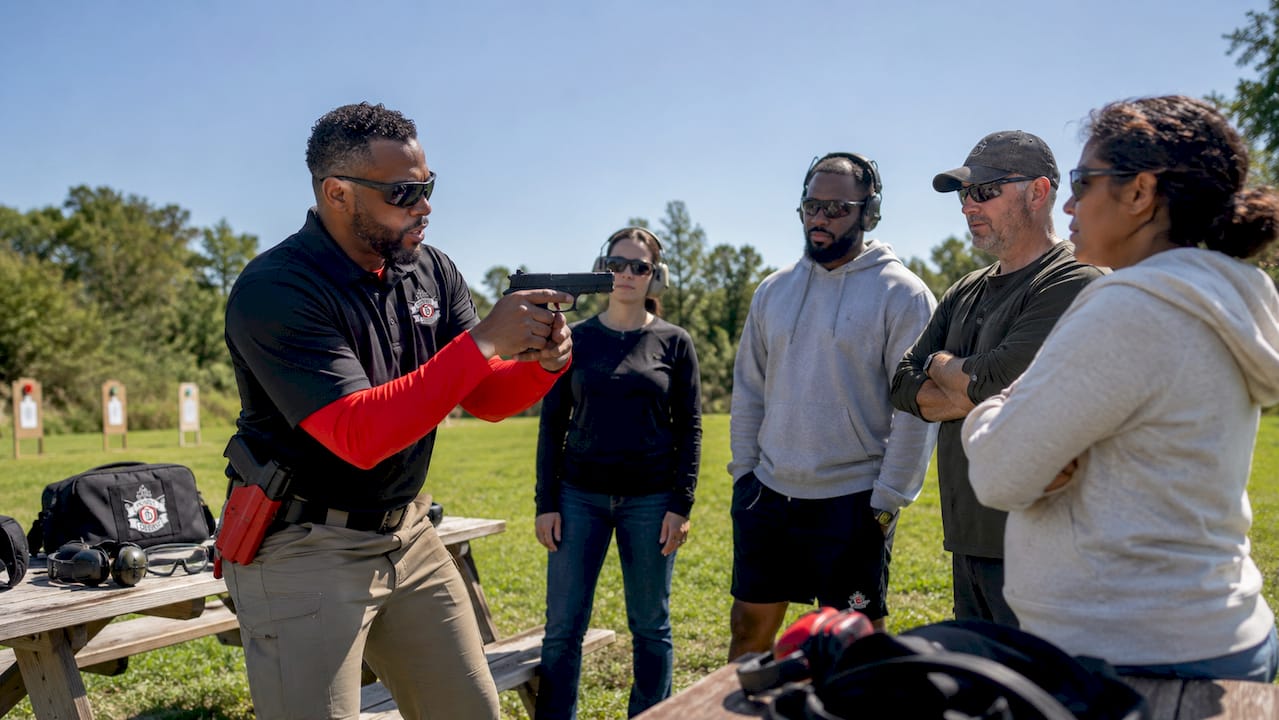
Stress inoculation is the deliberate exposure to pressure during training so your body and mind learn to function under it. Tactical training achieves this through several methods:
- Scenario-based drills that introduce unpredictable targets, time pressure, and environmental constraints
- Multi-sensory stimuli including noise, movement, and verbal commands that compete for your attention
- After-action review where instructors analyze your decisions and mechanics immediately after each scenario
VR combat training adds another dimension by replicating physiological stress responses including elevated heart rate and adrenaline surges in a zero-risk environment. This technology allows repeated exposure to dangerous scenarios with objective performance data for review, something a standard range cannot provide.
Military programs like Special Forces Advanced Urban Combat training use these exact principles. The lesson for civilian and law enforcement shooters is the same. Tactical training includes managing recoil, movement, ethics, and decision-making that range training alone cannot address.
“The goal of stress inoculation is not to eliminate fear. It is to train your body to perform its learned skills despite fear.” This principle drives every scenario-based training program used by serious tactical instructors.
What are tactical shooting drills and how do they build skill
Tactical shooting drills are the specific, repeatable exercises that translate concepts into muscle memory. The best drills combine movement, accuracy, and time constraints to pressure-test your fundamentals in conditions that mirror real encounters.
Beginner vs. advanced drill comparison
| Drill type | Beginner focus | Advanced focus |
|---|---|---|
| Static marksmanship | Sight alignment, trigger press, grip | Calling shots, recoil management |
| Shooting on the move | Forward movement at 3-5 yards | Lateral and pivot movement at 7-15 yards |
| CQB drills | Single target, controlled pace | Multiple targets, timed, with movement |
| Dry-fire practice | Basic draw stroke and presentation | Full scenario simulation with laser tools |
The War HOGG “L” CQB drill is one of the most effective structured exercises for developing Close Quarters Battle skills on a flat range. It uses cone markers to define movement paths, requiring the shooter to engage targets while moving laterally and forward at specific distances. This drill builds the spatial awareness and trigger timing needed before any shoot-house application.
One mechanical detail that most beginners overlook: lateral movement shooting requires controlling support-hand tension to gain freedom of pivot and avoid point-of-impact deviation. Too much grip tension locks your upper body and throws your shots wide. Learning this adjustment on the flat range prevents bad habits from carrying into dynamic environments.
Mid-distance shooting drills at 15 to 25 yards develop the precision needed for scenarios where a threat is not immediately in your face. Combining these with close-range movement drills gives you a complete skill set across realistic engagement distances.
Tracking tools like The Firearms Training Notebook help you log drill results, identify patterns in your misses, and measure progress over weeks and months. Without tracking, most shooters repeat the same errors without realizing it.
Pro Tip: Alternate between dry-fire and live-fire sessions each week. Dry-fire builds the neural pathways; live-fire confirms whether those pathways are producing accurate results.
What are the benefits of tactical training and how to get started
The benefits of tactical training extend well beyond shooting accuracy. Structured tactical firearm training builds a set of skills that directly improve your safety and confidence in any defensive situation.
- Improved firearm handling and safety. Tactical drills reinforce safe muzzle discipline, trigger control, and weapon manipulation under conditions that expose bad habits before they become dangerous.
- Increased confidence in defensive situations. Shooters who train tactically report significantly higher confidence in their ability to respond to a real threat, because they have already practiced the response under pressure.
- Enhanced decision-making under stress. Consistent, principle-based training is the foundation of operational readiness, whether you are a law enforcement officer or a civilian with a concealed carry permit.
- Practical self-defense readiness. Training that incorporates movement, cover, and scenario decisions prepares you for the reality that defensive situations rarely happen at a static range.
Getting started does not require prior military or law enforcement experience. Virginia CCW classes, Maryland Wear and Carry permit courses, and DC concealed carry training programs all serve as entry points that introduce tactical concepts alongside legal and safety fundamentals. From there, you can progress to dedicated tactical courses that add movement, scenario work, and advanced marksmanship.
Adaptive firearms training programs also exist for shooters with disabilities, including blind and low-vision individuals, proving that tactical readiness is accessible to a much wider population than most people assume. Selecting the right instructor matters as much as selecting the right course. Look for certified NRA instructors with documented experience in defensive and tactical training, not just competitive shooting.
Overcoming barriers like time and budget is achievable with short, frequent training sessions rather than infrequent marathon days at the range. One focused hour of tactical drilling per week produces better results than a single all-day session once a month.
Key takeaways
Tactical shooting training builds real-world defensive readiness by combining marksmanship, movement, stress inoculation, and decision-making into a structured, progressive system.
| Point | Details |
|---|---|
| Definition of tactical training | It combines marksmanship, movement, and decision-making under stress, not just static range accuracy. |
| Stress inoculation is non-negotiable | Variable, effortful drills build performance under pressure far better than smooth, repetitive practice. |
| CQB drills build layered skills | Start with static fundamentals, then progress to lateral movement and dynamic scenarios. |
| Tracking progress accelerates growth | Tools like The Firearms Training Notebook reveal patterns and measure improvement over time. |
| Accessibility matters | Adaptive programs and beginner-friendly courses make tactical training available to all shooter levels. |
Why most shooters underestimate what tactical training actually demands
I have worked with hundreds of students at Trouble Defense, from complete beginners to military veterans, and the pattern I see most often is this: people arrive thinking tactical training is about shooting faster. It is not. It is about making better decisions faster, and that requires a completely different kind of practice than most people have experienced.
The hardest thing to teach is not trigger control or stance. It is the willingness to train in a way that feels uncomfortable and imperfect. When a drill exposes a weakness, the instinct is to slow down and make it look clean. That instinct works against you. The research on desirable difficulties is clear: the practice that feels hardest is the practice that sticks.
I also tell every concealed carry student the same thing. Getting your Virginia CCW or Maryland Wear and Carry permit is a legal milestone, not a training milestone. The permit tells you that you are legally authorized to carry. Tactical training tells you whether you are actually prepared to use that firearm responsibly under stress. Those are two very different things, and confusing them is a mistake that could cost you or someone else dearly.
My advice for anyone starting out: commit to consistent, short sessions over a long period. One hour of focused tactical drilling every week will do more for your readiness than any single weekend course. And find an instructor who will challenge you, not just validate you.
— Dee Parker
Train with Trouble Defense in Virginia, Maryland, and DC
Trouble Defense offers self-defense firearm training across Virginia, Maryland, and Washington DC, built specifically for shooters who want more than a basic range session. Every program is led by certified NRA instructors with real-world defensive training experience, and the curriculum covers everything from Virginia CCW classes and Maryland Wear and Carry permits to advanced tactical drills, women’s firearm training, and adaptive programs for individuals with disabilities.
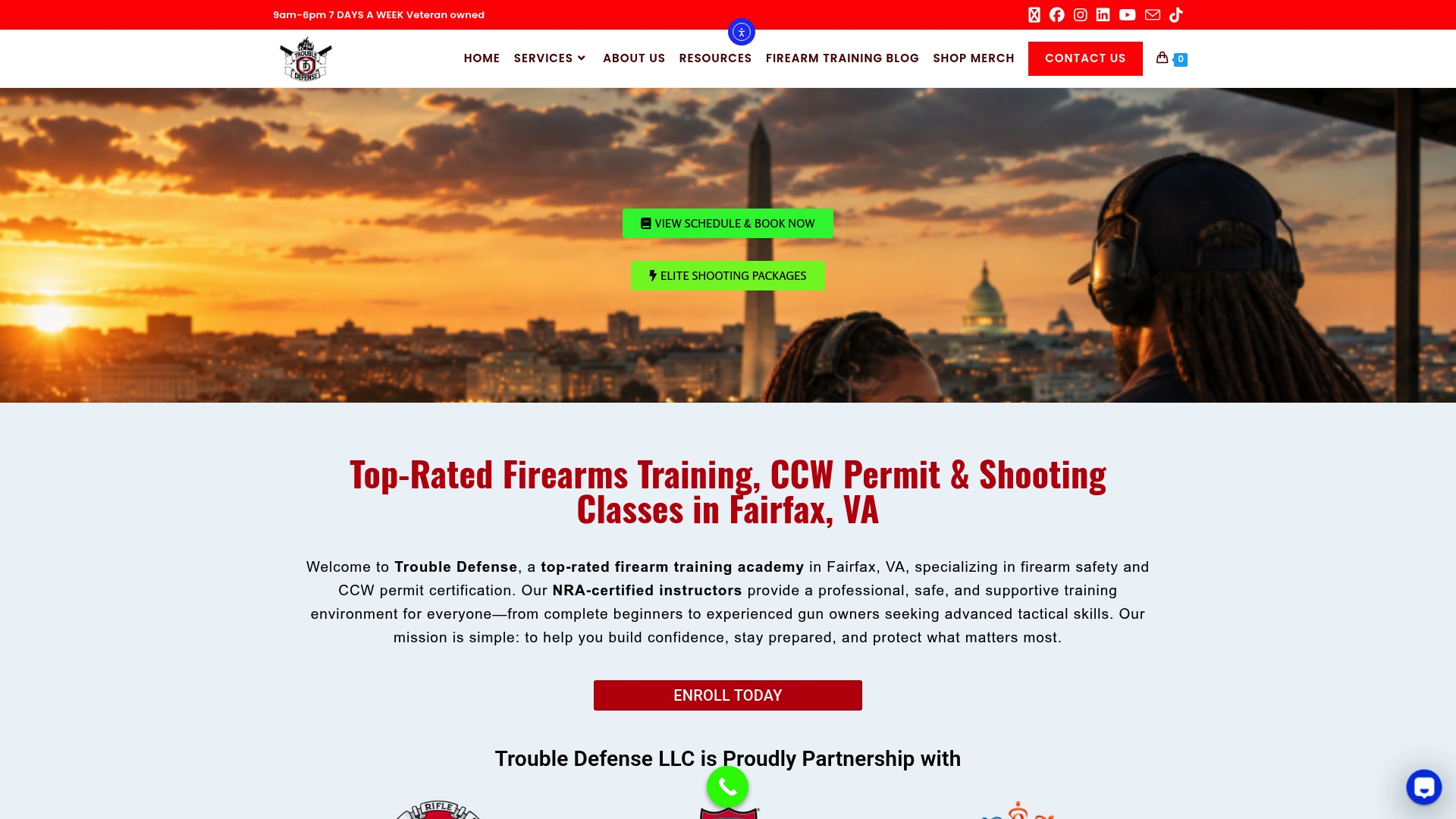
With over 300 five-star Google reviews, Trouble Defense has earned its reputation as the DMV area’s most trusted firearms training academy. Whether you are picking up a firearm for the first time or sharpening skills you already have, the right course is on the training calendar right now. Browse available classes and book your spot today.
FAQ
What is tactical shooting training in simple terms?
Tactical shooting training is a structured program that teaches firearm accuracy, movement, and decision-making under realistic stress conditions. It goes beyond static range practice to prepare shooters for actual defensive scenarios.
How is tactical training different from basic firearms training?
Basic firearms training focuses on safe handling and marksmanship fundamentals. Tactical training adds dynamic movement, scenario-based drills, stress inoculation, and real-time decision-making to build performance under pressure.
What tactical shooting drills should beginners start with?
Beginners should start with static marksmanship drills to build sight alignment and trigger control, then progress to forward-movement drills at close range before attempting lateral movement or CQB exercises.
Do I need a concealed carry permit before taking tactical training?
No permit is required to begin tactical firearm training, though Virginia CCW classes and Maryland Wear and Carry courses are excellent starting points that introduce both legal knowledge and foundational tactical skills.
Is tactical shooting training available for people with disabilities?
Adaptive firearms training programs, including those offered by Trouble Defense, provide tailored instruction for individuals with disabilities, including blind and low-vision shooters, making tactical readiness accessible to all.
