
Shooting experience builds confidence by training your mind and body to perform under pressure, recover from mistakes, and trust your own preparation. This process is what psychologists call self-efficacy development, and it is the same mechanism behind confidence gains in surgery, athletics, and public speaking. The difference with shooting is that the feedback is immediate, objective, and impossible to rationalize away. You either hit the target or you do not. That clarity, repeated across dozens of sessions, rewires how you see yourself under stress. At Trouble Defense, we see this transformation in students every week, from first-time shooters to veterans refining their edge.
Why shooting experience builds confidence through psychology and physiology
Self-efficacy is the technical term for your belief in your own ability to execute a specific task. In shooting, self-efficacy and stress show a strong negative correlation of r = -0.30 (p < 0.001), meaning the more capable you believe yourself to be, the lower your subjective stress during a shooting task. That is not a small effect. It means that building genuine shooting skill directly reduces the anxiety that undermines performance, which in turn creates more successful repetitions, which builds more confidence. The cycle is self-reinforcing.
The physiological side is equally concrete. Target shooting promotes serotonin production and measurable improvements in cognitive function by requiring you to coordinate breathing, distance calculation, and sustained focus simultaneously. Serotonin is the neurotransmitter most directly linked to stable mood and self-esteem. This means that regular range time is not just skill practice. It is a form of neurological conditioning that supports the emotional baseline from which confidence grows.
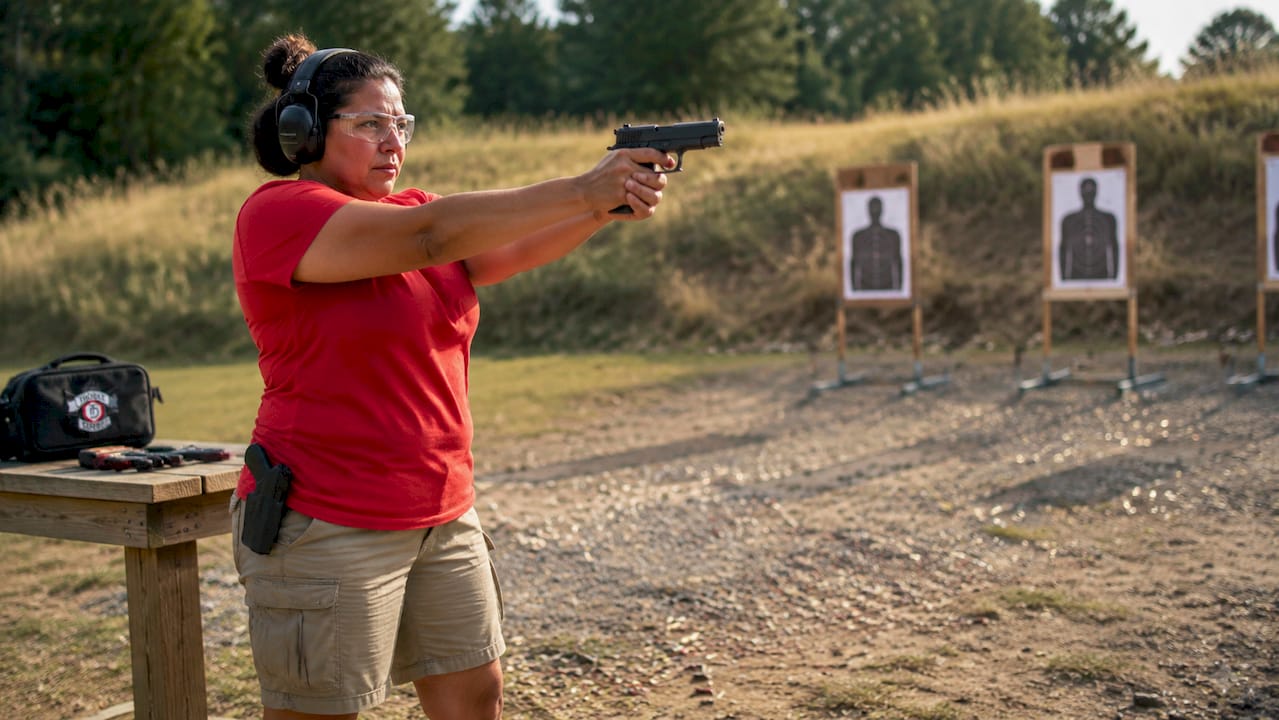
Controlled exposure to adrenaline is the third mechanism. Every time you draw, aim, and fire under any form of time pressure or scrutiny, your nervous system processes a low-level stress event and resolves it successfully. Over time, your brain stops treating that stress as a threat and starts treating it as a cue to focus. This is the same adaptation that makes experienced surgeons calm in the operating room and combat veterans composed under fire.
Pro Tip: If you want to accelerate the self-efficacy cycle, track your hits per session in a simple notebook. Objective evidence of progress is more persuasive to your brain than any amount of positive self-talk.
How mental fitness and emotional regulation create stable shooting confidence
Physical skill gets you to the range. Mental fitness keeps you performing when conditions are imperfect, when you have had a bad string of shots, or when the stakes feel higher than usual. Mental training like visualization is as critical to shooting confidence as physical repetition, yet most shooters spend zero deliberate time on it.
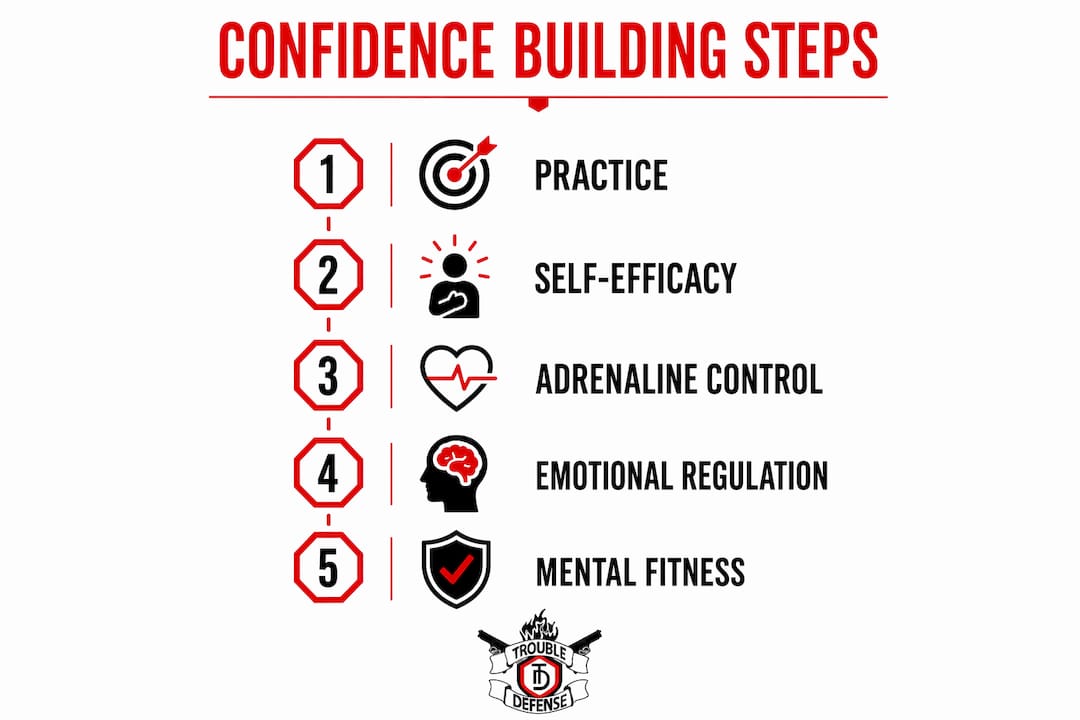
The core mental skill is what coaches call “mental consistency.” This is not about being emotionless. It is about your ability to reset after a bad shot within two to three seconds and return to your process without carrying the error forward. Shooters who lack this skill tend to spiral. One miss becomes two, then five, and suddenly their confidence has collapsed not because their skill degraded but because their attention moved from the process to the outcome.
Three mental fitness practices that build this stability:
- Visualization: Spend five minutes before each session mentally rehearsing your stance, grip, sight alignment, and trigger press. Research from MyMentalCoach confirms that visualization sharpens mental consistency by pre-loading the neural pathways your body will use on the range.
- Breathing protocols: A four-count inhale, four-count hold, and four-count exhale before each shot sequence activates the parasympathetic nervous system, reducing heart rate and steadying your hands. This is not a trick. It is physiology.
- Pre-shot routines: A fixed sequence of physical and mental checks before every shot removes decision fatigue and anchors your attention to process rather than result.
Mental fitness routines train the mind to stay in the process rather than the pressure, which is the exact condition under which consistent performance becomes possible. Confidence does not come from hoping you will shoot well. It comes from knowing you have a process that works and trusting it even when the first shot is not perfect.
Pro Tip: After a bad shot, say a single reset word out loud or in your head, something like “process” or “next.” This interrupts the rumination loop before it starts and returns your focus to what you can control.
What most people get wrong about confidence in shooting
The most common misconception is that shooting confidence means printing tight groups on paper at a static range under ideal conditions. Experienced shooters know this is not confidence. It is performance under favorable conditions, which is a different thing entirely.
True shooting confidence is knowing exactly where your first shot lands, not your fifth or tenth, under whatever conditions you actually face. That first-shot certainty is what separates a confident shooter from a skilled one. It requires adaptability, not perfection.
The table below contrasts the myth with the reality across four dimensions:
| Dimension | The myth | The reality |
|---|---|---|
| What confidence looks like | Tight groups, perfect scores | Reliable first-shot placement under varied conditions |
| How it is built | High-volume range sessions | Small, intentional wins with deliberate focus |
| What undermines it | A few bad shots | Chasing perfection instead of trusting process |
| What sustains it | Better equipment | Repeatable routines and measurable progress |
Dry-fire practice is the most effective tool for building the muscle memory and trigger control that underpin first-shot confidence, because it removes recoil distraction and lets you focus entirely on mechanics. Ten minutes of deliberate dry-fire practice daily produces faster confidence gains than an hour of live-fire shooting without a specific focus. The shooters who understand this stop chasing volume and start chasing quality of repetition.
Shooting sports also provide something rare in personal development: immediate, measurable feedback that instills personal responsibility and agency. You cannot blame the target. That accountability, practiced consistently, transfers directly into how you carry yourself outside the range.
Practical ways to build shooting confidence through experience
Building confidence through shooting is a deliberate practice, not a byproduct of time spent at the range. The following sequence works for beginners at Trouble Defense and for intermediate shooters who have plateaued:
Establish a pre-shot routine and stick to it. Choose a fixed sequence of four to six physical checks (grip, stance, sight alignment, breath, trigger press, follow-through) and execute it identically on every shot. Consistency in process produces consistency in results, and consistent results produce confidence.
Use dry-fire practice as your primary training tool. Intentional small wins in dry-fire build muscle memory faster than high-volume live fire because your attention is not divided by recoil management. Aim for ten focused minutes daily rather than one unfocused hour weekly.
Keep a shooting log. Record your distance, target type, round count, conditions, and a brief note on what worked and what did not. After six sessions, patterns emerge. You will see which conditions produce your best performance and which mental states correlate with your worst. This data is the foundation of building a track record of repeatable success.
Increase challenge gradually. Once you can place your first shot reliably at ten yards, move to fifteen. Once you can perform your routine under calm conditions, add a timer. Gradual challenge increases build mental reserves without overwhelming your nervous system. This is the same principle behind progressive overload in strength training.
Train with a qualified instructor. The benefits of indoor shooting range training under certified instruction include immediate feedback on errors you cannot see yourself, a structured progression that prevents bad habits from calcifying, and the psychological safety of a supervised environment where mistakes are learning opportunities rather than embarrassments.
Prioritize first-shot accuracy over group size. In every session, take at least five cold shots from a ready position and record where they land. This is your real confidence metric. Group tightness after a warm-up tells you about your best-case performance. First-shot placement tells you about your actual capability.
Pro Tip: Review your shooting log before each session, not after. Knowing what worked last time primes your brain for success before you fire a single round.
The psychology of marksmanship confirms that confidence improves most sharply when shooters shift from chasing perfect scores to trusting their preparation and executing consistent shot sequences. That shift is a mindset change, and it is available to every shooter regardless of experience level.
Key takeaways
Shooting experience builds lasting confidence by developing self-efficacy, emotional regulation, and first-shot reliability through deliberate, process-focused practice.
| Point | Details |
|---|---|
| Self-efficacy drives confidence | Higher shooting self-efficacy directly reduces stress, creating a self-reinforcing cycle of performance and belief. |
| Mental training is non-negotiable | Visualization, breathing protocols, and pre-shot routines build the emotional regulation that sustains confidence under pressure. |
| First-shot accuracy is the real metric | Knowing where your first shot lands under imperfect conditions matters more than tight groups in ideal conditions. |
| Dry-fire practice accelerates growth | Ten focused minutes of daily dry-fire builds muscle memory faster than high-volume live-fire sessions without deliberate intent. |
| Progress tracking compounds confidence | A shooting log converts subjective feelings into objective evidence, giving your brain the data it needs to trust your preparation. |
Why I believe shooting is one of the most honest confidence builders available
I have worked with hundreds of students across every experience level, from people who have never touched a firearm to veterans with decades of trigger time. The pattern I see consistently is this: the students who grow the most confident are not the ones who shoot the most rounds. They are the ones who pay the closest attention to what is actually happening.
Shooting does something that most confidence-building activities cannot. It gives you an immediate, unambiguous result. There is no coach’s interpretation, no judge’s score, no teammate’s opinion. The round either went where you intended or it did not. That honesty is uncomfortable at first, and then it becomes the most motivating thing in the world.
What I find most powerful is how shooting trains emotional regulation under physical stress. Your heart rate is elevated. Your hands want to shake. And you have to override all of that with a deliberate, practiced process. Every time you do it successfully, you prove to yourself that you can perform when it is hard. That proof accumulates. After enough sessions, you stop asking whether you can handle pressure. You already know the answer.
The shooters I worry about are the ones chasing perfection. They leave frustrated because the standard they set is impossible, and frustration erodes confidence faster than any bad shot. The shooters I admire are the ones who trust their process and treat every session as data. They are quieter about their ability, and they are far more capable when it counts.
— Dee Parker
Take the next step with Trouble Defense
If this article has you thinking seriously about using shooting to build real, lasting confidence, the most effective next step is structured training with instructors who understand both the technical and psychological dimensions of the process.

Trouble Defense, a veteran-owned training academy in Fairfax, VA, offers programs specifically designed for personal development through shooting, including women’s firearms training, beginner courses, Virginia CCW classes, Maryland Wear and Carry training, and DC concealed carry programs. Every class is led by certified NRA instructors in a supportive environment where confidence is the outcome, not just the goal. Browse the full training class schedule and find the program that fits where you are right now.
FAQ
Does shooting actually improve confidence?
Yes. Research confirms that shooting self-efficacy is negatively correlated with stress at r = -0.30, meaning that as shooting skill and belief in that skill grow, anxiety measurably decreases. This reduction in stress is one of the primary mechanisms through which shooting builds confidence.
How long does it take to build shooting confidence?
Most shooters notice meaningful confidence gains within six to ten deliberate practice sessions when they combine live-fire training with dry-fire practice and mental routines. The key variable is intentionality, not total round count.
What is the best way to build shooting confidence as a beginner?
The most effective approach combines structured instruction from a certified trainer, daily dry-fire practice for muscle memory, and a shooting log to track measurable progress. Trouble Defense’s beginner firearm training courses are specifically designed to build this foundation.
Does mental training really matter for shooting confidence?
Mental training is as important as physical skill. Visualization and pre-shot routines build the emotional regulation that allows you to reset after mistakes and perform consistently under pressure, which is the core of genuine shooting confidence.
Can shooting confidence transfer to other areas of life?
Yes. The self-efficacy, emotional regulation under stress, and accountability that shooting develops are transferable skills. Shooters regularly report improved composure in high-pressure professional situations and greater overall self-assurance as direct benefits of consistent training.


