

An indoor shooting range is the safest and most effective starting point for any beginner learning to handle a firearm. Unlike outdoor settings, indoor ranges offer controlled conditions, professional supervision, and structured protocols that remove the guesswork from your first sessions. The indoor shooting range benefits for beginners are well-documented: predictable environments reduce anxiety, rental equipment lowers the cost barrier, and certified instructors accelerate skill development. Whether you are exploring firearms for personal defense, sport, or general education, starting indoors gives you the foundation to build real confidence.
1. Why indoor ranges are the right starting point for beginners
Indoor shooting ranges are defined by one core advantage: they remove variables that make learning harder. Predictable conditions and professional oversight reduce anxiety for first-timers, allowing beginners to focus entirely on fundamentals like grip, stance, and trigger control rather than managing distractions. That focus is exactly what novice shooters need in their first sessions.
The structure of a typical indoor range visit reinforces this. You check in, sign a waiver, receive a safety briefing, and shoot under the direct commands of a range safety officer. Each step is predictable, and that predictability is what separates a productive first session from an overwhelming one. Outdoor ranges rarely offer this level of guided structure.
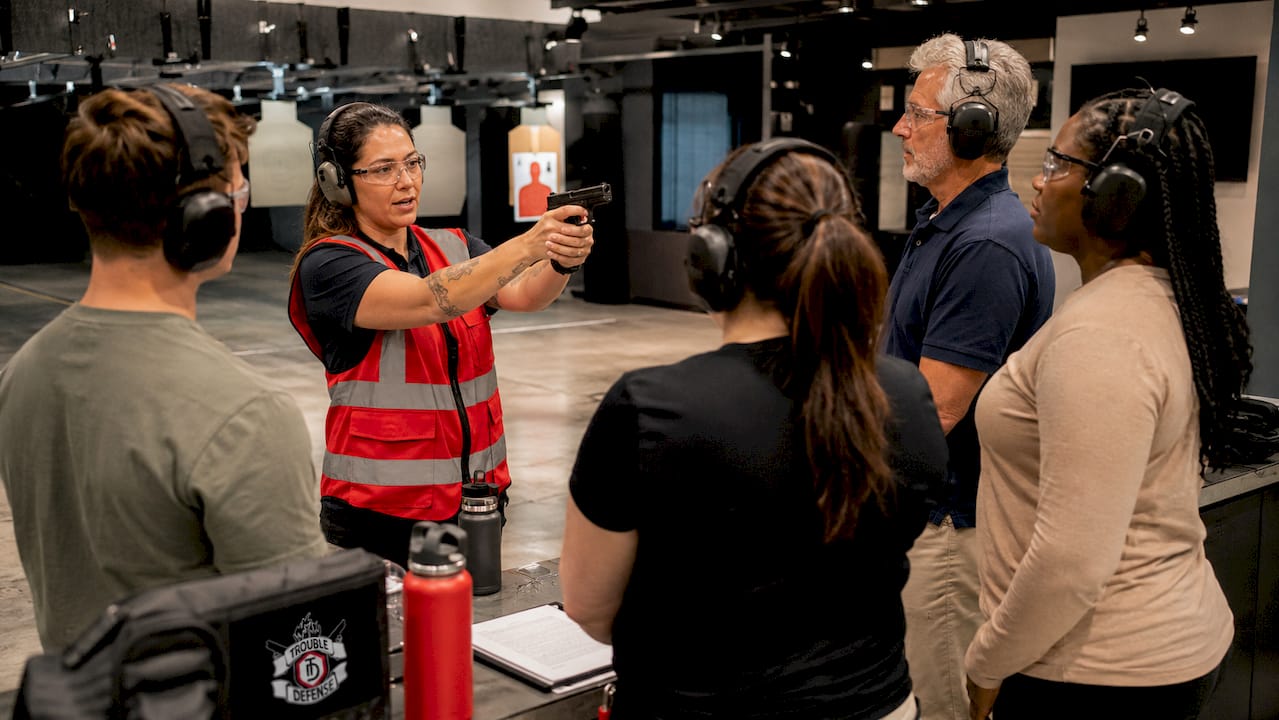
Trouble Defense, based in Fairfax, VA, builds its beginner programs around this same principle. Certified NRA instructors lead every session, and the environment is designed to make new shooters feel supported rather than judged. That combination of professional oversight and welcoming atmosphere is why the academy has earned over 300 five-star Google reviews from clients across Virginia, Maryland, and Washington DC.
2. Safety protocols that protect every new shooter
Safety is the defining feature of a well-run indoor range, and beginners benefit from it more than anyone. Structured rules and range officer supervision create a secure learning environment where mistakes are caught before they become dangerous. This is not something you can replicate on your own.
Key safety elements you will encounter at a reputable indoor range include:
- Mandatory eye protection: Safety glasses shield against brass casings and debris, which are common in enclosed shooting lanes.
- Hearing protection: Combining foam earplugs with earmuffs provides superior noise reduction. Double protection is the recommended standard for indoor ranges due to amplified sound in enclosed spaces.
- Range safety officers (RSOs): RSOs monitor every shooter on the line, enforce commands like “cease fire,” and step in immediately if unsafe behavior occurs.
- Safety briefings: Before you ever touch a firearm, you receive a procedural overview covering the four fundamental firearm safety rules, range commands, and lane etiquette.
- Facility maintenance: Well-maintained ranges conduct regular inspections of equipment, ventilation, and backstop integrity.
Not all ranges meet the same standard. Some indoor ranges have faced safety violations due to inadequate oversight, which means your choice of facility matters. Ask about inspection records and staff certifications before you book.
Pro Tip: When visiting a range for the first time, treat it as a safety audit. Ask the RSO what protocols they enforce and how often the facility is inspected. A range with a strong safety culture will answer those questions confidently and in detail.
3. How controlled conditions improve your learning curve
One of the most underappreciated advantages of indoor firearms training is the elimination of environmental variables. Indoor ranges remove weather-related distractions like wind, rain, glare, and temperature extremes, giving beginners a clean baseline to develop muscle memory. When you are not fighting the elements, you can actually focus on what your hands and body are doing.
Consistent lighting across all lanes means your sight picture looks the same every session. Consistent lane distances mean your targets are always where you expect them. These controlled conditions are not just comfortable. They are pedagogically important. Skill acquisition research consistently shows that beginners learn faster in low-variability environments before progressing to more complex conditions.
Indoor air quality is another factor most beginners do not think about until they notice it. Mechanically planned ventilation systems in quality indoor ranges reduce exposure to lead particles and other contaminants generated during shooting. Ranges that invest in HEPA filtration and designed airflow maintain a cleaner breathing zone, which matters for both short-term comfort and long-term health.
The practical result of all these controlled conditions is straightforward: beginners who train indoors build composure faster. They are not distracted, not uncomfortable, and not managing variables outside their control. That mental clarity translates directly into better technique.
4. Equipment rentals that lower the barrier to entry
One of the biggest hesitations for new shooters is cost. Buying a firearm before you know what you like is an expensive mistake, and most beginners do not realize they do not have to. Indoor ranges offer rental firearms across a range of calibers and platforms, letting you try before you commit to a purchase.
A typical rental program at a full-service indoor range includes:
- Handguns in multiple calibers: From a .22 LR for low recoil practice to a 9mm or .45 ACP for a more realistic self-defense simulation.
- Long guns and shotguns: Some ranges offer carbines and shotguns for shooters exploring home defense options.
- Eye and ear protection: Rental safety gear is available for shooters who arrive without their own.
- Immediate staff assistance: Range staff walk you through loading, handling, and operating any rental firearm before you step onto the line.
This rental model does more than save money. It supports better purchasing decisions. Shooters who try three or four platforms before buying consistently report higher satisfaction with their eventual purchase. They know what recoil feels like, what grip size fits their hand, and what caliber they can control accurately. That knowledge is worth far more than the rental fee.
5. Expert instruction that accelerates skill development
Access to professional coaching is one of the clearest indoor shooting range benefits for beginners. Private lessons and simulator training at indoor ranges give novices real-time feedback that self-directed practice simply cannot provide. A certified instructor watching your grip and stance will catch errors in minutes that you might reinforce for months on your own.
Indoor range instruction typically covers:
- Stance and grip fundamentals: Isosceles and Weaver stances, proper grip pressure, and hand placement for recoil management.
- Sight alignment and sight picture: How to align iron sights or use a red dot optic for accurate shot placement.
- Trigger control: The single most common beginner error is anticipating recoil and flinching. Instructors use dry-fire drills and snap caps to isolate and correct this.
- Simulator training: Many modern indoor ranges use force-on-force simulators or laser training systems that build decision-making skills in a zero-risk environment.
Trouble Defense offers structured beginner firearm training programs led by certified NRA instructors, with options for private lessons, group classes, women’s firearm training, and adaptive programs for individuals with disabilities. The academy also provides Virginia CCW classes, Maryland Wear and Carry permit courses, and DC concealed carry training, making it a one-stop resource for shooters at every stage.
Pro Tip: Book a private lesson for your first session rather than joining a group class. One-on-one instruction lets the instructor identify your specific errors immediately, which compresses your learning timeline significantly.
6. Year-round access that builds consistent progress
Skill development in any physical discipline requires repetition over time. Outdoor ranges close for weather, lose daylight in winter, and are often located far from urban centers. Indoor ranges solve all three problems at once.
Here is how indoor access compares to outdoor alternatives for beginner progress:
| Factor | Indoor range | Outdoor range |
|---|---|---|
| Weather dependency | None | High |
| Consistent lighting | Yes | Seasonal/variable |
| Year-round availability | Yes | Often limited |
| Flexible scheduling | Extended hours common | Daylight dependent |
| Community events and classes | Regularly scheduled | Less frequent |
The practical implication is that indoor shooters practice more often, and more frequent practice produces faster skill gains. A beginner who visits an indoor range twice a month for six months will outperform a shooter who visits an outdoor range sporadically when conditions allow.
Indoor ranges also host regular events, competitions, and training programs that create a sense of community. That social element matters more than most beginners expect. Shooters who feel part of a community stay engaged with training longer and progress further than those who practice in isolation.
Key takeaways
Indoor shooting ranges give beginners the safest, most structured, and most effective environment to build foundational firearms skills, combining professional supervision, controlled conditions, and accessible equipment in one facility.
| Point | Details |
|---|---|
| Safety protocols are non-negotiable | Choose ranges with certified RSOs, mandatory PPE, and documented inspection records. |
| Controlled conditions accelerate learning | Consistent lighting, no weather, and clean air let beginners focus entirely on technique. |
| Rentals enable smarter decisions | Try multiple calibers and platforms before purchasing to find the right fit. |
| Expert instruction compresses progress | Certified instructors catch errors in real time that self-directed practice reinforces. |
| Year-round access drives consistency | Regular indoor practice outperforms sporadic outdoor sessions for skill development. |
What I have learned from watching beginners walk through the door
I have seen hundreds of first-time shooters arrive at a range with the same look: a mix of curiosity and quiet anxiety. What I know after years of working in firearms training is that the anxiety almost always disappears within the first 15 minutes of a well-run indoor session. The structure does the work. When someone knows exactly what to expect, when a range officer is present and clearly in charge, and when the environment is calm and consistent, the nervous energy converts into focus.
What I tell every beginner is this: the range you choose matters as much as the instruction you receive. A facility with a weak safety culture, poor ventilation, or undertrained staff will undermine your confidence rather than build it. Do not just look at price or location. Read reviews, ask about instructor certifications, and pay attention to how staff treat new shooters when you walk in.
The other thing I push back on is the idea that beginners should wait until they feel “ready” to start formal training. You will never feel ready before your first session. The readiness comes from the session itself. Rental firearms, patient instructors, and a controlled environment exist precisely to meet you where you are. Take advantage of them early, not after you have already developed bad habits on your own.
— Dee Parker
Start your training at Trouble Defense
Trouble Defense, a veteran-owned firearms training academy in Fairfax, VA, offers beginner firearm training programs designed specifically for new shooters in Virginia, Maryland, and Washington DC. Certified NRA instructors lead every class in a supportive, safety-first environment where rental equipment is available and no prior experience is required. Programs include Virginia CCW classes, Maryland Wear and Carry permit courses, women’s firearm training, and adaptive training for individuals with disabilities. Check the upcoming training calendar to find a class that fits your schedule and take the first step toward building real confidence with a firearm.
FAQ
What should a beginner expect on their first indoor range visit?
Expect a check-in process, a signed waiver, and a safety briefing before you ever handle a firearm. A range safety officer will be present throughout your session to guide commands and answer questions.
Do I need to bring my own gun to an indoor shooting range?
No. Most indoor ranges offer rental firearms across multiple calibers, along with eye and ear protection. Rentals let beginners try different platforms before making a purchase.
Is indoor shooting safe for complete beginners?
Indoor ranges are the recommended starting point for novice shooters because of their structured safety protocols, mandatory protective equipment, and professional supervision. Choosing a well-maintained facility with certified staff is the key factor.
How often should a beginner practice at an indoor range?
Two sessions per month is a solid baseline for steady skill development. Consistent, regular practice at an indoor range produces faster progress than infrequent outdoor sessions.
What is the difference between indoor and outdoor shooting ranges for beginners?
Indoor ranges offer controlled lighting, no weather interference, year-round access, and on-site instruction, all of which make them more effective for beginners than outdoor ranges where conditions vary and supervision is less structured.


Pingback: How laser clay compares to real clay accuracy | Laser Clay Singapore
I’d constantly want to be update on new posts on this site, saved to favorites! .
I wanted to make a small message to be able to express gratitude to you for all of the splendid techniques you are giving at this website. My long internet investigation has now been recognized with beneficial concept to go over with my relatives. I ‘d admit that we visitors are quite fortunate to dwell in a perfect website with very many outstanding individuals with insightful points. I feel really happy to have come across the web site and look forward to so many more fun moments reading here. Thanks again for everything.
some really nice and useful information on this internet site, likewise I think the design and style has good features.