For first-time carriers, the best holsters come down to four proven options: the Vedder LightTuck for IWB comfort, the Alien Gear ShapeShift for modular flexibility, ComfortTac for budget-friendly belly band carry, and Galco for leather dress carry. Every pick on this list meets the three non-negotiable safety criteria defined by PHLster’s concealment guidance: full trigger-guard coverage, stable passive retention, and a holster mouth that stays open for safe reholstering.
Before you read another word about comfort or price, those three criteria are the filter. A holster that fails any one of them is not a beginner option. It is a liability.
Quick shortlist:
- Vedder LightTuck — Best IWB for beginners; Kydex shell, adjustable ride height and cant, model-specific fit
- Alien Gear ShapeShift — Best modular platform; converts between IWB, AIWB, OWB, and paddle carry
- ComfortTac Ultimate — Best budget belly band; elastic construction, fits most body types, good for deep concealment
- Galco KingTuk — Best hybrid for all-day comfort; leather backer with Kydex shell, ideal for dress or business carry
- Galco leather OWB — Best for formal or range carry; classic leather, slower draw, excellent for new shooters building fundamentals
| Holster | Best For | Carry Position | Material | Price Range |
|---|---|---|---|---|
| Vedder LightTuck | IWB everyday carry | IWB / AIWB | Kydex | $60–$90 |
| Alien Gear ShapeShift | Modular / multi-role | IWB / OWB / AIWB / paddle | Kydex + polymer | $60–$150 |
| ComfortTac Ultimate | Budget / deep concealment | Belly band | Elastic / neoprene | $30–$50 |
| Galco KingTuk | Hybrid comfort carry | IWB | Leather + Kydex | — |
| Galco leather OWB | Formal / range use | OWB | Full leather | — |
Table of Contents
- 1. Vedder LightTuck — the best IWB holster for new carriers
- 2. Alien Gear ShapeShift — best modular platform for beginners who want options
- 3. ComfortTac Ultimate belly band — best budget starter for new gun owners
- 4. Galco KingTuk — best hybrid holster for all-day comfort
- 5. Galco leather OWB — best for formal carry and range fundamentals
- How to choose your first holster — the only checklist you need
- Safety first: reholstering, practice drills, and when to get instruction
- Key Takeaways
- What first-time carriers actually get wrong
- Hands-on holster training in Virginia, Maryland, and DC
- Further reading and sources
- FAQ
1. Vedder LightTuck — the best IWB holster for new carriers
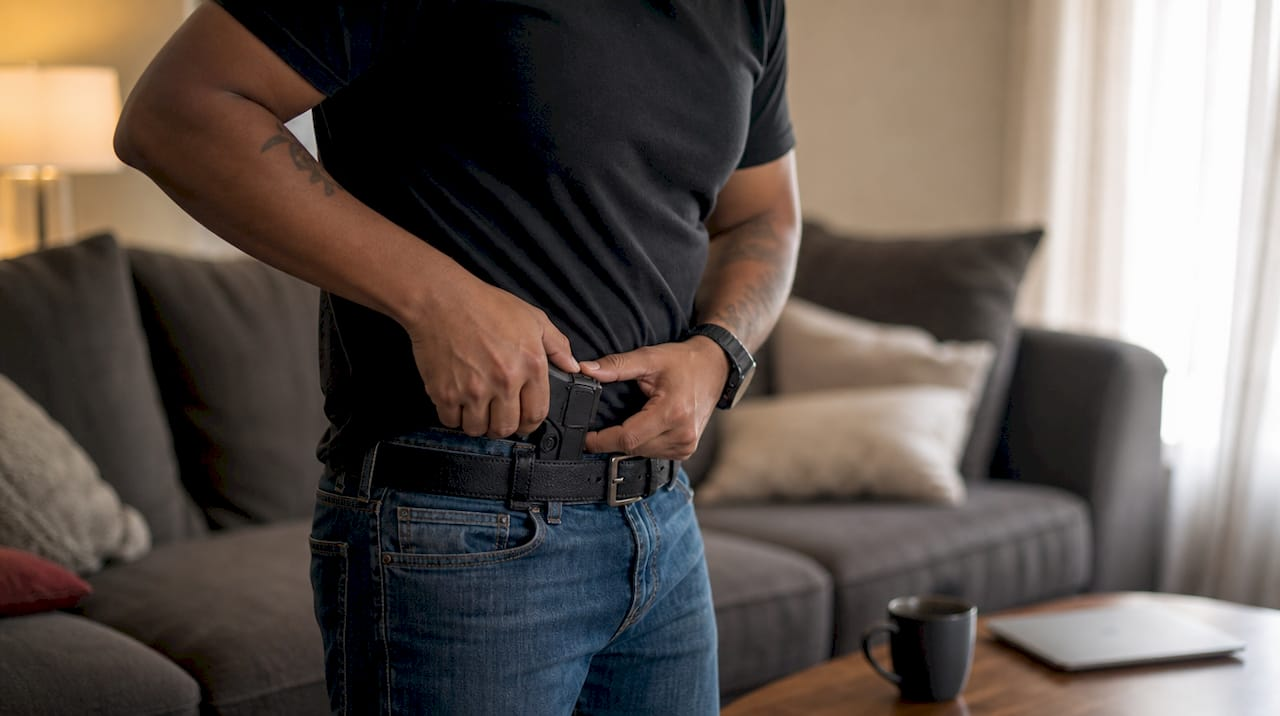
The LightTuck is the most recommended IWB holster for beginners, and the reason is simple: it does everything right without asking you to compromise. The Kydex shell is molded to your exact firearm model, so retention is consistent from day one. Ride height and cant are both adjustable with a single hex key, which matters when you are still figuring out what position works for your body and wardrobe.
Who it fits: Carriers who want a dedicated IWB workhorse for strong-side or appendix carry, especially those who dress in jeans and a t-shirt most days.
- Carry positions: IWB (3–5 o’clock), AIWB (12 o’clock) with the right clip setup
- Material: Full Kydex, model-specific mold
- Optic/light compatibility: Available in optic-cut and light-bearing versions for most popular pistols
- Warranty: Vedder offers a lifetime guarantee
Pros: Slim profile, excellent retention out of the box, easy to adjust, widely available for most carry pistols.
Cons: Kydex against bare skin can feel stiff in summer heat; no soft backer for extended wear without an undershirt.
Quality holsters typically run $60–$150, and the LightTuck sits comfortably in the lower half of that range for what you get.
2. Alien Gear ShapeShift — best modular platform for beginners who want options
The ShapeShift system is built around one shell that converts between four carry configurations: IWB, AIWB, OWB belt slide, and OWB paddle. For a new carrier who is not yet sure which position fits their lifestyle, that flexibility is genuinely useful. You buy one platform and test positions without buying four separate holsters.
Who it fits: Beginners who want to experiment with carry positions before committing, or those who carry in different contexts (office, gym, weekend).
- Carry positions: IWB, AIWB, OWB, paddle
- Material: Kydex shell with polymer retention hardware
- Adjustability: Retention screw, ride height, and cant all adjustable per configuration
- Optic/light compatibility: Alien Gear lists optic-cut and light-bearing shells for most popular pistols; confirm your specific model before ordering
Pros: One purchase covers multiple roles, solid retention, good warranty and trial policy.
Cons: Bulkier than a dedicated single-position holster; the modular hardware adds some thickness at the beltline.
Pro Tip: If you carry a red-dot-equipped pistol, verify the exact optic cut before ordering. Optic-ready holsters are now common, but “optic compatible” on a product page does not always mean your specific optic clears the hood.
3. ComfortTac Ultimate belly band — best budget starter for new gun owners
ComfortTac is the entry point for carriers who want to start carrying before investing $100 in a Kydex rig. The elastic belly band wraps around the torso and positions the firearm at the appendix or strong-side hip without any belt requirement. That makes it practical for gym wear, athletic clothing, or dresses where a traditional belt holster is not an option.
Who it fits: Budget-conscious beginners, women who carry in non-belt clothing, and anyone who wants a deep-concealment backup option.
- Carry positions: Appendix, strong-side, cross-draw (position depends on wrap placement)
- Material: Elastic and neoprene
- Price: Under $50 at most retailers
Pros: Affordable, versatile, works without a belt, good for summer or athletic carry.
Cons: Elastic construction means retention is less precise than Kydex; not a substitute for a model-specific molded holster for primary carry. Trigger-guard coverage depends on correct sizing and positioning.
The trigger-guard coverage point is not a minor caveat. With any soft or elastic holster, you must confirm the trigger is fully enclosed before you wear it. This is one reason model-specific, molded holsters are strongly preferred for primary everyday carry.
4. Galco KingTuk — best hybrid holster for all-day comfort
The KingTuk pairs a Kydex shell with a leather backer, and that combination solves the main complaint beginners have about full-Kydex IWB holsters: the hard edge against the hip. The leather distributes pressure across a wider surface, which makes a real difference on a 10-hour workday.
Who it fits: Carriers who wear business casual or dress clothing, or anyone who has tried full-Kydex and found it uncomfortable for extended wear.
- Carry positions: IWB (strong-side 3–5 o’clock)
- Material: Leather backer, Kydex shell
- Adjustability: Dual-clip design, adjustable ride height
Pros: Noticeably more comfortable than full-Kydex for all-day wear, solid retention, widely available for most pistols.
Cons: Leather backer requires a break-in period and periodic conditioning; hybrid designs add some width compared to a slim Kydex shell. Check retention periodically as the leather backer ages.
5. Galco leather OWB — best for formal carry and range fundamentals
A full-leather OWB holster is not the fastest draw or the most concealable option, but it is one of the best tools for a new shooter building the fundamentals of a safe draw stroke. The retention is passive and consistent, the draw angle is natural, and the leather construction is forgiving during the learning phase.
Who it fits: New carriers who attend range sessions regularly, those who open carry where permitted, or anyone who needs a formal-looking holster for business or professional settings.
- Carry positions: OWB (strong-side 3–4 o’clock)
- Material: Full leather
- Optic/light compatibility: Limited; most leather OWB designs are not cut for optics or lights
Pros: Classic look, comfortable for range use, durable with proper care.
Cons: Requires a break-in period; less concealable under light clothing; not ideal for appendix carry.
How to choose your first holster — the only checklist you need
Start with the three non-negotiables, then work outward. Shooting Illustrated’s holster guide puts it plainly: a holster must maintain mouth stiffness, attach securely with metal clips or closed loops, and use a rigid shell for retention. Soft nylon holsters fail all three.
The non-negotiable checklist:
- Full trigger-guard coverage — no gap, no soft material over the trigger
- Stable passive retention — the gun stays put through normal movement without a thumb break
- Rigid holster mouth — stays open when the gun is drawn so reholstering is safe
Red flags to walk away from:
- “Fits most” or “universal fit” labeling — generic holsters frequently fail on retention and trigger protection
- Soft nylon construction that collapses when empty
- Plastic or thin metal clips that flex under load
- No model-specific fit listed
- No warranty or return policy
Setup questions to answer before you buy:
- What carry position works with your daily clothing?
- Does your belt support the holster’s weight? (A dress belt does not.)
- Is your firearm optic- or light-equipped, and does the holster list explicit compatibility?
“Concealment fails more often because the holster system is wrong — ride height, cant, belt support — not because the gun is too large. Adjust one variable at a time before you blame the holster.” — The Avid Outdoorsman
Pro Tip: Before you adjust the holster, invest in a dedicated gun belt. A stiff gun belt prevents holster migration, maintains your draw angle, and fixes half the comfort complaints new carriers blame on the holster itself.
Once you have the belt sorted, wear the holster around the house for two weeks with an unloaded firearm before deciding it does not work. Most fit complaints resolve after a small ride-height or cant adjustment, not a new purchase.
Safety first: reholstering, practice drills, and when to get instruction
NRA Family’s reholstering guidance is direct: negligent reholstering is a leading cause of negligent discharges. The fix is not speed. It is a deliberate, step-by-step process every time.
Safe reholstering checklist:
- Keep your finger off the trigger and outside the trigger guard
- Look at the holster mouth — confirm it is open and clear
- Clear any clothing from the holster mouth before the muzzle enters
- Guide the muzzle in slowly; do not cant the gun to force it
- Feel and hear the retention click before releasing the grip
30-day beginner practice plan:
- Week 1: Dry practice only, unloaded firearm. Draw and reholster 10 times per session, focusing on grip and trigger discipline. No timer.
- Week 2: Add clothing. Practice drawing from concealment with your actual carry garments.
- Week 3: Introduce a timer. Measure draw-to-first-sight-picture, not draw-to-shot. Speed comes after consistency.
- Week 4: Live-fire session at the range. Draw from the holster under supervision, focusing on the reholstering checklist above.
When to seek professional instruction: before your first live-fire draw, when setting up AIWB carry, when adding a weapon light or optic to your carry setup, or any time your draw feels inconsistent. Trouble Defense’s holster draw training class covers exactly these scenarios for Virginia, Maryland, and DC carriers.
Pro Tip: If you carry AIWB, get hands-on coaching before you carry live. The muzzle points toward your femoral artery during the draw stroke. That is not a position where self-taught technique is acceptable.
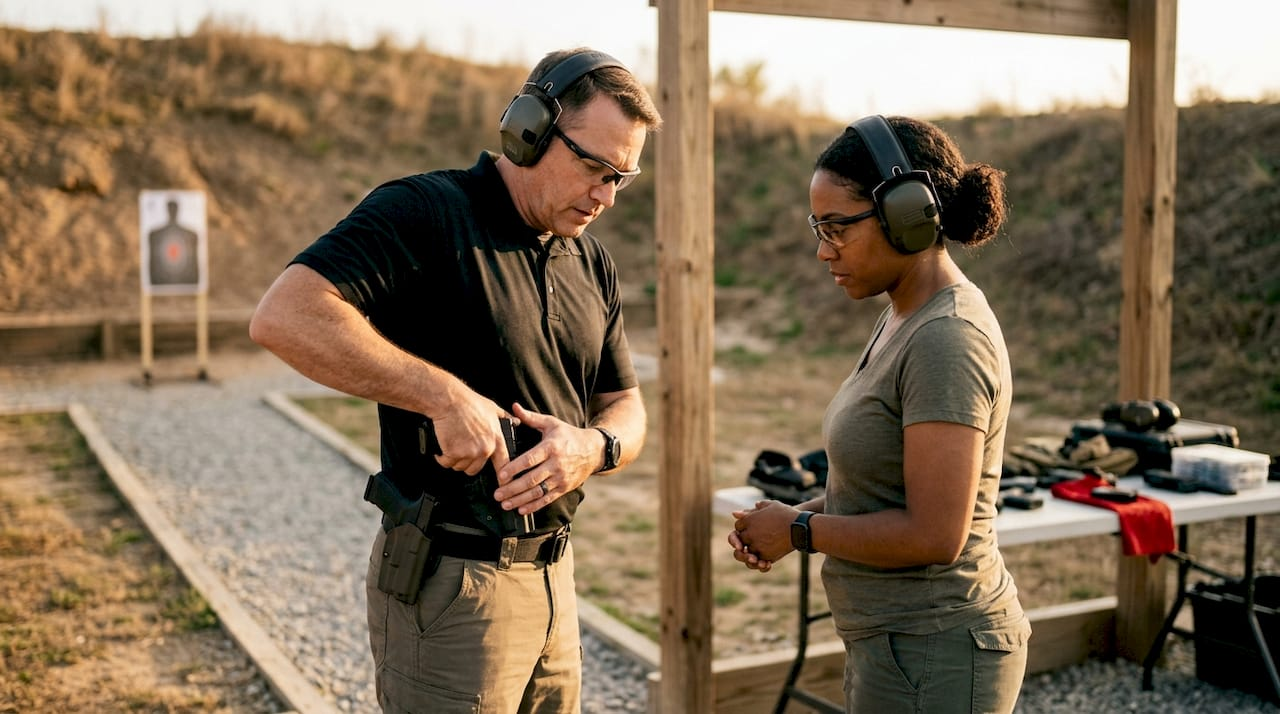
For first-time carriers in Virginia, a Virginia CCW class also covers safe handling and draw fundamentals as part of the certification curriculum. State permit requirements vary, so check concealed carry resources by state before you apply.
Key Takeaways
The single most important decision a first-time carrier makes is not which holster to buy — it is committing to a model-specific, rigid-shell holster that covers the trigger guard, holds retention, and stays open for safe reholstering.
| Point | Details |
|---|---|
| Three non-negotiables | Full trigger-guard coverage, stable passive retention, and a rigid holster mouth are required — not optional. |
| Start model-specific | Buy a holster molded to your exact firearm; universal-fit holsters fail on retention and trigger protection. |
| Invest in a gun belt | A dedicated gun belt prevents holster migration and fixes most comfort and concealment complaints. |
| Two-week wear test | Wear a new holster for two weeks and adjust ride height or cant before deciding it does not work. |
| Trouble Defense training | Trouble Defense’s holster draw classes in Virginia, Maryland, and DC teach safe draw and reholstering under certified NRA instructor supervision. |
What first-time carriers actually get wrong
Most beginners focus on the holster and ignore everything around it. The holster is one part of a four-part system: holster, belt, clothing, and training. When concealment fails or the draw feels wrong, the problem is almost never the holster alone.
The most common mistake is buying three or four cheap holsters in the first month instead of dialing in one quality setup. Instructors call it “holster drawer syndrome.” You end up with a drawer full of $25 nylon rigs and no consistent draw. The better path is to buy one model-specific holster in the $60–$150 range, pair it with a proper gun belt, and spend two weeks adjusting ride height and cant before you consider a change.
The second mistake is skipping the belt. A dress belt or a cheap fashion belt will let the holster shift, tilt, and migrate throughout the day. That changes your draw angle, increases printing, and makes reholstering inconsistent. A stiff, purpose-built gun belt is a $50–$80 investment that fixes problems most people blame on the holster.
The third mistake is carrying AIWB without instruction. Appendix carry is faster and more secure for many body types, but the muzzle direction during the draw demands proper technique. If you want to carry AIWB, get coached first. Trouble Defense’s beginner gun classes and concealed carry tactics training both address this directly.
Hands-on holster training in Virginia, Maryland, and DC
Choosing the right holster from a list is one thing. Drawing from it safely, consistently, and under real clothing is another. Trouble Defense, a veteran-owned training academy based in Fairfax, VA, offers hands-on holster draw training that covers safe draw technique, reholstering discipline, and holster setup coaching for first-time carriers across the DMV area.
Students leave with a consistent draw stroke, a properly fitted holster setup, and the reholstering habits that prevent negligent discharges. For those working toward a permit, Trouble Defense’s CCW permit class integrates holster fundamentals into the full certification curriculum for Virginia, Maryland, and DC. Check the training calendar for upcoming class dates and availability.
Further reading and sources
- How To Conceal A Gun Comfortably And Safely — PHLster
- Eclipse Holsters — Homepage
- How to safely reholster your handgun — NRA Family
- More Than Just A Gun Bucket: How to Choose A Good Holster — Shooting Illustrated
- Picking a CCW holster — Athlon Outdoors
- 11 carry holster mistakes that make concealment miserable — The Avid Outdoorsman
- How to choose a concealed carry holster — GunTransfers
- Benefits of using a gun belt for concealed carry — Blade-Tech
This article is general information for educational purposes. Concealed carry laws vary by state. Confirm current permit requirements and legal obligations with your state’s licensing authority or a qualified attorney before carrying.
FAQ
What are the three non-negotiable safety criteria for a beginner holster?
Full trigger-guard coverage, stable passive retention, and a rigid holster mouth that stays open when the gun is drawn. Any holster that fails one of these three criteria is not safe for everyday carry.
What is the best IWB holster for first-time carriers?
The Vedder LightTuck is a top pick for beginners: it is model-specific, fully adjustable for ride height and cant, and priced in the $60–$90 range. The Alien Gear ShapeShift is a strong alternative if you want to test multiple carry positions before committing.
How much should a first-time carrier spend on a holster?
Quality holsters typically cost between $60 and $150. Avoid sub-$30 universal-fit options; they consistently fail on retention and trigger protection.
Do I need a special belt for concealed carry?
Yes. A dedicated gun belt prevents holster migration, maintains your draw angle, and improves all-day comfort. A standard dress or fashion belt will let the holster shift and tilt throughout the day.
When should a first-time carrier get professional holster training?
Before your first live-fire draw, when setting up appendix carry, or any time your draw feels inconsistent. Trouble Defense offers holster draw training classes in Virginia, Maryland, and DC specifically designed for new carriers building safe, consistent technique.