If you’re a mom thinking about carrying a firearm, you’ve probably already heard the objections — maybe from family, maybe from other parents, maybe from the voice in your own head. Isn’t that dangerous around kids? Isn’t that paranoid? What would the other parents think?
Meanwhile, in our Northern Virginia classrooms, we meet more moms every year: mothers who have run the numbers on their own lives and decided they want the ability to protect their families themselves. This article separates the misconceptions about concealed carry for moms from the reality — what responsible carrying actually looks like when you have kids.
Why More Moms Are Choosing to Carry
Start with the simple math of a mom’s day. You are frequently the only adult present — at the park, in the parking garage, buckling a toddler into a car seat in a dim lot, walking the dog after bedtime, driving home from a late shift. Police response times are measured in minutes on a good day; a violent encounter is measured in seconds. That gap is nobody’s fault. It’s just the reality every parent is standing in.
Most moms who carry aren’t motivated by fear. They’re motivated by the same instinct that makes them check the back seat, lock the doors, and learn CPR: when something goes wrong, they will be the first one there. A firearm, carried legally and trained with, is one more layer of that protection — like the fire extinguisher in the kitchen that everyone hopes never gets used.
Misconception #1: “A Gun Around Children Is Automatically Unsafe”
This is the biggest myth, and it has the truth exactly backwards. The tragedies that make headlines almost always involve the same failure: a firearm left loaded and unsecured — in a purse on the counter, a nightstand drawer, under a car seat — where a child could reach it. The gun wasn’t the variable. The storage was.
Responsible gun-owning parents treat storage as non-negotiable:
- At home, the firearm is either on your body, under your direct control, or locked up. There is no third option — no “just for a minute” on the dresser.
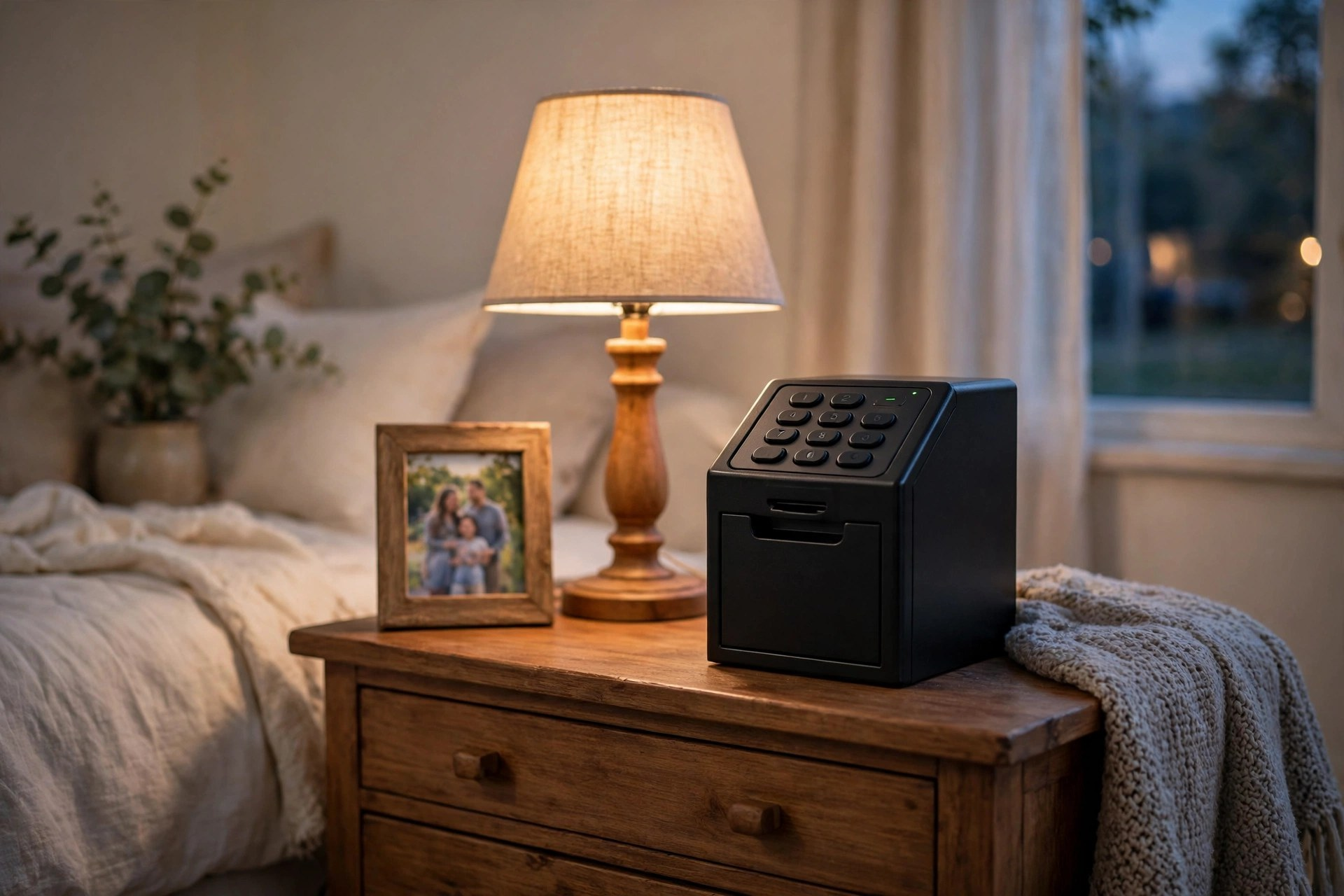
- Quick-access safes (keypad or biometric) live where you need them — bedside, entryway — and open in seconds for you while staying locked to everyone else.
- In the car, a handgun you’re not wearing belongs in a locked container, not loose in a console or bag.
National programs like Project ChildSafe exist precisely to get free cable locks and safe-storage education into gun-owning homes. The reality: children are safest in homes where firearms are stored locked, unloaded or secured, and treated with boring, consistent routine — not in homes where a gun is hidden carelessly and never discussed.
Misconception #2: “Moms Who Carry Are Paranoid”
Nobody calls a mom paranoid for buying car seats, baby-proofing cabinets, or sitting where she can see the playground. Carrying is the same category of decision: low-probability, high-stakes preparation. You don’t expect to use it. You expect to be glad it’s there if the worst day of your life ever shows up unannounced.
Our women students are teachers, nurses, real-estate agents, military spouses, and small-business owners. What they share isn’t fear — it’s the refusal to be helpless in front of their kids. That’s not paranoia. That’s parenting.
Misconception #3: “An Attacker Will Just Take It From You”
The concern sounds logical, but it quietly assumes the gun appears in a wrestling match. In reality, a responsibly carried firearm is concealed, in a proper holster with retention, and backed by training — and the decision framework matters more than the hardware:
- Situational awareness first. Most of self-defense is noticing trouble early enough to avoid it entirely — head up, phone down, keys ready, route chosen.
- Distance is the goal. A firearm is a last resort for when escape and avoidance have failed, not a tool for winning arguments or protecting property.
- Training closes the gap. Drawing from concealment, shooting accurately under stress, and knowing Virginia law are skills — and they’re exactly what separates carrying a gun from being prepared to use one lawfully.
No instructor can promise an outcome. What training does is stack every advantage on your side before a bad moment ever arrives.
Misconception #4: “Other Parents Will Judge You”
Two realities here. First: it’s called concealed carry. Done properly, nobody at the playground knows — and it’s nobody’s business, any more than your home security system is.
Second: the playdate question is becoming normal, and that’s healthy. More parents now ask, “Do you have firearms in the home, and how are they stored?” — the same way they ask about pools, dogs, and trampolines. If you’re asked, answer it the way you’d want it answered: honestly and specifically. “Yes, and they’re in a locked safe the kids can’t access” is a complete, respectable answer. If another parent’s storage answer makes you uncomfortable, that’s information — use it.
What Responsible Carry Actually Looks Like for a Mom
Storage is the foundation. Everything above rests on this: a quick-access safe at home, a locked container in the vehicle, and a hard rule that the gun is on you or locked. Every time, no exceptions for “just running upstairs.”
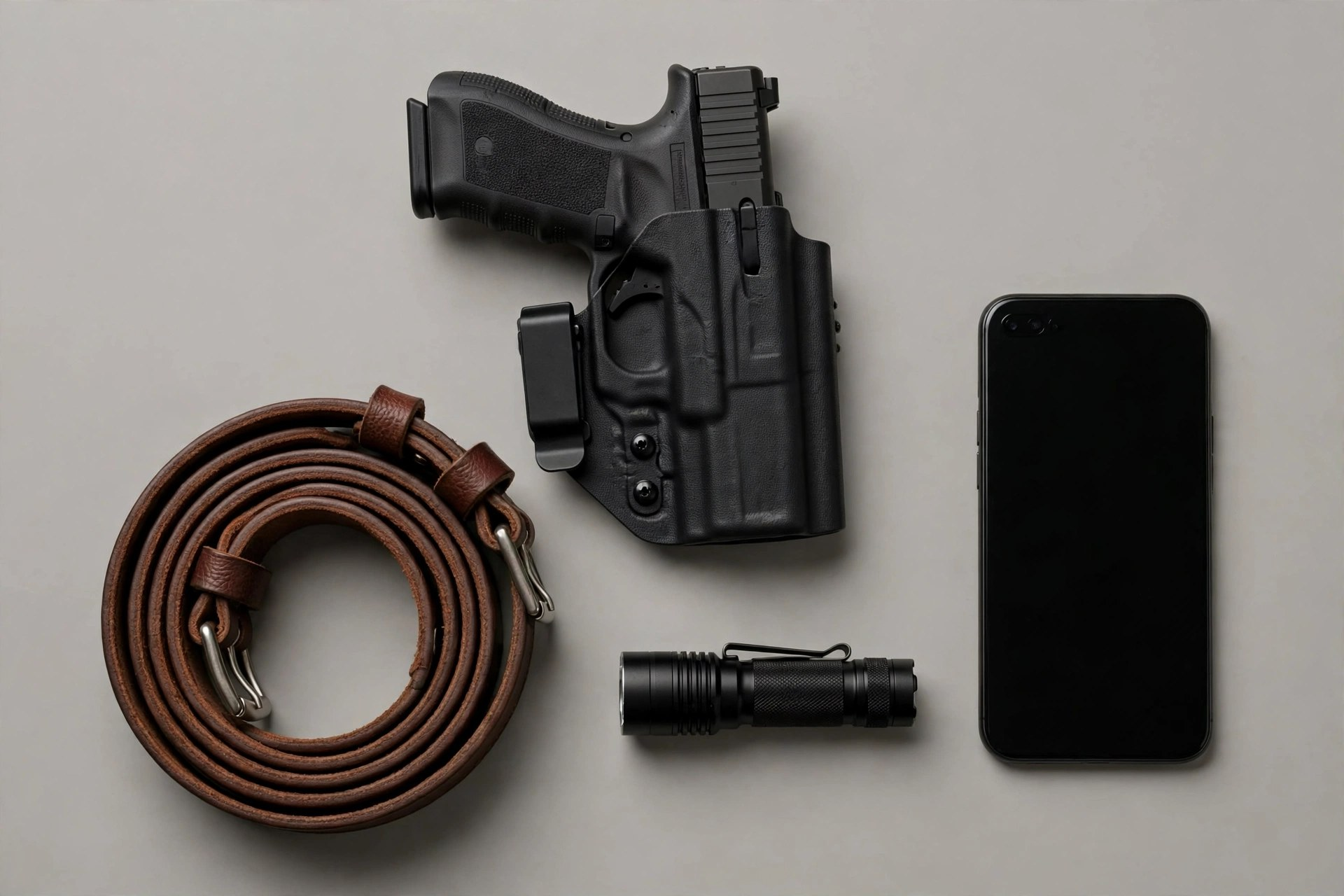
On-body carry beats purse carry for most moms. A purse gets set down — at restaurants, at church, at a friend’s house — and little hands explore purses constantly. A purse can also be snatched, and drawing from one is slow. A quality holster on your body keeps the firearm under your control, pointed safely, and accessible in about a second. If off-body carry is your only workable option some days, use a purpose-built carry bag with a dedicated holster compartment, keep it crossbody and on you, and lock the gun up the moment you’re home. Never carry in a diaper bag — it gets handed to partners, set on changing tables, and raided for snacks.
Carry methods have to survive real mom life. Test your setup with your actual routine: bending to lift a toddler, babywearing (a carrier’s waist strap can conflict with waistband carry — placement matters), seatbelts, playground climbing. A rigid holster that fully covers the trigger guard, worn consistently in the same position, is what keeps little grabbing hands and daily chaos from becoming a problem.
Teach your kids — don’t just hide it. Secrecy breeds curiosity; age-appropriate education kills it. For young children, the rule is simple and rehearsed like a fire drill: stop, don’t touch, leave the area, tell an adult. For older kids, add supervised familiarity — safe handling rules, range time with an instructor, and the understanding that the safe stays locked, period. Kids who learn that firearms are serious, boring, and rule-bound are far less tempted to sneak a look.
Virginia Permit Basics, Mom Edition
Virginia’s Concealed Handgun Permit (CHP) is straightforward: you must be 21 or older, complete in-person handgun training, apply at your circuit court clerk’s office, and the fee is capped at $50. The court must act within 45 days, and the permit is valid for five years. Our step-by-step Virginia permit guide walks the whole process, and our Virginia concealed carry class covers the training requirement in person, with plenty of moms in every class.
Two Virginia rules matter especially to parents:
- Schools are off-limits. Firearms are prohibited on K-12 school property — but permit holders may keep a concealed handgun inside their vehicle in the parking lot or drop-off loop. Stepping out of the car with it is a different story.
- Where you can’t carry still applies to you. Courthouses, secure airport areas, and any property whose owner prohibits firearms. Our Virginia self-defense laws guide covers the full map.
You can confirm current requirements anytime on the Virginia State Police website.
Concealed Carry for Moms: Frequently Asked Questions
Can I carry at my child’s school? No. Virginia bans firearms on K-12 school property. The narrow exception: permit holders may have a concealed handgun inside their vehicle in the parking lot, traffic circle, or drop-off loop — it stays in the car, and so do you.
Is purse carry ever okay? It’s the option we steer moms away from, because purses get set down and explored by kids. If it’s your only option on a given day, use a dedicated concealed-carry bag with its own holster compartment, keep it on your body, and transfer the gun to your safe as soon as you’re home.
Do I need a permit to keep a gun at home in Virginia? No permit is required to own a handgun or keep one in your home if you’re legally eligible to possess it. The CHP is what lets you carry it concealed in public. (Virginia allows open carry for eligible adults, but most moms choose concealed for practical and social reasons.)
What if my child tells their friends? It happens — and it’s fine. Decide in advance what your family rule is (“our family’s safety equipment is private, like our alarm code”), teach it calmly, and don’t make the topic feel forbidden or exciting. Matter-of-fact beats mysterious every time.
Carry Like You Mean It: Trained, Legal, and Calm
The moms who carry well have nothing to prove. Their guns are locked up or on their bodies, their kids know the rules, their permits are current, and their skills stay sharp with regular practice. That — not fear, not bravado — is what concealed carry for moms actually looks like.
As a veteran-owned company training Northern Virginia since 2012, we’ve taught thousands of women, including a whole lot of moms getting their first permit. Our women’s firearm training program was built for exactly this — a supportive, women-focused environment where you build real skill at your own pace. Pair it with our Virginia concealed carry class for your permit, then pick your date on the training calendar. Bring your questions. We’ve heard them all, and the honest ones are our favorites.
Disclaimer: Firearm laws change, and this article is for general information only — not legal advice. Always verify current requirements with the Virginia State Police or your circuit court clerk’s office.