Pack these groups before you head out: an unloaded, secured firearm for transit, spare magazines and range-approved ammunition, dual hearing protection and low-profile eye protection, a basic cleaning kit, a compact first-aid supply, lead-removal wipes and a change of clothes, plus water and weather-appropriate layers. Confirm your range’s rules and the federal transport basics before you leave, then use the grouped checklist below to fill in the details.
TL;DR:
- NIOSH recommends wearing foam earplugs beneath earmuffs because firearm blasts can reach roughly 144 to 172 decibels, while one layer may not suffice.
- Thick temple pieces on safety glasses can break earmuff seals; test the fit together and use low profile eyewear to protect hearing.
- After shooting, use lead removing wipes, wash your hands before eating or drinking, and bag clothes and shoes separately to limit contamination at home.
- Federal rules require unloaded firearms inaccessible from the passenger compartment; without a separate trunk, use a locked container, not the glove box or console.
- Check range rules for ammunition, targets, holsters, waivers, and equipment before leaving, since requirements differ and may restrict items such as optics or tripods.
Table of Contents
- 1. Core range bag essentials you shouldn’t skip
- 2. Hearing and eye protection: why double protection and fit matter
- 3. Tools and maintenance for a smoother session
- 4. Lead hygiene and contamination controls
- 5. Range rules, transport basics, and pre-visit checks
- 6. Comfort and weather items worth packing
- 7. Optional gear and upgrades worth considering
- 8. Packing, labeling, and organization tips
- 9. Trainer perspective: habits that prevent common packing mistakes
- 10. Put your checklist into practice with hands-on instruction
- FAQ
- Sources
1. Core range bag essentials you shouldn’t skip
Your range bag checklist starts with the items that make a trip possible at all: the firearm itself, the ammunition, and the protective gear that keeps you safe once you’re on the line. Everything else supports these five groups.
- Firearm items: an unloaded firearm in a locked case, a chamber flag if your range requires one, and spare magazines or speedloaders.
- Ammunition: range-approved rounds in labeled containers, counted before you leave home so you know exactly what you’re carrying.
- Primary PPE: foam earplugs plus well-seated earmuffs, low-profile safety glasses, and spare batteries for any electronic hearing protection.
- First aid: a compact trauma kit with bandages, antiseptic wipes, disposable gloves, and hemostatic gauze or a tourniquet if you’re trained to use one.
- Field cleaning: a bore snake or brush, a small bottle of solvent or lube, cloths, a small screwdriver or sight tool, plus a pen and tape for marking targets.
NIOSH recommends wearing both earplugs and earmuffs together during live fire, since firearm noise can hit levels that single protection doesn’t fully address. That one habit belongs at the top of every range bag checklist, right alongside your ammo count.
2. Hearing and eye protection: why double protection and fit matter
Firearm discharge produces peak sound levels that can range from roughly 144 to 172 dB SPL depending on the firearm, well above what a single layer of hearing protection reliably handles. That’s why NIOSH recommends wearing foam earplugs under earmuffs rather than choosing one or the other.
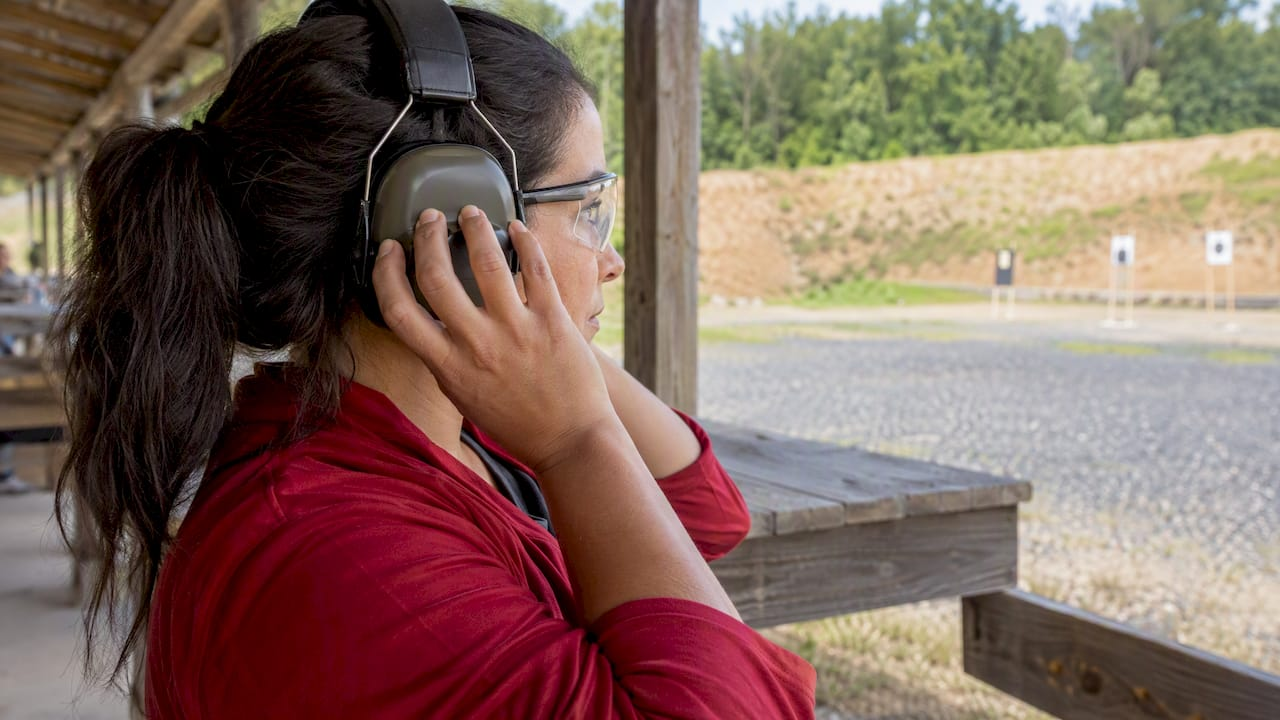
Eyewear and earmuffs have to work together, not against each other. Thick-templed safety glasses can break the seal of your earmuffs and create an acoustic leak, so low-profile eyewear, or glasses seated carefully under the ear cup, protects both your eyes and your hearing at the same time.
Pack these specifically for hearing and eye protection:
- Foam earplugs, with at least one spare pair in a side pocket.
- Electronic, level-dependent earmuffs, along with spare batteries.
- Low-profile safety glasses or a retention strap that keeps them snug under earmuffs.
Pro Tip: Try on your glasses and earmuffs together before you load up, not after you’re already on the firing line.
3. Tools and maintenance for a smoother session
A short field-cleaning kit keeps minor malfunctions from ending your trip early. Pack a bore snake or small brush, a travel-size bottle of lubricant, a few cloths, a compact screwdriver set or sight tool, a multitool, and a flashlight for low-light bays.
- Spare batteries for optics and electronic ear protection, grouped together so you’re not digging for them.
- Tape and a permanent marker for labeling targets, magazines, or ammo containers.
- A small flashlight for indoor ranges or early morning sessions.
Follow the range’s instructions about when tools or maintenance are permitted. Check the facility’s rules for safe handling and range etiquette.
4. Lead hygiene and contamination controls
Lead residue from primers and bullets at indoor ranges can travel home with you on your hands, clothes, and shoes. NIOSH’s guidance on indoor firing ranges identifies this transfer as a real exposure pathway, which is why hygiene supplies deserve a spot in your bag, not just an afterthought.
- Lead-removing wipes, packed where you’ll actually use them before you get back in the car.
- A small bar of soap or hand sanitizer for a quick wash before eating or drinking.
- A zip-top bag for a spare change of clothes, keeping range wear separate from everything else.
Washing your hands before you touch food, and bagging your range clothes and shoes separately, keeps lead from spreading into your vehicle or home.
5. Range rules, transport basics, and pre-visit checks
Every facility sets its own rules on ammunition types, target stands, holster use, and clothing, so a quick call or website check before you leave saves you a wasted trip. Our guide to firearm safety before your range visit walks through what most ranges expect.
Federal law also governs how you transport a firearm between states. Under 27 CFR § 478.38, firearms must travel unloaded and inaccessible from the passenger compartment, and if your vehicle has no separate trunk, the firearm or ammunition needs to be in a locked container other than the glove box or console.
- Confirm ammunition, target, and holster rules with the specific range before you go.
- Check whether waivers, sign-in sheets, or supervision requirements apply, especially for bringing minors.
- Review transport rules for your route if you’re crossing state lines.
6. Comfort and weather items worth packing
A range trip runs smoother when you’re not distracted by discomfort. Pack water and a snack, layer your clothing for temperature swings, and bring a brimmed hat to cut glare and keep brass or sun out of your eyes.
- Close-toed shoes and clothing that matches facility rules, such as crew-neck shirts and long pants.
- Sunscreen for outdoor sessions and light rain gear if the forecast calls for it.
- Small extras: insect repellent, lip balm, and hand sanitizer.
Our beginner’s guide to your first shooting experience covers what to expect if this is your first time packing for a session like this.
7. Optional gear and upgrades worth considering
Once you’ve got the fundamentals covered, a few optional items can make repeat trips easier without becoming dead weight on your first one.
- Extra magazines, a shooting mat, or your own target stands if the range allows them.
- A magnetic tool tray to keep small parts from rolling off the bench.
- Optics or a red-dot sight, with spare batteries packed alongside your other electronics.
Check your range’s equipment rules before bringing optics or a tripod, since some facilities restrict what you can set up on the line. First-timers generally do better packing light and adding gear as experience grows.
8. Packing, labeling, and organization tips
A well-organized bag saves time and keeps your hands away from ammo when you’re reaching for ear protection. Arrange items by how often you’ll need them: eye and ear protection in a top or front pocket, your locked case and spare ammo containers in the main compartment.
Label magazines and pouches so you’re not second-guessing which ammo goes where, and keep batteries grouped in a single labeled pouch. Use resealable bags for wipes and anything wet or soiled after the session.
- Unload and secure the firearm first.
- Pack PPE and magazines next, where you can reach them quickly.
- Add tools and hygiene supplies.
- Stow everything in the vehicle according to your transport rules.
Pro Tip: Keep a duplicate of your most-used small items, like batteries and earplugs, in a dedicated pouch so a forgotten item never cancels a trip.
9. Trainer perspective: habits that prevent common packing mistakes
A consistent pre-leave visual check and a post-range hygiene routine can help you catch common oversights, such as bringing the wrong ammunition, forgetting wipes, or overlooking dead batteries. Make them part of your routine.
— Dee Parker
10. Put your checklist into practice with hands-on instruction
A checklist gets you prepared, but nothing replaces practicing safe transport, PPE fit, and hygiene habits with an instructor watching over your shoulder. 
- Our Tourist Range Package gives visitors guided range time with an instructor walking through every item on this list.
- Our Private Firearm Training sessions build these habits into your routine one-on-one, at your pace.
Book a session with us and leave your next range trip better prepared than this checklist alone can make you.
FAQ
What should be the first thing I pack in a range bag?
Pack your unloaded, secured firearm first, since everything else in your bag supports safe handling and transport of that one item. From there, add magazines, ammunition, and your PPE before anything optional.
Do I really need both earplugs and earmuffs?
Yes. NIOSH recommends wearing both together because firearm sound levels can exceed what a single layer of protection handles safely.
How should I transport my firearm between states?
Under 27 CFR § 478.38, your firearm must travel unloaded and inaccessible from the passenger compartment, locked in a container other than the glove box or console if your vehicle lacks a separate trunk. Always confirm state and local laws for your specific route as well.
What’s the quickest way to reduce lead exposure after shooting?
Use lead-removing wipes and wash your hands before eating, drinking, or touching your face, and keep your range clothes and shoes separate from the rest of your belongings. NIOSH’s indoor range guidance treats this hygiene step as a core prevention measure, not an optional extra.
What should I check before bringing a new item to the range?
Call ahead or check the facility’s posted rules on ammunition types, target stands, optics, and clothing, since requirements differ by range. Our guide on firearm safety before your range visit covers the most common pre-visit checks.