Firearm safety training is defined as structured education that teaches gun owners how to handle, transport, store, and use firearms in ways that prevent injury, death, and legal liability. The National Shooting Sports Foundation (NSSF) and the NRA both recognize this training as the foundation of responsible gun ownership, not an optional add-on. Whether you are a first-time buyer in Fairfax, VA, or a veteran sharpening your skills in the DMV area, firearm safety training covers the knowledge and habits that keep you, your family, and your community safe. Trouble Defense LLC, a veteran-owned academy based in Fairfax, VA, delivers this training to beginners, experienced shooters, and everyone in between.
What does firearm safety training actually cover?
Firearm safety training involves structured education on handling, transporting, and storing firearms to prevent injury or death. That definition sounds simple, but the curriculum goes deeper than most new gun owners expect.
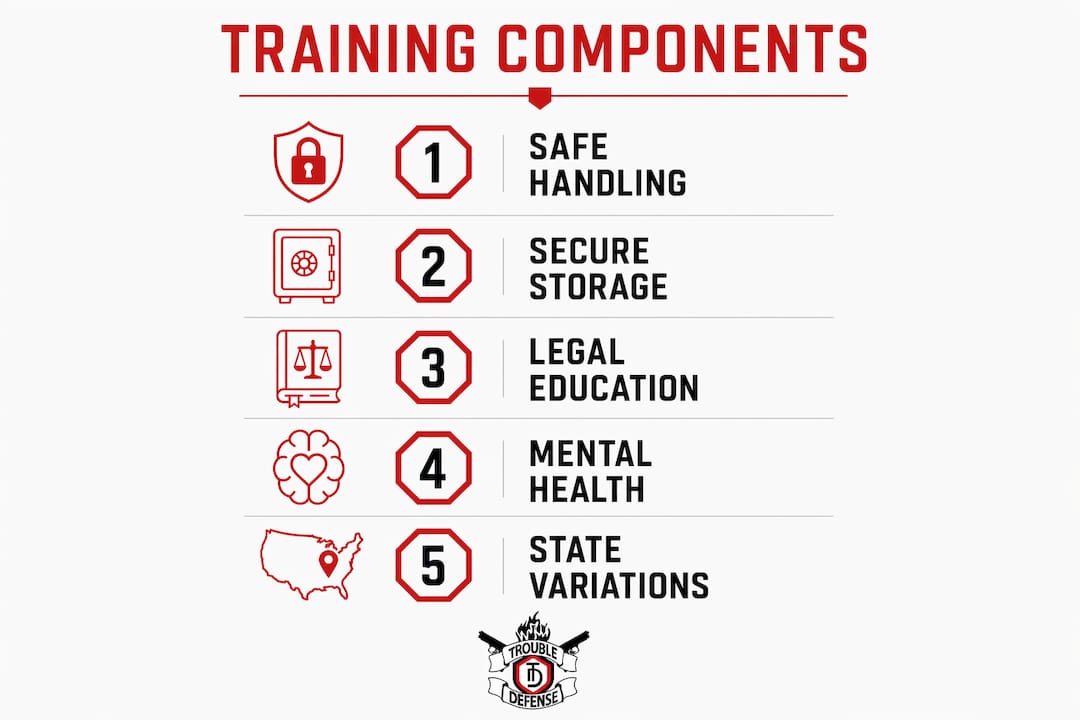
Safe handling fundamentals
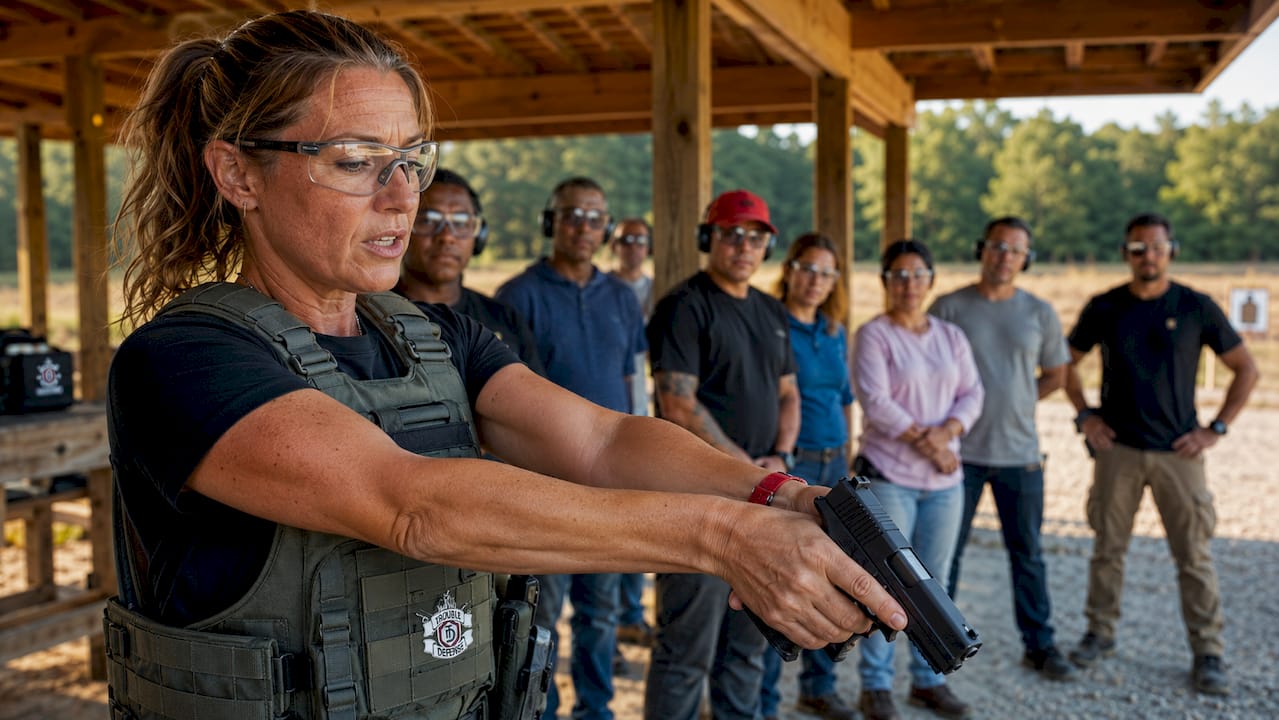
The core of any quality course is physical discipline. Students learn trigger discipline, muzzle control, and the four universal firearm safety rules. They practice loading and unloading under supervision, which is where most negligent discharges actually occur. Effective safety depends more on repeatable behavior than on mechanical safety features. A gun’s manual safety can fail or be forgotten. Trained habits do not.
Secure storage practices
Safe storage is not just about preventing theft. The NSSF’s Gun Storage Check Week campaign exists specifically to prevent children from accessing firearms and to reduce suicide risk. That campaign, which runs annually in June, distributes cable locks nationwide through Project ChildSafe. Proper storage training teaches you which lock types work for different firearms, how to balance accessibility with security, and why a loaded gun in a nightstand drawer is a liability, not a safety plan.
Legal education
Every course should cover federal law, state-specific regulations, and self-defense statutes. In Virginia, Maryland, and Washington DC, those laws differ significantly. A student who completes firearm training in Maryland without understanding the state’s Wear and Carry permit requirements is only half-educated.
Mental health awareness
California’s SB 948 explicitly requires mental health awareness as part of its mandated training content. That includes suicide prevention and domestic violence awareness. This is a growing trend in quality curricula nationwide, and it reflects a more complete understanding of firearm risk.
Pro Tip: Before enrolling in any course, ask the instructor whether the curriculum covers your state’s specific self-defense statutes. Generic courses often skip local legal nuances that matter most in a real incident.
Here is a summary of the core components you should expect in a quality firearm safety course:
- Trigger and muzzle discipline
- Loading, unloading, and malfunction clearing
- Safe storage methods and lock types
- Federal and state legal requirements
- Self-defense law and use-of-force standards
- Mental health awareness and suicide prevention
- Range safety rules and live-fire proficiency
How do training requirements vary by state?
Training requirements vary widely by jurisdiction, and confirming exact requirements before enrolling saves time and avoids compliance gaps. The table below shows how several states and jurisdictions approach mandatory firearm training.
| Jurisdiction | Required Hours | Live-Fire Required | Key Notes |
|---|---|---|---|
| California | 8 hours minimum | Yes, 1 hour | DOJ-certified instructors only; covers mental health topics |
| Colorado (2026) | Varies by prior education | Yes | Mandatory for semiautomatic rifle purchases; background check required |
| Virginia | No state mandate for purchase | Optional | Required for CHP (concealed handgun permit) application |
| Maryland | 16 hours for Wear and Carry | Yes | HQL requires 4-hour safety course; live-fire included |
| Washington DC | 2 hours minimum | Yes | Required for concealed carry license application |
California’s SB 948 training mandate sets one of the most detailed standards in the country, requiring DOJ-certified instructors and a regulated curriculum. Colorado’s 2026 program adds a new layer by mandating in-person safety courses for semiautomatic rifle purchases, with course length adjusted based on prior hunter education credentials. Both examples show a clear national trend: states are moving toward more structured, verified training requirements.
Virginia does not mandate a safety course for firearm purchases, but it does require training for a Concealed Handgun Permit (CHP). Maryland’s Wear and Carry permit requires 16 hours of instruction including live-fire. Washington DC requires a minimum of 2 hours with a live-fire component for its concealed carry license. If you live or carry across the DMV area, you may need to satisfy multiple jurisdictions’ requirements.
Trouble Defense LLC structures its courses to meet the specific requirements of Virginia, Maryland, and DC. That means students do not have to guess whether their certificate will be accepted. The instructors know the local rules because they operate within them every day.
What are the real benefits beyond legal compliance?
Legal compliance is the floor, not the ceiling. The deeper value of firearm safety training shows up in behavior, confidence, and community safety.
Disciplined habits prevent accidents
Human factors are the leading cause of negligent discharge, not mechanical failure. Complacency, distraction, and poor habits cause most firearm accidents. Training replaces those habits with automatic, disciplined responses. A trained shooter who picks up an unfamiliar firearm still checks the chamber first. That behavior is not instinctive. It is trained.
Confidence changes how you carry
Many new gun owners report feeling anxious about their firearm rather than confident. That anxiety often leads to avoidance, which means the gun sits in a drawer unused and unexercised. Quality handgun training builds the kind of familiarity that replaces anxiety with competence. You know how your firearm works, how to clear a malfunction, and how to draw safely. That knowledge changes your relationship with the tool.
Secure storage reduces community risk
The NSSF’s Project ChildSafe has distributed millions of cable locks nationwide. That program exists because unsecured firearms are a leading source of gun theft and youth accidents. When gun owners learn proper storage in a formal course, those habits extend to their households and reduce risk for everyone in the home.
Pro Tip: Treat your storage solution as part of your safety system, not an afterthought. A biometric quick-access safe gives you fast access while keeping the firearm secured from children and unauthorized users.
The practical benefits of quality training include:
- Reduced risk of negligent discharge through habit formation
- Faster, safer response in a self-defense situation
- Reduced household theft risk through proper storage
- Legal protection through documented training and certification
- Greater confidence at the range and in everyday carry situations
How do you find quality firearm training in the DMV area?
Finding the right course means looking beyond price and convenience. Instructor credentials, curriculum depth, and course format all determine whether you leave with real skills or just a certificate.
What to look for in an instructor
NRA-certified instructors and DOJ-certified instructors have completed standardized training and testing. That certification matters because it signals a minimum level of verified competency. Trouble Defense LLC’s certified NRA instructors bring military and law enforcement backgrounds to every class, which means the instruction reflects real-world application, not just textbook theory.
Course formats available in the DMV area
- Classroom-only courses cover legal education, safe handling principles, and storage practices without live-fire. These work well for Maryland HQL requirements and introductory education.
- Live-fire courses add supervised range time to classroom instruction. These are required for Virginia CHP, Maryland Wear and Carry, and DC concealed carry applications.
- Online hybrid courses combine self-paced digital instruction with an in-person live-fire session. Trouble Defense offers a multi-state online CCW class that covers multiple jurisdictions in one enrollment.
- Specialized courses address specific populations or skills, including women’s firearm training, youth firearm safety, and advanced self-defense scenarios.
Accessible firearm education for every student
Trouble Defense stands out in the DMV area for its commitment to accessible firearm education. The academy offers adaptive firearms training for blind and low-vision individuals, a program that very few training providers offer anywhere in the country. Students with physical disabilities, veterans with service-related injuries, and individuals with sensory impairments all have access to personalized instruction designed around their specific needs. That commitment to inclusion reflects a broader truth: firearm safety training is for everyone who owns or uses a firearm, regardless of background or ability.
For beginners in Virginia, Maryland, or Washington DC, the first-time owner guide on the Trouble Defense website walks through exactly what to expect from the certification process before you ever step into a classroom.
Key takeaways
Firearm safety training is the structured foundation that separates responsible gun ownership from dangerous guesswork, and every owner benefits from it regardless of experience level.
| Point | Details |
|---|---|
| Training covers more than handling | Quality courses include legal education, storage practices, and mental health awareness. |
| Requirements vary by jurisdiction | Virginia, Maryland, and DC each have different hour and live-fire mandates for permits. |
| Habits matter more than hardware | Disciplined behavior prevents negligent discharge more reliably than mechanical safeties. |
| Accessible education exists | Adaptive programs from providers like Trouble Defense serve shooters of all abilities. |
| Compliance is the starting point | Legal certification is the floor; ongoing practice builds the real-world competence that matters. |
Why i think most gun owners underestimate training
I have worked with hundreds of students at Trouble Defense, and the pattern I see most often is this: people treat their initial certification as the finish line. They complete the course, get the certificate, and assume they are done. That mindset is the most common gap I encounter in firearm education.
The truth is that a four-hour course teaches you the rules. It does not build the muscle memory that keeps you safe under stress. A student who shoots once at certification and then stores the firearm for two years has not retained the skills that course was designed to build. Mechanical skills decay without practice. Legal knowledge becomes outdated as laws change. The DMV area has seen significant shifts in concealed carry law over the past few years, and students who trained in 2021 may be operating on outdated information right now.
What I tell every student is this: treat training as a discipline, not an event. Schedule range time quarterly. Review your state’s self-defense statutes annually. Take an advanced course when your skills plateau. The gun owners who handle their firearms most safely are not the ones with the most expensive equipment. They are the ones who practice the most consistently.
Families benefit from this mindset too. If a firearm is in your home, every adult in that household should understand safe handling and storage. That shared responsibility is what actually reduces household accidents. One trained owner in a home with untrained family members is a partial solution at best.
— Dee Parker
Start your training with trouble defense
Trouble Defense serves Virginia, Maryland, and Washington DC with a full schedule of firearm safety courses taught by NRA-certified instructors with real-world experience. Whether you need a beginner handgun course, a Maryland Wear and Carry certification, a Virginia CHP class, or self-defense firearm training, the academy has a course designed for your goal.
Trouble Defense also offers adaptive training for individuals with disabilities, women’s firearm training, and youth safety education. With over 300 five-star Google reviews, the academy has built its reputation on students who leave confident, certified, and genuinely prepared. Browse the training calendar to find the next available class in your area and register directly online. Safe, legal firearm ownership starts with the right instruction.
FAQ
What is firearm safety training?
Firearm safety training is structured education that teaches gun owners how to handle, store, transport, and use firearms safely and legally. It covers safe handling rules, secure storage, legal responsibilities, and live-fire proficiency depending on the course level.
Is firearm safety training required by law?
Requirements depend on your state and the type of permit you are seeking. Maryland requires 16 hours of training for a Wear and Carry permit, while Virginia requires a safety course for a Concealed Handgun Permit but not for firearm purchase.
How long does a firearm safety course take?
Course length varies by jurisdiction and format. California mandates at least 8 hours including 1 hour of live-fire, while introductory courses in Virginia and Maryland can range from 4 to 16 hours depending on the permit type.
Does trouble defense offer training for beginners?
Yes. Trouble Defense offers beginner firearm courses in Virginia, Maryland, and DC designed for students with no prior experience, covering safe handling, range fundamentals, and legal basics in a supportive environment.
What is adaptive firearms training?
Adaptive firearms training is instruction modified for individuals with physical, visual, or other disabilities. Trouble Defense offers specialized programs for blind and low-vision students, making firearm safety education accessible regardless of ability.