Documentation firearm safety completion is the official proof that you passed a recognized firearm safety course, and it is required by law in most U.S. states before you can purchase, carry, or transfer a firearm. This documentation takes several forms, from paper certificates to digital records, and each state sets its own standards for what counts as valid. In Virginia, Maryland, and Washington DC, the requirements are specific and getting them wrong delays purchases, voids carry permits, and creates legal exposure. This guide covers every document type, the step-by-step process for earning valid credentials, and the compliance rules you need to follow in 2026.
What documentation proves firearm safety course completion?
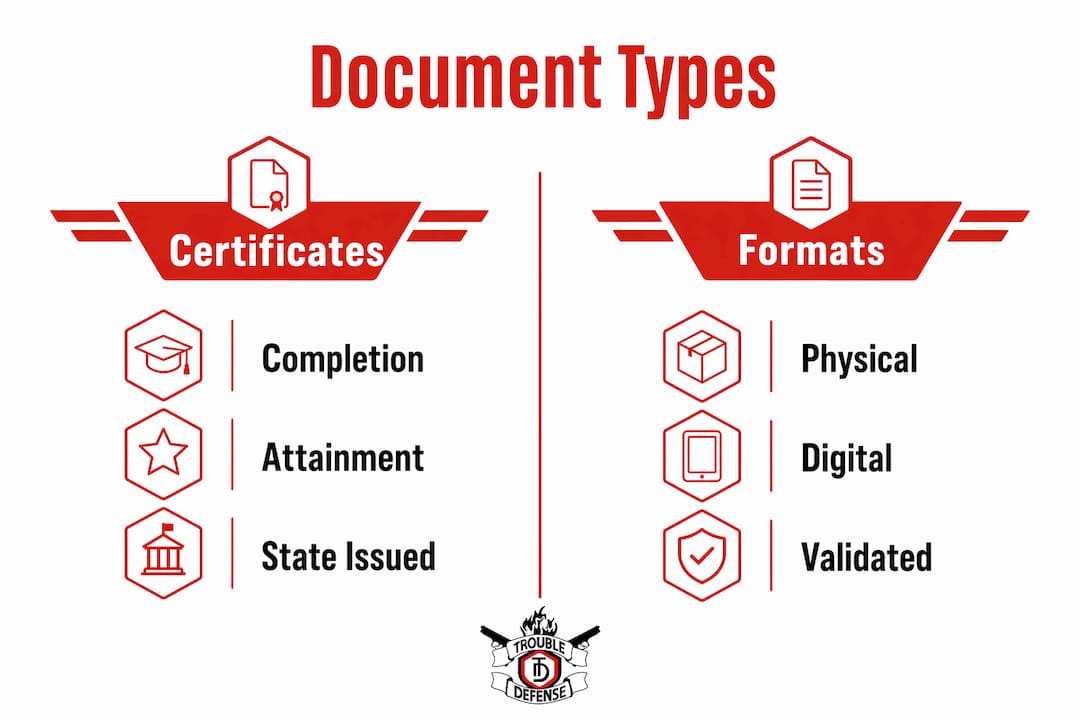
Firearm safety course completion documentation falls into three recognized categories: certificates of completion, Statements of Attainment, and state-issued Basic Firearm Safety Certificates. Each carries different legal weight depending on your jurisdiction.
Certificates of Completion are the most common format. A certified instructor issues them after you finish classroom instruction and a live-fire component. They typically include your full name, the course name, the instructor’s NRA or state certification number, and the date of completion.
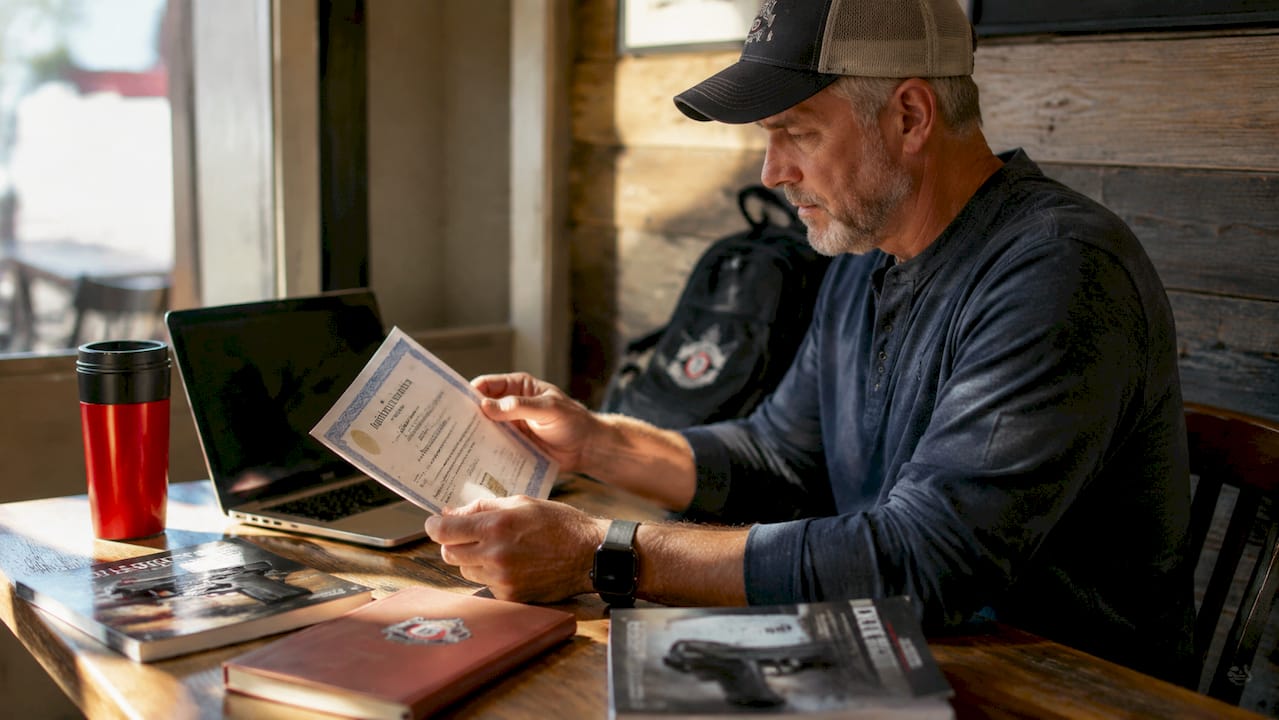
Statements of Attainment are used in nationally standardized training programs. In Queensland, Australia, for example, the official Statement of Attainment is nationally recognized for licensing and is emailed within 10 days of completing an 8-hour course. That model reflects a growing global standard: documented, time-stamped, and digitally delivered.
Basic Firearm Safety Certificates are state-issued documents, most notably in Massachusetts and California. Massachusetts mandates live-fire training and injury prevention curriculum, and instructor certificates are valid for 10 years with strict renewal fees. Issuing a certificate to an unqualified person carries criminal penalties including fines and imprisonment.
Comparing common document types
| Document Type | Issuing Authority | Typical Validity |
|---|---|---|
| Certificate of Completion | Certified instructor or training academy | Varies by state (1–5 years) |
| Statement of Attainment | Nationally accredited training provider | 12 months (some jurisdictions) |
| Basic Firearm Safety Certificate | State agency or licensed instructor | 5–10 years |
| ATF Form 4473 | Federal Firearms Licensee (FFL) | 30 days (background check window) |
| Concealed Carry Course Certificate | State-approved instructor | Tied to permit renewal cycle |
Digital certificates are now accepted in most states, but you must confirm acceptance with your state’s issuing authority before relying on a PDF alone. Virginia and Maryland both recognize digital certificates when they include verifiable instructor credentials. For a clear breakdown of the firearm safety certificate steps, Trouble Defense has published a first-time owner guide that walks through each requirement.
How do you complete firearm safety training and get valid documentation?
The process for earning valid gun safety documentation follows a consistent structure across most states, though the specifics vary by jurisdiction. Here are the core steps:
- Confirm eligibility. You must meet the minimum age requirement (typically 18 for rifles and shotguns, 21 for handguns) and present a valid government-issued photo ID at enrollment.
- Choose a state-approved course. Not every firearm safety class produces legally valid documentation. In Virginia and Maryland, the instructor must hold active NRA certification or equivalent state credentials. Trouble Defense employs certified NRA instructors who meet all state requirements.
- Complete classroom instruction. Most courses cover the four fundamental safety rules, safe storage, legal use of force, and state-specific laws. Colorado requires a minimum of 4 hours for students with prior hunter education and 12 hours for beginners spread across at least 2 days, with a 90% passing score on the final exam.
- Pass the live-fire component. This is non-negotiable in most states. Certificates without verified hands-on testing are often legally invalid. Online-only courses do not satisfy live-fire requirements in Virginia, Maryland, or DC.
- Pass the written exam. California requires employees involved in firearm transfers to pass annual training with at least 70% accuracy and retain proof for inspections. Most personal ownership courses set similar thresholds.
- Receive your certificate. Instructors issue certificates in person or via email, typically on the day of completion or within a few business days. Keep both a physical copy and a digital backup.
Pro Tip: Before enrolling, ask the instructor for their NRA certification number or state license number and verify it directly with the issuing body. An invalid instructor credential means your certificate will not hold up during a background check or permit application.
The completion of firearm safety training is not just a box to check. It is the foundation of every legal firearm transaction you will make going forward.
What are the legal and compliance implications of firearm safety documentation?
Proper documentation for gun training directly affects your ability to purchase a firearm, apply for a concealed carry permit, and pass a background check. The legal chain is tighter than most people realize.
ATF Form 4473 is the federal document that records every firearm purchase from a licensed dealer. It verifies your identity, initiates a NICS background check, and must be completed in person. The background check tied to this form is valid for only 30 days. Many applicants do not realize that if the transfer is not completed within that window, the process restarts and costs additional time and money.
Compliance experts confirm that cross-referencing your government-issued photo ID with the address on your Form 4473 is mandatory. Any mismatch requires supplemental documentation or the transfer is rejected. This is where incomplete or outdated firearms education paperwork creates real problems.
Common compliance mistakes to avoid
- Submitting a certificate from an instructor whose credentials have lapsed
- Using a digital certificate in a state that requires an original paper document
- Failing to renew your firearm safety certificate before applying for a carry permit
- Assuming an out-of-state certificate satisfies your current state’s requirements
- Missing the 30-day NICS window after initiating a purchase
“Documentation is a key safeguard in preventing illegal firearm transfers by ensuring proper identity verification and compliance at every transaction stage.” — ATF Form 4473 Guide, e4473.com
Federal record-keeping rules are also tightening. Electronic record-keeping systems for firearm transactions must retain full edit histories, perform daily backups, and meet a 20-year minimum retention standard. That means the records your instructor and dealer keep about your training and purchase must be preserved for two decades. Choosing a training provider with professional documentation practices protects you long after the course ends.
How should you store and maintain your firearm safety documentation?
Secure storage of your firearms education paperwork is as important as earning it. Lost or damaged certificates create delays at the worst possible moments, including during permit renewals and firearm transfers.
The best approach combines physical and digital storage. Keep the original certificate in a fireproof document safe alongside your state ID, carry permit, and any other legal firearm documents. Store a scanned PDF copy in a password-protected cloud service such as Google Drive or iCloud. Email a copy to yourself as a dated record.
Tracking expiration dates is where most gun owners fall short. Industry professionals must maintain ongoing documentation like Certificates of Eligibility with possible annual renewals. Failure to maintain current documentation results in compliance loss, which can block a purchase or void a permit mid-cycle.
Pro Tip: Set a calendar reminder 90 days before your certificate’s expiration date. That gives you enough time to schedule a refresher course, complete the live-fire requirement, and receive updated documentation before your current credentials lapse.
If your certificate is lost or damaged, contact the issuing instructor or training academy immediately. Most certified providers keep records for several years and can reissue documentation. Trouble Defense, for example, maintains student records and can assist with reissuance requests. If the original instructor is no longer available, you may need to retake the course, so proactive storage is always the better option.
For those managing documentation across multiple states, such as Virginia and Maryland residents who hold both a Virginia CCW and a Maryland Wear and Carry permit, keep a dedicated folder for each jurisdiction. Requirements for firearm safety course renewal differ between states, and mixing documents creates confusion during audits or permit renewals.
Key takeaways
Valid firearm safety documentation is the legal foundation for every firearm purchase, carry permit, and transfer you complete, and managing it proactively prevents costly delays.
| Point | Details |
|---|---|
| Documentation types vary by state | Certificates, Statements of Attainment, and state-issued cards each carry different legal weight. |
| Live-fire is legally required | Certificates from online-only courses are invalid in Virginia, Maryland, DC, and most other states. |
| ATF Form 4473 has a 30-day window | The NICS background check expires in 30 days, so timing your documentation matters. |
| Store both physical and digital copies | A fireproof safe plus cloud backup protects you if originals are lost or damaged. |
| Renewal is ongoing, not one-time | Track expiration dates and schedule refreshers at least 90 days before credentials lapse. |
What i have learned about documentation after years in the field
By Dee Parker
After years of working with students across Virginia, Maryland, and DC, the single biggest mistake I see is treating documentation as an afterthought. People focus on the shooting skills, which is right, but they hand their certificate to a dealer six months later and discover it expired, or the instructor’s credentials were never valid to begin with.
The 2026 federal push toward electronic record-keeping with 20-year retention minimums is a signal that documentation standards are only going up. States are not loosening requirements. They are adding layers. Virginia and Maryland have both tightened their instructor verification standards in recent years, and DC’s concealed carry process remains one of the most document-intensive in the country.
My honest advice: treat your firearm safety certificate the way you treat your passport. You would not let your passport expire and then try to board a flight. Do not let your training credentials lapse and then walk into a dealer expecting a smooth transfer.
The other thing I push hard on is instructor verification. I have seen students arrive at Trouble Defense after paying for a course elsewhere, only to find out the instructor was not properly credentialed. Their certificate was worthless. That is a painful and expensive lesson. Verify credentials before you pay, not after.
Proactive documentation management is not bureaucratic overhead. It is what separates a lawful, confident firearm owner from someone who gets turned away at the counter. Firearm Safety Documentation: 2026 Compliance
— Dee Parker
Get certified with trouble defense in VA, MD, and DC
Trouble Defense is a veteran-owned firearms training academy based in Fairfax, VA, serving students across Virginia, Maryland, and Washington DC. Every course is led by certified NRA instructors who issue legally valid completion certificates on the day of training.
Whether you are a first-time owner looking for beginner firearm training or an experienced shooter pursuing a Virginia CCW, Maryland Wear and Carry permit, or DC concealed carry certification, Trouble Defense has a course built for your situation. Programs also include women’s firearm training, adaptive training for blind and low-vision individuals, and youth firearm safety education. Check the training calendar to find upcoming classes and reserve your spot today.
FAQ
What counts as valid firearm safety course completion documentation?
Valid documentation includes a certificate of completion issued by a state-approved or NRA-certified instructor, a state-issued Basic Firearm Safety Certificate, or a nationally recognized Statement of Attainment. The certificate must include the instructor’s credentials, your name, the course date, and the course title.
Does an online firearm safety course satisfy documentation requirements?
Online theory training is widely available, but most states including Virginia, Maryland, and DC require a live-fire component completed in person before issuing a valid certificate. Certificates from online-only courses are legally insufficient in these jurisdictions.
How long is a firearm safety certificate valid?
Validity periods vary by state. Colorado certificates are valid for 5 years, Massachusetts instructor certificates are valid for 10 years, and some state-specific carry course certificates are tied to permit renewal cycles. Always check your state’s current requirements before assuming your documentation is still active.
What happens if my firearm safety documentation is lost?
Contact the original training provider immediately. Most certified academies retain student records and can reissue documentation. If the provider is no longer available, you will likely need to retake the course to obtain new valid credentials.
How does firearm safety documentation connect to ATF form 4473?
ATF Form 4473 records the firearm purchase and initiates a NICS background check, which is valid for only 30 days. While the form itself does not require a training certificate, your carry permit application does, and that permit is often required before or alongside a purchase in permit-to-purchase states.