A concealed carry purse is a specialized self-defense tool, not just a bag, and carrying one safely requires the right design, disciplined habits, and consistent training. Off-body carry, the industry term for carrying a firearm outside a body holster, gives women a practical option when clothing or comfort rules out on-body carry. This concealed carry purse safely guide covers every step: which features matter, how to set up your bag, how to practice your draw, and how to stay in control at all times. Get these fundamentals right, and purse carry becomes a reliable part of your personal protection plan. Concealed Carry Purse Safety Guide.
Which features make a concealed carry purse safe and effective?
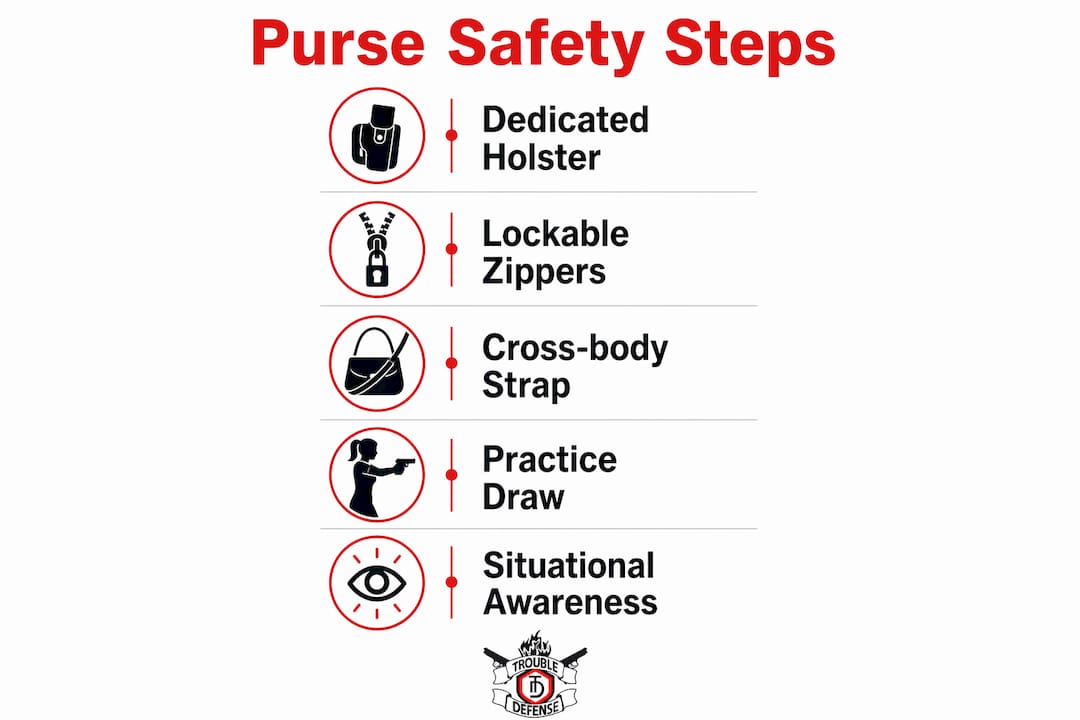
The single most important feature in any women’s concealed carry bag is a dedicated, isolated holster compartment. This compartment sits completely separate from your wallet, keys, and phone. It holds the firearm in a fixed position so the trigger guard stays covered and the grip faces the same direction every time you reach for it. Dedicated holster compartments prevent shifting, snagging, and unauthorized access in ways that a standard purse never can.
Lockable zippers are the second feature you cannot skip. Lockable zippers or compartments, ideally with combination or key locks, prevent unauthorized access during the inevitable moments the purse leaves your hand. A zipper pull that a child or thief can open in two seconds defeats the purpose of carrying at all. Look for metal hardware, not plastic, and test the zipper track for smooth, snag-free movement before you buy.
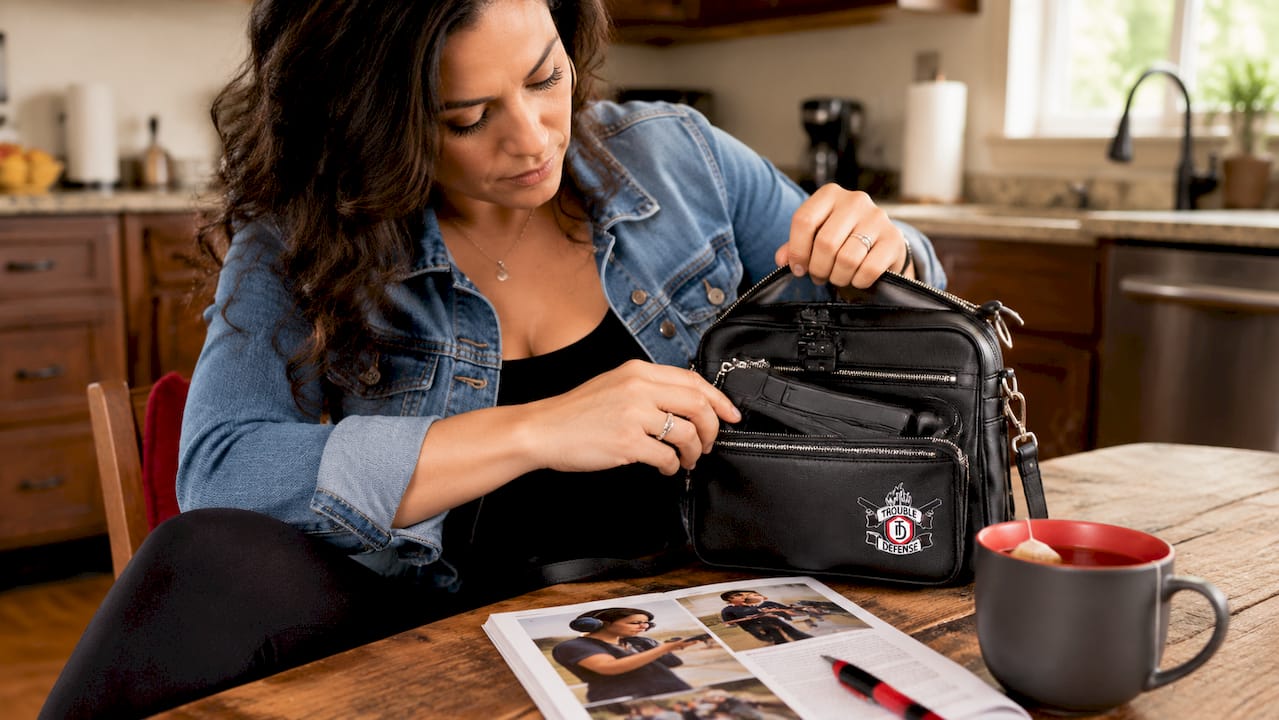
Strap design matters more than most buyers realize. Cross-body straps keep the bag attached to your body, which directly reduces theft risk. Cross-body bags significantly reduce the risk of purse theft in public compared to shoulder bags that can be grabbed and pulled away. A wide, reinforced strap also distributes weight better, which matters when you carry a loaded firearm all day.
Key concealed carry purse features at a glance
| Feature category | What to look for | Why it matters |
|---|---|---|
| Safety | Isolated holster compartment with trigger guard coverage | Prevents accidental discharge and snagging |
| Security | Lockable zippers, metal hardware | Blocks unauthorized access, including by children |
| Accessibility | Consistent firearm orientation, smooth zipper track | Supports fast, reliable draw under stress |
| Construction | Cut-resistant strap, sturdy frame | Resists grab-and-run theft attempts |
| Carry style | Cross-body design | Keeps purse attached to your body at all times |
Pro Tip: Before you buy, practice opening the holster compartment with one hand while your eyes are closed. If you fumble for more than two seconds, the design is wrong for carry.
How to prepare your purse and firearm for safe carry
Safe setup starts before you ever leave the house. The firearm must sit inside a dedicated holster that fits your specific model. A holster fully covers the trigger guard and holds the gun at a fixed angle. Without a dedicated holster inside the purse, loose items can contact the trigger and cause an accidental discharge.
Follow these steps every time you load your concealed carry bag:
- Insert the holster first. Attach or place the holster in the dedicated compartment before anything else goes in the bag.
- Holster the firearm at home. Never drop a loose gun into the compartment. The firearm goes into the holster, then the holster goes into the compartment.
- Orient the grip consistently. Position the grip so your hand finds it the same way every single draw. Pick a direction and never change it.
- Close and lock the compartment. Zip and lock the holster section before you pick up the bag.
- Check for overpacking. Press gently on the outside of the holster compartment. If you feel resistance from other items, remove them. Pressure on the firearm area creates snag risk.
- Confirm the main compartment is separate. Keys, pens, and loose items must never share space with the firearm. Loose items increase the risk of snagging the trigger or slowing your draw.
Purse carry preparation checklist
| Step | Completed? |
|---|---|
| Holster fits firearm model | Yes / No |
| Firearm holstered before entering compartment | Yes / No |
| Grip orientation consistent and confirmed | Yes / No |
| Holster compartment locked | Yes / No |
| No loose items in firearm compartment | Yes / No |
| Strap adjusted for cross-body carry | Yes / No |
Pro Tip: Stage your purse the night before. Running through the checklist when you are calm and unhurried is far safer than doing it in a rush on the way out the door.
How to practice drawing from a concealed carry purse
Draw speed from a purse is slower than from an on-body holster. Draws from purse carry are on average 300% slower than from on-body holsters, increasing from roughly 2 seconds to 6 seconds. That gap is real and it has consequences in a self-defense situation. The only way to close it is deliberate, repeated practice.
Dry-fire practice at 10 repetitions twice a week builds the muscle memory needed for a smooth draw. Regular practice prevents fumbling under the high stress of an actual threat. Use an unloaded firearm and confirm it is clear before every dry-fire session.
The draw from a concealed carry purse follows five distinct stages:
- Unzip. Use your dominant hand to open the holster compartment in one clean motion.
- Grip. Establish a full firing grip on the firearm while it is still in the holster.
- Clear the purse. Draw the firearm straight up and out of the compartment.
- Support hand. Bring your support hand to meet the firearm as it clears the bag.
- Present. Extend toward the target with a two-hand grip, finger off the trigger until you are ready to fire.
Regular purposeful practice with an unloaded firearm builds confidence and safer handling under stress. Skipping practice and assuming you will perform well under pressure is the most dangerous mistake a purse carrier can make.
Pro Tip: Film yourself during dry-fire sessions. Watching the footage reveals grip errors and zipper fumbles you cannot feel in the moment.
Trouble Defense offers holster draw training in the DC, Maryland, and Virginia area with structured drills that include purse carry scenarios. Certified NRA instructors there will identify and correct technique errors that solo practice misses.
How to maintain control and situational awareness with a carry purse
Purse control is not optional. It is the core discipline that separates safe purse carry from reckless carry. A purse containing a firearm must never be left unattended. Loss or theft means losing weapon control entirely, which raises the risk of the firearm reaching a criminal or a child.
Build these habits into every outing:
- Wear it cross-body, always. The strap goes across your chest, not over one shoulder. Situational awareness combined with cross-body carry reduces theft risk substantially compared to shoulder-style bags.
- Never set it down in public. Restaurants, shopping carts, restroom hooks, and office chairs are all off-limits. The purse stays on your body.
- Lock the compartment when you are not holding the bag. If you must set it down at home, lock the holster compartment immediately.
- Stay alert in crowded spaces. Thieves target distracted carriers. Keep one hand on the bag in busy areas like transit stations and markets.
- Keep children away from the bag. Treat the purse the same way you treat a loaded firearm. It is a loaded firearm.
- Avoid handing the purse to others. Even briefly passing your bag to a friend transfers firearm control to someone who may not be trained.
Pro Tip: Practice self-defense awareness habits in everyday situations. Knowing how thieves approach targets helps you position your body and bag to reduce risk before a threat develops.
What are the limitations and risks of purse carry?
Purse carry has real tactical disadvantages, and every woman who chooses it deserves an honest picture of those trade-offs. Off-body carry risks include slower draw times and a higher risk of separation from the firearm. Only choose purse carry after weighing your lifestyle needs against those tactical drawbacks.
The core limitations are:
- Slower draw. A 6-second draw versus a 2-second on-body draw is a significant gap in a fast-moving threat scenario.
- Separation risk. Any moment the purse leaves your body is a moment you are unarmed and the firearm is unsecured.
- Clutter interference. Mixing items in the firearm compartment creates snag risk and slows access.
- Theft equals disarmament. A stolen purse does not just cost you your wallet. It puts a loaded firearm in a stranger’s hands.
“A purse must be treated as a specialized part of your self-defense system, not just a storage bag. Mixing other items in the gun compartment compromises both safety and accessibility. Only choose purse carry after weighing your lifestyle needs and the real tactical drawbacks of off-body carry.”
On-body carry options, including inside-the-waistband holsters, appendix carry rigs, and belly bands, all offer faster draw times and tighter firearm control. They are worth serious consideration even if purse carry is your primary method. Understanding concealed carry tactics in full gives you the context to make that decision well.
Purse carry makes the most sense when clothing genuinely prevents on-body carry, when you have trained specifically for it, and when you commit to the control habits described above. It is a valid choice. It is not a casual one.
Concealed Carry Purse Safety Guide Key Takeaways
A concealed carry purse is only as safe as the design you choose, the habits you build, and the training you put in.
| Point | Details |
|---|---|
| Dedicated holster compartment | The firearm must sit in an isolated, trigger-covered holster inside a locked compartment. |
| Cross-body carry style | Cross-body straps keep the purse attached to your body and reduce theft risk significantly. |
| Consistent draw practice | Dry-fire practice at 10 reps twice a week builds the muscle memory needed for a reliable draw. |
| Strict purse control | Never leave the purse unattended. Loss or theft means losing control of a loaded firearm. |
| Know the trade-offs | Purse carry draws average 300% slower than on-body holsters. Train and plan accordingly. |
What I’ve learned from years of watching women carry purses
I have seen women walk into a training class with a beautiful concealed carry bag and zero idea of what they had signed up for. The purse looked right. The firearm was loaded. But the holster compartment held lip balm, a charging cable, and a granola bar alongside the gun. That is not carry. That is a liability.
Purse carry is a legitimate method, and I respect every woman who chooses it thoughtfully. What I push back on is the idea that buying the right bag is the hard part. The bag is the easy part. The hard part is the discipline: locking the compartment every single time, never setting the bag down, practicing the draw until it is automatic, and honestly asking yourself whether your lifestyle actually supports this carry method.
The women I have seen carry purses most effectively treat the bag the way a surgeon treats a scalpel. It has one purpose. It stays in their control. They practice with it. They do not lend it, forget it, or stuff it full of clutter. That level of intentionality is what separates a self-defense tool from a safety hazard.
My honest recommendation: if you are considering purse carry, get professional training before you carry in public. Not a YouTube video. Not a range session with a friend. Structured instruction from a certified instructor who can watch your draw, correct your grip, and tell you the truth about your readiness. The stakes are too high for anything less.
— Dee Parker
Trouble Defense and women’s concealed carry training
Women who carry, or plan to carry, deserve instruction built around their specific needs and carry methods. Trouble Defense, a veteran-owned training academy in Fairfax, VA, offers women’s firearm training designed to build real confidence, not just certification. Programs cover Virginia CCW classes, Maryland Wear and Carry permits, and DC concealed carry training, with curriculum that includes holster draw technique for both on-body and off-body carry.

Certified NRA instructors at Trouble Defense work with students at every level, from first-time carriers to experienced shooters refining their technique. If purse carry is part of your plan, the firearm safety training program gives you the foundation to do it right. Contact Trouble Defense to schedule your class and carry with the confidence that comes from real preparation.
FAQ
What makes a purse a true concealed carry purse?
A true concealed carry purse has a dedicated, isolated holster compartment that covers the trigger guard and keeps the firearm in a fixed orientation. Standard purses without this feature are not safe for firearm carry.
How much slower is a purse draw compared to on-body carry?
Draws from a concealed carry purse average 300% slower than from on-body holsters, roughly 6 seconds versus 2 seconds. Regular dry-fire practice reduces that gap but does not eliminate it entirely.
Can I use any holster inside a concealed carry purse?
The holster must fit your specific firearm model and fully cover the trigger guard. A universal or ill-fitting holster creates snag risk and can allow trigger contact from other items in the compartment.
How often should I practice drawing from my carry purse?
Firearms instructors recommend dry-fire draw practice at 10 repetitions twice a week. Consistent practice builds the muscle memory needed to draw smoothly under stress.
Is purse carry legal in Virginia, Maryland, and DC?
Purse carry is legal with a valid concealed carry permit in Virginia and Maryland. DC has its own permit requirements. Trouble Defense offers DMV concealed carry training that covers the specific permit requirements for each jurisdiction.