A gun safety course is a formal training program that teaches individuals how to handle, store, and operate firearms safely, covering everything from foundational safety rules to legal responsibilities. Whether you are a first-time gun owner in Virginia, a Maryland resident pursuing a Wear and Carry permit, or a concerned citizen who simply wants to understand responsible ownership, this type of structured firearm safety training program gives you the knowledge and confidence to handle a gun without putting yourself or others at risk. These courses exist in multiple formats, from two-hour online modules to five-hour in-person sessions with live-fire exercises, and they serve both legal compliance and personal safety goals.
What is a gun safety course and what does it cover?
A gun safety course is a structured curriculum built around three non-negotiable behavioral rules: treat every firearm as if it is loaded, never point a gun at anything you are not willing to destroy, and keep your finger off the trigger until you are ready to shoot. These three core safety rules form the muscle memory foundation that prevents accidents, and every reputable course builds its entire curriculum around them.
Beyond those rules, a well-designed course covers the following core areas:
- Firearm parts and operation. Students learn the anatomy of common handguns, rifles, and shotguns, including how to safely load, unload, and clear malfunctions.
- Marksmanship fundamentals. Stance, grip, sight alignment, sight picture, and trigger control are all taught in sequence. These mechanics matter even if you never plan to compete.
- Safe storage and transport. Courses cover federal and local storage and transport laws, including requirements specific to Virginia, Maryland, and DC. Knowing these rules protects you from accidental legal violations.
- Use-of-force overview. Students receive a general introduction to when lethal force is legally justified, which is especially relevant for those pursuing a Virginia CCW class or DC concealed carry training.
- Range safety and etiquette. Commands, range officer authority, and safe muzzle direction are drilled before anyone touches a firearm on the range.
- Live-fire exercises. Practical shooting under instructor supervision translates classroom knowledge into real skill. This is where confidence is actually built.
Pro Tip: Bring a notepad to your first class. The legal and storage sections move quickly, and states like Maryland have specific HQL requirements that are easy to confuse with Virginia or DC rules if you do not write them down.
The legal education component is one of the most undervalued parts of any gun safety training program. Many new owners focus entirely on the mechanical side and overlook the fact that improper storage or transport can result in criminal charges, even without any intent to harm.
How to enroll in a gun safety course
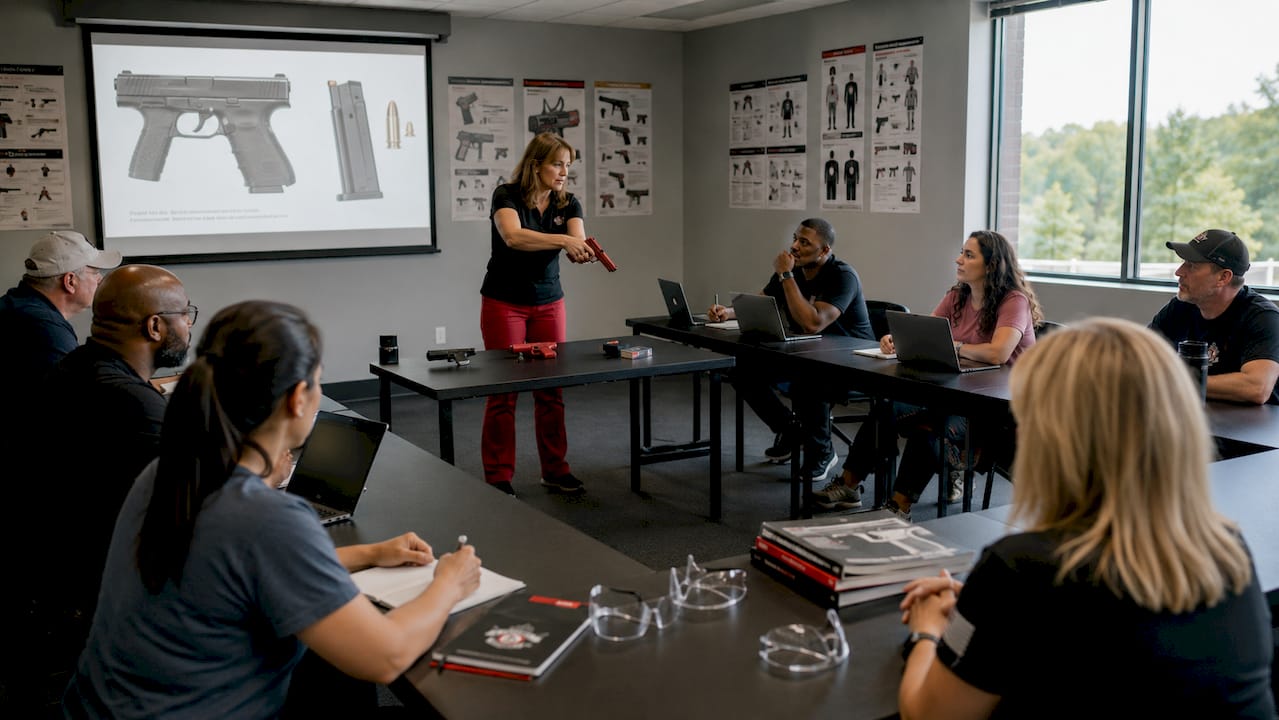
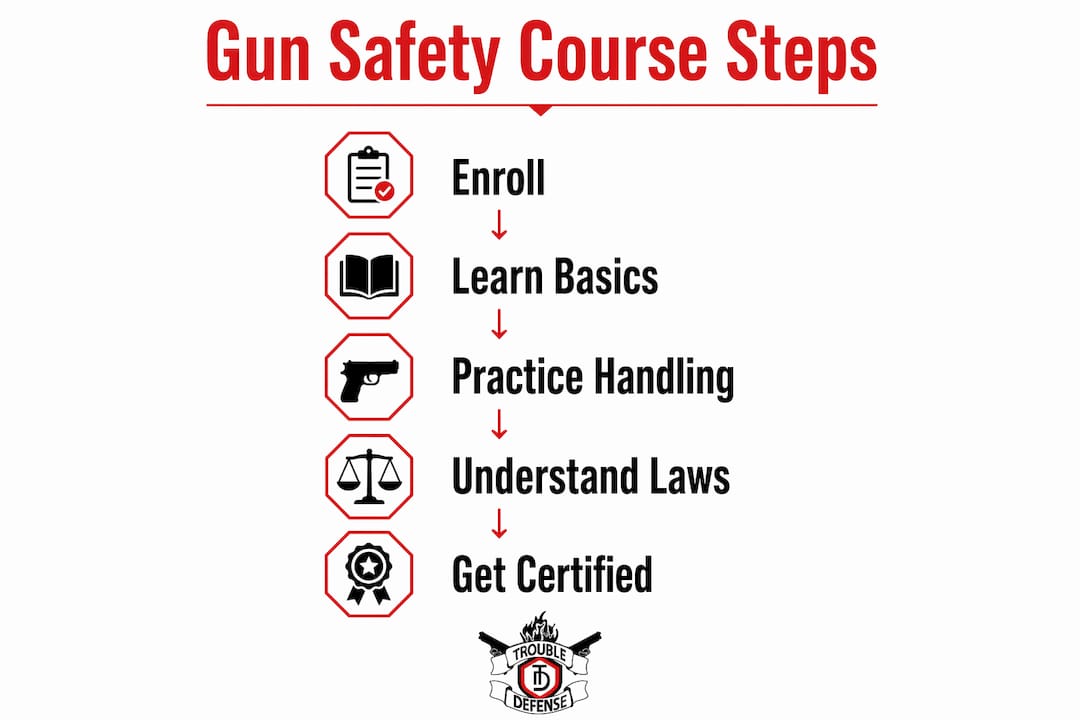
Finding and enrolling in the right course takes about 30 minutes if you know what to look for. Here is a practical sequence to follow:
- Identify your purpose. Are you enrolling for personal safety, a Virginia CCW class, a Maryland Wear and Carry permit, or a Maryland HQL requirement? Each has different course approval requirements, so confirm which certifying body your state or employer recognizes before you pay.
- Choose a course format. Options include online-only modules, in-person classroom sessions, blended learning, and full live-fire programs. Course lengths range from two-hour online basics to five-hour in-person sessions that include range time. Match the format to your learning style and legal requirement.
- Verify prerequisites. Most in-person courses require you to be at least 18 years old, present a valid photo ID, and confirm legal eligibility to possess a firearm. Some youth firearm safety education programs accept minors with parental consent.
- Confirm your gear. Many courses require students to bring their own eye and ear protection. Failing to bring safety gear is one of the most common reasons first-timers are delayed or turned away on day one.
- Prepare your firearm and ammunition. Live-fire courses often require students to bring a minimum of 50 rounds and confirm their firearm meets the range’s safety protocols. Showing up with an incompatible firearm can get you turned away entirely.
Pro Tip: Before purchasing an online certification, verify that the issuing organization is recognized by your state. Not all online certificates are accepted for permitting purposes. NRA-certified instructors and state-approved providers are the safest choices.
Course costs vary widely. Free community programs exist through some sheriff’s offices and local organizations. Paid professional courses typically run between $50 and $150, with online certification courses averaging around $90. The price difference usually reflects instructor credentials, range access, and the depth of hands-on training.
What are the real benefits of completing a gun safety course?
The benefits of gun safety courses extend well beyond passing a legal requirement. Here is what consistent training actually delivers:
- Accident prevention. Proper handling technique and ingrained safety rules are the single most effective barrier against unintentional discharges. Training converts good intentions into reliable behavior.
- Legal protection. Understanding storage laws and transport regulations shields you from liability. A course that covers your state’s specific rules is worth far more than a generic online module.
- Confidence and reduced anxiety. Gun safety training shifts the mindset from intimidation to confident responsibility. Many first-time owners report that anxiety around firearms drops significantly after their first structured class.
- Improved situational awareness. Trained shooters recognize unsafe conditions faster and respond more deliberately. This applies at the range, at home, and in public carry situations.
- Insurance and employer compliance. Some homeowner’s insurance providers offer discounts for certified gun owners. Certain employers and security licensing boards require documented training as a condition of employment.
- Community safety. When more gun owners complete formal training, the overall standard of behavior in the community rises. Youth firearm safety education programs extend this benefit to the next generation.
“Training is more than shooting mechanics. It builds a mindset of responsibility that is crucial for safe ownership.” — Texas Gun Club
That mindset shift is what separates a trained gun owner from someone who simply owns a gun. The mechanical skills matter, but the behavioral change is what actually prevents tragedies.
Comparing types of gun safety classes and formats
Not all courses are built the same, and choosing the wrong format can mean wasted money or an unaccepted certificate.
| Course type | Best for | Typical length | Certification accepted |
|---|---|---|---|
| Online-only module | Basic safety knowledge, busy schedules | 2 to 3 hours | Varies by state; verify before enrolling |
| In-person classroom | Legal compliance, permit requirements | 3 to 5 hours | Generally accepted with NRA or state approval |
| Blended (online + range) | Balanced learning with practical skills | 4 to 6 hours | Widely accepted; strongest option for permits |
| Advanced defensive shooting | Experienced owners, CCW holders | Half-day to multi-day | Specialty certification; not a beginner course |
| Community or sheriff’s office | Free introduction, general public | 2 to 4 hours | Limited; often not accepted for permitting |
In-person courses with live-fire components consistently produce better skill retention than online-only formats. The hands-on practice under a certified instructor is where common beginner mistakes get corrected before they become habits. For Virginia, Maryland, and DC residents pursuing concealed carry permits, a blended or fully in-person course from an NRA-certified instructor is the most reliable path to an accepted certificate.
State-specific courses matter more than most people realize. A Maryland HQL course covers different legal content than a Virginia CCW class, even though both involve firearms. If you carry across state lines or live in the DMV area, understanding the requirements for each jurisdiction is not optional.
Key takeaways
A gun safety course is the single most effective step a new firearm owner can take to reduce risk, meet legal requirements, and build lasting confidence.
| Point | Details |
|---|---|
| Core safety rules | Three behavioral rules form the foundation of every reputable course and prevent the majority of accidents. |
| Course length and cost | Courses range from two-hour online modules to five-hour in-person sessions, with costs from free to $150. |
| Enrollment preparation | Bring photo ID, eye and ear protection, and confirm firearm compatibility before your first class. |
| Certificate verification | Not all online certificates are accepted for state permits; always verify the certifying body first. |
| Benefits beyond mechanics | Formal training builds legal knowledge, situational awareness, and a responsible ownership mindset. |
Why I think skipping formal training is the biggest mistake new gun owners make
By Dee Parker
Every week, I see new gun owners walk in with the same pattern. They bought a firearm, watched a few videos online, and feel reasonably confident. Then they get on the range and the gaps show immediately. Not in their shooting, but in their thinking. They do not know where to point the muzzle when they are not shooting. They hesitate on commands. They have no idea what their state requires for storage or transport.
The mechanical part of shooting is honestly the easiest thing to teach. Grip, stance, trigger control. Those skills respond to repetition. What takes longer to build is the mindset. The automatic, no-thought-required habit of treating every firearm as loaded, every time, without exception. That habit does not come from watching videos. It comes from being corrected by a qualified instructor in real time, repeatedly, until the behavior is automatic.
I have also noticed that people who skip formal training tend to carry more anxiety around their firearm, not less. They second-guess themselves in storage situations. They are unsure about transport rules when crossing from Virginia into Maryland. That uncertainty is not just uncomfortable. It is a legal and safety liability. A structured firearm safety course resolves that uncertainty in a single session.
The other thing worth saying directly: formal training is not just for beginners. Experienced shooters who have never taken a structured course often have deeply ingrained bad habits that feel natural because no one has ever corrected them. A good instructor will spot those habits in the first five minutes on the range.
— Dee Parker
Train with Trouble Defense in Virginia, Maryland, and DC
Trouble Defense is a veteran-owned firearms training academy based in Fairfax, VA, serving the entire DMV area with NRA-certified instruction across Virginia, Maryland, and Washington DC. Whether you are a complete beginner looking for your first structured class, a Maryland resident working toward an HQL or Wear and Carry permit, or someone who wants adaptive firearms training designed for individuals with disabilities, Trouble Defense has a program built for you. The academy also offers women’s firearm training, youth firearm safety education, and DC concealed carry training, all led by certified instructors with a track record of over 300 five-star reviews. Check the training calendar to find your next class, or explore beginner firearm training options designed specifically for first-time owners and visitors.
FAQ
What is a gun safety course exactly?
A gun safety course is a formal education program covering firearm safety rules, handling techniques, safe storage, legal responsibilities, and often live-fire practice. It is designed for new and experienced gun owners who want to handle firearms safely and responsibly.
How long does a gun safety course take?
Most foundational courses last between two and five hours, depending on whether the format is online-only or includes in-person classroom and live-fire components. Advanced or permit-specific courses may run longer.
Do I need a gun safety course to get a concealed carry permit?
Most states, including Virginia and Maryland, require completion of a state-approved or NRA-certified firearms safety course as part of the concealed carry or Wear and Carry permit application process. Requirements vary by jurisdiction, so verify your state’s specific rules before enrolling.
What should I bring to a gun safety course?
Bring a valid photo ID, your own eye and ear protection, and if the course includes live-fire, your firearm and a minimum of 50 rounds of compatible ammunition. Verify gear requirements with the instructor before the class date to avoid being turned away.
Are online gun safety courses accepted for permits?
Not always. Online certificates are not universally accepted for state permitting purposes. Always confirm that the online provider is recognized by your state’s issuing authority before purchasing a course.