A gun safety class is structured firearm instruction that teaches safe handling, legal compliance, and practical shooting skills under certified supervision. Whether you are a first-time gun owner, fulfilling a court-mandated requirement, or simply want to build confidence with a firearm, the right course gives you the knowledge and hands-on practice to handle a gun responsibly. NRA-certified instructors and state regulatory bodies set the standards that define what qualifies as legitimate firearm safety training. This guide breaks down the top types of courses, what to look for in each, and how to choose the one that fits your situation.
What does a quality gun safety class include?
A quality firearm safety training course covers four core areas: safety rules, mechanical knowledge, live-fire practice, and legal education. Skipping any one of those areas leaves a gap that can cost you legally or physically.
The best courses build on these foundations:
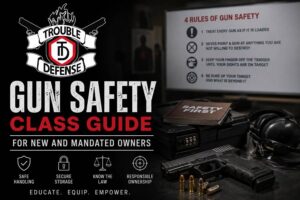
Universal safety rules. Every reputable course opens with the four fundamental rules: treat every gun as loaded, never point it at anything you are unwilling to destroy, keep your finger off the trigger until ready to shoot, and know your target and what is beyond it.
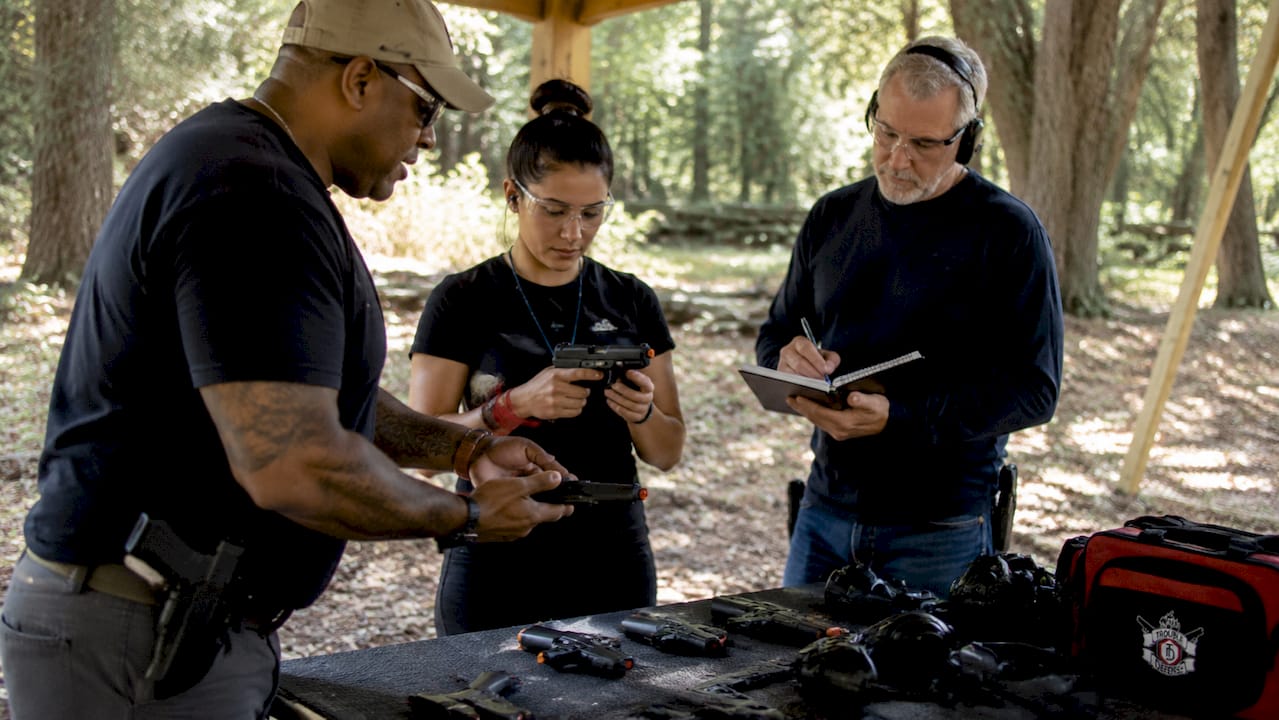
Parts identification and operation. Students learn how a handgun cycles, how to load and unload safely, and how to clear a malfunction without panicking.
Live-fire range practice.Classes often last 4 hours combining classroom and range instruction. That split matters because reading about trigger control and actually feeling it are two completely different experiences.
Legal education. A solid course covers your state’s storage laws, transport rules, and permit requirements. This is where first-time owners often learn the most.
Equipment preparation. Students in live-fire segments must provide 50 or more rounds of ammunition, closed-toe shoes, and high-neckline shirts. Some facilities offer loaner guns and protective gear for those who do not yet own a firearm.
Confidence-building instruction. The best instructors create an environment where questions are welcomed and no one feels judged for not knowing something.
Pro Tip:Ask any prospective instructor whether the course includes live-fire practice before you register. Classroom-only courses meet some legal minimums but do not build the muscle memory that keeps you safe.
10 types of gun safety classes worth knowing
1. NRA-certified basic handgun safety
The NRA Basic Pistol course is the most widely recognized entry-level option in the country. It covers NRA’s fundamental safety rules, handgun parts, ammunition care, shooting fundamentals, and range etiquette. Most state permit processes accept it as proof of training.
2. State-mandated firearm safety courses
Some states require specific courses before you can legally buy or carry a firearm. California’s Firearm Safety Certificate test has 30 questions and is valid for 5 years. Massachusetts requires an LTC course that includes both written and practical components. These are not optional for residents of those states.
3. Concealed carry permit classes
Concealed carry permit courses go deeper than basic safety. South Carolina’s CWP class lasts about 8 hours and combines NRA Basic Pistol content with state-specific legal requirements. Students must bring a handgun, ammunition, and protective gear. Virginia CCW classes and Maryland Wear and Carry courses follow a similar structure with state-specific legal content added.
4. Introductory firearm fundamentals workshops
These short-format gun handling workshops are designed for people who have never touched a firearm. The focus is on grip, stance, sight alignment, and trigger control in a low-pressure setting. They are ideal before committing to a full permit course.
5. Women’s firearm safety courses
Women’s firearm training programs are structured specifically around the physical and psychological needs of female shooters. Smaller class sizes, female-friendly instruction styles, and gear recommendations tailored to women’s body types make these courses more effective than generic options for many students.
6. Youth and family-oriented gun safety programs
Youth programs teach children and teenagers the Eddie Eagle GunSafe principles: stop, do not touch, run away, and tell a grown-up. Family-oriented sessions bring parents and children together so safety rules are reinforced at home. These programs reduce accidents in households where firearms are present.
7. Private one-on-one lessons
Private instruction moves at your pace. An instructor can identify and correct your specific errors in real time, which group classes cannot always do. This format works well for people with physical limitations, anxiety around firearms, or a need for flexible scheduling.
8. Online and hybrid courses
NRA provides web-based firearm safety training covering safety rules, shooting techniques, and personal defense strategies. Online modules handle the classroom portion, and students then complete a live-fire session with a local certified instructor. This format suits people with demanding schedules or limited access to nearby ranges.
9. Interactive safety workshops using inert firearms
Training increasingly uses inert firearms or UTM systems to safely teach grip, stance, and trigger control before moving to live-fire. This zero-risk environment builds beginner confidence and reduces accidents during the transition to live ammunition. It is especially effective for students who feel intimidated by a loaded firearm.
10. Adaptive firearm training for people with disabilities
Adaptive firearms training serves shooters with physical, visual, or cognitive disabilities. Trouble Defense offers specialized programs for blind and low-vision individuals, making safe firearm ownership accessible regardless of physical ability. These courses use modified equipment, tactile instruction, and one-on-one coaching to meet each student where they are.
Key features to compare when evaluating a shooting safety course
Not every course is built the same. The table below identifies the features that matter most when you are comparing your options.
Feature
What to look for
Certification
NRA-certified instructors and state-recognized course completion certificates
Live-fire vs. classroom only
Courses with supervised range time build practical skills; classroom-only meets some legal minimums but not all
Duration and cost
Basic courses run 4–8 hours; permit courses often run a full day; cost varies by format and location
Equipment requirements
Confirm whether the facility provides loaner firearms and gear or requires you to bring your own
Target audience
Look for courses designed for your specific situation: beginner, permit seeker, mandated trainee, or special population
Instructor credentials
Verify NRA certification, teaching experience, and whether the instructor has real-world firearm experience
Pro Tip:Check your state’s official permit office website to confirm which certifications it accepts before you pay for a course. Not all certificates transfer across state lines.
How to choose the right firearm safety training for your needs
Choosing the right course starts with knowing why you need it. The answer to that question narrows your options quickly.
Define your primary goal. Are you seeking legal certification, building practical skill, or fulfilling a court mandate? Each goal points to a different course type. A mandated trainee needs a state-recognized certificate. A first-time owner needs live-fire practice. A permit seeker needs both.
Check your state’s requirements. Virginia, Maryland, and DC each have different permit and training mandates. Review the firearm safety certification requirements for your jurisdiction before enrolling in anything.
Evaluate instructor qualifications. NRA certification is the baseline. Beyond that, look for instructors with real-world experience and a teaching style that matches your learning needs. Read reviews and ask about class size.
Verify equipment access. If you do not own a firearm yet, confirm that the facility offers loaner guns. Confirm that the range provides eye and ear protection or that you know what to bring.
Prioritize a supportive environment.New owners often face psychological barriers like intimidation. Instructors who encourage questions and create ego-free classrooms produce students who actually retain what they learn.
Plan for follow-up training. One course is a starting point, not a finish line. Firearm proficiency is a perishable skill, and refresher courses every 6–12 months are recommended to maintain safety and competence. Build that into your schedule from the start.
Gun Safety Class Guide
Key Takeaways
The most effective gun safety class combines NRA-certified instruction, live-fire practice, legal education, and a confidence-building environment that supports long-term responsible ownership.
Point
Details
Match course type to your goal
Mandated trainees need state-recognized certificates; first-time owners need live-fire practice.
Live-fire practice is non-negotiable
Classroom-only courses meet some legal minimums but do not build the muscle memory required for safe handling.
Instructor credentials matter
Verify NRA certification and real-world experience before enrolling in any course.
Firearm skills are perishable
Schedule refresher training every 6–12 months to maintain safe handling ability.
Adaptive and specialized courses exist
Programs for women, youth, and people with disabilities make safe ownership accessible to everyone.
Why one class is rarely enough
I have seen a pattern repeat itself across hundreds of students: someone takes a basic course, passes the test, and then does not touch their firearm for eight months. When they pick it up again, the confidence is gone and the muscle memory has faded. Firearm proficiency fades quickly without consistent practice, and that gap between training and real-world readiness is where accidents happen.
The psychological side of this matters just as much as the technical side. High-quality introductory courses focus as much on psychological comfort as technical skills. A student who leaves class feeling confident is far more likely to practice regularly, ask questions, and seek out advanced training. A student who felt judged or rushed will avoid the range entirely.
Safe firearm handling training is critical not only for legal compliance but also to establish a safety culture that reduces accidents and misuse. That culture does not come from a single four-hour class. It comes from consistent training, honest self-assessment, and instructors who treat every student as capable of learning. The best investment any gun owner can make is not the most expensive firearm. It is the ongoing commitment to training that keeps everyone around them safe.
— Dee Parker
Trouble Defense: veteran-led firearm safety training in the DMV area
Trouble Defense LLC offers a full range of certified firearm safety training programs for first-time owners, permit seekers, and mandated trainees across Virginia, Maryland, and Washington DC. Every course is led by NRA-certified instructors with real-world experience, and the training environment is built around confidence, not intimidation.
Trouble Defense programs include Virginia CCW certification, Maryland Wear and Carry training, women’s firearm courses, adaptive training for blind and low-vision individuals, and youth safety education. With over 300 five-star Google reviews, Trouble Defense is the trusted choice for responsible firearm ownership in the DMV area. Browse the training calendar and reserve your spot today.
FAQ
What is covered in a basic gun safety class?
A basic gun safety class covers the four universal firearm safety rules, handgun parts identification, ammunition handling, shooting fundamentals, and live-fire range practice. Most courses also include legal education on storage and transport requirements.
How long does a gun safety class take?
Most basic firearm safety courses run 4–8 hours, combining classroom instruction with supervised range time. Concealed carry permit courses typically last a full day, around 8 hours, to meet state-specific requirements.
Do I need to own a gun to take a firearm safety class?
No. Many facilities offer loaner firearms for students who do not yet own one. Confirm availability when you register, and ask what equipment the facility provides versus what you need to bring.
What is the difference between a basic safety course and a concealed carry class?
A basic safety course teaches fundamental handling and safety rules. A concealed carry class adds state-specific legal requirements, permit application procedures, and more extensive live-fire qualification. You typically need the basic course before enrolling in a permit class.
Are online gun safety courses legally accepted?
NRA online training covers safety rules and shooting techniques, but most states require a live-fire component for permit certification. Check your state’s specific requirements to confirm whether an online course satisfies your legal obligation.
 Trouble Defense programs include Virginia CCW certification, Maryland Wear and Carry training, women’s firearm courses, adaptive training for blind and low-vision individuals, and youth safety education. With over 300 five-star Google reviews, Trouble Defense is the trusted choice for responsible firearm ownership in the DMV area. Browse the training calendar and reserve your spot today.