Lorton firearm training is the in-person, practical instruction required to develop safe and competent firearm handling skills under Virginia law. Whether you are a first-time gun owner, a parent focused on home safety, or someone pursuing a Concealed Handgun Permit, the path starts with finding the right course close to home. Lorton sits in southern Fairfax County, giving residents easy access to certified instructors and professional ranges throughout the DMV area. This guide covers Virginia’s legal requirements, how to choose a quality instructor, what to expect on training day, and the mistakes that cost students time and money.
What are the legal requirements for Lorton firearm training?
Virginia law sets clear rules for anyone seeking a Concealed Handgun Permit, and those rules directly affect which courses count.
Virginia requires all CHP training to be completed in person as of january 1, 2021. Online-only virtual courses no longer satisfy the statutory requirement. That single rule eliminates a large category of courses advertised online, so confirming a course is in-person before you register matters.
Who qualifies to apply?
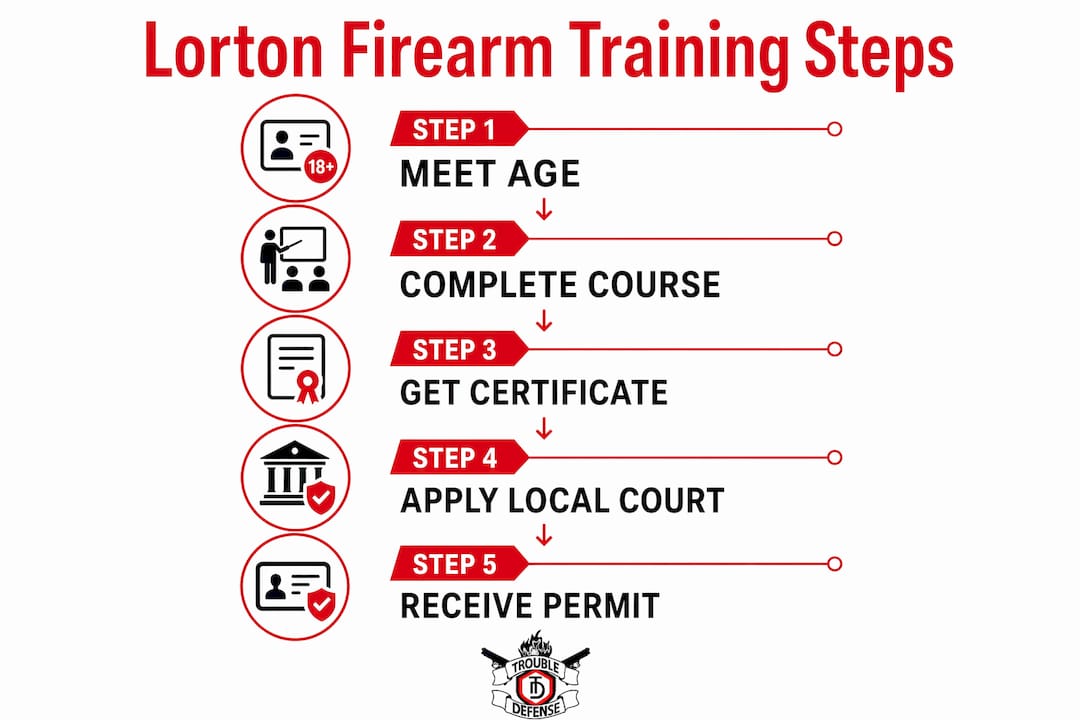
Applicants must be at least 21 years old and submit their CHP application to their local Circuit Court. The court must
process the application within 45 days, and fees range from $15 to $50 depending on the jurisdiction. Permits remain valid for five years. Lorton residents file through the Fairfax County Circuit Court.
What courses does Virginia accept?
Acceptable training types include:
- NRA-certified courses taught by a credentialed NRA instructor
- Hunter safety courses that include live-fire components
- Law enforcement training completed as part of official service
- Documented military firearms training with supporting records
Virginia does not accept virtual training for concealed carry permits, but
hunter safety and military training qualify as substitutes when properly documented. Each exception requires strong paperwork to hold up during the application review.
What documents do you need?
A certificate of course completion is required for the CHP application, along with a valid photo ID. Keep your training certificate in a safe place. Losing it means contacting your instructor for a replacement, which can delay your permit application by weeks.
| Document |
Purpose |
| Certificate of completion |
Proves you met the training requirement |
| Valid photo ID |
Confirms identity for the application |
| CHP application form |
Filed with the Fairfax County Circuit Court |
| Application fee ($15–$50) |
Paid at time of filing |
How do you choose the best firearm courses and instructors near Lorton?
The quality of your instructor determines how much you actually learn, not the quality of the marketing.
Instructor credentials should be transparent, including NRA or USCCA certification, so you can confirm professional legitimacy before you pay. A bio page listing certifications is a baseline expectation, not a bonus feature.
Check credentials before anything else
NRA certification is the most widely recognized standard for civilian firearms instruction in Virginia. USCCA certification signals additional focus on self-defense law and defensive shooting techniques. Ask any prospective instructor directly: “What certifications do you hold, and when were they last renewed?” A qualified instructor answers that question without hesitation.
Choosing a trainer based on social media followers rather than teaching ability is one of the most common mistakes new students make. A large Instagram following reflects marketing skill, not instructional quality. Look for structured curricula, documented learning outcomes, and student reviews on independent platforms instead.
Repeated appearance of the same students in a school’s promotional photos can signal a marketing-focused program rather than a skill-focused one. Real training programs cycle through a broad student base and show diverse results.
Evaluate class size and student ratios
Low instructor-to-student ratios significantly improve skill acquisition and safety outcomes. A class of 20 students with one instructor means you receive minimal individual feedback. Look for programs that cap class sizes or use assistant instructors to maintain close supervision on the range.
Verify the facility
Facility logistics matter more than most students expect. Check range location accessibility, nearby food options, cell phone signal, and parking before you commit to a full-day course. A range that is 90 minutes away with no cell service and no food nearby creates real problems during an eight-hour training day.
Pro Tip: Search the instructor’s name plus “review” on Google, Reddit, or firearms forums before enrolling. Third-party feedback reveals the real student experience far better than curated testimonials on a school’s own website.
For a deeper look at what separates good programs from great ones, Trouble Defense’s guide to
private firearm training covers instructor selection in detail.
What should you expect during your Lorton shooting classes?
Preparation before class day reduces anxiety and helps you focus on learning. Knowing what to bring, how the day is structured, and what challenges to expect puts you ahead of most first-time students.
What to bring on training day
- Closed-toe shoes with ankle support
- Comfortable, weather-appropriate clothing with no low necklines (hot brass lands in unexpected places)
- Eye protection and ear protection (many ranges provide these, but bringing your own is better)
- A valid photo ID
- Your firearm and sufficient ammunition if the course requires you to supply your own
- Water, snacks, and cash or a card for any range fees not included in tuition
How a typical course is structured
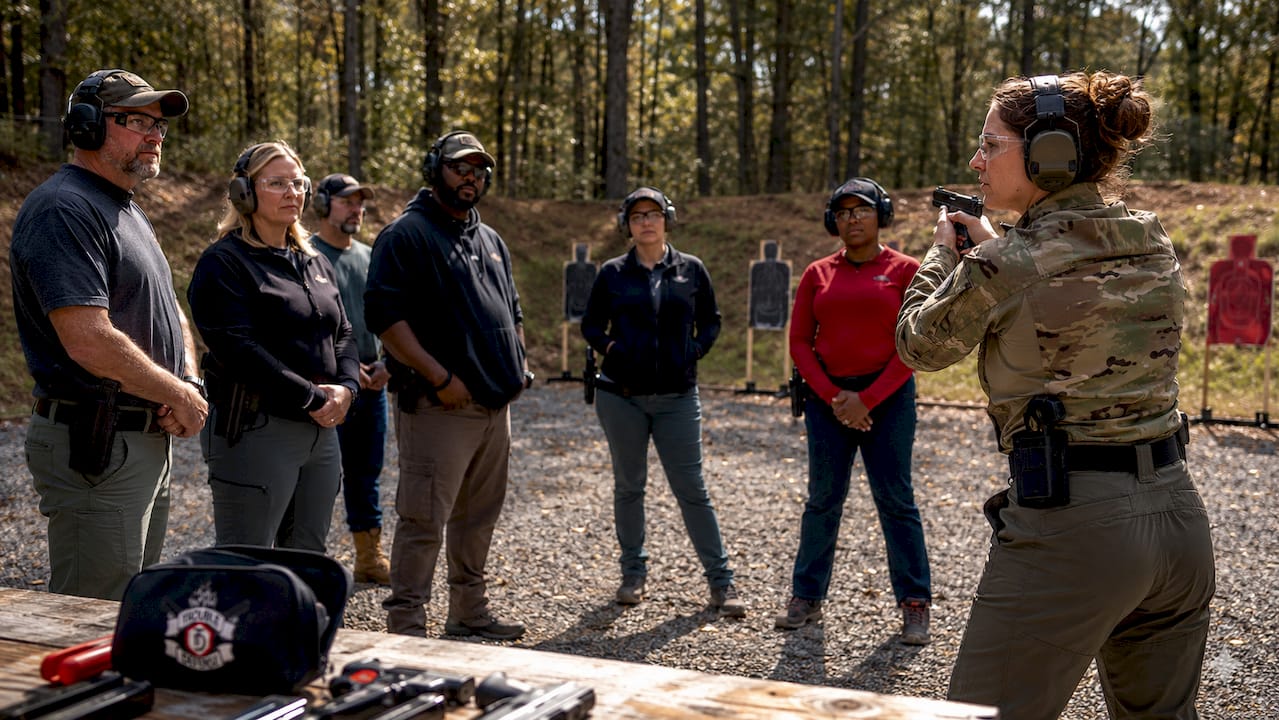
Most beginner and intermediate courses follow a consistent pattern. The morning covers firearm safety rules, legal use of force, and basic handling mechanics. The afternoon moves to live-fire exercises on the range, where you apply what you learned under direct instructor supervision. Defensive shooting courses add scenario-based drills that simulate real-world decisions under mild stress.
- Safety briefing covering the four fundamental firearm safety rules
- Classroom instruction on Virginia law, use of force, and firearm mechanics
- Dry-fire practice to build trigger control and sight alignment without live ammunition
- Live-fire drills at the range under instructor supervision
- Debrief and Q&A to address individual questions and next steps
Handling common challenges
Anxiety on the range is normal, especially for first-time shooters. A good instructor acknowledges it and adjusts the pace. If you feel overwhelmed, ask to pause. Rushing through live-fire exercises to keep up with the group is how accidents happen. Range etiquette, including keeping your finger off the trigger until ready to fire and always pointing the muzzle in a safe direction, applies from the moment you handle a firearm.
Pro Tip: Practice dry-fire at home in the week before your course. Even five minutes a day of trigger control and sight alignment work will make your first live-fire session noticeably smoother.
After your initial course, consider
shooting lessons that build on your foundation with more advanced marksmanship and defensive techniques. Skills decay without practice, and a follow-up course every six to twelve months keeps your abilities sharp.
Common mistakes to avoid when getting gun handling training in Lorton
Most training failures are preventable. The mistakes below cost students money, time, and in some cases their permit application.
“The biggest mistake I see is students who complete an online-only course expecting it to satisfy Virginia’s CHP requirement. Virginia has required in-person training since January 1, 2021. An online certificate will not be accepted by the Circuit Court, and you will have to start over.”
- Relying on online-only courses. Virginia does not accept virtual training for concealed carry permits. Confirm your course is in-person before paying.
- Choosing instructors without verified credentials. Popularity on social media is not a substitute for NRA or USCCA certification. Always ask for proof.
- Ignoring hidden costs. Some courses advertise a base price but charge separately for range fees, ammunition, or target materials. Ask for a full cost breakdown before enrolling.
- Overlooking facility logistics. A range that is far from Lorton with poor access can turn a productive training day into a stressful one. Confirm location, parking, and amenities in advance.
- Losing your training certificate. Your certificate of completion is a legal document for your CHP application. Store it with your other important records immediately after class.
If you ever face legal questions related to firearm ownership or charges,
firearm-related legal support is available through specialized services that understand Virginia law.
Key Takeaways
Lorton residents who complete in-person, NRA-certified firearm training with a credentialed instructor meet Virginia’s legal requirements and build skills that last.
| Point |
Details |
| In-person training is mandatory |
Virginia has required in-person CHP training since January 1, 2021. Online-only courses are not accepted. |
| Credentials matter most |
Verify NRA or USCCA certification before enrolling in any course or paying any fees. |
| Small class sizes improve outcomes |
Low instructor-to-student ratios produce better skill development and safer range sessions. |
| Documentation is non-negotiable |
Keep your training certificate safe. It is required for your CHP application at the Circuit Court. |
| Preparation reduces anxiety |
Bring proper gear, practice dry-fire beforehand, and know the course structure to get the most from training day. |
Why I believe in-person training is the only real option
I have watched students arrive at the range having completed an online video course and believing they were ready. They were not. Watching a video of someone else handling a firearm does not build the muscle memory, situational awareness, or decision-making speed that live instruction develops. Virginia’s 2021 mandate was not bureaucratic overreach. It reflected a real gap between what online courses deliver and what safe firearm ownership actually requires.
The instructors who make the biggest difference are not the ones with the most followers or the flashiest websites. They are the ones who slow down when a student struggles, who correct grip and stance before moving to the trigger, and who treat every student as an individual rather than a seat to fill. That kind of instruction only happens in person, at a real range, with a real firearm in your hands.
Lorton residents have access to quality training in the DMV area, but access alone is not enough. You have to choose well. Vet your instructor, confirm the course format, and commit to continuing education after your initial certification. A firearm is a serious responsibility. The training you invest in should match that seriousness.
Trouble Defense offers
women’s firearm training and adaptive programs that prove quality instruction is not one-size-fits-all. Every student deserves a program built around their needs, not the other way around.
— Dee Parker
Trouble Defense serves Lorton and the entire DMV area
Trouble Defense is a veteran-owned firearms training academy based in Fairfax, VA, with certified NRA instructors and over 300 five-star Google reviews. The academy’s courses meet Virginia’s in-person training requirement for Concealed Handgun Permits and cover everything from beginner safety to advanced defensive shooting.
Trouble Defense serves Lorton residents and the broader DMV area with programs including Virginia CCW classes, Maryland Wear and Carry training, women’s firearm training, adaptive training for individuals with disabilities, and youth firearm safety education. Whether you are starting from zero or sharpening existing skills, the
Virginia concealed carry class is a strong starting point. For answers to the most common questions about getting started, the
firearm safety training guide covers the full picture. Contact Trouble Defense to enroll or ask about upcoming class dates.
FAQ
What counts as valid firearm training for a Virginia CHP?
Virginia accepts NRA-certified courses, hunter safety courses, law enforcement training, and documented military firearms training. All qualifying training must be completed in person as of January 1, 2021.
How long does it take to get a Virginia Concealed Handgun Permit?
The Circuit Court must process your CHP application within 45 days of submission. Processing times vary by jurisdiction, but Fairfax County typically moves efficiently within that window.
Can Lorton residents take firearm safety courses online?
Virginia does not accept online-only courses for CHP applications. In-person training is required by state law, and any course completed virtually will not satisfy the statutory requirement.
How do I verify a firearm instructor’s credentials near Lorton?
Ask the instructor directly for their NRA or USCCA certification number, and search their name plus “review” on Google or firearms forums. Transparent instructors provide credential information without hesitation.
Does Trouble Defense offer courses for beginners in the Lorton area?
Trouble Defense serves the Lorton area and the full DMV region with courses designed for all experience levels, from complete beginners to experienced shooters seeking advanced defensive training. Contact Trouble Defense directly to confirm current class availability and scheduling.
Recommended