What is a gun cleaning class and what will you learn?
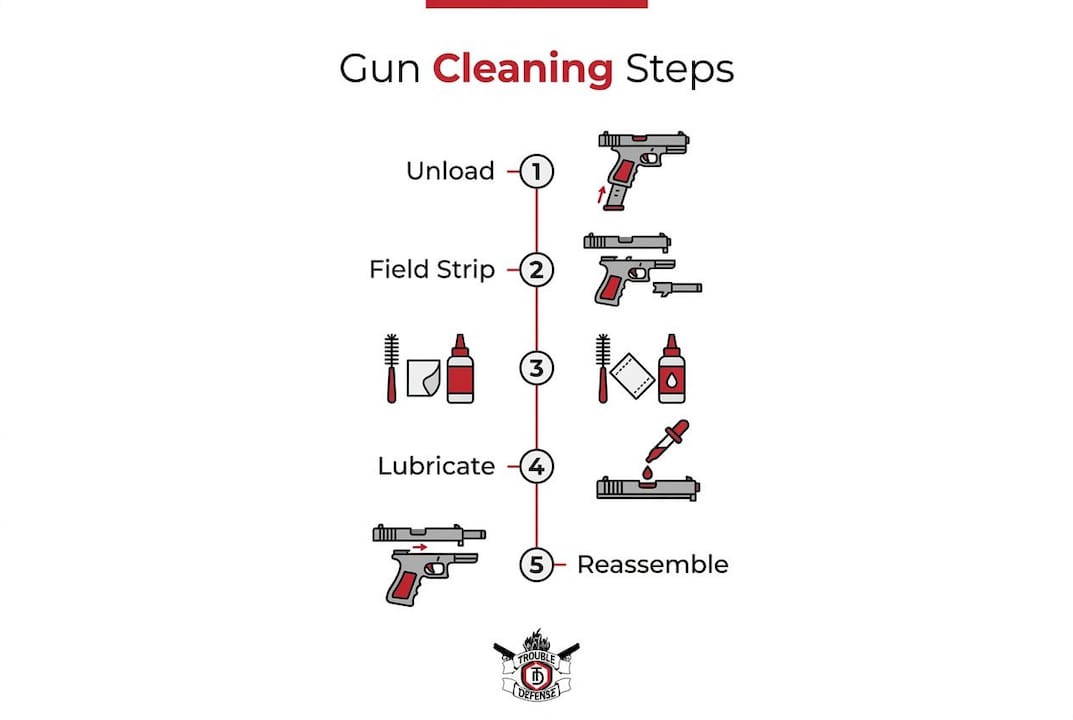
A gun cleaning class is a structured firearm maintenance course where you learn to safely disassemble, clean, lubricate, and reassemble your firearm under the guidance of a certified instructor. The industry term is “firearm maintenance training,” and it covers far more than wiping down a barrel. These classes exist because most new gun owners have never been shown the right way to do it, and bad habits picked up early tend to stick.
Formats vary. You can attend an in-person gun cleaning workshop with hands-on supervision, or join a virtual session from home. In-person is the stronger option for beginners, since an instructor can catch mistakes in real time that a video simply cannot.
A typical class covers:
- Safety verification: Confirming the firearm is unloaded, removing the magazine, and checking the chamber before touching any cleaning tools
- Workspace setup: Choosing a well-lit, ventilated area free of live ammunition, per NRA Family guidelines
- Field stripping: Breaking the firearm down to its main components for cleaning, without going deeper than the manufacturer recommends
- Bore cleaning: Running solvent-soaked patches and bore brushes through the barrel until patches come out clean
- Lubrication: Applying the right amount of oil to the right places, since over-lubrication attracts dust and creates an abrasive paste that damages internal parts
- Reassembly and function check: Putting everything back together and verifying the trigger, safety, and action work correctly
Certified NRA instructors lead the best classes, and they bring a safety-first mindset that goes beyond technique. Treating every firearm as loaded, even during cleaning, is a core principle taught from the first minute.
What does a typical class cover, and what do you need to bring?
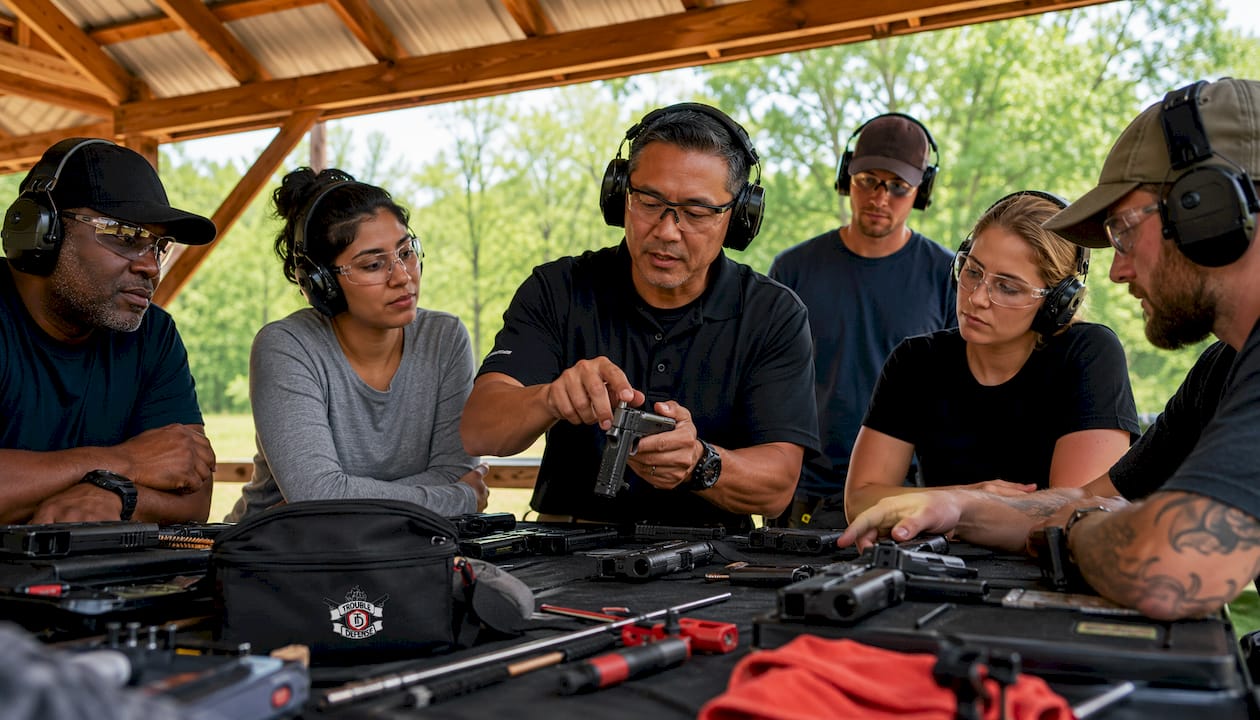
Most firearm maintenance courses run 1–2 hours and pack a lot into that window. You will move through safety procedures, field stripping, cleaning technique, lubrication, and a final function check, roughly in that order. The pacing is deliberate so beginners do not feel rushed.
Standard equipment used in class:
- Cleaning rods (never bare steel, which scratches the bore)
- Bore brushes sized to your specific caliber
- Cleaning patches and a jag or slotted tip
- Firearm-specific solvent such as Hoppe’s No. 9 or Break Free CLP
- Lubricant, applied sparingly
- Cleaning mat to protect the work surface
- Gun vise to hold the firearm steady
Many providers supply the cleaning kit during class. Check before you register so you know whether to bring your own. You should always bring your unloaded firearm and its owner’s manual.
Safety gear worth having: rubber gloves to limit solvent and lead exposure, and eye protection. The NSSF recommends wearing eye protection during disassembly and cleaning because springs, solvents, and small parts can reach your eyes without warning.
Skill level requirements are minimal. Most classes welcome complete beginners. Many modern defensive handguns are designed for easy field stripping without special tools, so the mechanical side is accessible to virtually anyone willing to follow instructions.
How do you book a gun cleaning class?
Registration is usually straightforward. Most providers offer online booking through their website, and some accept phone reservations. Before you commit, confirm a few things:
- Class size: Low student-to-instructor ratios matter. Smaller groups mean you get actual feedback, not just a demonstration you watch from the back of the room.
- Pricing: Fees generally range from $35 to $75 depending on the provider, format, and whether equipment is included.
- Format options: In-person workshops give you hands-on supervision. Virtual sessions are convenient but work best as a supplement to in-person practice, since an instructor cannot physically correct your grip or technique through a screen.
- Scheduling: Many providers offer weekend and evening sessions to fit working schedules.
- Prerequisites: Most beginner classes have none. Bring a valid ID, your unloaded firearm, and a willingness to follow safety rules.
Pro Tip: If you are signing up for a cleaning class as part of a broader training path, ask whether the provider also offers Virginia CCW classes, Maryland Wear and Carry permits, or DC concealed carry training. Bundling courses with one trusted provider saves time and builds a consistent safety foundation.
Self-defense training programs like those at Street Safe Self Defence also incorporate firearm handling fundamentals, which can complement what you learn in a dedicated maintenance course.
What are the cancellation and refund policies?
Policies differ by provider, but the industry standard follows a tiered structure based on how far in advance you cancel.
- 48–72 hours before class: Most providers offer a full refund or free reschedule.
- 24–48 hours before class: Partial refund or credit toward a future session is common.
- Less than 24 hours or no-show: Fees are typically forfeited, though some providers offer a one-time reschedule as a courtesy.
Always read the cancellation terms before paying. Reputable providers publish these clearly on their booking page. If you need to cancel, notify the provider by phone or email as early as possible. Waiting until the last minute rarely works in your favor, and it leaves a spot empty that another student could have used.
Some providers distinguish between student-initiated cancellations and provider-initiated ones. If the class is canceled by the instructor or the facility, you should receive a full refund or a priority reschedule with no penalty.
How do you contact a class provider and get support?
Most training providers are reachable by phone, email, or a contact form on their website. Response times vary, but a reputable academy answers within one business day.
- Before class: Use contact channels to ask about equipment, parking, class size, or any physical accommodations you need.
- After class: Good providers offer post-class resources such as printed maintenance guides, reference cards, or links to manufacturer disassembly videos. These are worth asking about during registration.
- Instructor credentials: Ask directly. NRA-certified instructors and veteran-owned academies carry verifiable credentials. You have every right to confirm who is teaching before you show up.
Do not wait until class day to raise concerns. A quick call or email beforehand resolves most questions and lets you focus on learning once you are there.
Trusted gun cleaning classes led by certified trainers in the DMV area
Trouble Defense LLC is a veteran-owned firearms training academy based in Fairfax, VA, serving Virginia, Maryland, Washington DC, and the broader DMV area. NRA-certified instructors lead every session, and the academy has built its reputation on personalized, hands-on instruction rather than large-group lectures.
With over 300 five-star Google reviews, Trouble Defense stands out for the range of students it serves: complete beginners, casual gun owners, women seeking a supportive training environment, seniors, and individuals with disabilities through its nationally recognized Blind and Low Vision Adaptive Firearms Training Program.
Beyond gun cleaning, Trouble Defense offers:
- Virginia CCW classes and Maryland Wear and Carry permit training
- Maryland HQL and DC concealed carry training
- Active shooter preparedness and security firearms training
- Women’s firearm training and youth firearm safety education
- Tourist shooting experiences and adaptive training programs
Pro Tip: Trouble Defense’s firearm safety training guide is a solid starting point if you want to understand what a full training path looks like before committing to a class.
Ready to learn proper gun care from instructors who take safety seriously? Contact Trouble Defense to find a class that fits your schedule and skill level.
Do you need prior experience to attend?
No prior experience is required for a beginner gun cleaning class. Most courses are designed specifically for first-time gun owners who have never cleaned a firearm before. The only expectation is that you arrive willing to follow safety instructions and handle your firearm responsibly.
Intermediate or advanced students can request sessions that go deeper into detail cleaning, inspection techniques, or maintenance for specific firearm types such as rifles or shotguns. If you own multiple firearms, mention that when you register so the instructor can tailor the session accordingly.
What safety rules are taught during a gun cleaning class?
Safety instruction is not a brief disclaimer at the start of class. It runs through every step. The core rules taught in virtually every reputable maintenance course align with NRA gun safety standards:
- Treat every firearm as loaded, even when you know it is not
- Remove all live ammunition from the cleaning area before starting
- Keep the muzzle pointed in a safe direction throughout the process
- Work in a well-lit, ventilated space free of distractions
- Never clean a firearm while under the influence of alcohol or any substance that impairs judgment
One rule that surprises many beginners: cleaning frequency should be based on actual use and environmental exposure, not a fixed schedule. A firearm used in wet or dusty conditions needs cleaning immediately. One stored in a climate-controlled safe may only need a wipe-down and mid-year inspection.
Instructors also emphasize that disassembly should stop at field stripping. Going deeper than the manufacturer recommends risks losing small springs or pins and can introduce reassembly errors that affect function.
Key Takeaways
A gun cleaning class gives beginners a safe, structured path to proper firearm maintenance, covering everything from field stripping to lubrication, with certified instructors guiding every step.
| Point | Details |
|---|---|
| Class duration | Most firearm maintenance courses run 1–2 hours and cover safety, field stripping, cleaning, lubrication, and function checks. |
| Pricing range | Fees typically fall between $35 and $75 depending on provider, format, and included equipment. |
| No experience needed | Beginner classes require no prior skills; modern defensive firearms are designed for easy field stripping. |
| Safety is the core lesson | Every class teaches the rule of treating every gun as loaded and removing all ammo from the cleaning area before starting. |
| Lubrication matters | Over-lubrication attracts dust and creates abrasive buildup; instructors teach a less-is-more approach to oil application. |
FAQ
Do you need a license to clean your own gun?
No license is required to clean a firearm you legally own. Cleaning is part of responsible ownership, not a regulated activity.
What is cleaning a gun officially called?
The standard industry term is “firearm maintenance.” It covers the full process of unloading, disassembly, bore cleaning, lubrication, reassembly, and function verification.
How much does a gun cleaning class cost?
A gun cleaning class typically costs between $35 and $75, depending on the provider, class format, and whether cleaning supplies are included.
How much do firearm training classes cost overall?
Costs vary widely by course type. A basic cleaning or safety class typically runs $35–$75, while permit certification courses such as Virginia CCW or Maryland Wear and Carry training are priced higher due to their length and legal requirements. Contact Trouble Defense for current pricing on specific courses.