A firearm consultation is a professional service that delivers expert guidance on firearm selection, safety training, and legal compliance, tailored to your experience level and goals. Whether you are a first-time buyer in Virginia, a Maryland resident pursuing a Wear and Carry permit, or a seasoned shooter refining tactical skills, a structured consultation removes guesswork and replaces it with clear, personalized advice. The Bureau of Alcohol, Tobacco, Firearms and Explosives (ATF) sets federal baselines, but state laws in Virginia, Maryland, and Washington DC each add their own layers. A qualified consultant bridges that gap before it becomes a legal problem.
What does a firearm consultation session look like?
A typical gun ownership consultation runs between one and three hours, depending on your goals and experience. The format usually combines a one-on-one discussion, a review of relevant laws, hands-on demonstrations, and a Q&A segment. Some consultants offer group sessions for families, workplace security teams, or community organizations. The format is flexible, but the goal is always the same: leave with a clear plan.
Common topics covered in a session include:
- Firearm selection based on physical fit, intended use, and budget
- Safe storage requirements under state and federal law
- Legal transfer rules for private sales, gifts, and estate transfers
- Firearm safety training options and certification pathways
- Range etiquette and preparation, including required protective gear and course requirements
- Permit pathways such as Virginia CCW, Maryland Wear and Carry, or DC concealed carry
Specialized consultations exist beyond the standard new-owner session. Estate consultations, for example, focus on plain-language legal guidance to protect families and executors managing a firearms collection. Range operators can request operational reviews that evaluate facility design, ventilation, sight lines, and safety protocols to meet industry standards.
Pro Tip: Before your session, write down your top three questions and bring any firearms-related documents you already have, such as a purchase receipt, existing permit, or storage setup photos. A prepared client gets twice the value from the same hour.

How do firearm consultations improve safety and legal compliance?
A firearm consultation is one of the most direct ways to reduce legal risk. Compliance errors in firearms law can lead to felony charges, and federal and state rules vary sharply enough that what is legal in one jurisdiction is a criminal offense in another. A professional consultant performs a thorough review of your situation before you make a move that cannot be undone.
The DMV area is a clear example of why local knowledge matters. Here is how key compliance requirements differ across the three main jurisdictions Trouble Defense serves:
| Requirement | Virginia | Maryland | Washington DC |
|---|---|---|---|
| Concealed carry permit | Virginia CCW (shall-issue) | Wear and Carry permit (may-issue) | DC concealed carry license (may-issue) |
| Handgun Qualification License | Not required | Required (HQL) before purchase | Not applicable for most residents |
| Safe storage law | Recommended; required if minors present | Required; criminal penalties apply | Required; strict enforcement |
| Private transfer rules | No background check required | Licensed dealer transfer required | All transfers through licensed dealer |
| Training requirement | Firearms safety course required for CCW | HQL training and live-fire required | Training required for carry license |
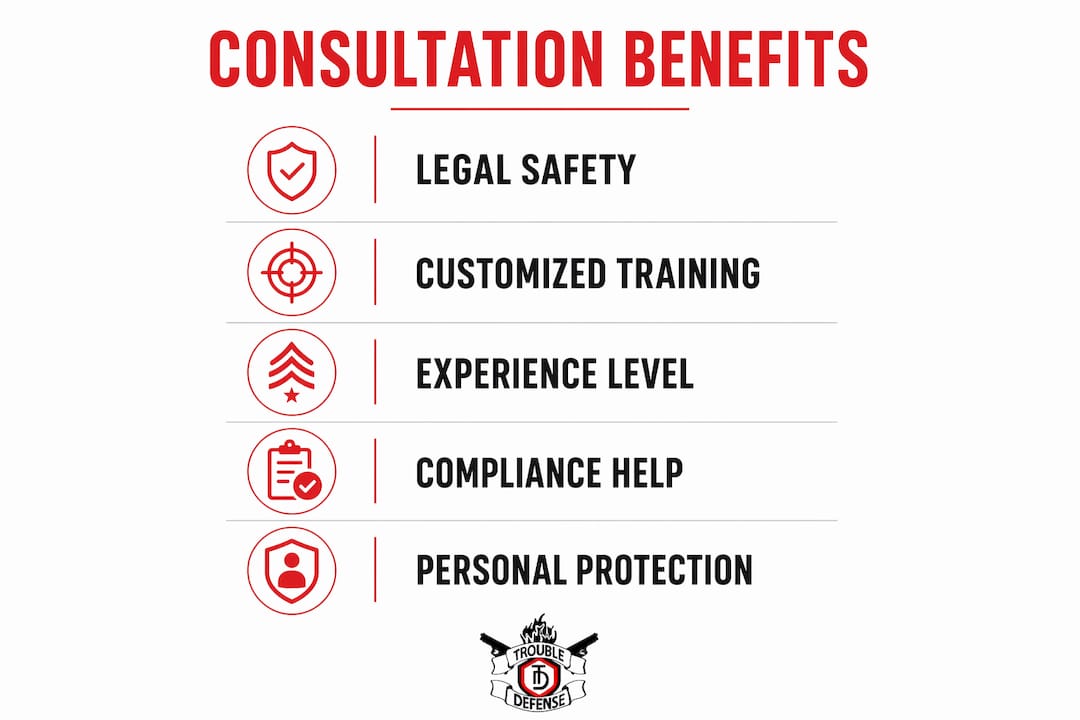
Each of these differences represents a potential legal trap for someone who moves across state lines or buys a firearm without checking local rules first. A consultation maps your specific situation against the correct jurisdiction before you act.
Statements made in a firearms licensing hearing can be used in a separate criminal proceeding. That fact alone explains why coordinated, professional advice matters far more than a quick internet search. Consultants who understand both the administrative and criminal sides of firearms law protect you from procedural mistakes that compound over time.
California’s model is instructive even for DMV residents: the state requires passing a Firearm Safety Certificate written test before most purchases, with mandatory storage rules backed by criminal penalties under Penal Code 25100. Maryland’s HQL system follows a similar logic. A consultant familiar with these frameworks helps you satisfy requirements correctly the first time.
How consultations adapt to different experience levels and needs
The best firearm consultants do not deliver a one-size-fits-all session. They adjust depth, content, and pace based on who is sitting across from them. A new owner needs foundational safety rules, storage guidance, and a clear path to certification. An experienced shooter preparing for a Virginia CCW or Maryland Wear and Carry permit needs scenario-based discussion, legal nuance, and live-fire preparation.
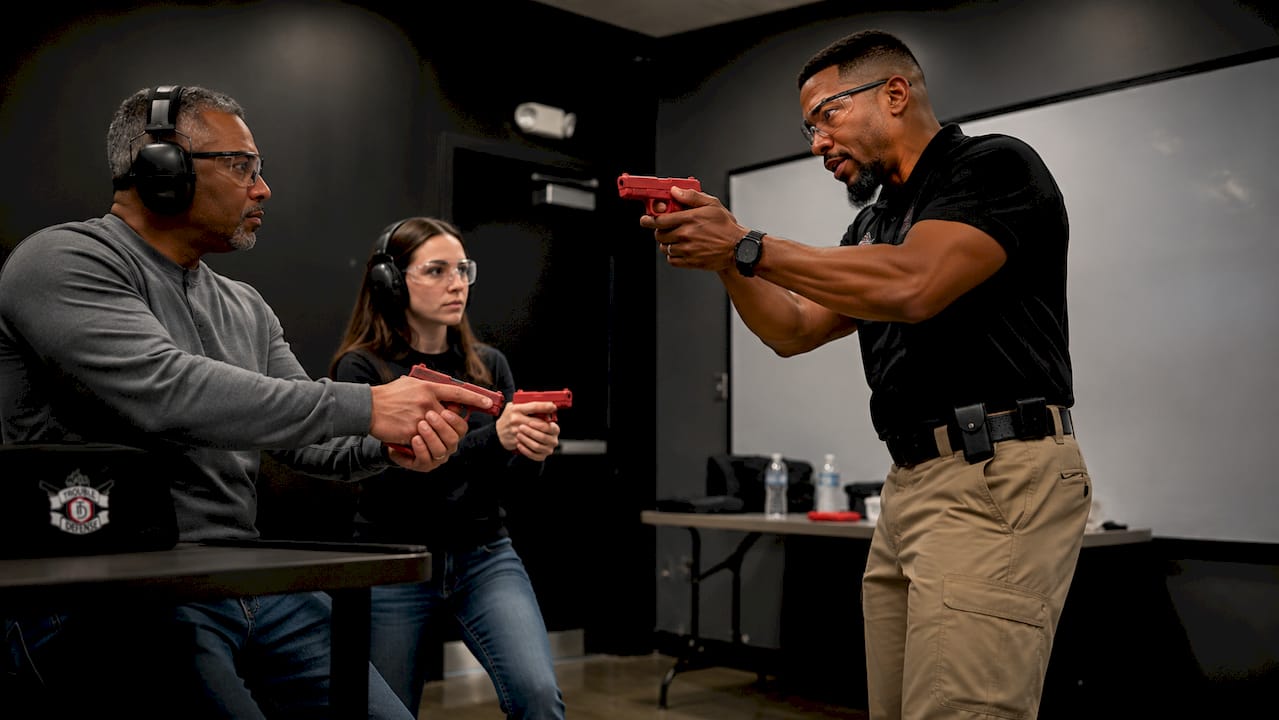
Pre-purchase advice aligns firearm choices with physical stature, intended use, and local regulations, preventing wasted money on equipment that does not fit. That is a practical benefit most new owners never consider until they are standing at a counter feeling pressured to decide.
Key factors a skilled consultant considers when tailoring a session:
- Experience level: beginner, intermediate, or advanced
- Physical considerations: hand size, strength, mobility, or vision limitations
- Primary purpose: self-defense, concealed carry, home protection, sport shooting, or collecting
- Group context: individual, couple, family, workplace team, or community organization
- Jurisdiction: Virginia, Maryland, DC, or multi-state needs
- Special circumstances: military background, disability, youth training, or women’s-specific programs
Trouble Defense runs adaptive firearms training for blind and low-vision individuals, a program that most training academies do not offer at all. The academy also runs dedicated women’s firearm training sessions designed around the specific handling, fit, and confidence-building needs of women shooters. Youth firearm safety education and security firearms training round out a program list built for the full range of the DMV community.
Tactical and self-defense consultations take a different shape than recreational or collection-focused sessions. A client preparing for a self-defense training program needs scenario planning, legal use-of-force discussion, and a training calendar that builds skills progressively. A collector needs guidance on storage, transfer law, and estate planning. Both are legitimate consultation goals, and both deserve a session built around their actual needs.
How to choose the right firearm consultant
The most important quality in a firearm consultant is independence from retail sales pressure. Education-first consultations give clients clear, unbiased guidance tailored to their needs rather than steering them toward a purchase. If a consultant’s income depends on selling you a firearm, the advice is compromised before the session starts.
Certifications matter. Look for NRA-certified instructors, documented experience with state-specific permit programs, and demonstrated knowledge of both administrative and criminal firearms law. A consultant who can explain Virginia CCW requirements, Maryland HQL rules, and DC carry licensing in plain language is worth far more than one who only knows the federal baseline.
Immediate legal counsel is the standard recommendation for anyone already facing a firearms legal issue, given strict deadlines and mandatory minimum sentences in many jurisdictions. A good consultant knows when to refer you to an attorney and does so without hesitation.
Trouble Defense holds NRA instructor certifications and has earned over 300 five-star Google reviews from clients across the DMV area. The academy’s certified instructors cover Virginia CCW, Maryland Wear and Carry, Maryland HQL, DC concealed carry, active shooter training, and specialized programs. That breadth means a single consultation can map your full training path rather than just answering one question.
Pro Tip: Ask any prospective consultant to walk you through the specific permit requirements for your state before you commit to a session. A consultant who cannot answer that question clearly is not the right fit.
Key Takeaways
A firearm consultation is the most direct way to align your firearm choices, safety habits, and legal compliance with your specific situation and jurisdiction.
| Point | Details |
|---|---|
| Consultations are jurisdiction-specific | Virginia, Maryland, and DC each have distinct permit, storage, and transfer laws that require local expertise. |
| Legal risk is real without guidance | Compliance errors in firearms law can result in felony charges; professional review prevents costly mistakes. |
| Sessions adapt to every skill level | Consultants tailor content for beginners, experienced shooters, women, youth, and adaptive needs. |
| Independence from sales pressure matters | Choose a consultant whose income does not depend on selling you a firearm for unbiased advice. |
| Preparation multiplies session value | Bring documents and written questions to get the most from your consultation time. |
Why personalized consultation changed how I think about firearm ownership
The most common misconception I encounter is that a firearm consultation is only for beginners. Experienced shooters often assume they already know what they need. What they frequently discover in a session is that their knowledge has gaps in the legal dimension, not the technical one. A shooter who handles a firearm with confidence may have no idea that Maryland requires an HQL before purchase, or that a private transfer in DC without a licensed dealer is a criminal offense.
The trend I have watched grow over the past several years is demand for consultations that go beyond the basics. Clients are asking harder questions about use-of-force law, multi-state carry rights, and how to structure training for a household rather than just an individual. That shift reflects a more mature understanding of what responsible ownership actually requires.
What I find most rewarding is watching a client leave a session with a clear, written plan. They came in with anxiety about making the wrong choice. They leave knowing exactly which permit to pursue, which safety certification steps to complete, and what their storage setup needs to look like. That clarity is the whole point of professional consultation. It is not about selling a product. It is about removing the confusion that leads to bad decisions.
— Dee Parker
Trouble Defense brings expert firearm consultation to the DMV area
Trouble Defense LLC offers firearm training and consultation for every skill level across Virginia, Maryland, and Washington DC. Programs include Virginia CCW certification, Maryland Wear and Carry training, Maryland HQL preparation, DC concealed carry training, women’s firearm training, adaptive training for blind and low-vision individuals, youth firearm safety education, active shooter training, and tourist shooting experiences.
Every session at Trouble Defense starts with education, not sales. Certified NRA instructors build a training plan around your goals, your jurisdiction, and your experience level. Read the full firearm safety training guide to understand what your training path looks like, then contact Trouble Defense to schedule a personalized consultation. The training calendar lists current class options across more than 10 programs in Northern Virginia.
FAQ
What is a firearm consultation?
A firearm consultation is a professional session where a certified expert provides personalized advice on firearm selection, safety training, and legal compliance based on your experience level and jurisdiction.
How long does a typical firearm consultation take?
Most consultations run between one and three hours. Entry-level safety courses that combine classroom instruction and live-fire exercises typically run about four hours.
Do I need a firearm consultation before getting a CCW permit?
A consultation is not legally required, but it significantly improves your preparation. A consultant maps Virginia CCW, Maryland Wear and Carry, or DC carry requirements to your specific situation before you invest time and money in the process.
What qualifications should a firearm consultant have?
Look for NRA instructor certification, documented experience with your state’s permit programs, and knowledge of both administrative and criminal firearms law. Trouble Defense instructors hold NRA certifications and serve clients across Virginia, Maryland, and DC.
Can firearm consultations cover legal compliance issues?
Yes. Consultants review storage requirements, transfer rules, and permit obligations for your jurisdiction. For active legal matters, immediate legal counsel from a firearms attorney is the appropriate next step given strict deadlines and mandatory minimum sentences.