An active shooter is one or more individuals actively engaged in killing or attempting to kill people in a populated area, according to the FBI’s own working definition. The moment you recognize one, three options exist in order of priority: run if you have a clear path out, hide if you don’t, and fight only as an absolute last resort. Act immediately. The FBI, CISA, and FEMA all teach this same framework because most incidents are over before help arrives.
TL;DR:
- Running is most effective when you can reach safety quickly without exposing yourself to the shooter or stopping to gather belongings.
- Hiding involves locking and barricading the door, turning off lights, silencing devices, and spreading out to reduce the risk of multiple casualties if breached.
- Fighting should be a last resort when escape and hiding are impossible, requiring coordinated, aggressive action to disarm or incapacitate the attacker.
- Basic first aid, including direct pressure and tourniquets, is critical because many incidents end within 10 to 15 minutes, often before EMS arrives.
- Organizations should develop, train, and regularly review an active shooter response plan, including building layout familiarization and regular realistic drills.
Table of Contents
- How Do You Respond to an Active Shooter by Running?
- What’s the Best Way to Hide From an Active Shooter?
- When Is Fighting an Active Shooter the Right Call?
- What First Aid Should You Give During an Active Shooter Event?
- How Should You Act When Police Arrive?
- What Are the Warning Signs of a Potential Shooter?
- How Should Organizations Prepare an Active Shooter Plan?
- Where Trouble Defense Fits Into Active Shooter Readiness
- Why Realistic Drills Change What People Actually Do
- How to Schedule Active Shooter Training With Trouble Defense
- Authoritative Guidance and Training Resources to Consult
- Sources
- FAQ
How Do You Respond to an Active Shooter by Running?
Running is always the first choice when you can move away from danger without walking toward the shooter or into an unknown risk. The decision has to happen fast, and it has to be based on what you can actually see and hear, not on hope.
The rule is simple: if you can get to safety without exposing yourself to the person doing the shooting, go. Don’t stop to grab your laptop, your keys, or your coat. Every second spent gathering belongings is a second you’re not putting distance between yourself and the threat.
- Move away from the sound of gunfire, using the nearest safe exit rather than the most familiar one.
- Warn others only if you can do it without slowing yourself down or drawing attention to your position.
- Choose routes that put walls, corners, or distance between you and the shooter’s likely line of sight.
- Keep your hands visible and empty as you move, since responding officers won’t yet know who the threat is.
- Help others evacuate if it’s safe to do so, but never delay your own escape to convince someone else to leave.
- Prevent people from wandering into the danger zone if you’re near an entrance others might use.
Once you’re clear and behind a locked door, in a vehicle, or otherwise genuinely safe, call 911. Give your exact location, the direction the shooter was last seen heading, a description of weapons if you saw them, and how many people you believe are involved. Dispatchers are trained to pull details out of you calmly, but the more specific you are up front, the faster responding officers can act on what you know.
What’s the Best Way to Hide From an Active Shooter?
Hiding is the fallback when running isn’t realistic, and doing it well is a skill, not an instinct. Get out of the hallway or open area and into a room that has a door you can lock or block.
Once inside, barricade the entrance with anything heavy: desks, filing cabinets, bookshelves, stacked chairs. A locked door slows an attacker down; a locked door with a desk shoved against it slows them down a lot more. Turn off the lights, silence your phone completely (not just vibrate; a buzzing phone against a desk is audible), and move away from the door and any windows.
- Lock and barricade every entry point into the room, including secondary doors you might not think about at first.
- Spread people out around the room instead of clustering together in one corner or under one table.
- Stay out of the shooter’s direct line of sight if they look through a window or gap.
- Silence everything, phones, watches, pagers, and stay quiet yourselves, including muting group texts.
- Text 911 if your area supports it, since a whispered phone call can give away your position.
- Use a printed sign in a window only if law enforcement in your area has trained you to do so; otherwise stay silent.
Research on hiding behavior from campus safety programs consistently finds that spreading out rather than clustering reduces the risk of multiple casualties in a single room if a door is breached. Clustering feels safer. It isn’t.
Pro Tip: A doorstop wedge or a belt looped through the door handle and around a nearby fixed object can buy critical seconds on doors that don’t lock from the inside. Practice this once, in a calm moment, so your hands know what to do under stress. The most common mistake people make is hiding in a room without checking whether the door actually latches, only to discover under pressure that it swings open with a light push.
When Is Fighting an Active Shooter the Right Call?
Fighting is the option of last resort, reserved for the moment when running isn’t possible, hiding isn’t possible, and the shooter is already in the room with you. This isn’t a tactic you choose. It’s the one that’s left when the other two are gone.
If you’re in that position, commit fully. Half measures get people hurt worse than full commitment does. The advantage civilians have in this scenario is numbers and surprise, not skill, so use both.
- Act as a group whenever possible; multiple people moving on one attacker at once overwhelms them faster than a single person can.
- Aim for the hands, eyes, and face, since these disrupt an attacker’s ability to keep control of a weapon.
- Use anything within reach as an improvised weapon: a fire extinguisher, a chair, a stapler, scissors.
- Commit to one decisive, coordinated effort rather than a hesitant, drawn out struggle.
- Once you have control of the weapon or the attacker is down, do not let go until help arrives.
This is a psychological fight as much as a physical one. Hesitation is the biggest risk, and people who freeze at this moment tend to freeze longer than they realize. Understand also that fighting escalates the immediate risk of injury to you and anyone near you. It’s a real option, not a movie fantasy, but it’s the option you take only when the other two doors are closed.
What First Aid Should You Give During an Active Shooter Event?
Gunshot wounds kill through blood loss faster than most people expect, which is why basic bleeding control matters as much as evacuation once you’re safe enough to help. Scene safety comes first: don’t approach a wounded person if the shooter is still active nearby.
When it’s safe, apply firm, direct pressure to the wound immediately. A common mistake is placing a bandage on a wound without pressing hard first; a loose bandage does almost nothing against arterial bleeding. Push down with both hands if you have to, and keep pushing.
- Apply direct, steady pressure to the wound using both hands, a folded shirt, or gauze if available.
- If bleeding continues and the wound is on an arm or leg, apply a tourniquet two to three inches above the wound and tighten until bleeding stops.
- Keep applying pressure even while placing a tourniquet; don’t stop one to start the other.
- Improvise with a belt, a necktie, or torn fabric and a rigid object like a pen if no manufactured tourniquet is on hand.
- Note the time you applied the tourniquet and tell EMS or officers as soon as they arrive.
- Tell 911 the number of injured, the location of each, and whether wounds are to the torso, head, or limbs.
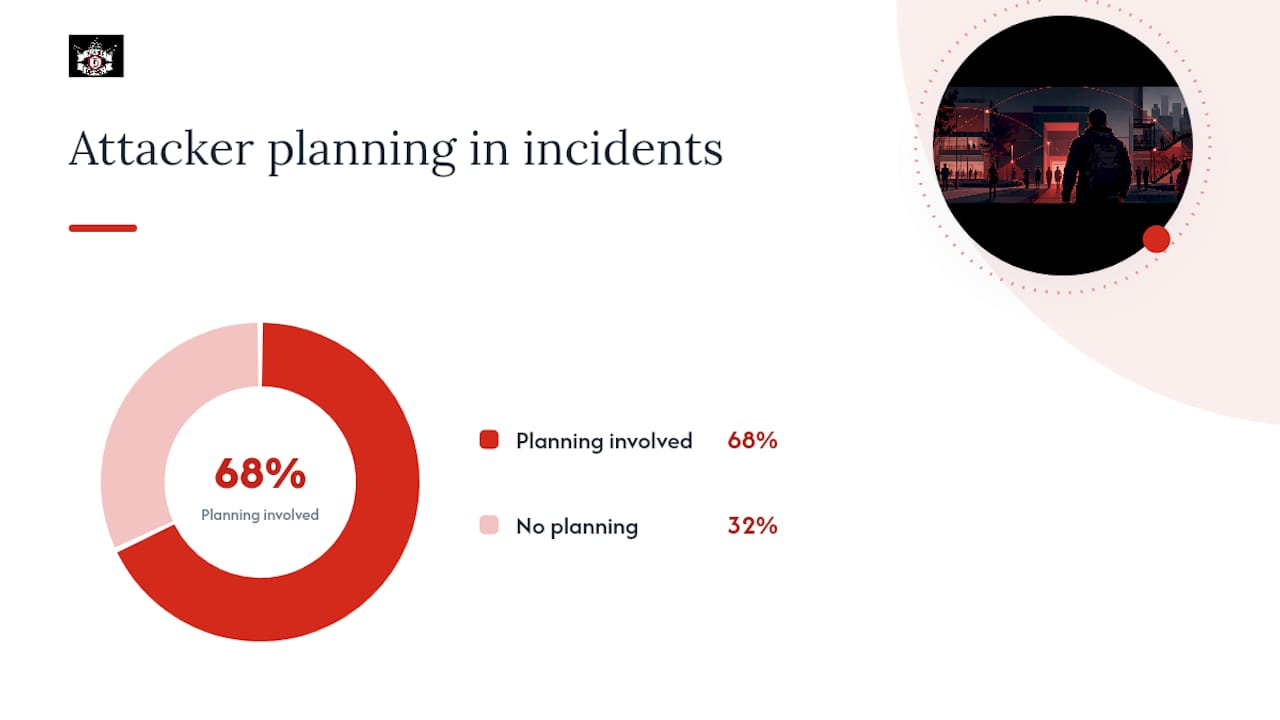
The 68% figure that changes everything: the FBI’s 2025 report found that 68% of that year’s 34 active shooter incidents involved planning and preparation by the attacker, a reminder that these events rarely give warning in the moment itself. That’s exactly why bystander medical skill matters. Many incidents resolve in 10 to 15 minutes, often before EMS can physically reach the wounded.
Hands-on practice beats reading about this every time. Stop the Bleed courses and FEMA’s You Are the Help Until Help Arrives program both teach these exact motions on training mannequins, which is the only way to build the muscle memory that holds up under real stress. Our gunshot wound first aid guide walks through the same steps in more depth if you want a written reference to review beforehand.
How Should You Act When Police Arrive?
The first officers on scene have one job: find and stop the shooter. They are not trained or tasked to stop and treat wounded people on their way in, which surprises a lot of civilians and can feel cold in the moment, but it’s what saves the most lives overall. Rescue and medical teams follow behind the first wave specifically to treat and evacuate the injured.
Your job when officers appear is to make it instantly obvious you’re not the threat.
- Keep your hands visible, empty, and raised above your head or in plain sight.
- Follow every instruction immediately, even if it seems to contradict what you were doing a moment before.
- Avoid sudden movements, running toward officers, or reaching into pockets or bags.
- Answer questions clearly and briefly: your name, whether you’re injured, and what you saw.
- Give officers or 911 dispatchers the shooter’s location, number of shooters if known, weapon type, and victim locations.
After the immediate threat is contained, expect a controlled evacuation, often single file with hands still raised, followed by witness interviews before you’re released from the scene. This can take hours. It’s part of the process, not a sign something’s wrong.
What Are the Warning Signs of a Potential Shooter?
Most attackers show behavioral changes before they act, which is why prevention matters as much as response. Watch for a pattern rather than one isolated incident: escalating anger or aggression, explicit threats of retribution against specific people, sudden social withdrawal, an unusual fixation on weapons or past attacks, and a noticeable drop in work or school performance.
None of these signs alone proves anything. Together, and especially when they escalate, they’re worth taking seriously.
- Escalating hostility or verbal threats directed at coworkers, classmates, or supervisors.
- Statements referencing past attacks, admiration for shooters, or specific plans for retribution.
- Sudden isolation from people who were previously close, paired with visible distress.
- Fixation on firearms or violence that feels disproportionate to any hobby or job requirement.
- A sharp, sustained drop in performance, attendance, or attention to personal appearance.
Organizations with behavioral threat-assessment teams handle these reports far better than individuals guessing on their own. If your workplace or school has one, use it; if it doesn’t, that’s a gap worth raising. Report concerning behavior to HR, school administration, or law enforcement rather than confronting someone directly. Reporting isn’t about punishing people for having a bad week. It’s about giving trained professionals a chance to intervene before a pattern turns into a plan.
How Should Organizations Prepare an Active Shooter Plan?
An Emergency Action Plan turns individual readiness into an organizational habit, and CISA’s own EAP template is the standard starting point for building one. A plan sitting in a binder nobody’s opened isn’t a plan. It’s paperwork.
- Assign specific roles: who calls 911, who triggers the alert system, who accounts for people afterward.
- Map evacuation routes from every part of the facility, plus at least one alternate route per area.
- Identify shelter locations with doors that lock, minimal windows, and enough space to spread people out.
- Build a communication plan covering internal alerts, mass notification systems, and coordination with 911.
- Stock basic trauma kits (tourniquets, pressure bandages, gloves) in accessible, known locations.
- Train staff in a mix of formats: awareness briefings, hands-on Stop the Bleed practice, active shooter drills, and tabletop exercises.
- Review and update the plan annually, and after any incident or facility change.
- Build in accessibility for people with disabilities, non-English speakers, and anyone who can’t use a standard evacuation route.
- Coordinate directly with local police and EMS so first responders already know your building’s layout before an incident happens.
That last point gets skipped constantly, and it’s one of the more overlooked pieces of readiness. When local officers have walked your building, know where the cameras are, and understand your floor plan ahead of time, confusion during an actual response drops sharply. CISA also recommends physical measures like access control, visible signage, and camera coverage as part of a facility’s broader preparedness posture, and exercises built on HSEEP standards help surface gaps before a real event does.
Where Trouble Defense Fits Into Active Shooter Readiness
Reading a plan is one thing. Running through it under time pressure with an instructor watching your form is another, and that gap is where most preparedness efforts quietly fail. Trouble Defense, a veteran-owned firearms training academy based in Fairfax, VA, built its Active Shooter Training program specifically to close it for organizations across Virginia, Maryland, DC, and the wider DMV area.
Courses cover workplace violence prevention, evacuation and lockdown drills, and hands-on bleeding control practice, taught by certified NRA instructors in a setting built for genuine skill building rather than a compliance checkbox. The program is supported by positive reviews and includes women’s firearms training and an adaptive program for blind and low-vision students, reflecting a broader commitment to training that meets people where they actually are.
Professional instruction doesn’t replace the plan your organization builds. It’s what makes that plan hold up when the room is loud, people are scared, and nobody has time to think through the steps from scratch.
Why Realistic Drills Change What People Actually Do
The gap between reading about Run, Hide, Fight and actually doing it under stress is enormous, and most people underestimate it until they’ve felt the difference in a drill. Ready.gov’s own instructor materials describe the freeze response, denial, tunnel vision, auditory exclusion, as normal, not a personal failing. Training exists specifically to override that freeze, and it only works if you’ve physically rehearsed the motion, not just read about it.
Simple, specific actions rehearsed in advance beat complex tactics every time. Deciding in advance where you’ll run, practicing the barricade motion once with your own hands, applying pressure to a wound on a mannequin instead of imagining it, these small rehearsals are what people actually reach for when the moment arrives. Nobody rises to the occasion under pressure. People fall back to their training level.
If you take one thing from this article, take this: sign up for a basic first-aid course and an active shooter awareness session before you think you need them. That’s the whole point of rehearsal.
— Dee Parker
How to Schedule Active Shooter Training With Trouble Defense
Reading through Run, Hide, Fight is a start. Walking through it in a real room, with a certified instructor correcting your barricade technique or your grip on a tourniquet, is what actually sticks. Trouble Defense runs its Active Shooter Training program for organizations and individuals across the DMV area, pairing lockdown and evacuation drills with hands-on bleeding control practice led by veteran, NRA-certified instructors.
For organizations that want a scenario built around their own building layout, Trouble Defense also offers Private Firearm Training starting from $80 per hour, along with the DMV Concealed Carry Training Package at $450 one-time for readers who want to pair active shooter readiness with concealed carry certification. Group formats, corporate sessions, and adaptive training for individuals with disabilities are all part of the lineup. Reach out through the Trouble Defense website to check upcoming class dates and get your organization or your family scheduled for hands-on training this month.
Authoritative Guidance and Training Resources to Consult
The guidance in this article draws directly from official federal sources, and each one is worth bookmarking for your own reference:
- CISA’s Active Shooter Preparedness Action Guide and its accompanying EAP template for building an organizational plan.
- The FBI’s active shooter incident reports, published annually with incident data and trend analysis.
- FEMA and Ready.gov’s Run, Hide, Fight training materials, including the You Are the Help Until Help Arrives bystander course.
- Stop the Bleed courses, widely offered through hospitals and safety organizations, for hands-on hemorrhage control practice.
Sources
- FBI releases 2025 active shooter incidents in the United States report
- CISA — Active Shooter Preparedness
- FEMA training resources / Run, Hide, Fight framework references
FAQ
What Is the Official Definition of an Active Shooter?
The FBI defines an active shooter as one or more individuals actively engaged in killing or attempting to kill people in a populated area. The FBI’s 2025 report recorded 34 such incidents that year, a 42% increase from 2024.
What Does Run, Hide, Fight Mean?
Run, Hide, Fight is the official response framework promoted by FEMA, Ready.gov, and the FBI for active shooter situations. Run if you can safely evacuate, hide if you can’t, and fight only as a last resort when no other option exists.
How Long Do Active Shooter Incidents Typically Last?
Most active shooter incidents resolve within 10 to 15 minutes, often before law enforcement can arrive on scene. That short window is exactly why individual readiness and quick decision making matter more than waiting for help.
Does Trouble Defense Offer Active Shooter Training?
Yes. Trouble Defense offers Active Shooter Training for organizations and individuals throughout the DMV area, covering evacuation drills, lockdown procedures, and bleeding control. Current pricing and available class dates are listed on the Trouble Defense website.
What Should Go in a Basic Trauma Kit?
A basic trauma kit should include a commercial tourniquet, pressure bandages or gauze, and gloves, though a belt or torn fabric can serve as an improvised tourniquet if nothing else is available. Direct, firm pressure on a wound remains the critical first step before any tourniquet goes on.