
Workplace violence covers everything from a verbal threat to physical assault or homicide, and it happens across every industry, from offices to hospitals to warehouses. The three things to act on right now: employers need a written prevention program, employees need to recognize warning signs early, and everyone should know the basic Run, Hide, Fight response. Agencies including OSHA, the EEOC, the FBI, and the BLS all publish guidance on exactly how to do this.
TL;DR:
- Building a workplace violence prevention program requires a written zero-tolerance policy, site risk assessment, employee training, and metrics tracking to ensure effectiveness.
- Recognizing warning signs involves monitoring for behavioral clusters like performance drops, isolating behavior, or verbal threats, rather than isolated odd acts.
- During an active threat, follow the Run, Hide, Fight protocol based on your environment, and rehearse response plans to increase safety likelihood.
- Higher-risk industries such as healthcare and retail should implement controls like secure entry points, visible cameras, and scheduled check-ins for lone workers.
- Establishing a threat assessment team with multidisciplinary members and conducting simulated exercises help identify and manage potential threats proactively.
Table of Contents
- Recognizing the four types of workplace violence and their warning signs
- Building a workplace violence prevention program that actually works
- What to do during an active threat and right after
- Setting up behavioral threat assessment and a Threat Assessment Team
- Legal duties employers carry and what to document
- Higher-risk industries need controls built for their setting
- How Trouble Defense builds practical readiness into training
- Three things to do this week
- Book workplace and active shooter training with Trouble Defense
- Sources
- FAQ
Recognizing the four types of workplace violence and their warning signs
Security researchers generally sort workplace violence into four categories. Type I involves someone with no legitimate business relationship to the workplace, often criminal intent like robbery. Type II involves a customer, client, or patient turning violent, common in healthcare and retail. Type III is worker-on-worker violence between employees or former employees. Type IV involves someone with a personal relationship to an employee, such as a domestic partner, who brings that conflict into the workplace.
Single odd behaviors rarely predict violence on their own. What matters is a cluster of changes over time: a sudden drop in performance, fixation on a grievance, increasing isolation, or verbal threats that escalate in frequency and intensity. A retail worker might notice a customer’s tone shifting from frustrated to threatening. An office manager might see a former employee repeatedly showing up uninvited.
- Document specific dates, words, and behaviors rather than general impressions.
- Report through a known, accessible channel, not just a hallway conversation.
- Treat any direct threat or weapon mention as urgent, regardless of context.
Building a workplace violence prevention program that actually works
OSHA recommends a comprehensive prevention program built around a few consistent parts, and employers can use this as a working checklist.
- Publish a zero-tolerance policy with reporting channels that don’t require going through a potential aggressor.
- Run a site risk assessment covering lighting, entry points, cash handling, and isolated work areas.
- Add engineering and administrative controls such as barriers, panic buttons, or adjusted staffing at high-risk hours.
- Train employees on recognizing warning signs, de-escalation, and role-specific response, repeated on a regular schedule rather than once at onboarding.
- Set a clear investigation workflow with anti-retaliation protections for anyone who reports.
- Track metrics like report volume, response time, and incident trends to see whether the program is actually working.
A program on paper that nobody has practiced is not a program.
What to do during an active threat and right after
Federal guidance on active threats summarizes the response as Run, Hide, Fight: escape the area if you can, hide securely and silently if you can’t, and defend yourself only as an absolute last resort. Each step depends on your specific layout and exits, which is why rehearsing them matters more than memorizing them.
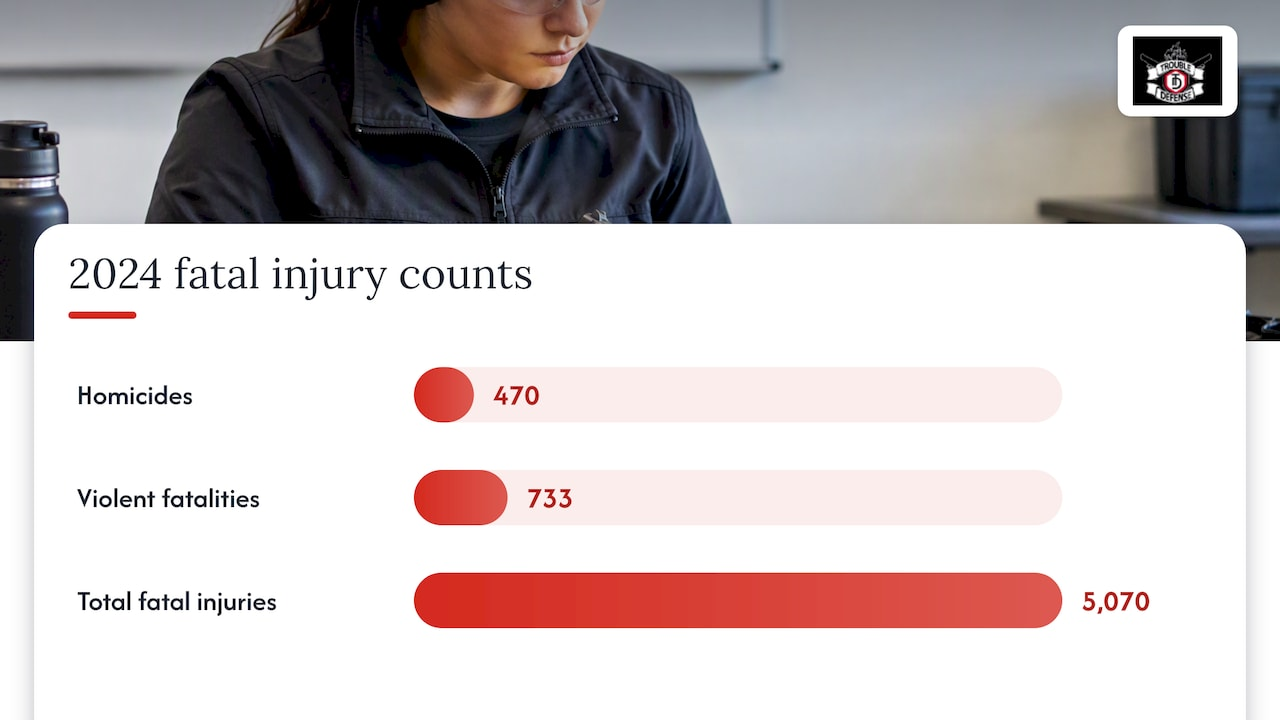
BLS data shows workplace violence is a significant cause of occupational death. In 2024, 733 fatalities were caused by violent acts at work, with homicides accounting for 470 of those, or 64.1%, out of 5,070 total fatal work injuries that year.
- When calling 911, give your exact location, a suspect description, weapon type if known, and casualty information.
- Apply direct pressure to bleeding wounds if you’re trained and it’s safe to do so.
- Avoid touching anything in the scene that investigators may need later.
- Once the area is secure, use a single agreed channel, like a text chain, to confirm you’re safe rather than flooding phone lines.
Setting up behavioral threat assessment and a Threat Assessment Team
The behavioral approach to threat assessment looks at intent, capability, and proximity rather than reacting only after something happens. The FBI’s threat assessment guidance recommends organizations build a multidisciplinary Threat Assessment Team, often called a TAT, to evaluate persons of concern before a situation turns physical.
- Staff the team with HR, security, legal counsel, and, where possible, a mental health professional.
- Build a simple workflow: report comes in, team triages severity, a management plan is set, and the case is monitored over time.
- Keep case records limited to what’s necessary and legally defensible, since privacy law intersects with these investigations constantly.
Pro Tip: Run a tabletop exercise with your TAT at least once a year using a hypothetical case, not just a real one after the fact.
Escalate to law enforcement the moment a threat looks imminent rather than waiting for the team’s next scheduled meeting.
Legal duties employers carry and what to document
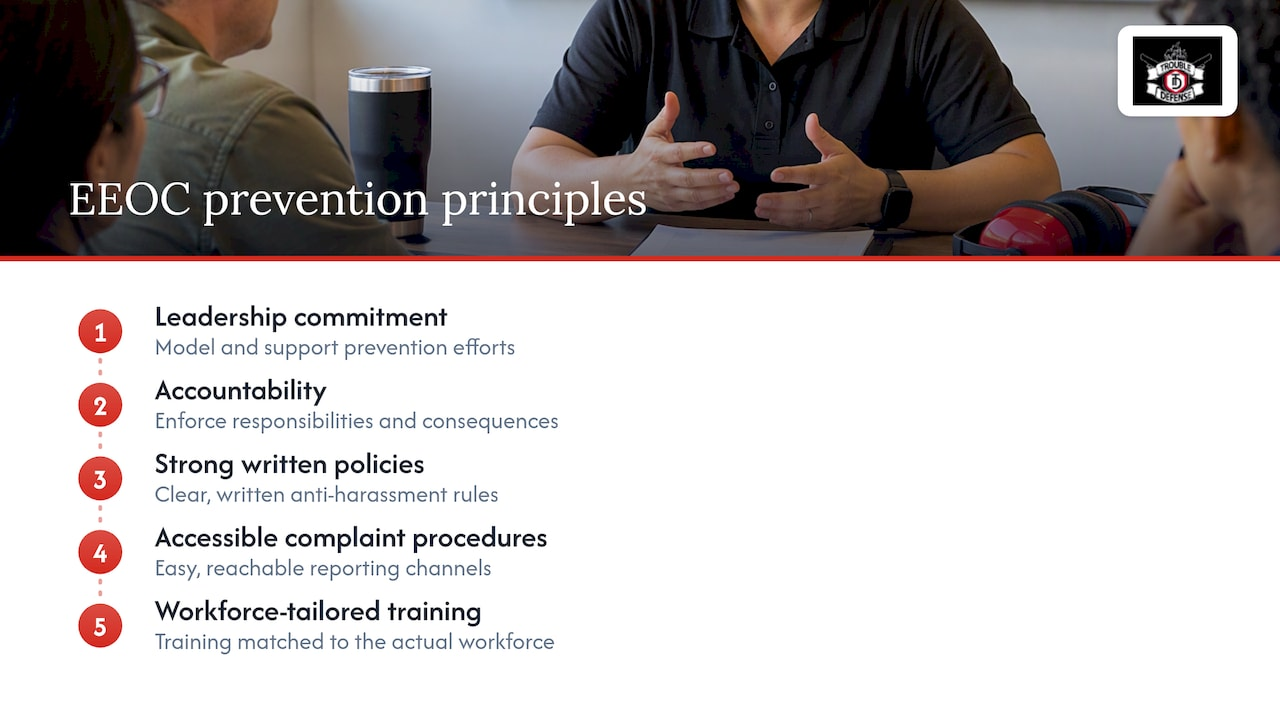
OSHA’s general duty clause pushes employers toward a documented, proactive prevention program rather than a reactive one. Separately, the EEOC’s promising practices guidance lays out five principles that reduce harassment before it turns violent: leadership commitment, accountability, strong written policies, accessible complaint procedures, and training tailored to the actual workforce.
Harassment becomes unlawful specifically when it’s tied to a protected characteristic and is severe or pervasive, a distinction worth understanding before drafting policy language. For specific liability questions, an employment attorney such as the Law Office of Michael P Carroll can clarify where a company’s exposure actually sits. Keep incident reports factual, dated, and separate from performance records, and involve counsel early on anything involving a protected class or a credible threat.
Higher-risk industries need controls built for their setting
Healthcare and social assistance workers face notably higher assault rates than most other industries, largely from Type II incidents involving patients, and OSHA’s healthcare-specific guidance points to staffing levels, facility design, and targeted training as the biggest levers. Retail and late-night operations carry their own risks tied to cash handling and limited staffing after dark.
- Healthcare settings benefit from secure triage areas and staffing ratios that avoid solo coverage during high-risk shifts.
- Retail operations reduce risk with visible cameras, controlled cash access, and paired staffing late at night.
- Lone workers, including delivery and field staff, need scheduled check-ins and a duress alarm they can trigger discreetly.
- Warehouse and distribution environments benefit from clearly marked safety zones that officers and staff both recognize. The Public Safety Consulting Group and resources like distribution center safety zone examples offer setting-specific frameworks worth reviewing.
How Trouble Defense builds practical readiness into training
A veteran-owned firearms training academy based in Fairfax, Virginia, offers comprehensive training with hundreds of positive client reviews, serving a wide range of experience levels. Its workplace violence prevention training covers recognition, de-escalation, and reporting procedures built for real teams, not generic slideshows. Organizations that want rehearsal, not just policy, can pair it with active shooter training that walks through Run, Hide, Fight scenarios specific to their own floor plan. Every course is led by certified instructors in a supportive, judgment-free environment, whether the group is a corporate office or a healthcare team.
Three things to do this week
If you take one thing from this: set a written reporting policy this week, walk your own space for risk gaps, and book role-specific training before you need it, not after. Prevention works best as a habit, not a one-time event.
— Dee Parker
Book workplace and active shooter training with Trouble Defense

Whether your team needs recognition and de-escalation training or a full active shooter rehearsal, Trouble Defense builds programs around your actual workplace, not a generic script. Courses are led by certified instructors and can flex for adaptive needs across a range of teams. Schedule your workplace violence prevention training and get your team ready before an incident forces the issue.
Sources
- Bureau of Labor Statistics — Fatal work injuries declined in 2024
- OSHA — Workplace Violence: Prevention and Programs (OSHA3153)
- FBI — Making Prevention a Reality (threat assessment guide)
FAQ
What are five examples of workplace violence?
Examples include verbal threats, bullying or intimidation, physical assault, robbery-related violence from an outsider, and domestic violence that follows a partner into the workplace. Severity ranges widely, but each type is tracked separately under the Type I through Type IV classification framework.
What are the four types of workplace violence?
Type I involves a criminal with no legitimate connection to the workplace, Type II involves a customer or client, Type III involves a coworker or former coworker, and Type IV involves someone with a personal relationship to an employee. This framework comes from established OSHA workplace violence guidance.
What is Type III workplace violence?
Type III workplace violence is worker-on-worker violence, involving a current or former employee who targets coworkers or supervisors. It’s often preceded by observable behavioral changes such as escalating grievances or performance shifts rather than appearing without warning.
What are common causes of workplace violence?
Common contributing factors include unresolved interpersonal conflict, untreated mental health crises, domestic issues spilling into the workplace, and organizational stressors like layoffs or disciplinary action. No single cause explains most incidents, which is why threat assessment looks at patterns over time rather than one trigger.

