Shooting range visits attract non-gun owners because they deliver a rare combination of mental focus, social connection, and measurable personal growth that few other recreational activities match. The industry term for this growing segment is “recreational shooting,” and it covers anyone who visits a range for enjoyment, skill-building, or community without owning a firearm. Why non-gun owners enjoy range visits comes down to three core drivers: the meditative quality of focused practice, the welcoming social environment modern ranges have built, and the confidence that comes from learning a new skill in a controlled setting. Places like Trouble Defense in Fairfax, VA have made this experience accessible to complete beginners across the DMV area.
What recreational and mental benefits do non-gun owners gain from range visits?
Shooting ranges deliver genuine mental health benefits, not just entertainment. The indoor shooting range industry is valued at $4 billion, with documented stress reduction and focus improvement tied directly to the motor skill engagement required during practice. That number reflects how seriously Americans take this activity as a wellness outlet, not just a hobby.
The mental mechanics are straightforward. When you step up to a lane, your brain shifts entirely to stance, grip, breath control, and sight alignment. There is no room for work stress or phone notifications. This forced single-tasking produces a state that researchers compare to mindfulness meditation. The adrenaline and serotonin effects create a therapeutic feedback loop that motivates people to return, even those who have no interest in owning a firearm.
The benefits go beyond the session itself. Shooting ranges improve social interactions, which in turn boost cognitive attention and memory. That means a single visit can sharpen your focus for hours afterward. The combination of physical coordination, mental discipline, and social engagement makes a range visit more cognitively demanding than watching a movie or playing a casual video game.
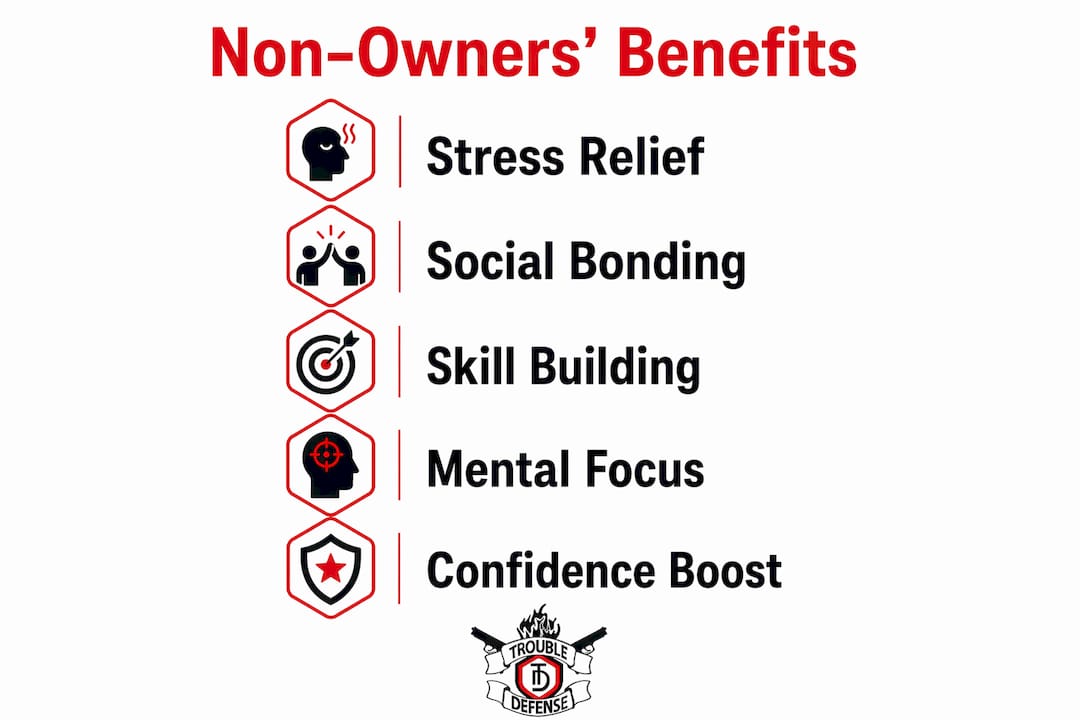
Key mental and recreational benefits non-owners report:
- Stress relief: Deep concentration on mechanics pushes out anxious thoughts within minutes.
- Improved focus: The stable indoor environment removes external distractions, accelerating skill development and mental clarity.
- Serotonin boost: The physical act of shooting triggers a natural mood lift that lasts well after leaving the range.
- Mindful presence: Breath control and sight alignment demand full attention, producing a meditative effect.
- Sense of accomplishment: Seeing tight groups on a target at the end of a session provides immediate, visible feedback.
Pro Tip: If you are visiting a range for stress relief, book a session mid-week during off-peak hours. Quieter lanes mean fewer distractions and a more focused, calming experience.
How do shooting ranges foster community and social interaction for non-owners?
Modern shooting ranges function as inclusive social spaces, not exclusive clubs. Families and couples increasingly use ranges for bonding and skill progression, preferring it over screen-based entertainment because the shared challenge creates genuine connection. Watching a partner or friend improve their groupings over a single session builds a kind of shared pride that passive entertainment simply cannot replicate.
The stereotype of the shooting range as an intimidating, unwelcoming space is outdated. Modern ranges prioritize inclusivity, actively encouraging questions and dismantling the exclusionary culture that once kept newcomers away. Staff at well-run facilities treat first-timers with the same respect as experienced shooters. That shift in culture is one of the biggest reasons non-gun owner experiences at ranges have become so positive.
Group activities at ranges include:
- Couples date nights: Many ranges offer structured date night packages with rental gear and side-by-side lanes.
- Family outings: Youth-friendly sessions introduce safe firearm handling in a supervised, educational setting.
- Corporate team events: Group shooting experiences build trust and communication in ways that a conference room cannot.
- Friend group challenges: Friendly competition on targets creates shared memories and repeat visits.
- Community classes: Group lessons for beginners connect people with similar curiosity and zero prior experience.
Trouble Defense runs group shooting events across the DC metro area specifically designed for people who want the social experience without needing prior knowledge or equipment. These sessions are built around connection first and skill second.
What practical features make shooting ranges accessible for people without guns?
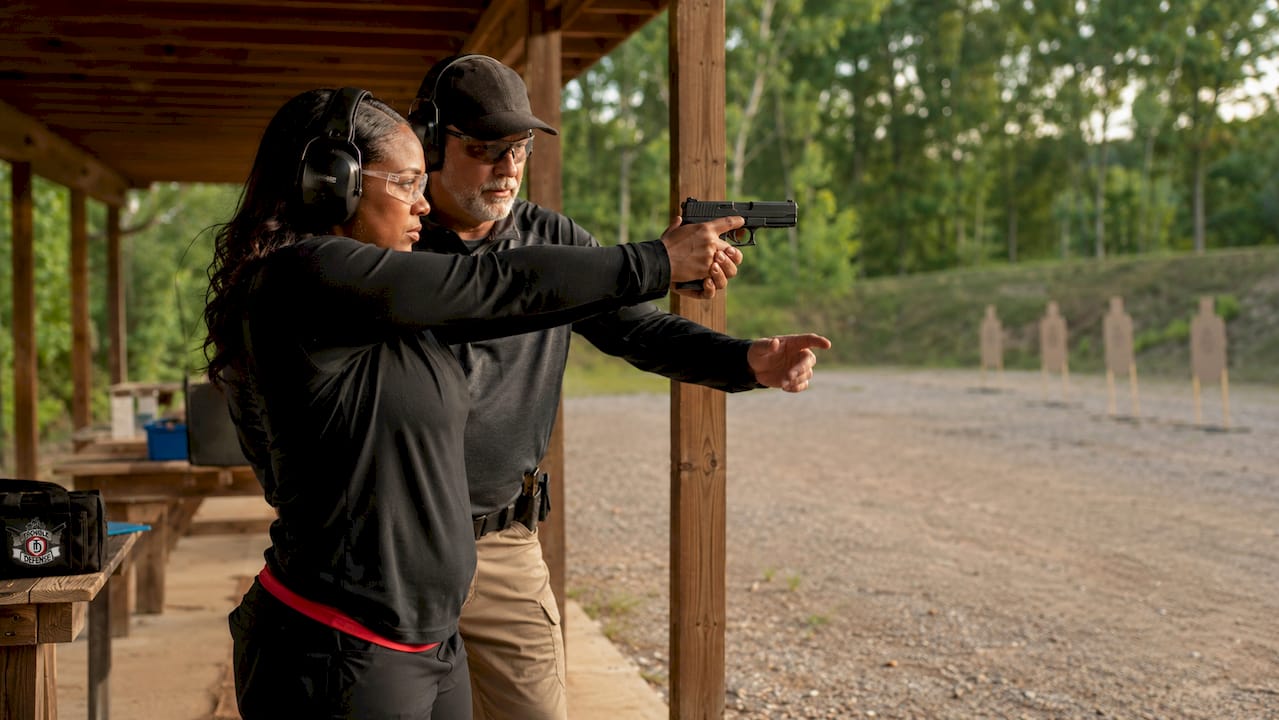
The logistical barriers to visiting a range as a non-owner are lower than most people expect. Many ranges offer walk-in policies with full rental gear, meaning you can show up without a firearm, without a membership, and without any prior experience. Rental fees typically cover the firearm, eye protection, and ear protection for the session.
Modern facilities have also changed the physical environment. Venues are climate-controlled and professionally managed, resembling a sports facility far more than the dimly lit stereotype many people imagine. Clean lanes, bright lighting, and attentive staff create an atmosphere that feels approachable for a first-timer. The experience is closer to a bowling alley than a military training ground.
Here is what a typical first visit looks like for a non-owner:
- Sign a safety waiver. Every reputable range requires this. It takes two minutes and sets clear expectations for behavior on the floor.
- Receive a safety briefing. Staff walk you through the four fundamental firearm safety rules before you touch anything.
- Select a rental firearm. Staff recommend beginner-friendly options, usually a .22 caliber pistol or a low-recoil 9mm.
- Get fitted for hearing and eye protection. Both are mandatory and provided at the counter.
- Head to your lane with a staff member or instructor nearby. Questions are expected and welcomed.
Pro Tip: Tell the range staff upfront that you are a first-timer. They will assign you a lane with more space, walk you through loading, and check your form without you having to ask.
Trouble Defense offers beginner firearm training in Virginia, Maryland, and Washington DC with certified NRA instructors who specialize in working with people who have never held a firearm before.
How does visiting a shooting range build personal development without ownership?
Personal growth is one of the most underreported reasons people without firearms keep returning to ranges. Non-owners report that initial anxiety fades within 15 to 20 minutes as concentration on stance and grip crowds out fear. That shift from anxiety to competence in a single session is a powerful experience. It proves to the person that they can do something they believed was beyond them.
The progress at a range is measurable in a way that most recreational activities are not. You can see exactly where your shots land. You can track improvement from the first target to the last. Non-owners enjoy this measurable feedback because it provides a sense of accomplishment that is distinct from most other leisure options. There is no ambiguity. Either you hit the target or you adjust and try again.
Personal development benefits that carry beyond the range:
- Overcoming fear: Controlled exposure to something unfamiliar builds general confidence in facing other anxieties.
- Patience and discipline: Consistent improvement requires slowing down, breathing, and repeating fundamentals.
- Goal-setting habits: Tracking shot groups teaches people to set small, measurable targets in other areas of life.
- Physical coordination: Fine motor control developed at the range transfers to other precision activities.
- Mental resilience: Accepting a bad shot and immediately refocusing is a skill with broad life applications.
The confidence built through shooting is not just about firearms. It is about proving to yourself that you can learn something new, stay calm under pressure, and improve with practice. That lesson applies everywhere.
Key Takeaways
Non-gun owners gain the most from range visits when they approach the experience as a mental wellness and skill-building activity, not just a novelty.
| Point | Details |
|---|---|
| Mental focus is the core benefit | Shooting requires full concentration, producing stress relief and clarity similar to meditation. |
| Modern ranges are genuinely welcoming | Inclusive policies, rental gear, and patient staff remove barriers for complete beginners. |
| Social bonding drives repeat visits | Couples, families, and groups use ranges for shared challenges that screen-based activities cannot match. |
| Personal growth happens fast | Anxiety fades within 15–20 minutes as measurable progress replaces fear. |
| No ownership required | Walk-in rental programs make range visits fully accessible without a firearm or membership. |
Why ranges matter more than most people realize
I have watched hundreds of people walk into a range for the first time with their arms crossed and their jaw set. Most of them leave with a completely different posture. That transformation is not about guns. It is about doing something hard, staying focused, and seeing the result on paper.
The conventional wisdom says shooting ranges are for gun people. That framing misses the point entirely. A range is one of the few places left where you have to be fully present. Your phone is useless. Your worries are irrelevant. The only thing that matters is the next shot. That kind of forced presence is rare, and people are hungry for it.
What I find most interesting is who keeps coming back. It is not always the people who showed the most natural talent on day one. It is the people who discovered that they could get better at something through patience and repetition. That lesson is worth far more than any target score.
The ranges that are thriving right now are the ones that figured this out early. They stopped marketing to gun owners exclusively and started welcoming anyone curious enough to show up. The benefits for beginners are real, and the ranges that communicate that clearly are the ones filling their lanes on a Tuesday afternoon.
— Dee Parker
Start your range experience with Trouble Defense
Trouble Defense is a veteran-owned firearms training academy in Fairfax, VA, serving Virginia, Maryland, and Washington DC. Whether you have never held a firearm or you are simply curious about what a range visit feels like, Trouble Defense builds programs around your starting point, not someone else’s skill level.
Certified NRA instructors lead every session, from women’s firearm training to tourist shooting experiences designed for first-timers. Trouble Defense also offers adaptive programs for individuals with disabilities and youth firearm safety education across the DMV area. If you want to understand firearm safety training before you book, the complete guide on the Trouble Defense website covers everything a newcomer needs to know. Over 300 five-star Google reviews reflect what happens when a range puts people first.
FAQ
Do I need to own a gun to visit a shooting range?
No. Most ranges offer walk-in rental programs that include the firearm, eye protection, and ear protection for the session. You can participate fully without owning any equipment.
Is a shooting range safe for complete beginners?
Yes. Reputable ranges require a safety waiver and briefing before anyone enters a lane. Mandatory safety cultures and trained staff build confidence from the very first session.
How long does it take to feel comfortable at a range?
Most non-owners report that anxiety fades within 15 to 20 minutes as mental focus on mechanics replaces initial nervousness.
What are the main reasons non-gun owners visit ranges?
The top reasons are stress relief, social bonding, measurable skill progress, and the challenge of learning something new in a controlled, supportive environment.
Can shooting ranges be a good activity for couples or groups?
Yes. Families and couples increasingly choose ranges for shared recreational experiences, preferring the active challenge over passive screen-based entertainment for genuine connection.