Firearm Training in Virginia: Practical Courses, Legal Requirements, and Safety Best Practices

You want clear, practical guidance on firearm training in Virginia and a quick sense of what matters most. Virginia offers a wide range of courses—basic safety, defensive tactics, active-shooter response, and certified instructor programs—so you can pick training that fits your goals and skill level.
The article explains the types of courses available, key safety practices, how certifications work, and how to choose the right class. It also covers locations, enrollment steps, and common questions so you can move from curiosity to action with confidence.
Types of Firearms Courses Offered in Virginia
Virginia offers a wide range of courses that teach safe handling, marksmanship, and legal responsibilities. Classes vary by skill level, weapon type, and range setting, with many aimed at achieving qualification or permit requirements.
Beginner Handgun Training Programs
Beginner handgun programs focus on safety rules, basic pistol operation, and shooting fundamentals. They teach grip, stance, sight alignment, trigger control, and safe loading/unloading. Instructors demonstrate and then supervise live-fire drills on paper targets at 7–15 yards.
Many courses include classroom time on state gun laws, safe storage, and emergency response. Students often practice dry-fire at home and live-fire on the range. Courses frequently satisfy the classroom portion for a Virginia concealed handgun permit or give a certificate for local ranges.
Class sizes are small to allow one-on-one coaching. Rental pistols and eye/ear protection are usually available for students who do not bring their own firearm. Some schools offer follow-up sessions to improve accuracy.
Rifle and Carbine Instruction Options
Rifle and carbine courses cover rimfire and centerfire rifles, AR-platform carbines, and optics use. They teach zeroing optics, natural point of aim, breath control, and trigger follow-through. Instructors run drills at varied distances, from 25 to 300 yards, depending on range capability.
Safety briefings include safe handling across different actions and clearing malfunctions. Courses often split into parts: basic marksmanship, intermediate precision, and carbine movement drills. Many programs teach caliber-specific recoil management and ammunition selection.
Students learn use of iron sights and common optics like scopes and red dots. Classes may include live-fire positional shooting, barricade use, and basic rifle maintenance. Private coaching and hunter-specific rifle clinics are also common.
Shotgun and Specialty Shooting Classes
Shotgun classes teach scatter patterns, shot selection, and lead for moving targets. They cover pump and semi-auto actions, choke effects, and clay target methods such as skeet, trap, and sporting clays. Instructors show proper mount, swing, and follow-through for birdshot and buckshot.
Specialty classes include home-defense shotgun tactics, slug accuracy at close range, and tactical reloads. Some courses add low-light and stress-fire drills for realistic practice. Range limitations often dictate whether slugs or birdshot are used.
Shotgun courses emphasize recoil management and safe muzzle discipline. Many clubs offer season-specific hunting workshops that combine field etiquette, shot placement for game, and legal hunting regulations in Virginia.
Advanced Pistol Techniques
Advanced pistol classes build on basic skills with speed, accuracy, and tactical mindset training. They teach rapid target transitions, two-handed and one-handed manipulations, reloads under time, and malfunction clearance. Instructors use timed drills and steel targets to measure progress.
Courses often include movement while shooting, use of cover, and shooting from unconventional positions. Many advanced programs cover use of red-dot sights and holster work for real-world carry. Legal discussions focus on use-of-force thresholds and after-action duties.
Students receive coaching on controlling recoil for rapid strings, split-second sight picture recovery, and shooting while moving. Advanced classes suit armed professionals, competition shooters, and civilians seeking higher competence.
Essential Firearm Safety Practices
Train regularly, inspect equipment often, and follow clear rules for handling, storage, and range conduct. Knowing the basics reduces risk and helps people act quickly and safely in real situations.
Basic Gun Handling Rules
They always treat a firearm as if it is loaded. Before touching any gun, they point it in a safe direction and keep their finger off the trigger until they are ready to shoot.
They check the chamber and magazine every time they pick up a firearm. Use a visual and physical inspection: remove the magazine, open the action, and look and feel inside the chamber.
They identify the target and what is beyond it before firing. That means knowing the backdrop, range layout, or what could be behind a target in a home-defense scenario. When passing a firearm to someone, they keep the action open and show it is clear.
Safe Storage and Maintenance
They store firearms unloaded and locked, using a cable lock, trigger lock, or a locked safe. Ammunition stays stored separately in a locked container to reduce access by children or unauthorized people.
They clean and inspect firearms after use and on a regular schedule. Use the correct cleaning tools and solvents for the firearm’s caliber and model. Check for worn parts, loose screws, or changes in accuracy.
They follow manufacturer instructions for lubrication, torque, and part replacement. Keep a written log of maintenance and any parts replaced. For long-term storage, use desiccant packs to prevent rust.
Range Safety Procedures
They follow range commands and posted rules without exception. This includes eye and ear protection, handling firearms only at the firing line, and following cease-fire procedures immediately.
They use proper ammunition and targets approved by the range. Bring a chamber flag when required, and keep firearms pointed downrange with actions open during breaks. If a malfunction occurs, keep the muzzle pointed downrange, raise a hand, and wait for range officer instructions.
They coordinate with other shooters when moving downrange or retrieving targets. Communicate clearly and use two-person checks for any action that involves moving or handling firearms.
Active Shooter Response and Defensive Tactics
This section explains practical steps for reacting to an active shooter and the defensive skills taught in firearm training. It stresses realistic drills, safe weapon handling, and building constant awareness to reduce harm.
Scenario-Based Training Modules
Scenario drills use real locations and role players to teach decision-making under stress. Trainees move through simulated store, school, or workplace attacks. Instructors set clear safety rules: unloaded training firearms, protective gear, and range-off limits.
Modules practice three priority actions: run (escape routes and rally points), hide (secure rooms, door barricades, silence phones), and fight (improvised weapons, immediate action if confronted). Firearm safety is reinforced at every step: muzzle control, trigger discipline, and positive target identification.
After-action reviews use video and debriefs to point out timing, communication, and errors. They record response times and command tasks to track improvement. Repeating scenarios builds reflexes and links safe handling to fast, lawful responses.
Situational Awareness Development
Training teaches scanning techniques, threat indicators, and environmental cues. Students learn to note exits, people’s behavior, and sounds that signal gunfire. Instructors use short drills that require noticing specific details under time pressure.
Tactical movement is tied directly to awareness: choosing cover, keeping a low profile, and moving with purpose. Emphasis stays on legal and safe firearm use—never firing without a clear, lawful target.
Simple tools like checklist cards and practiced verbal commands improve team coordination. Regular, brief refreshers keep skills current and help individuals maintain steady awareness in everyday settings.
Certification and Instructor Credentials
This section explains who teaches firearm training in Virginia, what certifications they hold, and the standards those credentials meet. It covers commonly used certificates, state rules, and what to check when picking an instructor.
Role of NRA-Certified Instructors
NRA-certified instructors commonly teach basic pistol, personal protection, and range safety courses in Virginia. They complete NRA instructor courses that include classroom instruction, range demonstrations, and an evaluation by a certified trainer.
NRA programs require candidate-instructors to pass written tests and lead practical teaching sessions. The certification proves the instructor has met NRA teaching benchmarks for safety, marksmanship basics, and legal considerations.
Many private training companies and public ranges list “NRA-certified” on their websites or flyers. Students should confirm current certification dates and ask which NRA course the instructor completed, since NRA offers multiple instructor types (e.g., Pistol, Personal Protection Inside the Home, Chief Range Safety Officer).
State and National Training Standards
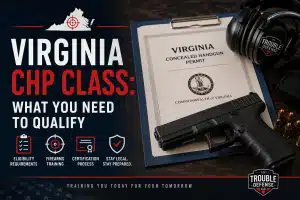
Virginia does not require a single statewide license for all firearms instructors, but it does regulate ranges and certain carry training elements. Concealed handgun permit (CHP) course requirements are set by statute and local circuit courts can set additional conditions. Instructors who teach CHP classes must follow the curriculum that covers legal use of force, firearms safety, and storage.
National standards that instructors follow include NRA curricula and state-approved CHP outlines. Reputable schools document course hours, written instruction, and live-fire time. Students should request a syllabus, proof of completed range time, and any certificates issued after course completion.
Instructor Backgrounds and Expertise
Instructor backgrounds vary: former law enforcement, military veterans, competitive shooters, and professional firearms trainers all work in Virginia. Each brings different strengths—law enforcement instructors may emphasize legal issues and incident response, while competition shooters focus on marksmanship and movement.
Good instructors provide a resume or CV on request and list continuing education. They maintain current first-aid/CPR training and liability insurance when teaching public classes. Ask about student-to-instructor ratios, experience teaching beginners, and references from past students.
Course Selection and Customization
Students should match course content, format, and instructor credentials to their goals. They must check legal topics, range time, live-fire requirements, and any state-specific carry or safety modules.
Choosing the Right Class for Your Needs
They should pick classes based on skill level and legal need. Beginners benefit from a basic safety and handling course that covers safe storage, parts of common pistols, and dry-fire practice. Intermediate shooters need groupings, recoil control, and reload drills with 50–200 rounds of live fire. Advanced students look for force-on-force, low-light, and movement drills taught by instructors with law enforcement or military backgrounds.
They must verify course length and student-to-instructor ratio. Short 2–4 hour classes suit a single skill focus. Full-day or multi-day courses work better for certification, Virginia concealed-carry reciprocity topics, or when live-fire time exceeds 200 rounds.
Private, Group, and Specialized Sessions
Private lessons give one-on-one coaching for technique fixes, tailored drills, and personalized progress plans. They cost more per hour but often cut learning time in half. Students should ask for a lesson plan, instructor credentials, and a clear cancellation policy.
Group classes provide peer learning, stress management, and scenario-based training at lower cost. Look for groups capped at 6–8 students for adequate coaching. Specialized sessions include competition prep, instructor certification, and legal-use-of-force seminars. Those often require prerequisites and specific equipment such as holsters, duty belts, or red-dot optics.
Enrollment, Locations, and Next Steps
This section explains how students sign up, where classes usually meet, and what happens on the first day. It lists steps, facility types, and items to bring so readers can get started quickly.
How to Register for Classes
Students register online through the training provider’s website or by phone. Most schools require a completed application, a copy of a government ID, and payment of the course fee to hold a spot. For Concealed Handgun Permit (CHP) classes, providers often ask for proof of residency if the student claims a Virginia address.
Many ranges limit class size, so early registration is recommended. Some programs use an online waiver and safety quiz that must be finished before arrival. If a student needs equipment rental, they should reserve a firearm and eye/ear protection when registering.
Payment methods usually include credit card, debit card, or PayPal. Refund and cancellation policies vary; students should read the provider’s policy and request a transaction receipt or confirmation number.
Training Facilities Across the State
Firearms training in Virginia takes place at public shooting ranges, private indoor ranges, and outdoor training fields. Northern Virginia has several indoor ranges that run CHP and defensive pistol classes. Southwest Virginia and the Shenandoah area offer larger outdoor ranges for long-gun and tactical courses.
Range rules differ by location. Indoor ranges typically require hearing protection, eye protection, and a range-specific brief. Outdoor sites may require long sleeves, sturdy shoes, and weather-appropriate clothing. Check each facility’s rules on caliber limits, ammunition type, and magazine restrictions before attending.
Many certified instructors travel to community centers, gun clubs, and local law-enforcement training sites to host classes. Students should confirm address, parking, and arrival time on the booking confirmation.
What to Expect on Your First Day
On arrival, students sign in and present ID and any required documents, like a CHL certification form. Instructors start with a safety briefing covering range commands, safe handling, and emergency procedures. This session usually lasts 20–40 minutes.
Live-fire exercises follow the safety brief. Students shoot from a bench or holster draw depending on the course. Instructors provide one-on-one coaching, correct stance and trigger control, and supervise live fire to ensure safe practices.
Students should bring a valid ID, eye and ear protection, a working holster for handgun courses if required, and the appropriate ammunition. Snacks and water help during long classes. New shooters should arrive early to complete waivers and fit any rental gear.
Frequently Asked Questions
This section answers specific rules, where to train, approved online options, typical costs, required gear, and course focus. It gives clear steps and examples to help someone pick the right Virginia firearms class.
What are the requirements to take a concealed carry class in Virginia?
Virginia requires no state license to possess a firearm, but a Concealed Handgun Permit (CHP) has its own rules. Applicants must be at least 21 for a permit, complete an application, submit fingerprints, and pass a background check.
Some local training providers expect students to show a government ID and proof of residency. Instructors often require students to bring a firearm and a set number of rounds for the qualification portion.
Where can I find beginner-friendly shooting classes near me?
Community gun ranges, local gun stores, and certified instructors usually offer beginner classes. Search by city — for example, Richmond, Norfolk, or Fairfax — and check venue websites for entry-level or “fundamentals” classes.
Local chapters of national organizations like NRA or USCCA list nearby instructors and review ratings. Recreation centers sometimes host basic safety clinics and youth programs.
Are there reputable online firearms safety courses that meet Virginia requirements?
Virginia accepts some online hunter education and basic safety courses, but a CHP still needs an in-person skills test or approved live-fire qualification. Online courses can cover legal topics and safety theory.
Look for courses from recognized groups (state Department of Wildlife Resources, NRA, or USCCA) and confirm with the instructor or sheriff’s office whether the online portion satisfies part of the training requirement.
How much do firearms training classes typically cost, and are there free options available?
Beginner range classes usually cost $40–$150 per person, depending on length and instructor credentials. More advanced or private lessons can run $150–$400 per session.
Free options include community safety talks, some hunter education classes, and gun clubs that offer volunteer-led orientation. Free sessions often do not include range time or ammunition.
What should I bring to my first firearms training class (gear, ammunition, eye/ear protection)?
Bring a government-issued photo ID and proof of age. Bring the firearm you plan to use, unless the class supplies rental guns.
Bring at least 50–100 rounds of factory ammunition unless the class states a specific amount. Wear eye and ear protection; many ranges require them. Closed-toe shoes and comfortable clothing help with stance and movement.
What is the difference between basic firearms safety training and tactical firearms training courses?
Basic safety training covers handling rules, safe storage, trigger discipline, and basic marksmanship. It focuses on preventing accidents and building a solid shooting foundation.
Tactical courses teach movement, low-light shooting, decision-making under stress, and defensive shooting skills. They usually require prior experience and higher physical and mental demands.