
So you’ve booked your first class — great decision. Now comes the next question every beginner asks: what to bring to firearms training class? The short answer is less than you’d think. The slightly longer answer is below, in checklist form, so you can pack with confidence and walk in ready to learn.
Your First-Class Checklist
Here’s everything a beginner typically needs. Don’t worry if you’re missing a few items — we’ll cover that too.
- Valid government-issued photo ID. You’ll need this at check-in. A driver’s license works perfectly.
- Your booking confirmation. Have it on your phone or printed out, along with any paperwork the confirmation asked you to complete.
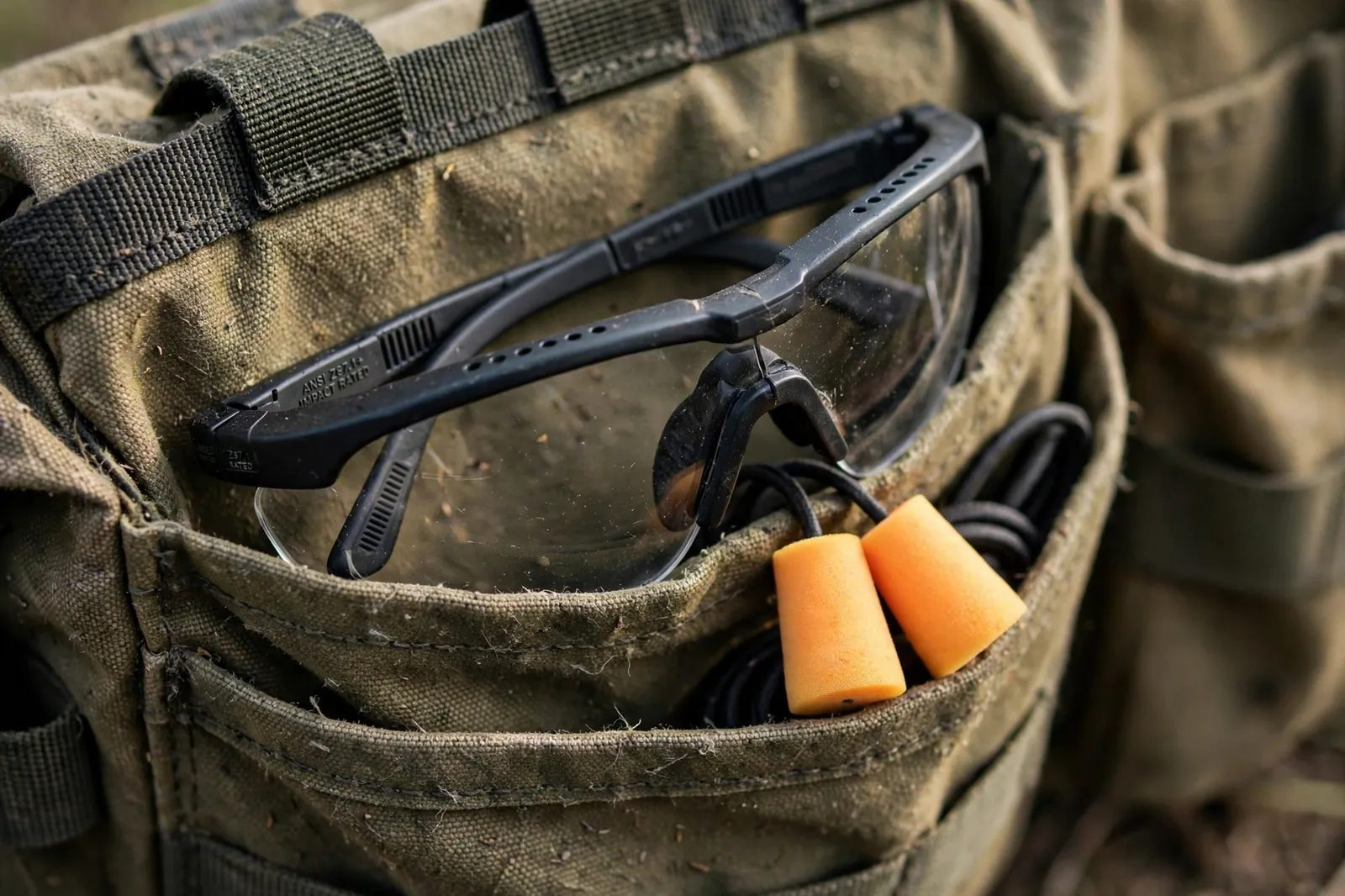
- Eye protection. Ballistic-rated shooting glasses are ideal. Prescription glasses count in a pinch, but dedicated eye protection is better.
- Ear protection. Foam earplugs, earmuffs, or both. Indoor ranges are loud, and good hearing protection makes the whole experience more comfortable.
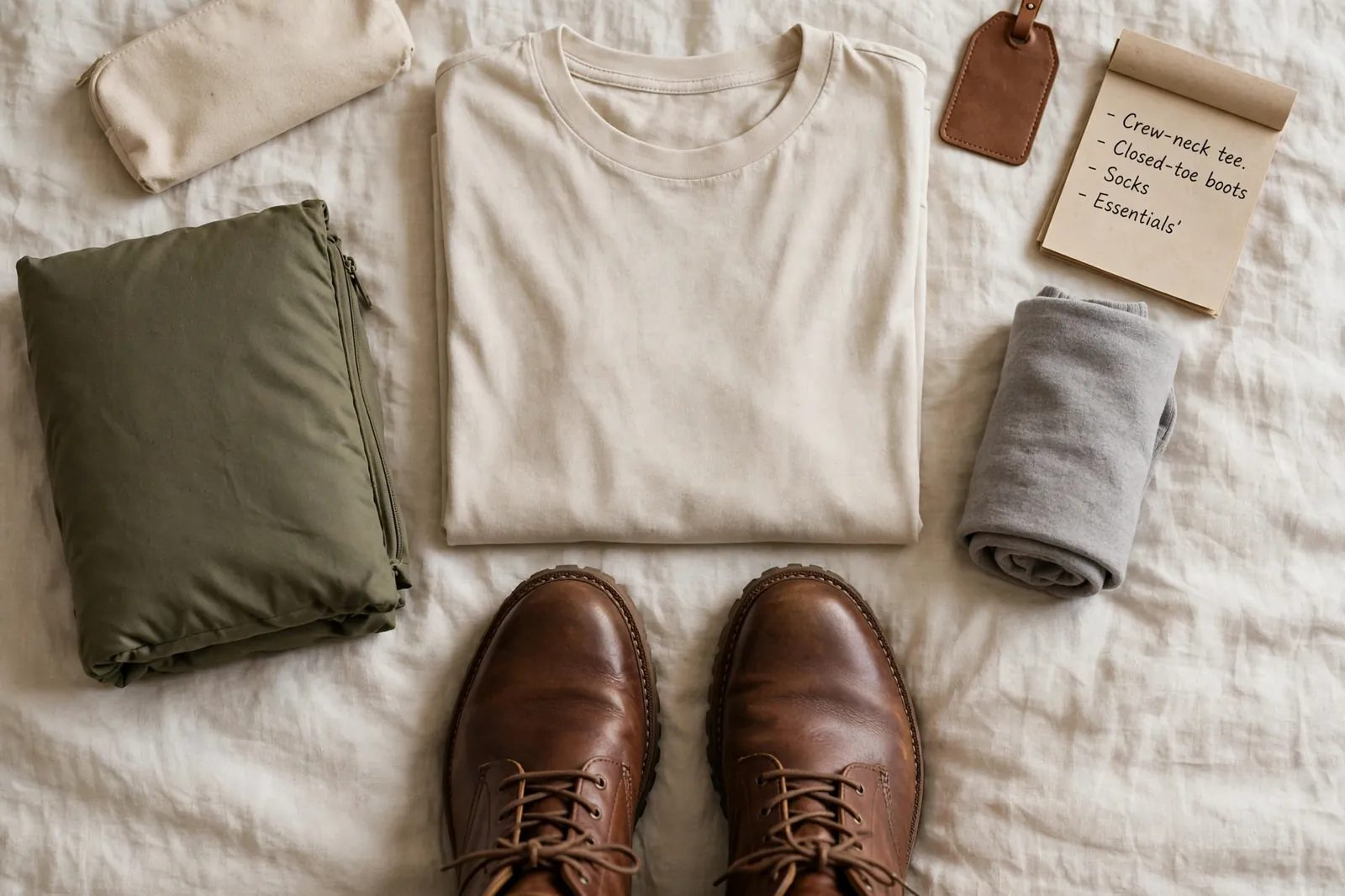
- Comfortable, range-appropriate clothing. More on this below — the short version is closed-toe shoes and a higher neckline.
- A notebook and pen. You’ll want to jot down tips, terminology, and things to practice. The best students take notes.
- Water and a snack. Training days can run several hours. Stay hydrated and keep your energy up.
- An open mind and your questions. Seriously — bring them. Instructors would much rather answer questions than have you guess.
That’s really it. If you’re taking first-time gun owner training with us, firearms, targets, and range fees are typically handled as part of the package — check your specific class description on the training calendar to confirm what’s included.
Eye and Ear Protection: What You Need to Know
Let’s talk about the gear beginners stress over most. Eye and ear protection aren’t optional — they’re required at every reputable range, and for good reason. A hot ejected casing or a fragment can injure an unprotected eye, and repeated exposure to gunfire without hearing protection causes permanent hearing damage. The NSSF lists eye and ear protection among its core rules of safe gun handling.
Here’s what will reassure you: most reputable schools provide loaner eye and ear protection if you don’t have your own. You don’t need to buy gear before your first class. That said, if you plan to keep training, a basic pair of shooting glasses and comfortable earmuffs is a modest investment that pays off quickly — well-fitting protection you’ll actually wear beats premium gear that stays in the bag.
One tip from experience: earmuffs are easier for beginners than foam plugs. They’re simpler to put on correctly, and you can slip them on and off between shooting strings.
Dress for the Range: Clothing Matters More Than You’d Think
This is the section that saves beginners the most discomfort. Shooting has one clothing rule that surprises newcomers: hot brass finds its way into everything. Ejected shell casings are small, hot, and seem magnetically attracted to open collars and loose necklines. A casing down your shirt is startling, not dangerous — but it’s easily avoided.
- Wear a crew-neck or higher shirt. No low-cut tops, no wide scoop necks. A simple t-shirt is perfect.
- Closed-toe shoes, always. No sandals, no flip-flops, no open-toed anything. Sturdy sneakers or boots are ideal — ranges have concrete floors and the occasional dropped item.
- Avoid loose, flowy sleeves that could snag or interfere with your grip.
- A billed cap is a smart optional extra. It keeps brass from dropping behind your safety glasses and shields your eyes from overhead range lighting.
- Dress in layers if it’s cool. Indoor ranges are climate-controlled, but outdoor sessions aren’t. Check the weather and your class location.
When in doubt, think “comfortable afternoon outdoors” rather than “fashion statement.” You’ll be standing, focusing, and having fun — dress for that.
Dress Code Details: Fabrics, Jewelry, and Hats
Fabrics. Sturdy cotton or athletic fabrics are ideal — comfortable and protective. Avoid anything delicate or expensive; ranges are dusty, and cleaning solvents don’t care about your favorite blouse.
Jewelry. Leave dangling bracelets, long necklaces, and rings with protruding stones at home. They can snag on equipment or interfere with your grip. A simple wedding band is fine.
Hats. A billed baseball cap is one of the best pieces of range gear you can own. Worn forward, the bill deflects ejected brass away from your face and keeps casings from dropping behind your safety glasses.
Hair. Long hair should be tied back. Loose hair and hot brass are a bad combination, and a ponytail keeps your sight picture clear.
Pants. Jeans or sturdy pants beat shorts — they protect your legs from hot casings and dusty range floors.
You almost certainly own everything you need already.
What NOT to Bring
Just as important as what to pack:
- Don’t bring a loaded firearm. If you’re bringing your own gun, it must arrive unloaded and secured in a case — no exceptions, at any range, ever.
- Don’t bring your own ammunition unless you were told to. Many beginner packages include ammunition, and bringing the wrong caliber or type creates problems. Check your confirmation email first.
- Leave the open-toed shoes and low-cut tops at home (see above — your future self says thanks).
- Don’t bring an audience. Unless the class specifically welcomes observers, spectators on the firing line are a distraction and a safety concern.
- Leave preconceptions at the door. Forget what movies taught you about shooting. Real instruction starts from zero, and that’s a good thing.
If you’re ever unsure whether something belongs, check our firearm training FAQ or just ask us before class day. We’d always rather answer the question early.
What About Ammunition?
This deserves its own section because it trips up so many beginners. The rule is simple: don’t bring your own ammo unless your class confirmation specifically tells you to.
Here’s why. Many beginner training packages include ammunition — the right caliber, the right type, in the right quantity. Showing up with your own box often means the wrong ammunition for the rental firearms, which can’t be used and just adds confusion. In the worst case, incorrect ammunition is a genuine safety hazard.
If your class doesn’t include ammunition, your confirmation will say so clearly, along with what to buy and where. And if you ever have questions about ammo for a specific class, ask before you shop — a quick message beats a wasted trip to the store.
Should You Bring Your Own Firearm?
You don’t need to own a firearm to take a beginner class — and many students intentionally train first and buy later. Learning proper grip, stance, and safety fundamentals before shopping means you’ll choose a handgun that actually fits your hands and your needs, instead of guessing at a counter.
If you do already own a handgun and want to train with it, that’s great — just remember the rules: it must be unloaded and secured in a hard case when you arrive. Never walk into a classroom or range with a firearm in your hand or holster unless your instructor specifically directs you to.
Not sure which path is right for you? Private one-on-one instruction is a great way to get personalized guidance, including advice on selecting your first firearm.
What the Range Provides vs. What You Bring
One of the biggest beginner anxieties is not knowing where your responsibilities end and the school’s begin. Here’s the typical split at a well-run beginner class:
The school provides: training firearms, ammunition (in most beginner packages), targets, loaner eye and ear protection, and the instruction itself.
You bring: your ID, booking confirmation, appropriate clothing, water and a snack, a notebook, and your questions.
That’s the whole deal. If a class expects anything unusual, it will say so in the confirmation — and when in doubt, check the class listing on our training calendar or just ask us.
One Last Thing: Plan for After Class
Good habits start on day one. Once you’re a gun owner — or when you become one — safe storage is part of responsible ownership. Organizations like Project ChildSafe offer excellent free resources on storing firearms securely at home, including cable locks available through local law enforcement agencies. It’s worth a look before you ever bring a firearm home.
Packing FAQ
Can I wear prescription glasses instead of safety glasses?
In a pinch, yes — far better than nothing. But dedicated ballistic-rated shooting glasses fit better and seal closer to your face. We have loaners if you need them.
Should I buy ear protection before class?
Not necessary. We provide loaner eye and ear protection, as do most reputable schools. If you catch the shooting bug — and many do — a comfortable pair of earmuffs is a great first purchase.
Can I bring a friend to watch?
Generally no; spectators on the firing line are a safety concern. But bring a friend to take the class with you! Learning alongside someone makes it more fun.
What if I forget something on the list?
Don’t stress. What we truly need from you is your ID and yourself, dressed appropriately. Everything else has a workaround.
Do I need to bring food?
A water bottle and a light snack are smart for longer sessions. Many of our Fairfax and Lorton area students grab lunch nearby between classroom and range time — check your class schedule first.
You’re More Prepared Than You Think
Packing for your first firearms training class really comes down to this: ID, confirmation, comfortable clothes, and an open mind. The school handles the rest — the firearms, the safety briefing, the patient instruction, and yes, the loaner eye and ear protection if you need it.
As a veteran-owned company that’s been training Northern Virginia since 2012, we’ve welcomed thousands of first-timers, and the ones who prepare just a little always have the best experience. Now you’re one of them.
Ready to put that checklist to use? Book private one-on-one instruction — we’ll see you on the range.


