A firearms instructor is a certified professional who teaches firearm safety, marksmanship, and the legal use of weapons to civilians and armed professionals using recognized curricula and certification standards. The role goes far beyond knowing how to shoot. Certified instructors design lesson plans, manage range safety, and guide students through the psychology of responsible gun ownership. Whether you are pursuing a career as a gun safety instructor in Virginia, Maryland, or Washington DC, this guide covers every step: certification pathways, state-specific licensing, teaching skills, and the ongoing obligations that keep your credentials current.
What are the certification pathways for a firearms instructor?
Becoming a certified firearms instructor starts with meeting baseline legal requirements. NRA instructor candidates must be at least 21 years old and legally permitted to possess firearms. Candidates with felony convictions or active restraining orders are disqualified at this stage.
The NRA pathway is the most widely recognized route in the United States. It begins with the Basic Instructor Training course, commonly called BIT, which runs approximately 6 hours. BIT focuses on adult learning principles and lesson delivery, not marksmanship. After completing BIT, candidates enroll in a discipline-specific course such as Pistol, Personal Protection in the Home, or Concealed Carry. Instructor courses typically run 8–16 hours and include both written and practical evaluations. Combined course costs run around $280, not counting BIT if taken separately.
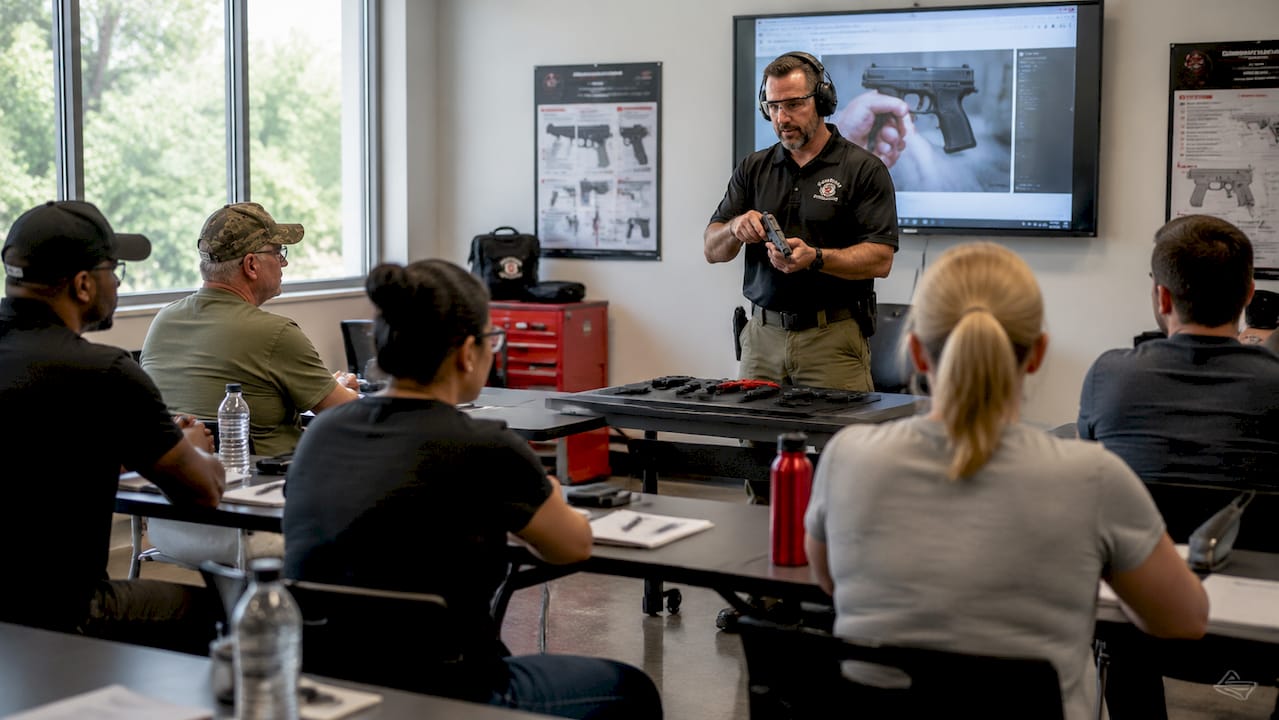
One fact surprises most candidates: BIT emphasizes teaching methodology and adult learning principles rather than marksmanship. Many people assume that being an excellent shooter automatically makes them a qualified instructor. The NRA disagrees, and the curriculum reflects that clearly.
Instructor levels progress in a defined sequence:
- Assistant Instructor — Supports lead instructors in a supervised setting.
- Apprentice Instructor — Leads portions of a course under observation.
- Certified Instructor — Independently delivers official NRA courses.
- Training Counselor — Certifies other instructors after extensive documented experience.
NRA certification grants access to standardized curricula, official teaching materials, and a national network of Training Counselors. That credibility matters when students are choosing between instructors.
Pro Tip: Complete BIT before your discipline-specific course. Some providers bundle both into a single weekend, which saves time and reduces scheduling conflicts.
How do state-specific regulations affect instructor licensing?
State law adds a critical layer on top of any national certification. Understanding who you train and what credentials are required for that population is the single most important compliance question an instructor faces. Getting this wrong creates legal exposure, not just administrative headaches.
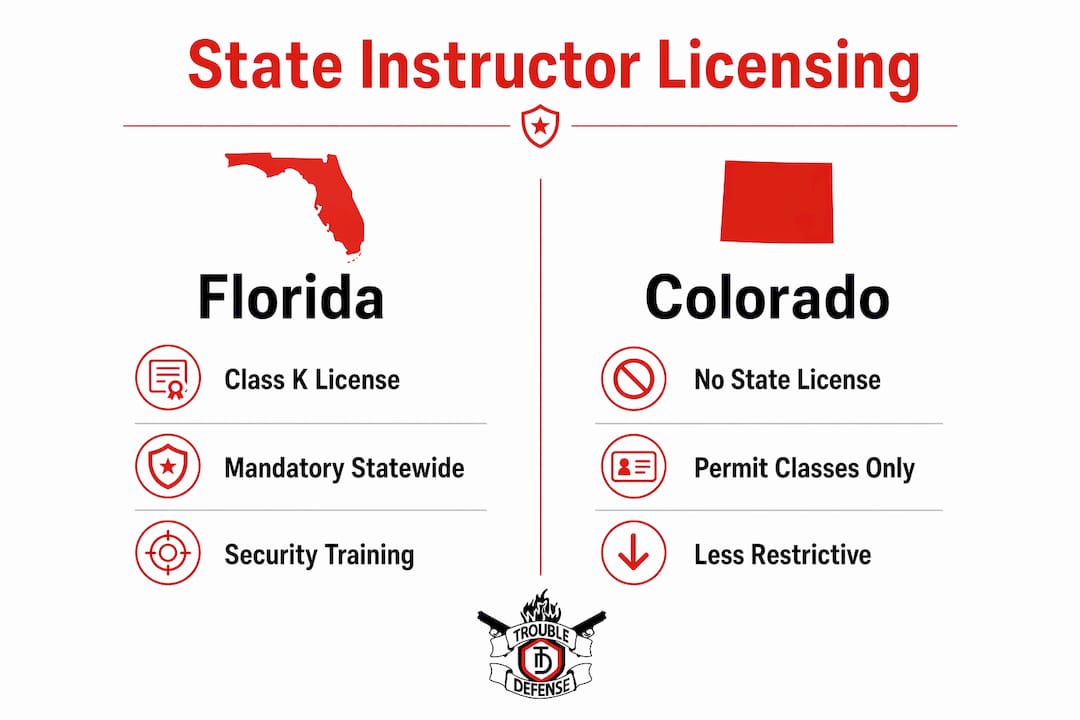
Florida’s Class K license
Florida draws a sharp line between teaching civilians and training armed professionals. Instructors who teach concealed carry to civilians operate under different rules than those who train security officers or private investigators. The Class K Firearms Instructor License is mandatory for anyone training armed security professionals under Chapter 493 of Florida statutes. No national certification waives this requirement.
Florida’s Class K requirements include:
- Background check and fingerprinting — Clean criminal record required; felony convictions disqualify unless civil rights are fully restored.
- Mental health documentation — Required if applicable to the applicant’s history.
- Proof of Florida residency — Must be documented at the time of application.
- License renewal every 3 years — Continuing education is required to renew.
The table below compares Florida and Colorado to show how differently states approach instructor licensing.
| Requirement | Florida (Class K) | Colorado |
|---|---|---|
| Statewide instructor license | Yes, mandatory for armed professionals | No statewide license issued |
| Background check | Required with fingerprinting | Required per NRA standards |
| Renewal cycle | Every 3 years | Follows NRA renewal schedule |
| National cert sufficient? | No, Class K is separate | Yes, NRA cert commonly accepted |
| Civilian CCW instruction | Separate from Class K | Meets state CHP requirements |
Colorado’s approach
Colorado does not issue a statewide firearms instructor license. Instructors teaching concealed handgun permit classes must meet the state’s legal qualifications, and NRA certification is the most common way to satisfy them. Colorado also allows instructors to pursue multiple discipline ratings, including concealed carry and personal protection, which expands the range of courses they can legally offer.
The contrast between Florida and Colorado is a useful reminder: always verify your state’s current requirements before advertising or delivering any firearms training courses. Laws change, and operating on outdated information is a liability risk.
Pro Tip: If you plan to teach in Virginia, Maryland, or DC, check each jurisdiction’s specific requirements. Trouble Defense’s state-specific training resources are a practical starting point for DMV-area instructors.
What skills make an effective firearms instructor?
Shooting proficiency is the entry ticket, not the job description. Effective certified firearms coaches need strong communication, patience, professionalism, and the ability to explain concepts clearly to students at every skill level. The technical knowledge matters, but the teaching ability is what separates good instructors from great ones.
The core competencies every instructor needs include:
- Adult learning psychology — Adults learn differently than children. They need context, relevance, and immediate application. Lesson plans must reflect this.
- Classroom and range management — Controlling a live-fire environment requires clear commands, consistent protocols, and zero tolerance for safety violations.
- Error correction — Identifying and fixing a student’s grip, stance, or trigger control requires observation skills and the ability to give feedback without damaging confidence.
- Scenario-based instruction — Real-world drills, like reality-based training scenarios, build decision-making skills that static range exercises cannot replicate.
- NRA Code of Ethics — Certified instructors are bound by a professional code that governs conduct with students, the public, and the firearms community.
Firearms instructors serve as key influencers in promoting a culture of firearm responsibility. That influence extends well beyond the range. Students carry the habits, attitudes, and knowledge their instructor modeled, often for life.
Pro Tip: Record yourself teaching a dry-fire drill and watch it back. Most instructors discover verbal habits or unclear commands they never noticed in the moment.
What ongoing education and liability considerations matter most?
Certification is not a one-time achievement. NRA instructors must renew every 2–3 years, which includes reporting teaching activity and completing refresher courses. Instructors who stop teaching and fail to report activity risk losing their certification status entirely.
Staying current also means staying legal. Laws governing concealed carry, use of force, and instructor qualifications shift regularly at the state level. An instructor who taught Virginia CCW classes in 2023 using the same materials in 2026 without reviewing updates is taking on unnecessary risk.
Professional liability insurance is not optional for a sustainable firearms instruction business. Coverage protects against range incidents, negligence claims, and the legal defense costs that follow. Medical expenses from a training accident can be significant, and a single uninsured claim can end a career before it fully starts. Treat insurance as a fixed operating cost, not an afterthought.
Additional obligations worth tracking:
- Recordkeeping — Maintain student rosters, signed waivers, and course completion records. These documents are your first line of defense in any dispute.
- Range safety compliance — Follow all range rules and document any safety incidents, even minor ones.
- Networking — Connect with NRA Training Counselors and local instructor groups to stay informed about curriculum updates and regulatory changes.
- Mentorship — Starting under experienced instructors builds the practical judgment that no course can fully teach.
The shooting lessons and skills development you offer students are only as strong as the professional foundation you maintain behind the scenes.
Key Takeaways
Becoming an effective firearms instructor requires completing recognized certification like NRA’s BIT and discipline-specific courses, navigating state-specific licensing requirements, and maintaining credentials through ongoing education, liability coverage, and active teaching.
| Point | Details |
|---|---|
| Meet baseline requirements | Candidates must be 21+ and legally permitted to possess firearms before pursuing NRA certification. |
| Complete BIT first | The Basic Instructor Training course covers adult learning principles, not marksmanship, and is the required foundation. |
| Know your state’s rules | Florida requires a Class K license for training armed professionals; Colorado relies on NRA certification for CCW classes. |
| Renew every 2–3 years | NRA instructors must report teaching activity and complete refresher courses to stay certified and compliant. |
| Carry liability insurance | Professional coverage protects against range incidents, negligence claims, and legal defense costs. |
What I’ve learned after years of watching instructors succeed and fail
The biggest mistake I see aspiring instructors make is treating certification as the finish line. It is the starting line. The instructors who build lasting careers are the ones who stay curious, stay humble, and keep showing up to learn from their students as much as they teach them.
Mentorship is the fastest shortcut most people skip. Assisting an experienced instructor for even a few months teaches you more about range management, student psychology, and real-world error correction than any written exam. The classroom skills that BIT introduces take years to fully develop in practice.
There is also a misconception worth addressing directly: being an excellent shooter does not make you a qualified teacher. I have seen highly skilled marksmen struggle to explain a basic grip correction in terms a nervous beginner can absorb. Teaching is a separate skill set, and the best instructors I know treat it with the same discipline they bring to the range.
The rewarding part of this work is real. When a first-time student leaves a firearm handling class with genuine confidence and a clear understanding of safe gun ownership, that outcome matters. Instructors who stay focused on that result, rather than on their own credentials or reputation, tend to build the most loyal student communities. Contribute to the safety culture, keep your certifications current, and the career takes care of itself.
— Dee Parker
Trouble Defense and firearms instructor training in the DMV
Trouble Defense serves aspiring and practicing instructors across Virginia, Maryland, and Washington DC with firearms training courses built around real-world application and certified NRA instruction.
Whether you are working toward your first certification or refining your teaching approach, Trouble Defense offers Virginia CCW classes, Maryland Wear and Carry training, and DC concealed carry programs taught by instructors who understand the DMV’s specific legal requirements. The academy also runs adaptive programs, women’s firearm training, and youth safety education. For answers to the most common training questions, the firearm safety training resource covers 50 frequently asked questions in plain language. Contact Trouble Defense to find the right program for where you are in your instructor development.
FAQ
What are the basic requirements to become a firearms instructor?
Most national certification programs, including the NRA, require candidates to be at least 21 years old and legally permitted to possess firearms. Felony convictions typically disqualify applicants unless civil rights have been fully restored.
How long does NRA firearms instructor certification take?
The NRA Basic Instructor Training course runs approximately 6 hours, and discipline-specific courses add another 8–16 hours. Most candidates complete the full process over one to two weekends.
Do I need a state license in addition to NRA certification?
It depends on your state and who you train. Florida requires a separate Class K license to train armed security professionals, and no national certification substitutes for it. Colorado accepts NRA certification for concealed handgun permit instruction without a separate state license.
How often do I need to renew my instructor certification?
NRA instructors renew every 2–3 years. Renewal requires reporting documented teaching activity and completing refresher coursework to stay current with updated training standards.
Does liability insurance matter for firearms instructors?
Liability insurance is critical for any instructor running a training business. It covers range accidents, medical expenses, and legal defense costs that can arise from negligence claims, making it a non-negotiable part of operating responsibly.