If you live in Northern Virginia but work or travel in Washington, DC or Maryland, you’ve probably asked the big question: can a DC concealed carry non resident get a permit — and does one permit cover all three? The short answer is yes, non-residents can get a DC permit, but no single permit covers the whole DMV. Each jurisdiction runs its own system, and DC and Maryland don’t recognize anyone else’s permit. Here’s exactly what each one requires.
The Short Answer: You May Need Three Permits
This surprises almost everyone. A fifteen-minute commute can take you through three different legal regimes:
- Virginia currently recognizes valid out-of-state permits — but that is being phased out. Under SB 115 (2026), the Attorney General must drop states whose standards aren’t “substantially similar” by December 1, 2026, and a rewritten law takes effect July 1, 2027. Check the Virginia State Police reciprocity page (vsp.virginia.gov) before every trip.
- Maryland does not honor any out-of-state carry permit, period.
- Washington, DC does not honor any out-of-state carry permit, period.
So a Virginia concealed handgun permit covers you in Virginia — but the moment you cross into Maryland or DC, it doesn’t count. If you regularly travel across all three, you realistically need a permit from each jurisdiction. There is no multi-state shortcut for the DMV.
How We Got Here: The Post-Bruen Landscape
It helps to know why these places work the way they do. For years, both DC and Maryland were effectively “may-issue” jurisdictions: you had to demonstrate a special “good reason” to need a gun before they’d issue you a carry permit, and most ordinary applicants couldn’t clear that bar.
That changed through the courts. DC’s “good reason” requirement was struck down in 2017 (Wrenn v. District of Columbia). Then, in June 2022, the U.S. Supreme Court’s decision in NYSRPA v. Bruen struck down New York’s similar “proper cause” rule — and weeks later, Maryland’s governor directed the State Police to stop enforcing Maryland’s “good and substantial reason” standard. The Maryland legislature formally repealed it in 2023.
The result: DC, Maryland, and Virginia are all shall-issue today. If you meet the objective requirements — age, training, background check — the issuing authority must grant the permit. No one gets to decide whether your reason is good enough anymore.
Washington, DC: Concealed Carry Pistol License (CCPL)
DC’s permit is issued by the Metropolitan Police Department (MPD), and yes — non-residents can apply. The process is essentially the same as for residents.
What DC requires:
- Be at least 21 years old
- Complete at least 16 hours of firearms training plus 2 hours of range training with an MPD-certified instructor, covering firearm safety, marksmanship, and DC and federal firearms law (including self-defense law)
- Pass fingerprinting and a thorough background check
- Register the handgun you intend to carry with MPD
- Pay the application fee (confirm the current amount on MPD’s site before applying)
A few things worth knowing: you can submit your application before finishing the training — if MPD preliminarily approves you, you get 45 days to complete it with a certified instructor. Non-residents will also need to show the carry license issued by their home state. And DC’s list of prohibited locations is long — government buildings, schools, public transit, stadiums, and more — so study where you can and can’t carry.
Start with the official source: MPD’s concealed carry page lists certified instructors and current instructions. If you’d rather train with instructors who teach the DC curriculum every week, our DC concealed carry class covers the full MPD-required course including the range qualification.
Maryland: Wear and Carry Permit
Maryland’s permit — officially the Wear and Carry Permit — is issued by the Maryland State Police (MDSP) Licensing Division. You don’t have to be a Maryland resident to apply.
What Maryland requires:
- Be at least 21 years old
- Complete an MSP-approved firearms safety training course: at least 16 hours for new applicants (8 hours for renewals), completed within 2 years before you apply, taught by a Qualified Handgun Instructor
- Achieve at least 70% accuracy on the live-fire qualification
- Submit LiveScan fingerprints to Maryland CJIS and the FBI
- Apply online through the MSP Licensing Portal with a passport-style photo and your qualification score sheet
- MDSP renders a decision within 90 days of a complete application
Don’t confuse this with the HQL. Maryland’s Handgun Qualification License (HQL) is a separate license required to purchase or rent a handgun in Maryland — it takes at least 4 hours of instruction and has nothing to do with carrying. You need the Wear and Carry Permit to carry, full stop.
Our Maryland Wear and Carry training is taught by MDSP Qualified Handgun Instructors and includes the 16-hour course plus the 70% live-fire qualification.
Virginia: Non-Resident Concealed Handgun Permit
Virginia’s system is the most straightforward of the three. Non-residents 21 and older apply directly to the Virginia State Police by mail.
What Virginia requires:
- Complete an SP-248 application and mail it to the VSP Firearms Transaction Center
- Include a $100 money order or cashier’s check payable to the Virginia State Police
- Submit fingerprints on an FD-258 card taken by a law enforcement agency, two photographs, and a photocopy of a government-issued photo ID
- Demonstrate competence with a handgun in person — Virginia accepts many paths, including a handgun safety course from an NRA-, USCCA-, or DCJS-certified instructor, hunter education, military service, or prior law enforcement training
- The permit is valid for five years
The full checklist lives on the VSP nonresident permits page, and the statute itself is § 18.2-308.06 of the Code of Virginia. One more useful fact: Virginia currently recognizes valid concealed carry permits issued by other states — but that recognition is being phased out under SB 115 (2026), with the first states potentially dropped December 1, 2026. Neither DC nor Maryland returns the favor, so don’t assume the reverse — and confirm Virginia’s current list on the VSP site before you travel.
The Commuter Reality: Plan for All Three
If you live in Fairfax or Lorton, work in DC, and visit family in Bethesda, here’s the honest math: your Virginia permit covers the Virginia leg only. Maryland and DC each require their own permit, their own training, and their own application. There’s no way around it — carrying in Maryland or DC on a Virginia permit alone can lead to arrest and criminal charges.
The good news: the training overlaps heavily. DC wants 16 hours plus range time; Maryland wants 16 hours plus a 70% qualification. A single well-designed course from instructors certified for both can satisfy both states’ classroom and range requirements at once — which is exactly why we built our DMV concealed carry training as a combined program, and our multi-state CCW package for students who want DC, Maryland, and Virginia handled together.
Which Permit Should You Get First?
If the three-permit reality feels overwhelming, prioritize by where you actually spend your time:
- You live in Virginia and rarely leave. Start with the Virginia concealed handgun permit. It’s the simplest application and it covers your daily life.
- You commute into DC. Add the DC license next — it’s the most training-intensive, so it sharpens your skills for everything else too.
- You regularly travel into Maryland. Add the Maryland Wear and Carry permit.
Many students go in exactly that order and complete the DC and Maryland training together, since the 16-hour courses overlap heavily — which is why we built our multi-state CCW package as one coordinated path through all three.
Traveling Between DC, Maryland and Virginia With a Firearm
One more scenario worth understanding: driving through a jurisdiction is legally different from carrying in it.
Carrying means the firearm is loaded or readily accessible — on your person, in a holster, in the center console. When you carry, the laws of whatever state you’re physically in apply, full stop. That’s why the permits above matter.
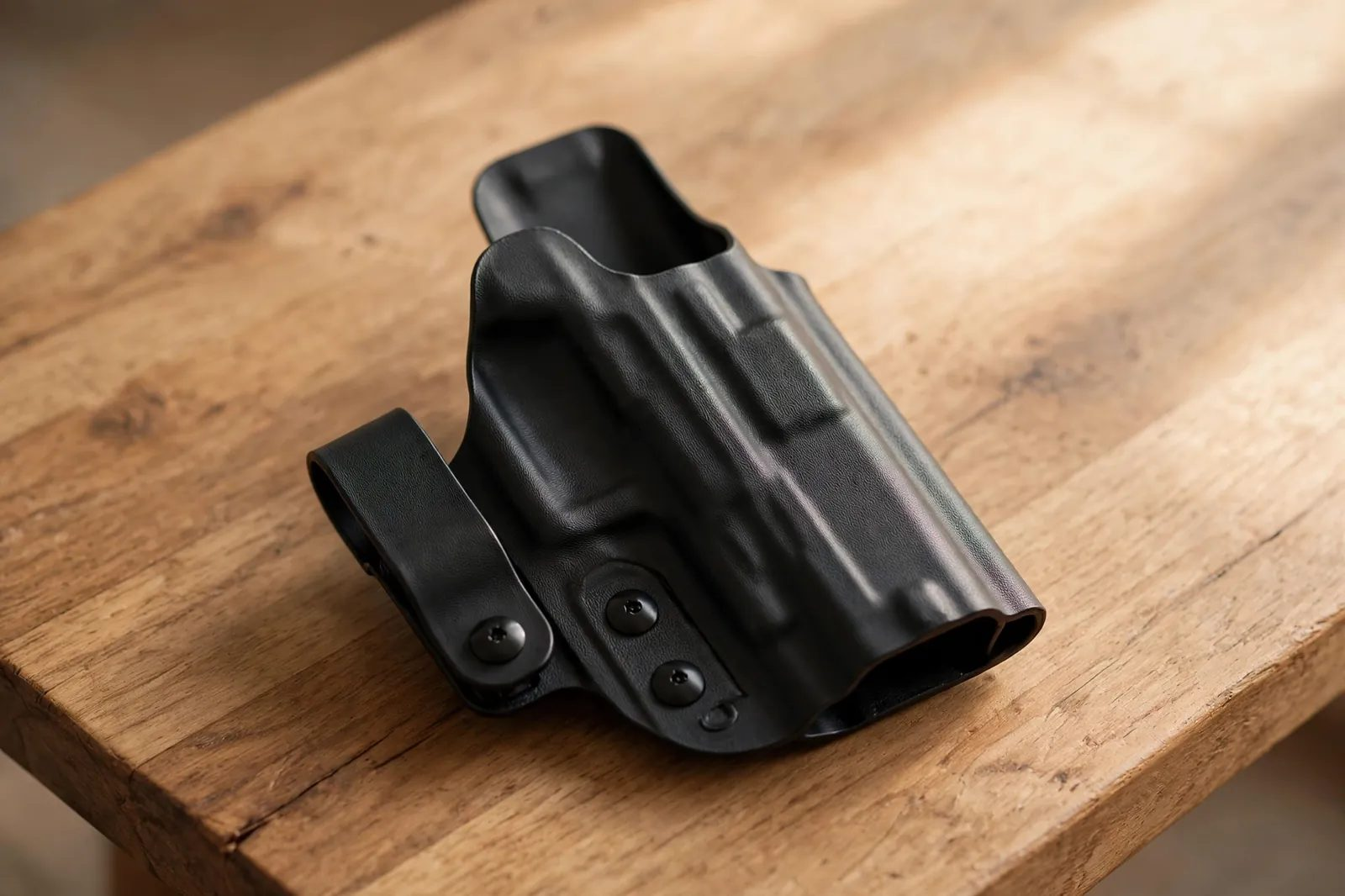
Transporting means the firearm is unloaded, cased, and stored where you can’t readily reach it. Federal law — the Firearm Owners Protection Act (18 U.S.C. § 926A), or “Safe Passage” — protects travelers moving a firearm between two places where they can lawfully possess it, even through stricter states. The gun must be completely unloaded, and neither it nor the ammunition can be readily accessible from the passenger compartment. No trunk? Then a locked container — not the glove box or console.
Two caveats: Safe Passage covers continuous travel — not detours or overnight stops — and some states treat it as a defense you raise after an arrest, not a shield that prevents one. It’s no substitute for having the right permits. The NRA-ILA’s interstate transportation guide is a solid reference — and when in doubt, transport cased and unloaded, with your permits on you.
Before You Apply: A Quick Checklist
- Decide where you actually need to carry. Daily DC commuter? Start with DC. Maryland weekends? Add Maryland.
- Get training from properly certified instructors — MPD-certified for DC, MDSP Qualified Handgun Instructors for Maryland.
- Keep every certificate and score sheet. You’ll upload them with your applications.
- Apply early. Between training, fingerprinting, and processing, the full timeline is measured in weeks to months.
- Learn each jurisdiction’s prohibited locations. The permit is only half the equation — knowing where you can’t carry keeps you out of trouble.
Frequently Asked Questions
Can a non-resident really get a DC concealed carry permit?
Yes — the process is essentially the same as for residents: 21+, 16 hours of training plus 2 hours of range time with an MPD-certified instructor, fingerprinting, background check, and registration of the handgun you’ll carry.
Does my Virginia concealed handgun permit work in Maryland?
No. Maryland does not honor any out-of-state carry permit. To carry in Maryland, you need a Maryland Wear and Carry permit.
How long does Maryland take to decide on a Wear and Carry application?
Maryland State Police renders a decision within 90 days of receiving a complete application.
Do I need Maryland’s HQL to carry a handgun there?
No. The Handgun Qualification License is for purchasing or renting a handgun in Maryland — it’s a separate license and doesn’t authorize carrying.
Can I submit my DC application before I finish training?
Yes — if MPD preliminarily approves you, you get 45 days to complete the training with a certified instructor.
Laws and fees change, so always verify current requirements on the official agency sites — MPD, MDSP, and VSP — before you apply. For a plain-English walkthrough of the whole process, our concealed carry resources page is a good next stop.
Ready to get your training done? Our multi-state CCW package handles DC, Maryland, and Virginia training in one coordinated path.