
Buying your first gun is a big responsibility — and the good news is that staying safe isn’t complicated. These five gun safety rules are taught in every reputable firearms class in America, and they work because they’re simple enough to follow every single time you handle a firearm. Learn them, practice them, and they’ll become second nature.
Rule 1: Treat Every Gun as If It’s Loaded
This is the foundation everything else stands on. Even if you just watched someone unload a gun — even if you just unloaded it — handle it as though a round is in the chamber.
What it means in plain English: Never let “I thought it was empty” be part of your vocabulary. Every negligent discharge in history involved someone who was sure the gun was unloaded.
A concrete example: Your friend hands you their pistol at the range to look at. Before you do anything else, you point it in a safe direction, remove the magazine, lock the slide back, and visually check the chamber yourself. You don’t take their word for it — you verify. Every time.
Rule 2: Never Point the Muzzle at Anything You’re Not Willing to Destroy
Your gun’s muzzle is like a laser pointer that can’t be turned off. Wherever it points, that’s where a bullet would go if the gun fired. So you keep it pointed in a safe direction at all times — at the range, that’s downrange; at home, that’s a direction where a discharge couldn’t hurt anyone.
What it means in plain English: Be aware of where your muzzle is pointing during every moment you hold a gun — not just when you’re aiming.
A concrete example: You’re at the range and turn to ask the person next to you a question. If you turn with the gun in your hand, the muzzle sweeps across people. Instead, set the gun down (or keep it pointed downrange) before you turn. New shooters sweep others most often during these casual, in-between moments — which is exactly why our first-time gun owner training in Virginia drills muzzle awareness from the very first hour.
Rule 3: Keep Your Finger Off the Trigger Until You’re Ready to Shoot
Your finger is the real safety. Modern firearms don’t fire on their own — they fire when something presses the trigger. Until your sights are on target and you’ve made the decision to fire, your finger stays straight, resting along the frame above the trigger guard.
What it means in plain English: “Ready to shoot” means you’ve identified your target, decided to fire, and are in the act of shooting — not “I might shoot in a minute.”
A concrete example: You’re holding a handgun while walking downrange to check your target (during a cease-fire, gun unloaded and action open, of course). Your finger stays off the trigger the entire time. This habit protects you against the startle reflex — if you trip or get bumped, a finger on the trigger can cause a discharge, but a finger indexed along the frame can’t.
Rule 4: Know Your Target — and What’s Beyond It
You’re responsible for every bullet that leaves your barrel, including where it stops. That means positively identifying what you’re shooting at and knowing what’s behind and around it.
What it means in plain English: Don’t shoot at sounds, shapes, or movement. And remember that bullets can travel far beyond your target and pass through walls, car doors, and other barriers.
A concrete example: At an outdoor range, you notice the berm (the backstop hill) behind your target is low in one spot, with a walking trail visible beyond it. You stop shooting at that lane and tell the range officer. In a home-defense context, this same rule is why you need to think now — calmly, in advance — about what’s on the other side of every wall in your home.
Rule 5: Store Your Firearm Securely — Locked, Unloaded, Ammunition Separate
A gun you can’t access in the moment you need it isn’t useful, but a gun a child, teenager, or unauthorized person can access is a tragedy waiting to happen. Safe storage is the rule that protects your family when you’re not in the room.
What it means in plain English: When a firearm isn’t under your direct control, it should be locked up, unloaded, with ammunition stored separately.
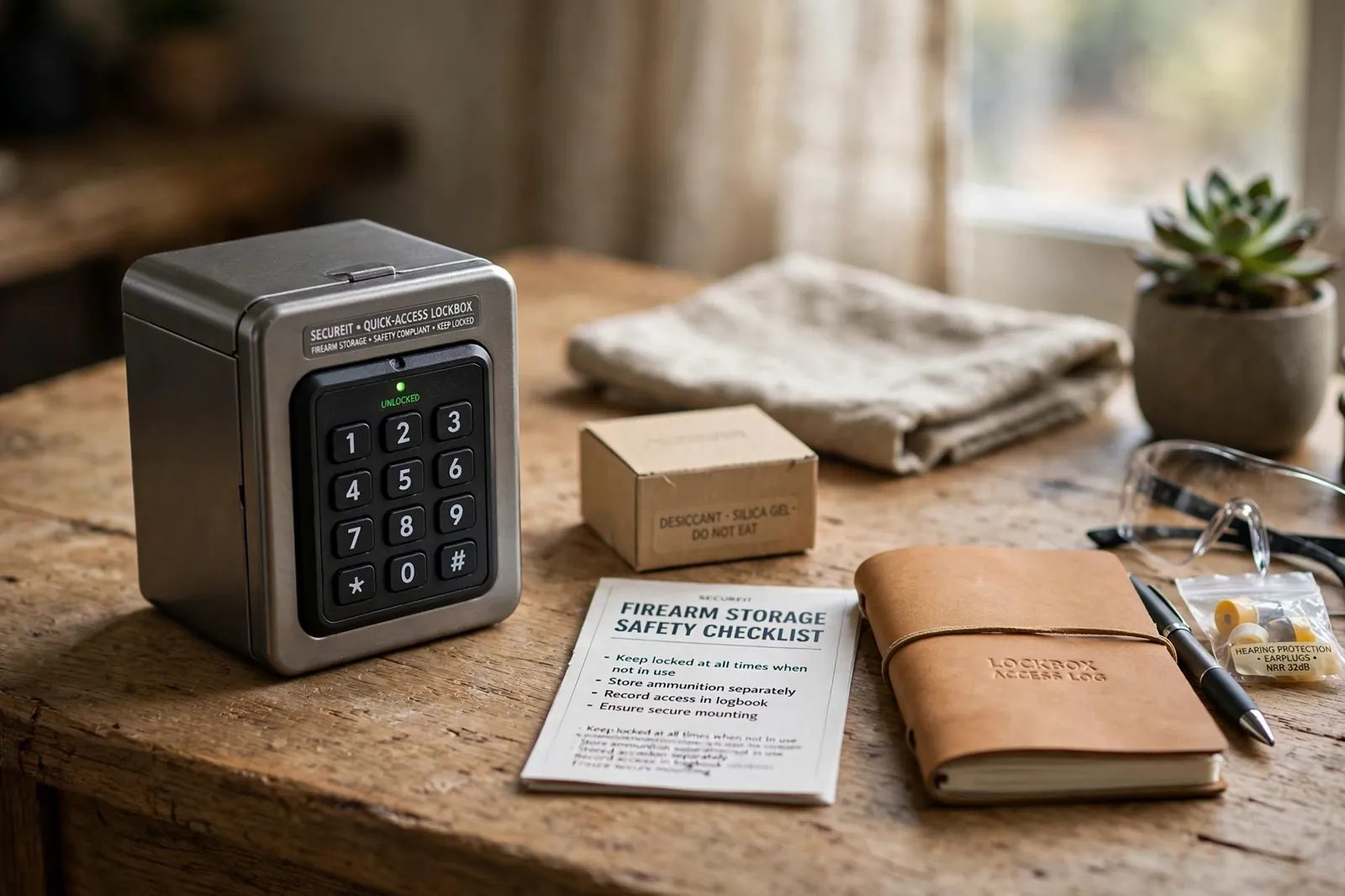
A concrete example: You keep your home-defense pistol in a quick-access lockbox bolted to your nightstand — locked, but openable in seconds by you. Your other firearms live in a full-size safe, unloaded, with ammunition in a separate locked container. Your kids know the lockboxes exist and know they are never to touch them — and the locks make sure of it regardless.
For free guidance on storage options, Project ChildSafe offers excellent resources, including a free safety kit request program. And if you’re choosing between lockboxes, cable locks, and full safes, our guide on how to choose the right gun safe walks through the tradeoffs.
Safe Storage Options Compared
What does “store it securely” actually look like? Three common options:
Cable or trigger locks. Inexpensive and better than nothing — they prevent the gun from firing. But they don’t stop it from being picked up or carried off. A minimum, not a solution.
Lockboxes and quick-access safes. A small steel box that keeps one handgun locked but retrievable in seconds by you — the sweet spot for home defense: secured against kids and visitors, accessible in an emergency. Bolt it down so it can’t walk away.
Full-size gun safes. The gold standard for a collection or a household with children: heavy, bolted to the floor, firearms unloaded inside with ammunition locked up separately.
Match the solution to your situation — a lockbox for one home-defense handgun, a full safe for a collection. Either way, the habit is the same: locked, unloaded, ammunition separate, every time.
Safety Is a Family Habit, Not a Lecture
Here’s something experienced gun owners learn: rules posted on a wall don’t keep anyone safe — habits do. And habits are built by repetition, out loud, together.
That’s the philosophy behind our Shield Kids safety program. Kids learn a simple, memorable rule — “Stop! Don’t touch! Tell a grown-up!” — and practice saying it until it’s automatic. It works for the same reason the five rules above work: short, clear, repeatable.
You can do the same thing at home tonight:
- Say the rules out loud with everyone in the household, including kids. Hearing them matters more than reading them.
- Practice with an unloaded firearm (triple-check it first): picking it up, checking the chamber, keeping the muzzle in a safe direction, finger off the trigger.
- Revisit them regularly. Safety isn’t a one-time conversation — it’s a habit you renew, the same way you renew any skill.
The NSSF — the firearm industry’s trade association — also publishes great family safety materials if you want more to work through together.
Teaching Kids About Gun Safety
The hardest safety conversation isn’t with yourself — it’s with your kids. Here’s what works:
Start early and keep it simple. Young children don’t need ballistics lessons. They need one clear rule they can repeat back to you: “Stop! Don’t touch! Tell a grown-up!” That’s the core of our Shield Kids safety program, and it works because a five-year-old can remember it under stress.
Never rely on hiding. Kids find everything. “They don’t know where it is” isn’t a safety plan — it’s a hope. Locked storage is the plan; the conversation is the backup.
Answer their questions honestly. Curiosity is normal. A calm, matter-of-fact answer defuses mystery far better than fear or secrecy.
Revisit as they grow. A five-year-old needs the simple rule; a twelve-year-old can handle all five rules above; a teenager needs to know what to do about an unsecured gun at a friend’s house — covered in the FAQ below.
Frequently Asked Questions
Should I keep a gun loaded for home defense?
A personal decision with real tradeoffs. Many keep their home-defense firearm loaded but secured in a quick-access lockbox — ready in seconds for them, inaccessible to everyone else. Others prefer unloaded-and-locked for maximum safety margin. Either way, the lock is non-negotiable: an unsecured loaded gun around kids or visitors is how tragedies happen.
What’s the best safe for a beginner?
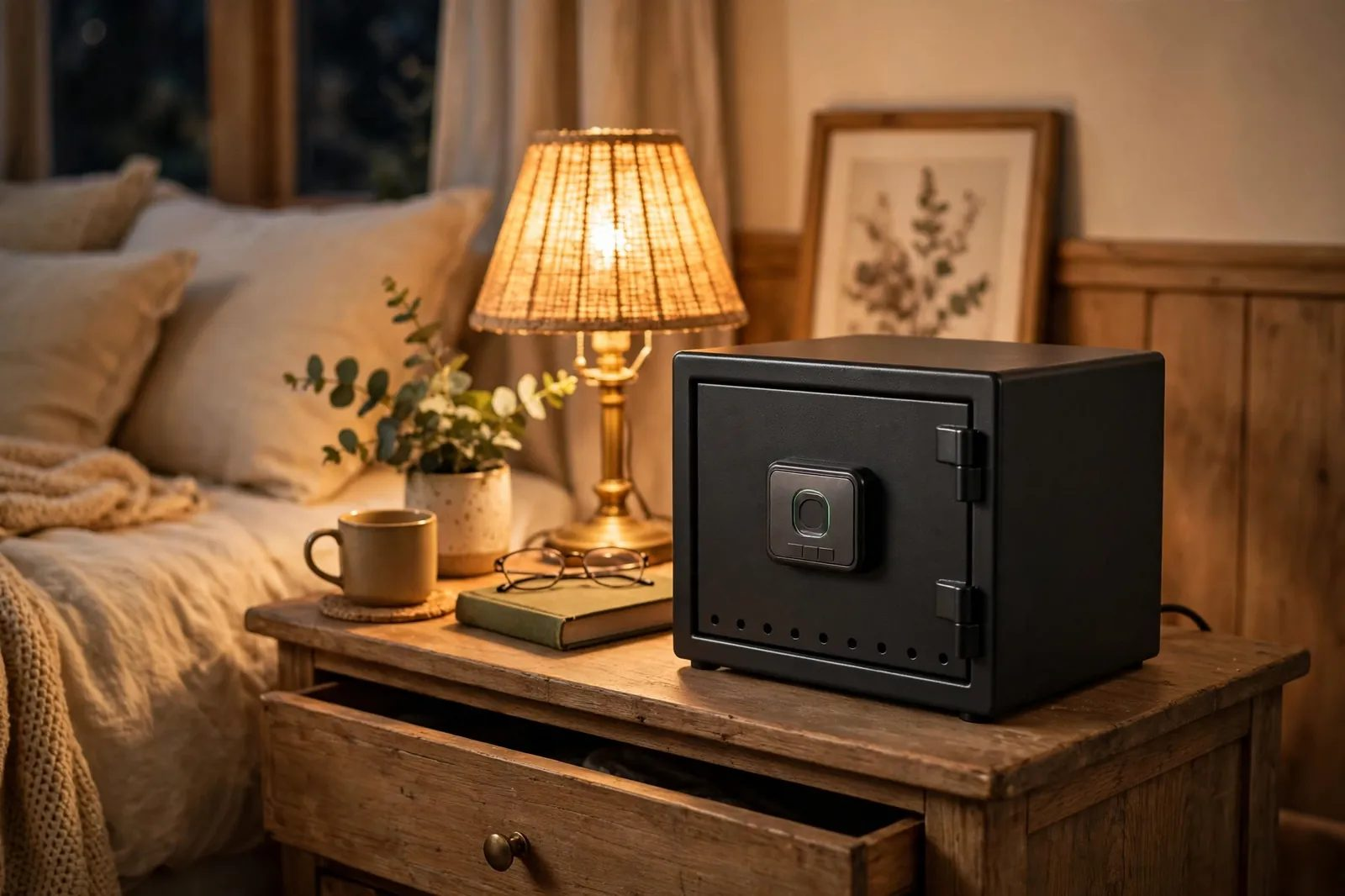
Match it to what you’re securing: a quick-access lockbox bolted down for one home-defense handgun, a full-size safe bolted to the floor for a collection. And remember the safe is only half the system — the habit of locking up every time is the other half.
How do I talk to my kids about gun safety?
Keep it short, calm, and age-appropriate — and repeat it often. For young kids, one rule suffices: “Stop! Don’t touch! Tell a grown-up!” Never frame it as a secret; curiosity handled calmly beats curiosity driven underground.
Do I really need a class if I grew up around guns?
Yes — experienced shooters say this most of all. Familiarity isn’t verified habit: muzzle discipline under stress, malfunction clearing, storage systems. One session with a certified instructor usually surfaces at least one habit worth fixing.
What should my child do if they find a gun at a friend’s house?
The same rule, every time: Stop! Don’t touch! Tell a grown-up! Don’t pick it up to “make it safe,” don’t show friends — leave the area and tell the nearest trusted adult immediately. Practice saying it out loud together until it’s automatic.
The Bottom Line
These five rules overlap on purpose. They’re redundant layers, so that if you ever slip on one, the others catch you. Treat every gun as loaded and keep the muzzle in a safe direction and keep your finger off the trigger — that’s three independent safeguards working at the same time.
New gun ownership comes with questions, and that’s a good thing — it means you’re taking it seriously. If you want hands-on practice with certified instructors who will drill these habits until they’re automatic, check our Shield Kids safety program for family safety training in Fairfax and Lorton. And if anything here raised a question we didn’t answer, our firearm and safety training questions page is a good place to start.