Big conversations.
Safer choices.
The Shield Kids safety program brings firearm safety education that grows with your child. Clear lessons for students. Practical guidance for parents. A meaningful conversation for every school and youth community.
Four steps worth practicing.
The Shield Kids safety program teaches four steps to use whenever a child unexpectedly sees a gun—even if they think it might be a toy.
Pause. Do not approach.
Leave it exactly where it is.
Leave the area and get to safety.
Find a trusted grown-up right away.
For adults: Teaching these steps supports awareness. Preventing access through secure storage and responsible adult supervision remains essential.
We teach road safety.
We teach online safety.
Let’s talk about this, too.
A child does not need a firearm at home to encounter one somewhere else. A visit to a friend, a relative’s house, or a shared space can raise a question they have never practiced answering.
The Shield Kids safety program gives parents and educators a calm, age-appropriate way to begin that conversation. We focus on recognizing an unsafe situation, leaving an unattended firearm alone, and asking a trusted adult for help.
Small steps.
A clear safety message.
For our youngest learners, the Shield Kids safety program keeps the message short, kind, and easy to repeat. Stories, music, pictures, and grown-up guidance help introduce the four safety steps.
- Practice stopping and keeping hands away.
- Learn to leave the area and get help.
- Name trusted adults at home and at school.
What would you do
at a friend’s house?
In the Shield Kids safety program, elementary students can practice applying the same simple rules to familiar situations. A friend’s curiosity, a dare, or a request to keep a secret never changes the need to move away and tell a trusted adult.
- Recognize that “don’t touch” includes picking it up to take it to an adult.
- Practice a confident “No. I’m getting help.”
- Understand that telling an adult about danger is helping.
Speak up.
Look out for each other.
In the Shield Kids safety program, middle-school conversations need room for peer pressure, group chats, unsafe dares, and worries about being called a “snitch.” Students practice stepping away from danger and getting responsible adults involved.
- Refuse unsafe participation without escalating a confrontation.
- Report concerning messages or threats to a trusted adult.
- Use the school’s reporting process; do not investigate alone.
Real situations.
Responsible next steps.
In the Shield Kids safety program, older students need direct, respectful conversations about unsafe access, threats, social pressure, and concern for a friend. Emphasize getting help early, using established reporting channels, and following staff guidance.
- Take statements about harming oneself or others seriously and tell a trusted adult promptly.
- Avoid confronting someone or trying to recover a firearm.
- In immediate danger, get to safety and contact emergency services.
Listen. Think. Make a safe choice.
Explore together with a parent, guardian, or educator. Start with the Trouble Dog song, then practice with a short activity for your school level.
The Trouble Dog song
A musical moment for younger learners. After listening, review the four steps together: stop, don’t touch, move away, and tell a trusted adult.
After the song: “Who could you tell at home? Who could you tell at school?” Music reinforces the conversation; adults remain responsible for preventing firearm access.
Make the safe choice.
You practiced four safe choices!
Say the steps together: Stop. Don’t touch. Move away. Tell a trusted adult.
Now name a trusted adult you can go to. Keep practicing with your family or educator.
A conversation and practice activity—not a certification or a test of how a child will behave around an actual firearm. No name, account, or personal details needed.
The conversation
comes to life.
Real moments from youth firearm-safety and education events. Different groups. Different settings. A shared commitment to learning and responsible choices.
Jack and Jill of America, Inc.Northern Virginia Chapter
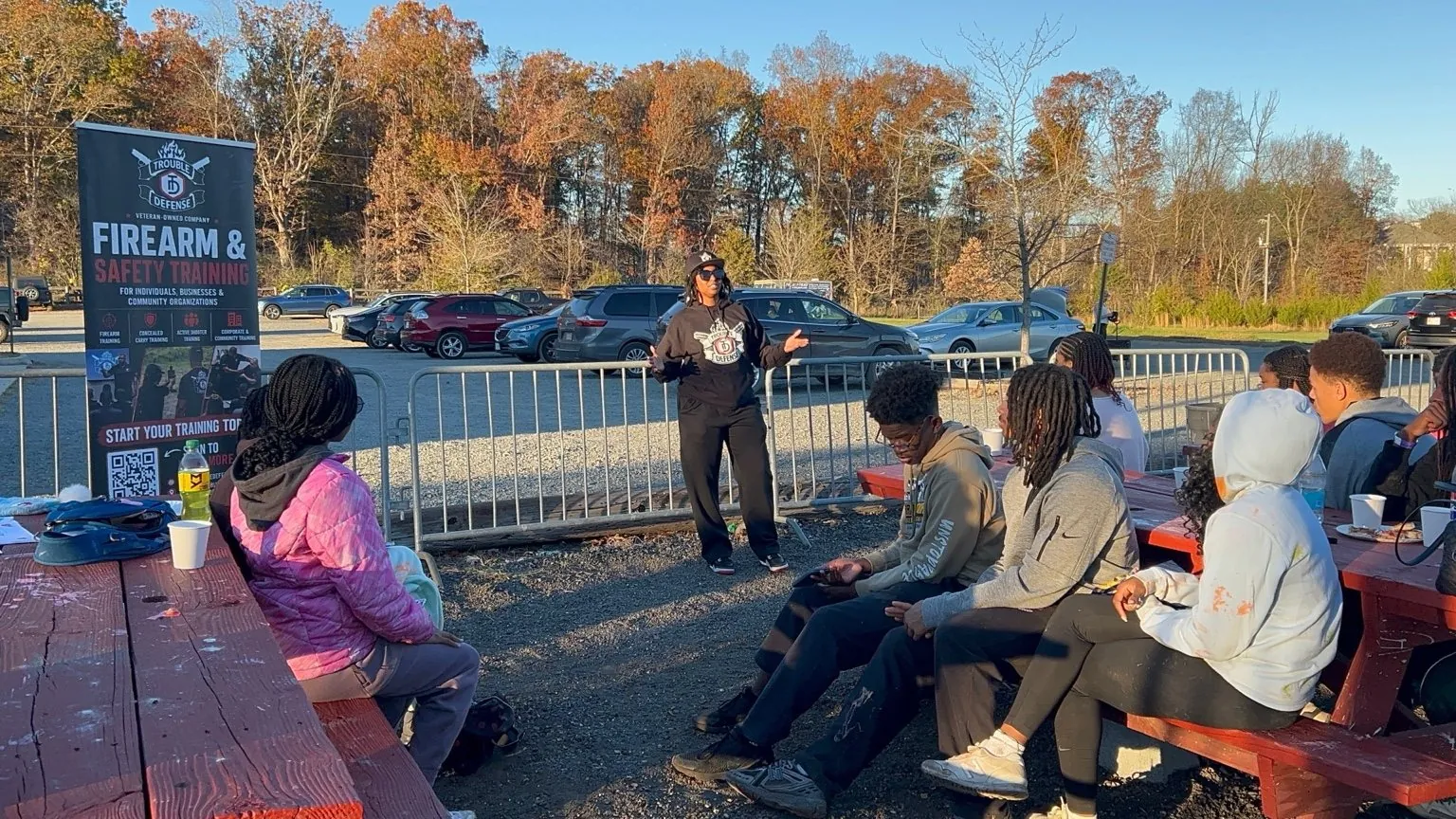
Trouble Defense joined the Northern Virginia Chapter for a youth firearm-safety and education event. With Sheena Parker and chapter leadership involved, the gathering brought young people and adults together for an important safety conversation.
An opportunity to ask questions, listen, and learn together. Tap any photo to view it larger.
Churches, chapters, clubs, and family organizations can build a session around their students’ ages and their group’s needs.
Plan a group program →Navy JROTC
Safety & EducationDCPS student group
In a separate event, Trouble Defense provided firearm-safety and education training for a school Navy JROTC group. These classroom moments capture students and instructors sharing the learning experience.
Planning a school or JROTC session? Share the grade levels, group size, location, and learning goals so we can discuss an appropriate format.
Your school or youth group can start the next conversation.
Ask about a program →The lesson starts here.
The follow-through happens together.
Children deserve clear guidance, and adults need practical steps they can take today. A class, song, or game supports the conversation; secure storage prevents access.
For parents & guardians
Ask about firearm storage before playdates and family visits. At home, store firearms locked and unloaded, with ammunition locked separately. Keep keys and combinations inaccessible to children and teens. Hiding a firearm is not secure storage.
For schools & youth leaders
Start with your grade levels and learning goals. Discuss an awareness presentation, a guided small-group conversation, or a family education session. Align the content with your organization’s expectations, adult supervision, and reporting procedures.
Tell us about language, reading-level, or accessibility needs when discussing your program. Lessons should fit the learners in the room.
Your next safety conversation
Use this as a discussion checklist. Your selections stay on this page and are not submitted.
0 of 5 conversation steps reviewed
A family vision.
A community purpose.
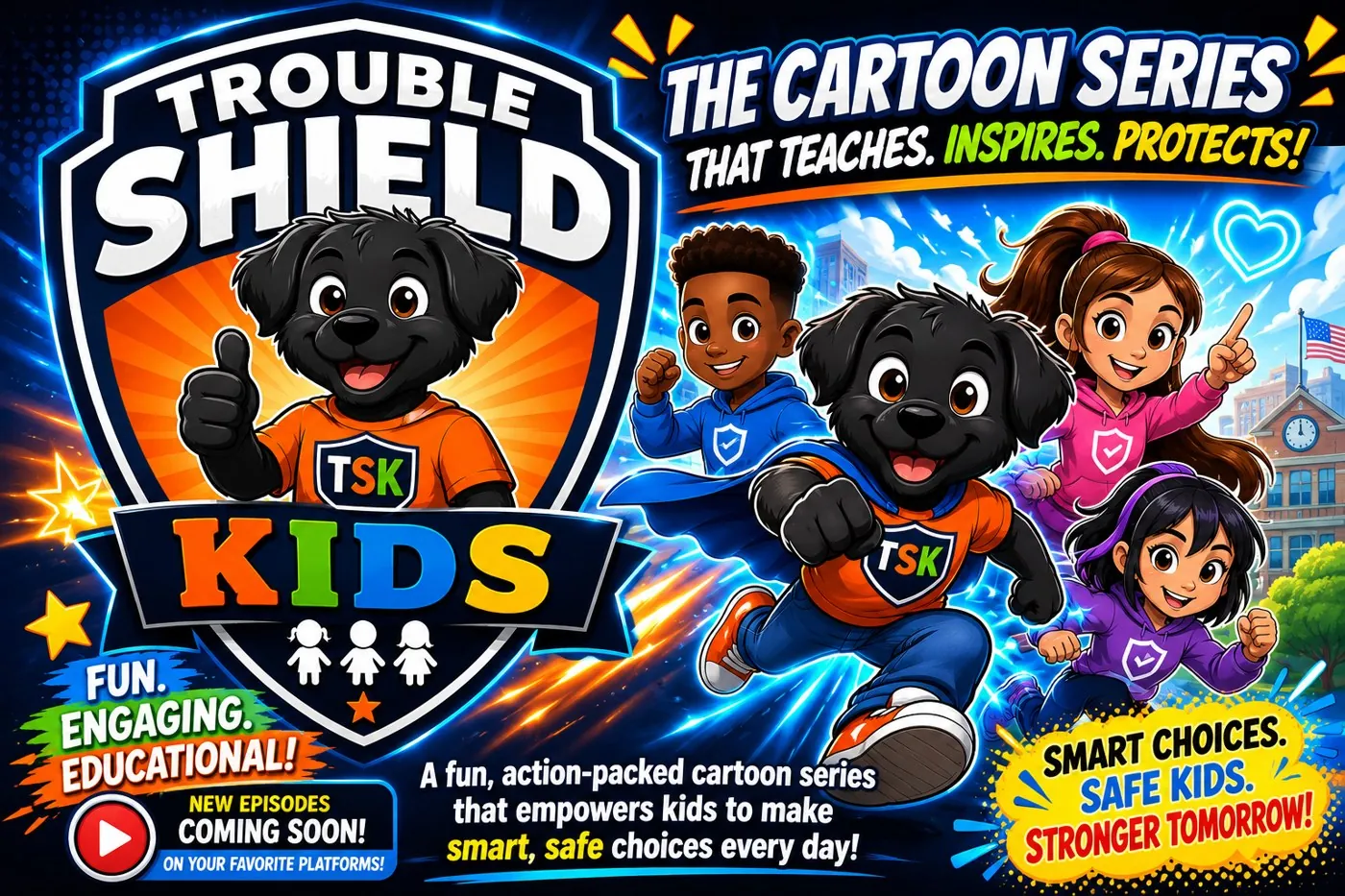
Created by Dee Parker and brought to life through the creative contributions of Sierra and Samira Parker, Shield Kids brings stories, characters, and safety conversations together. Trouble Defense’s purpose is to help families and youth communities build awareness, ask questions, and practice responsible choices. Our books and developing cartoon content provide another way to continue the conversation.
Clear answers.
Comfortable conversations.
You should know what your child or students will be learning.
Is this appropriate if we do not own a gun?
Yes. The awareness message applies to an unexpected encounter anywhere a child spends time. Children learn to leave an unattended firearm alone, move away, and tell a trusted adult. Families do not need to own or purchase a firearm.
Will children handle or fire a gun?
The Shield Kids awareness lessons on this page focus on recognizing risk and getting adult help; they do not require firearm handling or shooting. Any separately arranged hands-on training is a different activity with its own age requirements, parental or guardian involvement, and direct qualified supervision. Discuss the exact session scope before booking.
How do you adapt this for different ages?
Kindergarten lessons use short instructions and repetition. Elementary activities apply the steps to familiar situations. Junior-high and high-school conversations address peer pressure, reporting concerns, and responsible decisions. We discuss grade levels and learning needs with the organizing adult.
Can this be taught without frightening children?
The approach is calm, clear, and age-appropriate: simple rules, supportive conversations, and opportunities to ask questions. Let us know about your school’s or group’s expectations so the session can be planned thoughtfully.
Does completing the game mean my child is safe around firearms?
No. A child can remember a rule and still make an unsafe choice. The game is a learning and conversation activity, not a safety certification. Adults must continue secure storage, prevent unauthorized access, and reinforce the message.
Can a school, chapter, church, or youth group request a session?
Yes — the Shield Kids safety program can be requested by any school, chapter, church, or youth group. Send your organization name, grade levels, approximate attendance, city, and preferred timeframe. Trouble Defense will discuss the format, scheduling, pricing, supervision, and any requirements with you before the session is confirmed.
One conversation
can start a better habit with the Shield Kids safety program.
Bring the Shield Kids safety program to your school, family group, chapter, or youth organization. Tell us who you want to reach, and we’ll discuss the next step together.
The Shield Kids safety program serves Virginia, Maryland, and Washington, DC. Scheduling and program details are confirmed directly with Trouble Defense.
- Your school or organization
- Grade levels and approximate group size
- Location and preferred date or timeframe
- Your questions and learning goals
An inquiry starts a conversation. It does not reserve or confirm an event.