Firearms education reduces recidivism by reshaping how justice-involved individuals understand weapon possession, legal consequences, and personal responsibility. Programs at River City Correctional Facility in Cincinnati and the North Lawndale Restorative Justice Community Court (RJCC) in Chicago have produced measurable drops in reoffending, with data from 2026 showing outcomes that traditional incarceration alone cannot match. For criminal justice reform advocates and policymakers, the evidence is no longer anecdotal. Structured firearms education, when embedded in trauma-informed, holistic curricula, is one of the most underutilized tools in the recidivism reduction toolkit.
How firearms education reduces recidivism: what the evidence shows
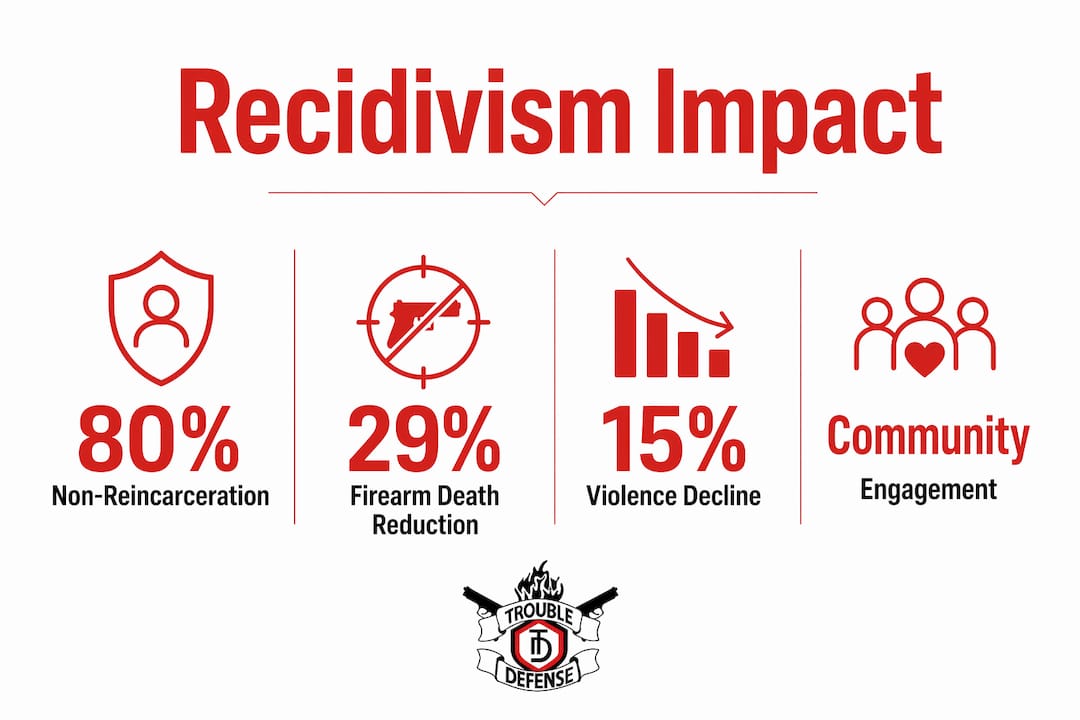
The most direct evidence comes from River City Correctional Facility, where a weapons-under-disability education course produced an 80% non-reincarceration rate among a 50-graduate cohort. Only 6% of graduates were re-arrested on weapons-related charges. That figure matters because weapons offenses are among the most reliable predictors of repeat incarceration. When a program cuts that pathway by more than 90%, it deserves serious policy attention.
The North Lawndale RJCC data is even more striking. Participants in restorative justice programming that included firearm safety education recorded a 13% recidivism rate within one year of enrollment, compared to 65% for individuals processed through traditional court adjudication. That is a five-to-one difference in outcomes. No single intervention in criminal justice reform produces that kind of gap without addressing something fundamental in how participants think and behave.
At the policy level, state firearm safety training requirements correlate with a 29% reduction in firearm-related death rates and a 15.9% reduction in crude suicide rates, based on analysis of 2003 to 2022 data. This tells policymakers that mandatory training requirements are not just a procedural formality. They produce population-level safety outcomes. The RAND Corporation’s review of correctional education further found that inmates who participated in education programs have 43% lower odds of recidivating than those who did not. Firearms education sits at the intersection of both findings.
| Program | Recidivism Rate | Comparison Baseline |
|---|---|---|
| River City Correctional Facility (weapons course graduates) | 17% re-arrested post-program | General correctional population |
| North Lawndale RJCC (restorative justice with firearms education) | 13% within one year | 65% traditional court adjudication |
| State-mandated firearm safety training (policy level) | 29% reduction in firearm deaths | States without training requirements |
What mechanisms make firearms training programs effective beyond basic safety?
The technical content of a firearms safety course, safe storage, legal ownership, handling procedures, is only the entry point. The deeper mechanism is cognitive reframing. River City Correctional’s program teaches participants to shift their view of firearms from survival tools to objects with severe legal consequences. That shift in perspective is what changes behavior after release, not the memorization of safety rules.
Trauma-informed care is the structural foundation that makes this reframing possible. River City’s 90-day mandatory program is designed to reprogram impulse responses shaped by dangerous environments. Participants learn to pause, assess consequences, and make deliberate decisions rather than reactive ones. This is not soft programming. It is applied cognitive-behavioral intervention delivered through a firearms education framework.
Effective programs also integrate components that address the full picture of a participant’s life:
- Legal education: Teaching the specific consequences of felon firearm possession, including mandatory minimums, removes the ambiguity that allows rationalization.
- Financial literacy: Participants who understand how to build economic stability are less likely to return to environments where illegal weapon carrying feels necessary.
- Mental health services: Unaddressed trauma is the single largest driver of impulsive weapon use. Programs that treat this directly reduce the underlying risk.
- Credible messengers: Instructors who are gun violence survivors or reformed offenders carry authority that no credential can replicate. Their presence signals that change is real and possible.
- History of firearms: Understanding the legal and social history of gun ownership in America shifts participants from adversarial to informed relationships with the subject.
Pro Tip: When designing a firearms education curriculum for a correctional or reentry setting, recruit at least one instructor with lived experience of gun violence. Research confirms that credible messengers reduce participant resistance and deepen engagement far more than credentialed-only instructors.
Firearms education is most effective when integrated into comprehensive rehabilitation rather than delivered as a standalone course. The data from both River City and North Lawndale confirms this. Neither program treats firearms safety as a single-topic workshop. Both embed it within a broader structure of life skills, legal awareness, and community accountability.
How do restorative justice models use firearms education differently?
Traditional adjudication treats a weapons offense as a transaction: crime committed, sentence served, case closed. Restorative justice models treat the same offense as a rupture in community relationships that requires active repair. The North Lawndale RJCC replaces punitive messaging with community safety and collective responsibility themes, and firearms education is woven directly into that framework.
The practical difference shows up in how participants engage with the material. In a traditional court-mandated program, firearms education feels like a penalty. In a restorative justice setting, it feels like preparation for a different kind of future. That distinction drives the 13% versus 65% recidivism gap more than any single curriculum element.
North Lawndale’s approach includes community-based learning where participants interact with neighbors, local organizations, and sometimes victims of gun violence. This creates accountability that extends beyond the program itself. When a participant knows that their community is watching their progress, the motivation to stay on course is qualitatively different from the motivation to avoid re-arrest.
Restorative justice programs that incorporate firearms education also produce better outcomes for youth specifically. The combination of judgment-free learning spaces, holistic program components like mental health and financial literacy, and culturally relevant instruction creates pathways toward desistance that punitive models simply do not offer. For policymakers evaluating where to direct funding, the comparison is not close.
What steps should policymakers take to expand firearms education programs?
Scaling what works requires more than replicating a curriculum. The following steps reflect what the most successful programs have in common and where most reform efforts fall short.
- Design for trauma first. Any firearms education program placed in a correctional or reentry context must be built on a trauma-informed foundation. Participants who have experienced gun violence, incarceration, or community instability cannot engage with technical content until their psychological safety is established.
- Hire credible instructors. Survivors of gun violence who have rebuilt their lives are the most effective educators in this space. Pair them with certified firearms instructors who understand both the technical and legal dimensions of the subject.
- Coordinate with mental health and vocational programs. Firearms education that runs in isolation loses its impact within months of completion. Programs that connect participants to ongoing mental health support and job training sustain behavioral change over time.
- Build in outcome measurement from day one. The River City and North Lawndale programs produced compelling data because they tracked re-arrest rates, reincarceration rates, and weapons-specific offenses systematically. Advocates need this data to secure continued funding and policy support.
- Pursue sustainable funding through criminal justice reform grants. Federal Second Chance Act funding, state-level justice reinvestment initiatives, and philanthropic sources focused on gun violence prevention are all viable channels. Programs that document outcomes attract continued investment.
Pro Tip: Policymakers who want to pilot a firearms education program should start with a restorative justice court partnership rather than a standalone correctional program. The existing infrastructure, community relationships, and holistic support services in restorative justice settings dramatically increase the odds of measurable success in the first program year.
Shooting sports and structured firearms training have a documented record of teaching discipline in young participants. That same mechanism, focus, rule-following, consequence awareness, applies directly in justice-involved populations when the program design is right.
Key takeaways
Firearms education reduces recidivism most effectively when it combines cognitive reframing, trauma-informed care, and holistic life skills within a restorative justice or structured correctional framework.
| Point | Details |
|---|---|
| Evidence is strong and specific | River City graduates showed an 80% non-reincarceration rate; North Lawndale participants had a 13% recidivism rate versus 65% in traditional courts. |
| Cognitive reframing is the core mechanism | Shifting how participants view firearms from survival tools to legal liabilities drives long-term behavioral change. |
| Holistic integration multiplies impact | Programs combining firearms education with mental health, financial literacy, and legal education outperform standalone safety courses. |
| Credible messengers are non-negotiable | Instructors with lived experience of gun violence produce deeper engagement and lower resistance among participants. |
| Policy-level training requirements work | State firearm safety training mandates correlate with a 29% reduction in firearm-related death rates across the population. |
Why firearms education deserves a central place in reform strategy
I have worked with enough people on both sides of the training room to say this plainly: the most transformative moments I have witnessed had nothing to do with trigger discipline. They happened when someone who had carried a firearm illegally for years finally understood, in concrete terms, what that choice had cost them and what it would cost them again. That understanding does not come from a lecture. It comes from a structured environment where the legal, personal, and community consequences of weapon possession are made undeniable.
What the River City and North Lawndale data confirms is something practitioners have known for years. People do not carry illegal firearms because they enjoy breaking the law. They carry them because they feel unsafe, unseen, and without alternatives. A well-designed firearms education program addresses all three of those drivers simultaneously. It teaches safety, yes. But it also says: your life has value, the law applies to you and for you, and there is a path forward that does not end in a cell.
The barrier I see most often is not participant resistance. It is institutional reluctance to treat firearms education as a legitimate rehabilitation tool. That reluctance is expensive. Every person who reoffends on a weapons charge represents a policy failure that better programming could have prevented. The evidence from 2026 makes the cost of inaction harder to justify than ever.
— Dee Parker
Partner with Trouble Defense to build programs that work

Trouble Defense, a veteran-owned firearms training academy based in Fairfax, VA, brings the same commitment to structured, trauma-aware instruction that makes correctional and reentry programs succeed. Whether you are a reform advocate designing a community curriculum or a policymaker exploring youth firearm safety education as part of a broader prevention strategy, Trouble Defense offers certified NRA instructors, adaptive training for individuals with disabilities, and programs built for real-world outcomes. The training calendar includes more than 10 classes across Virginia, Maryland, and DC. Contact Trouble Defense to discuss how professional, community-focused firearms education can support your recidivism reduction goals in the DMV region.
FAQ
Does firearms education actually lower reoffending rates?
Yes. Graduates of River City Correctional Facility’s weapons education program showed an 80% non-reincarceration rate, and North Lawndale RJCC participants recorded a 13% recidivism rate compared to 65% for traditionally adjudicated individuals.
What makes firearms education programs effective for justice-involved individuals?
The most effective programs combine firearms safety with trauma-informed care, legal education, and credible instructors who have lived experience with gun violence, addressing the cognitive and psychosocial roots of weapon-related reoffending.
How does restorative justice incorporate firearms education?
Restorative justice courts like North Lawndale RJCC embed firearms education within community accountability frameworks, replacing punitive messaging with collective responsibility themes and holistic life skills programming.
What role do state firearm training requirements play in public safety?
State-level firearm safety training requirements correlate with a 29% reduction in firearm-related death rates and a 15.9% reduction in suicide rates, based on analysis of data from 2003 to 2022.
How should policymakers start implementing firearms education programs?
Start with a restorative justice court partnership, hire instructors with lived experience, integrate mental health and vocational support, and build outcome tracking from the program’s first day to generate the data needed for sustained funding.