Gunshot Wound First Aid: What to Do Before EMS Arrives
Severe bleeding can become life-threatening quickly. Learn the basic principles of recognizing dangerous bleeding, applying direct pressure, wound packing when appropriate, and using a tourniquet for life-threatening arm or leg bleeding.
Treat this as an emergency.
A gunshot wound can involve serious internal injuries even when external bleeding does not appear dramatic. Get professional emergency help immediately.
This webpage is educational and cannot replace emergency medical care or hands-on first-aid training.
First Aid for Gunshot Wounds Online Course
If you're here because you want to prepare before something happens, this is the fastest purchase path on the page.
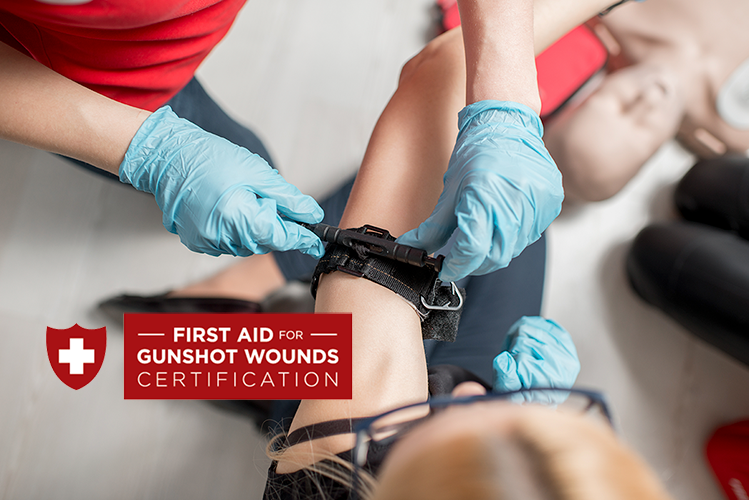
First Aid for Gunshot Wounds
Online educational training from U.S. LawShield Institute covering gunshot wound response and trauma first-aid principles.
- Full lifetime course access
- Learn on mobile or desktop
- No previous medical training required
- Gunshot wound first-aid education
- Trauma-response concepts and equipment
- Certificate of Completion
What brought you to this page?
Pick the option that fits your goal and we'll send you directly to the most useful next step.
Take the $34.95 Online Course
Get lifetime access to the U.S. LawShield First Aid for Gunshot Wounds course and complete it from your phone or computer.
Three techniques every prepared person should understand.
Major bleeding-control programs teach ordinary bystanders how to use direct pressure, wound packing and tourniquets when appropriate. Hands-on practice is the best way to develop these skills.
Direct Pressure
Locate the source of severe external bleeding and apply steady, firm pressure directly over the wound using a dressing, gauze, clean cloth or available material.
Wound Packing
Some deep external wounds may require packing with gauze or appropriate material followed by continued direct pressure.
Tourniquet Use
A commercial tourniquet can be used for life-threatening bleeding from an arm or leg. Apply it according to training and the manufacturer's instructions.
What can life-threatening bleeding look like?
Do not wait for every symptom to appear. Severe blood loss requires immediate emergency action.
This knowledge is useful far beyond the shooting range.
Severe bleeding can happen during vehicle crashes, workplace accidents, falls, outdoor incidents and other traumatic emergencies.
Online education is useful. Hands-on practice makes it stronger.
The best approach is to understand the concepts and then practice bleeding-control skills with qualified hands-on instruction.
$34.95 U.S. LawShield Course
A convenient starting point for learning about gunshot wound response and trauma first-aid concepts from home.
- Lifetime access
- Mobile and desktop
- Beginner friendly
- Certificate of Completion
Hands-On Bleeding-Control Training
Hands-on programs allow participants to physically practice direct pressure, wound packing and tourniquet application with instructor feedback.
- Practice techniques instead of only reading
- Learn equipment handling
- Receive instructor feedback
- Build confidence before an emergency
Need safety training for an entire organization?
Trouble Defense provides customized safety and emergency-preparedness training for businesses, government organizations, churches, security teams, community groups and private organizations throughout Virginia, Maryland and Washington, DC. Tell us your group size, location and training goals and we'll help build the right program.
Gunshot wound first aid questions.
What should I do first if someone has been shot?
Make sure the scene is safe before approaching, call 911 immediately, and control severe external bleeding using appropriate first-aid measures while following emergency dispatcher instructions. Gunshot wounds require emergency medical evaluation even when visible bleeding appears controlled.
How can I recognize life-threatening bleeding?
Warning signs can include blood flowing continuously or spurting, a large amount of visible blood, bleeding that does not stop with pressure, and signs of shock or decreasing responsiveness.
When is direct pressure used?
Direct pressure is a primary method for controlling severe external bleeding. Apply steady, firm pressure directly over the source of bleeding and continue until bleeding is controlled or more appropriate care is available.
When should a tourniquet be used?
Tourniquets are used for life-threatening bleeding from an arm or leg. Proper training is strongly recommended. Follow the device instructions, avoid placement directly over a joint, and leave an applied emergency tourniquet in place for EMS to manage.
Should I remove an object stuck in a wound?
Do not pull an embedded object out. Activate EMS and follow emergency instructions. Removing an embedded object can worsen bleeding or additional internal injury.
Can a person survive a gunshot wound?
Outcomes vary greatly depending on where the injury occurred, internal damage, blood loss, other injuries and how quickly emergency medical care is provided. A gunshot wound should always be treated as a medical emergency.
Does the $34.95 course include a certificate?
U.S. LawShield currently lists a Certificate of Completion as part of the online First Aid for Gunshot Wounds course. It should not be represented as an EMS license, medical professional credential or ACS STOP THE BLEED hands-on course certificate.
Do I need medical experience to take the online course?
No. U.S. LawShield states that no previous medical training is required for its First Aid for Gunshot Wounds online course.
Can bleeding-control skills help with injuries other than gunshots?
Yes. Severe external bleeding can occur during vehicle crashes, workplace incidents, falls, outdoor accidents and other traumatic emergencies. The general principles of recognizing and controlling dangerous external bleeding apply beyond firearm injuries.
Can Trouble Defense provide group safety training?
Trouble Defense offers customized safety and emergency-preparedness programs for private groups, businesses, churches, community organizations and other organizations. Contact Trouble Defense with your location, group size and training goals for available program options.
$34.95 could be a small investment in knowledge you hope you never need.
Learn the fundamentals of gunshot wound first aid and trauma response from home with lifetime access to the U.S. LawShield online course.
Course purchase is completed on U.S. LawShield Institute's website.