
DMV firearm training is the process of completing state- and district-mandated firearm safety and certification courses to legally carry or own a gun in Washington DC, Maryland, or Virginia. Each jurisdiction sets its own rules, and the differences matter. DC requires a 16-hour MPD-certified course with live-fire qualification. Maryland mandates separate courses for the Handgun Qualification License and the Wear and Carry permit. Virginia requires a qualified firearms safety course for its Concealed Handgun Permit. Getting the wrong course for the wrong jurisdiction wastes your time and money. This guide covers every requirement, cost, and step so you get it right the first time.
What does DMV firearm training legally require in DC, MD, and VA?
The legal requirements for firearm instruction across the DMV are not interchangeable. Each jurisdiction operates under its own certification framework, and a course accepted in one state may be rejected in another.
Washington DC sets the highest bar. The Metropolitan Police Department requires all concealed carry training to be delivered by MPD-certified instructors only. The course runs 16 hours total and includes a minimum of 2 hours of live-fire range time with a 50-round qualification. NRA certification alone does not satisfy this requirement. That distinction trips up many applicants who assume any nationally recognized credential will do.
Maryland splits its requirements across two separate permits. The Handgun Qualification License (HQL) requires a 4-hour safety course that includes live-fire, completed within three years before application. The Wear and Carry permit requires a longer, more intensive course covering laws, use of force, and live-fire qualification. Trouble Defense offers dedicated Maryland Wear and Carry training that meets both the legal hours and content standards set by the state.
Virginia requires completion of a qualified firearms safety training course to obtain a Concealed Handgun Permit (CHP). The state accepts a broader range of approved courses compared to DC, but it does not honor Maryland permits for carry within its borders.
| Jurisdiction | Course length | Live-fire required | Certification body | Key application step |
|---|---|---|---|---|
| Washington DC | 16 hours | Yes, 50-round minimum | Metropolitan Police Department | Submit MPD-certified training certificate |
| Maryland HQL | 4 hours | Yes | State-approved instructor | Complete within 3 years of application |
| Maryland Wear & Carry | Varies by provider | Yes | State-approved instructor | Submit course certificate with permit application |
| Virginia CHP | Varies by course | Recommended | State-qualified instructor | Submit certificate with CHP application |
The reciprocity gap between Maryland and Virginia is one of the most overlooked legal risks in the DMV. Maryland does not honor Virginia CHPs, and Virginia does not honor Maryland Wear and Carry permits. If you travel regularly across both states, you need separate certifications for each.
What does a typical DMV gun training program cover?
A standard firearm safety course in the DMV covers four core areas: safe handling, legal education, marksmanship fundamentals, and live-fire qualification. Understanding what each section involves helps you walk in prepared rather than overwhelmed.
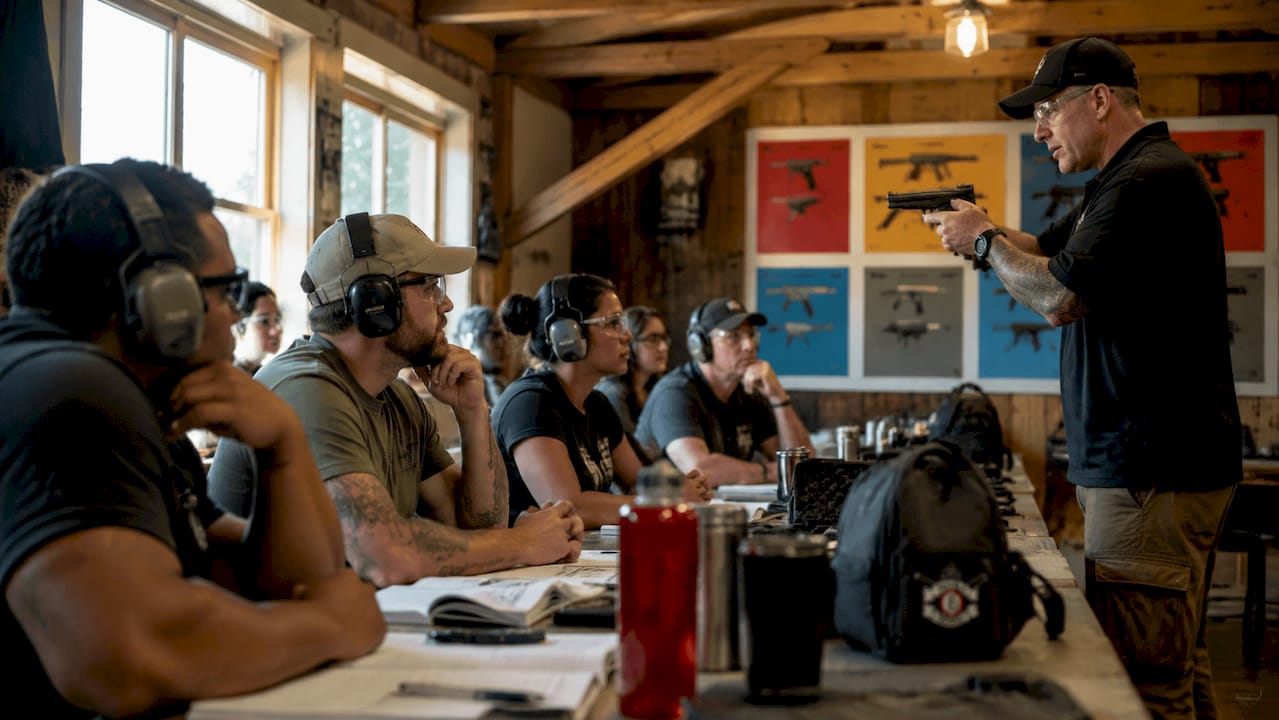
Safe handling and storage covers the four fundamental rules of firearm safety, how to load and unload your specific firearm type, proper storage methods including lock boxes and gun safes, and basic cleaning procedures. These skills apply regardless of which jurisdiction you are training for.
Legal education is where DMV-specific courses go deeper than generic national programs. Courses address:
- Federal firearms laws and prohibited persons categories
- State and district-specific use of force statutes
- Self-defense doctrine, including the duty to retreat where applicable
- Safe transport laws across DC, Maryland, and Virginia
Live-fire range qualification is the component most students underestimate. DC requires a 50-round qualification at specified distances. Maryland courses include live-fire as a mandatory component for both the HQL and Wear and Carry courses. Virginia courses strongly recommend live-fire even when not strictly mandated by every approved provider.
Blended learning formats are now common across the DMV. The NRA’s online pistol course, for example, offers 11 online lessons completed before in-person range time. This format works well for working adults who cannot commit to a full weekend course. Blended programs let you absorb the legal and safety content at your own pace, then focus entirely on hands-on skills during range time.
Course costs vary by jurisdiction and format. Maryland Wear and Carry courses run between $175 and $350. DC concealed carry courses cost upward of $450 due to the stricter MPD certification requirements. Virginia courses generally fall at the lower end of that range.
Pro Tip: Bring your own eye and ear protection to every range session. Many ranges allow or require personal PPE, and using your own gear means a better fit and one less thing to rent or borrow. Confirm the approved ammunition type with your instructor before the range day, since some facilities restrict steel-cased or hollow-point rounds.
How to complete your firearm training and submit for a permit
Completing your training correctly means more than just showing up to class. The sequence of steps matters, and small errors in documentation can delay your permit by weeks.
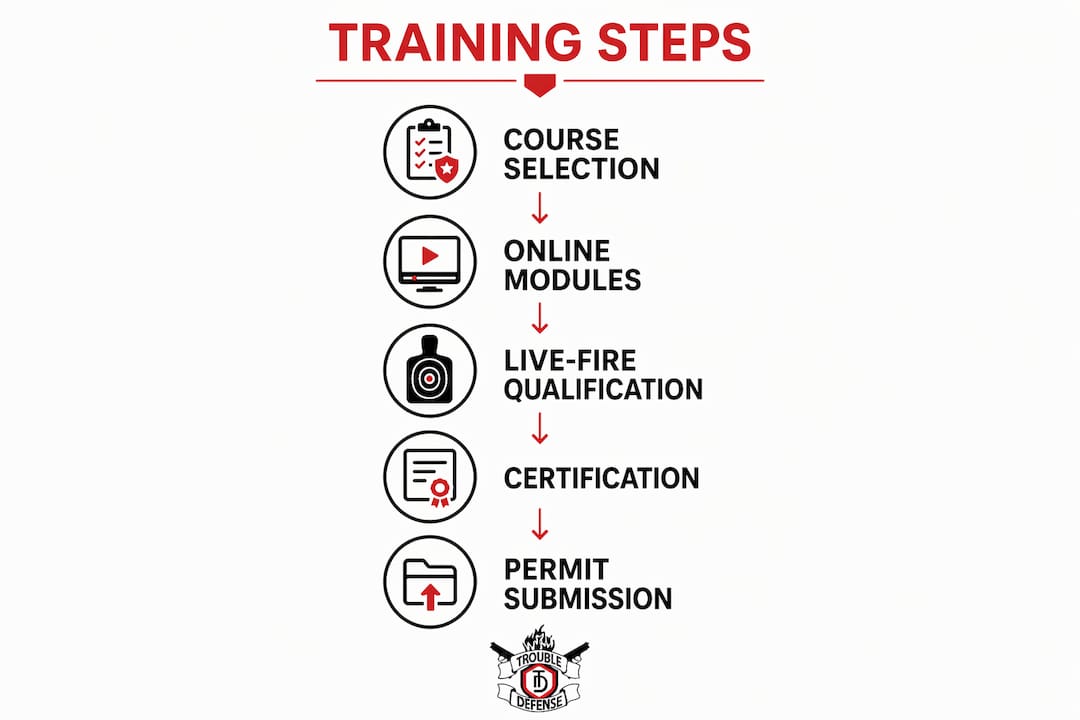
- Confirm your jurisdiction’s accepted course list. DC requires MPD-certified instructors. Maryland requires state-approved instructors. Virginia accepts a broader pool of qualified providers. Check the official agency website before booking any course.
- Register for the course before or after your permit application, depending on jurisdiction. Maryland allows you to complete training before submitting your HQL application. DC requires training completion as part of the application package.
- Prepare your documentation before the course date. Bring a valid government-issued photo ID, proof of residency if required, and any prior training certificates that may qualify for exemptions.
- Complete the classroom or online module first. For blended courses, finish all online lessons before your scheduled range day. Arriving unprepared to the range wastes your session and may disqualify your qualification attempt.
- Pass the live-fire qualification. Follow the round count, distance, and target requirements exactly as specified by your course provider and jurisdiction.
- Collect your training certificate immediately after the course. Do not leave without a signed, dated certificate from your instructor. This document is your proof of compliance.
- Submit your application with all required documents and fees. DC, Maryland, and Virginia each have separate application portals and fee schedules. Confirm current fees directly with the issuing agency before submitting.
| Step | DC | Maryland HQL | Virginia CHP |
|---|---|---|---|
| Course selection | MPD-certified only | State-approved instructor | Qualified provider list |
| Training timing | Before application | Before application | Before application |
| Live-fire requirement | 50 rounds minimum | Required | Recommended |
| Certificate submission | With permit application | With HQL application | With CHP application |
| Issuing agency | Metropolitan Police Dept. | Maryland State Police | Virginia State Police |
Pro Tip: Book your range session at least two to three weeks in advance. Range slots fill quickly, especially on weekends. Missing your range date can push your entire permit timeline back by a month or more.
A common mistake is using a generic online safety course that satisfies no jurisdiction’s legal requirement. These courses build basic knowledge but do not replace the mandated certification. The difference between a generic course and a legally mandated certification is the single most expensive mistake a DMV applicant can make.
Common challenges in DMV firearm training and how to handle them
Range availability is the biggest scheduling bottleneck in the DMV. Range sessions book weeks in advance, and equipment rules including approved ammo types, eye protection standards, and target specifications vary by facility. Plan for this early.
Reciprocity confusion ranks second. Many residents assume one permit covers the entire DMV region. It does not. Maryland and Virginia have no reciprocity with each other’s permits. Residents who regularly cross state lines need to hold separate certifications and complete separate training courses for each jurisdiction.
Cost variation also catches people off guard. Here is what to expect:
- Maryland HQL and Wear and Carry courses: $175–$350
- DC concealed carry courses: $450 or more
- Virginia CHP courses: generally lower than Maryland and DC rates
- Additional costs: range fees, ammo, PPE, and application fees paid separately
Choosing a blended learning format cuts the time you spend in a classroom without cutting the legal requirements. You complete the legal and safety content online on your schedule, then arrive at the range focused and ready. That combination consistently produces better qualification scores than students who try to absorb everything in a single all-day session.
Pro Tip: If your schedule is unpredictable, look for courses that offer online modules with flexible range scheduling. Completing the online portion first means you only need to lock in one range date rather than committing to a multi-day in-person block.
New firearm owners should also prepare physically and mentally for the range. Arrive rested. Wear comfortable, close-toed shoes and avoid loose clothing that could interfere with safe handling. Bring water and a snack for longer sessions. These small details affect your focus and your qualification score.
Key Takeaways
DMV firearm training requires separate, jurisdiction-specific certifications for DC, Maryland, and Virginia, and no single course satisfies all three.
| Point | Details |
|---|---|
| DC requires MPD certification | Only instructors certified by the Metropolitan Police Department can deliver legally valid DC concealed carry training. |
| Maryland splits into two permits | The HQL and Wear and Carry permits each require separate courses with distinct hour and live-fire requirements. |
| Virginia and Maryland have no reciprocity | Residents who carry in both states must hold and maintain separate permits and complete separate training. |
| Blended learning saves time | Online modules completed before range sessions reduce scheduling conflicts and improve qualification outcomes. |
| Book range time early | Range slots fill weeks in advance, and missing your date can delay your entire permit application by a month. |
What I’ve learned from watching DMV residents navigate firearm training
The biggest mistake I see is treating firearm training as a box to check rather than a skill to build. Residents rush to find the cheapest or fastest course, then discover it does not meet their jurisdiction’s legal standard. That costs them time, money, and sometimes their application window.
The blended learning model has genuinely changed outcomes for busy adults. Students who complete online modules before their range day arrive with better situational awareness and score higher on live-fire qualifications. The range is not the place to learn the rules. It is the place to apply them.
The reciprocity gap between Maryland and Virginia is the detail that surprises even experienced gun owners. I have spoken with people who carried legally in Virginia for years and had no idea their permit was invalid the moment they crossed into Maryland. The multi-state permit complexity in this region is real, and it requires deliberate planning, not assumptions.
My strongest advice: choose your instructor before you choose your course format. A certified, experienced instructor who knows the specific requirements of your target jurisdiction will save you from the most common and costly errors. Quality instruction is not a luxury in the DMV. It is the difference between a valid permit and a rejected application.
— Dee Parker
Trouble Defense makes DMV permit training straightforward
Trouble Defense LLC is a veteran-owned firearms training academy based in Fairfax, VA, serving the entire DMV region with certified, jurisdiction-specific courses. Whether you need Virginia firearm training for your CHP, a Maryland Wear and Carry course, or an MPD-certified DC concealed carry class, Trouble Defense has the certified instructors and structured curriculum to get you legally compliant and genuinely prepared.
Trouble Defense also offers Maryland Wear and Carry training, adaptive firearms training for individuals with disabilities, women’s firearm training, and youth firearm safety education. With over 300 five-star Google reviews and NRA-certified instructors, the academy delivers training that meets legal standards and builds real confidence. Contact Trouble Defense LLC to schedule your course and move through the permit process with clarity.
FAQ
What is DMV firearm training?
DMV firearm training refers to the legally mandated firearm safety and certification courses required to obtain a concealed carry permit or handgun license in Washington DC, Maryland, or Virginia. Each jurisdiction sets its own course length, instructor certification, and live-fire requirements.
Does one concealed carry permit cover the entire DMV?
No. Maryland and Virginia do not honor each other’s concealed carry permits, and DC has its own separate certification process. Residents who carry across all three jurisdictions must hold multiple permits and complete separate training for each.
How long does DMV firearm training take?
DC requires a 16-hour course. Maryland’s HQL course runs 4 hours, while the Wear and Carry course varies by provider. Virginia CHP courses vary in length depending on the approved provider you select.
How much does firearm training cost in the DMV?
Maryland courses typically cost between $175 and $350. DC concealed carry courses cost upward of $450 due to the MPD certification requirement. Virginia courses generally run lower than Maryland rates, though costs vary by provider.
Can I complete DMV firearm training online?
Partially. Blended formats allow you to complete legal and safety modules online before attending an in-person live-fire session. No jurisdiction in the DMV accepts a fully online course as a substitute for the mandatory live-fire qualification component.
The breakdown of how Washington, DC, Maryland, and Virginia each have different training and permit requirements is especially useful because it’s easy to assume the rules are the same across the region. It might also help readers to include a reminder that regulations can change over time, so checking the latest requirements before applying or renewing a permit can prevent unnecessary delays.