
Shooting lessons are structured training sessions that build firearm skills safely through professional instruction, hands-on practice, and controlled range environments. Whether your goal is personal safety, recreational marksmanship, or professional development, the right course covers the same non-negotiable foundation: safety rules, grip, stance, sight alignment, and trigger control. Trouble Defense LLC, a veteran-owned firearms training academy based in Fairfax, VA, serves beginners through advanced shooters across Virginia, Maryland, and Washington DC. With over 300 five-star Google reviews and certified NRA instructors on staff, Trouble Defense delivers the kind of personalized, hands-on instruction that turns nervous first-timers into confident, responsible gun owners.
What should you expect at your first shooting lesson?
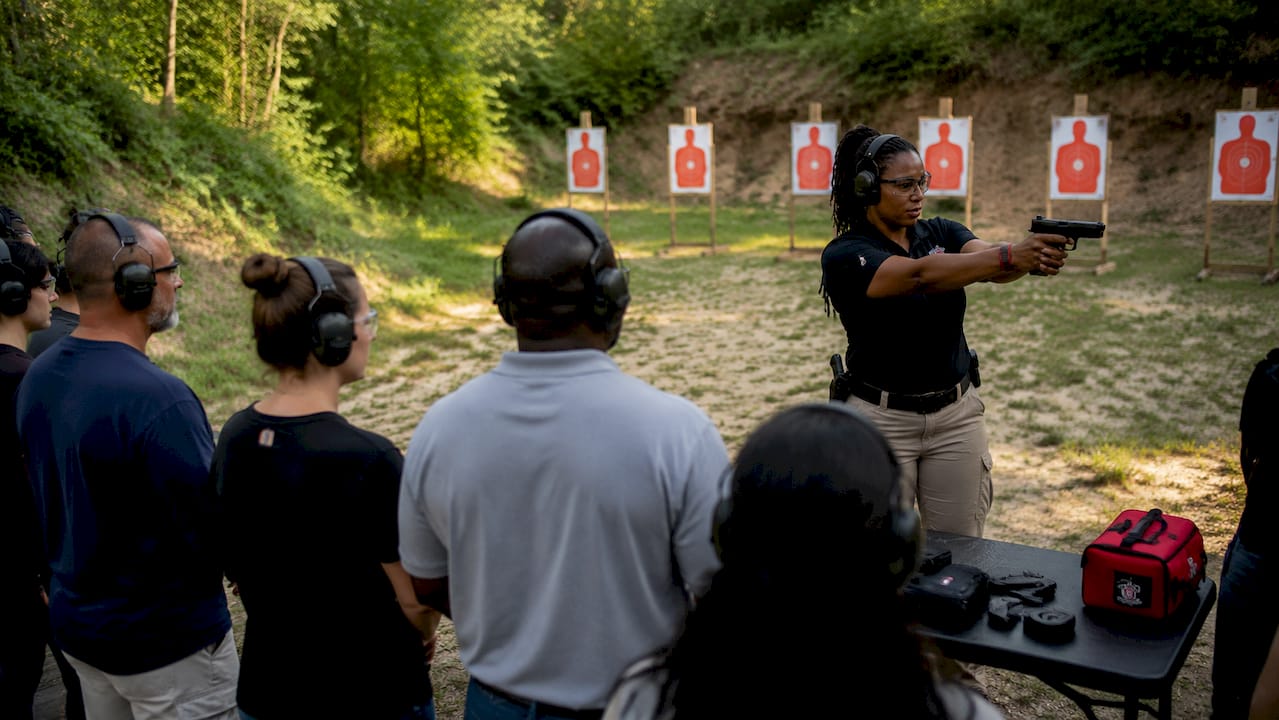
First-time students often arrive unsure of what to bring and what will happen. A typical session lasts 1–2.5 hours, blending classroom instruction with live-fire range time. That structure matters because you learn the rules before you ever touch a loaded firearm.
What to bring to your first session:
- Valid government-issued photo ID
- Closed-toe shoes and no low-cut necklines (brass ejects hot)
- A notepad if you prefer written notes
- Payment for any rental fees, typically around $50 for a firearm if not included
Most facilities supply firearms and ammunition for students, so you do not need to own a gun to start. Hearing and eye protection are fitted before any live fire begins. Instructors maintain one-on-one supervision throughout, so you are never left alone on the range.
State-specific rules also apply. Some states require a Firearm Safety Certificate before purchase, and waiting periods and legal basics are typically covered in the classroom portion of beginner courses. In Virginia and Maryland, your instructor will walk you through local carry permit requirements if that is your goal.
Pro Tip: If you are considering a Virginia CCW class or a Maryland Wear and Carry permit, ask your instructor during the first session. Many academies, including Trouble Defense, integrate permit prep directly into their beginner curriculum.
Check out Trouble Defense’s beginner shooting guide for a detailed walkthrough of what your first range visit looks like.
Core skills taught in gun safety classes and beginner courses
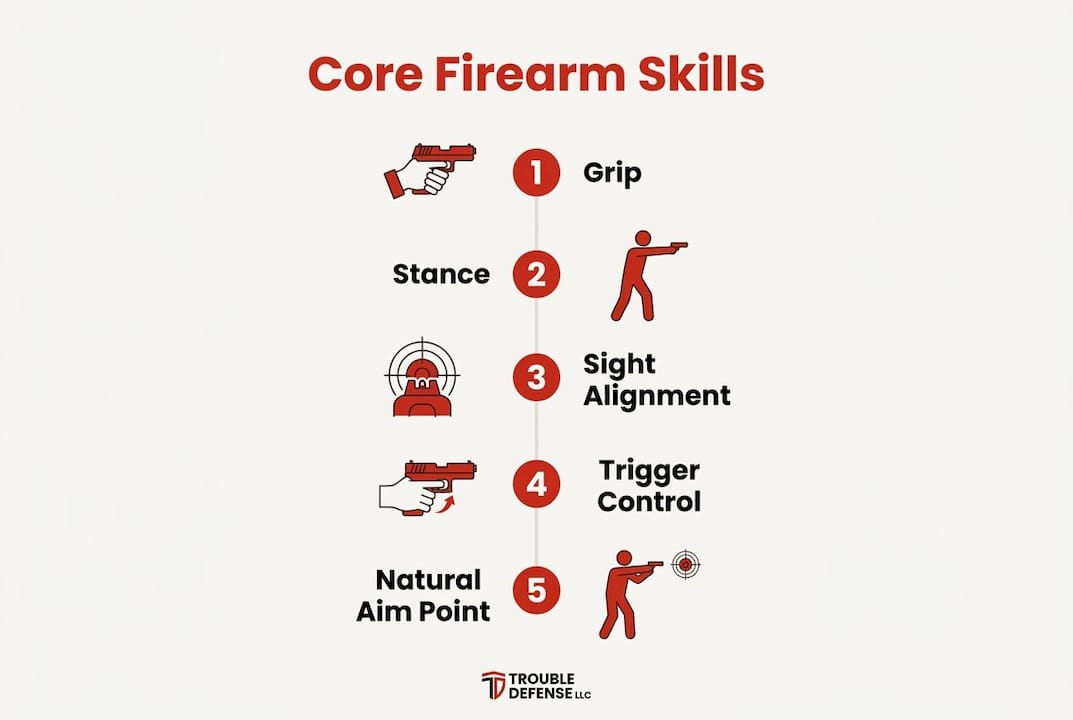
Every credible beginner shooting course builds on the same mechanical foundation. Standard curricula cover the four universal firearm safety rules, grip, stance, sight alignment, and trigger control before any live fire begins. These are not suggestions. They are the non-negotiable starting point for every shooter at every skill level.
The four universal firearm safety rules
- Treat every firearm as if it is loaded.
- Never point the muzzle at anything you are not willing to destroy.
- Keep your finger off the trigger until your sights are on target.
- Know your target and what is beyond it.
These rules form the safety foundation that every lesson reinforces, regardless of whether you are shooting a pistol or a rifle.
Fundamental skills every student develops
Grip and stance determine how well you manage recoil and maintain control. A thumbs-forward grip on a semi-automatic pistol keeps the gun stable and reduces muzzle flip. A balanced, athletic stance distributes weight evenly and lets you recover quickly between shots.
Sight alignment and sight picture are the two concepts most beginners confuse. Sight alignment means the front and rear sights are lined up with each other. Sight picture means that aligned sight is placed correctly on the target. Both must be correct for an accurate shot.
Trigger control is where most beginners lose accuracy. Pressing the trigger straight back without disturbing the sight picture is a learned motor skill, not an instinct. Dry fire practice with an unloaded or inert firearm builds that skill before live ammunition enters the equation.
Establishing a natural point of aim is the next step most beginners overlook. You relax your body and reposition your feet until the firearm rests naturally on the target without muscular tension. That skeletal alignment reduces tremors and improves accuracy, especially at distance.
| Skill | What it means | Why it matters |
|---|---|---|
| Grip | Thumbs-forward, firm two-hand hold | Controls recoil and muzzle flip |
| Stance | Balanced, weight slightly forward | Enables quick recovery between shots |
| Sight alignment | Front and rear sights lined up | Foundation for accurate shot placement |
| Trigger control | Smooth, straight rearward press | Prevents disturbing the sight picture |
| Natural point of aim | Body aligned to target without tension | Reduces tremors and improves consistency |
Pro Tip: Start every dry fire session by closing your eyes, raising the firearm, then opening your eyes to check where the sights land. If they are off target, adjust your feet, not your arms. That is natural point of aim in practice.
How do advanced shooting techniques build on the basics?
Fundamentals are not a phase you graduate from. Distance magnifies every error in your technique, and no amount of advanced gear compensates for a poor trigger press or an unstable stance. Advanced training is not about abandoning the basics. It is about executing them faster and under greater stress.
Short daily dry fire sessions of 10–15 minutes build muscle memory more effectively than occasional high-volume live-fire sessions. That is a counterintuitive finding for most new shooters who assume more rounds equals more progress. Deliberate, empty-chamber repetition compounds the neural pathways that make technique automatic.
Shot calling is the skill that separates intermediate shooters from advanced ones. Shot calling means predicting where your bullet will land based solely on your sight picture at the moment of trigger break. Without it, you rely on checking the target after each shot, which delays feedback and slows improvement. With it, you diagnose your own errors in real time.
“The shooter who can call their shots accurately has an internal feedback loop that no target or coach can replace. That self-awareness is what drives real, lasting improvement on the range and in the field.”
Recommended drills for tactical proficiency:
- Bill Drill: Six rounds on a single target as fast as possible while maintaining accuracy. Builds speed and recoil management simultaneously.
- Dot Torture: Ten small dots on a single target, each requiring a specific number of shots. Demands precision and trigger control under cognitive load.
- 1-to-5 Drill: Shoot one shot on the first target, two on the second, and so on. Builds target transition speed and shot sequencing.
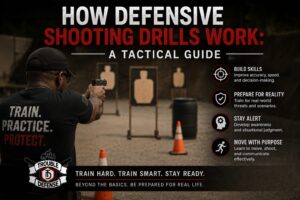
Tactical drills teach grip management, recoil control, and rapid target transitions that prepare shooters for defensive scenarios far beyond static range shooting. Shifting your visual focus to the next target before the firearm arrives there prevents overshooting and wasted time during transitions. That cognitive shift is what advanced tactical training develops.
Pro Tip: Record your dry fire sessions on your phone. Watching the footage reveals muzzle movement and trigger flinch that you cannot feel in the moment. It is the fastest way to self-correct without a coach present.
What do shooting lessons cost, and which format fits you?
Firearm training comes in two primary formats: private one-on-one instruction and group beginner courses. Each serves a different learner and budget.
Private lessons typically cost $85–$125 per hour, while group beginner sessions run $100–$150 per person. Bulk packages, such as five hours for $350, offer meaningful savings for students who commit to a training block. Equipment rental adds roughly $50 per session when not included in the course fee.
| Format | Typical cost | Best for |
|---|---|---|
| Private one-on-one | $85–$125/hr | Personalized feedback, specific skill gaps |
| Group beginner course | $100–$150/person | First-time shooters, social learning environment |
| Bulk private package | ~$350 for 5 hrs | Committed learners building consistent habits |
What to look for when choosing an instructor or academy:
- NRA certification or equivalent credentialing from a recognized body
- Experience teaching your specific goal, whether that is concealed carry, home defense, or competitive shooting
- A structured curriculum that starts with safety and dry fire before live rounds
- Small class sizes that allow individual feedback
- Positive, verifiable reviews from past students
Trouble Defense offers firearm training in Virginia covering everything from beginner pistol instruction to Virginia CCW certification, Maryland Wear and Carry permits, and DC concealed carry training. Adaptive programs for blind and low-vision individuals, women’s firearms training, and youth firearm safety education are also available for students with specific needs.
Key Takeaways
Shooting lessons deliver lasting skill only when safety rules, fundamental mechanics, and consistent dry fire practice are treated as the permanent foundation of every training session.
| Point | Details |
|---|---|
| Safety rules come first | The four universal firearm safety rules apply at every skill level, every session. |
| Dry fire builds the foundation | Daily 10–15 minute dry fire sessions develop muscle memory faster than sporadic live fire. |
| Shot calling accelerates progress | Predicting bullet impact at trigger break gives you real-time feedback without a coach. |
| Private lessons cost $85–$125/hr | Group courses run $100–$150 per person; bulk packages reduce the per-session cost. |
| Instructor credentials matter | Look for NRA certification, structured curriculum, and verifiable student reviews. |
What 15 years of teaching firearms actually taught me
By Dee Parker
Most students walk in thinking their biggest challenge will be accuracy. It never is. The real challenge is patience with the fundamentals. I have watched experienced gun owners struggle far more than complete beginners, because experienced shooters arrive with habits they do not know they have. A beginner has nothing to unlearn.
The misconception I correct most often is that dry fire is “just practice.” Dry fire is the practice. Live fire is the test. Students who spend their first two weeks doing nothing but dry fire, grip work, and natural point of aim drills consistently outperform students who rush to the range. That is not a theory. I have seen it repeat across hundreds of students.
Veteran-led training brings something that civilian-only instruction sometimes misses: a clear understanding of what real-world firearm use demands. Discipline, situational awareness, and a pre-shot routine are not extras. They are the whole point. When I teach a student to call their shots, I am not teaching a range trick. I am teaching them to trust their own judgment under pressure.
My advice to anyone hesitating to start: the right instructor will meet you exactly where you are. You do not need experience, your own firearm, or any prior knowledge. You need a willingness to follow the safety rules and take the fundamentals seriously. Everything else is built on top of that.
— Dee Parker
Trouble Defense LLC: veteran-owned firearm training in the DMV
Trouble Defense LLC brings certified, veteran-led instruction to Virginia, Maryland, and Washington DC, with a training philosophy built on safety, fundamentals, and real-world readiness.
Whether you are a first-time shooter or a seasoned carrier looking to sharpen tactical skills, Trouble Defense has a course designed for your goal. Programs include Virginia CCW certification, Maryland Wear and Carry training, DC concealed carry instruction, women’s firearms training, adaptive training for individuals with disabilities, and youth firearm safety education. Every course is taught by certified NRA instructors in a supportive, judgment-free environment. Start with the firearm safety training guide to understand what professional instruction covers, then contact Trouble Defense to enroll in the course that fits your needs.
FAQ
How long does a typical shooting lesson last?
Most sessions run 1–2.5 hours, combining classroom safety instruction with supervised live-fire range time. Beginners typically spend the first portion on dry fire before handling live ammunition.
Do I need my own firearm to take shooting lessons?
No. Most academies, including Trouble Defense, provide firearms and ammunition for students. Equipment rental fees average around $50 per session when not included in the course price.
What is the difference between private and group firearm training?
Private lessons cost $85–$125 per hour and deliver personalized, one-on-one feedback. Group beginner courses run $100–$150 per person and work well for first-time shooters who benefit from a structured, social learning environment.
What is shot calling, and why does it matter?
Shot calling is predicting where your bullet will land based on your sight picture at the moment of trigger break. It gives you immediate self-feedback to diagnose errors without waiting to check the target.
Does Trouble Defense offer training for beginners with no experience?
Yes. Trouble Defense serves complete beginners through advanced shooters, with programs that include women’s firearms training, adaptive training for blind and low-vision individuals, and Virginia CCW classes. No prior experience is required to enroll.
IShooting Lessons Comment Creation like that you emphasize mastering the four universal firearm safety rules before moving on to advanced techniques, since that foundation is what builds consistent habits. It would also be interesting to hear how you help new students overcome nervousness during their first live-fire session, because confidence is often just as important as technical skill when learning safely.