
Self defense training is the practice of building awareness, mindset, and physical skills to protect yourself from real threats. It is not about becoming a fighter. It is about making smart decisions under pressure, avoiding danger before it escalates, and knowing exactly what to do when it does. Whether you are a complete beginner or an experienced practitioner looking to sharpen your skills, the right personal safety training gives you tools that hold up when it counts. This guide covers the core elements, program types, foundational techniques, and practice methods that build genuine, lasting confidence.
What are the core elements of effective self defense training?
The most effective self defense training starts long before any physical contact occurs. Situational awareness is the first line of defense. It means reading your environment, noticing who is around you, and identifying exits before you need them.
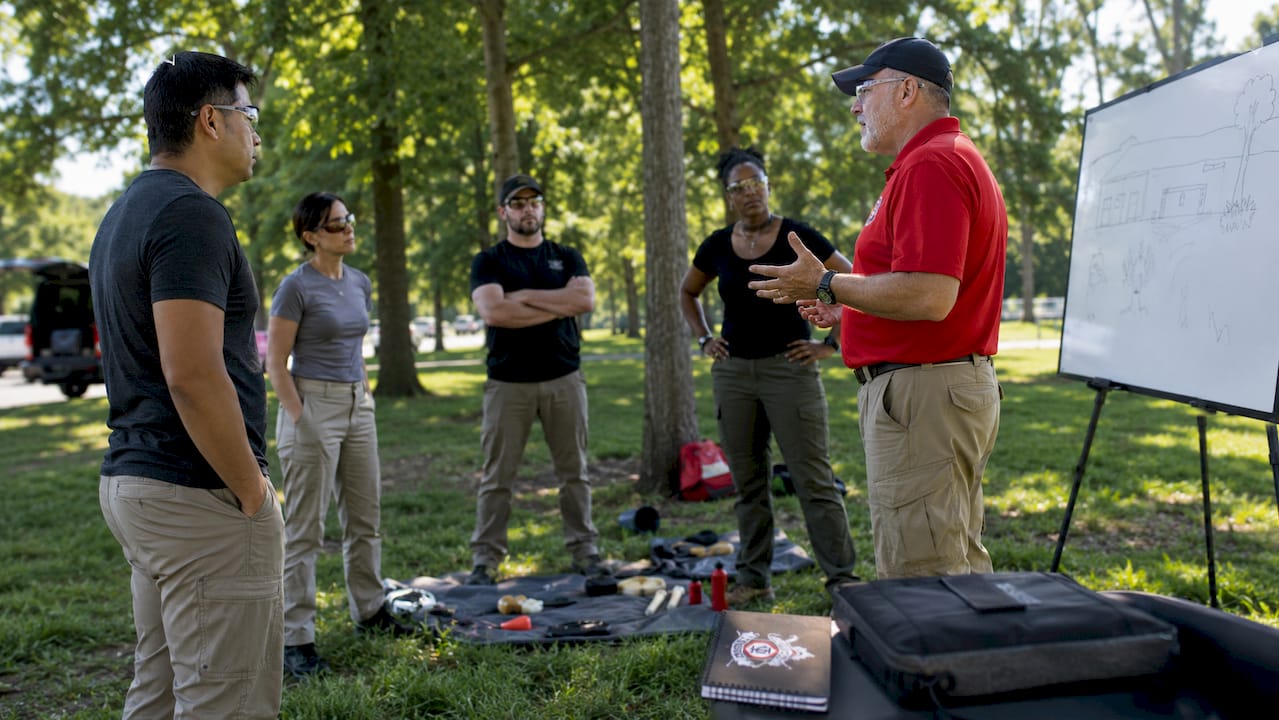
The foundational philosophy is simple: the best fight is the one you never have. This shifts your mindset from combatant to safety strategist. You stop reacting and start anticipating. That mental shift is what separates trained individuals from untrained ones in a real encounter.
Physical techniques matter, but only when they are simple enough to execute under stress. Fine motor skills degrade under adrenaline, so training must focus on gross motor movements. Strikes, blocks, and escapes that use your whole body work far better than complex joint locks or precision techniques when your heart rate spikes.
The four pillars of effective personal protection training are:
- Situational awareness: Scan your environment constantly. Know who is near you and where the exits are.
- De-escalation: Use assertive communication to defuse tension before it becomes physical. Community workshops often start here, emphasizing non-physical strategies over combat.
- Physical response: Simple, gross motor strikes and escapes that function under adrenaline.
- Exit strategy: Getting away safely is always the goal. Training that skips this step is incomplete.
Pro Tip: Practice scanning a room every time you enter one. Note two exits, one potential threat zone, and one safe position. This habit costs nothing and builds the awareness that prevents most dangerous situations entirely.
What types of self defense training programs are available?
Choosing the right program depends on your experience level, goals, and schedule. The options range from free community workshops to intensive tactical courses, and each serves a different purpose.
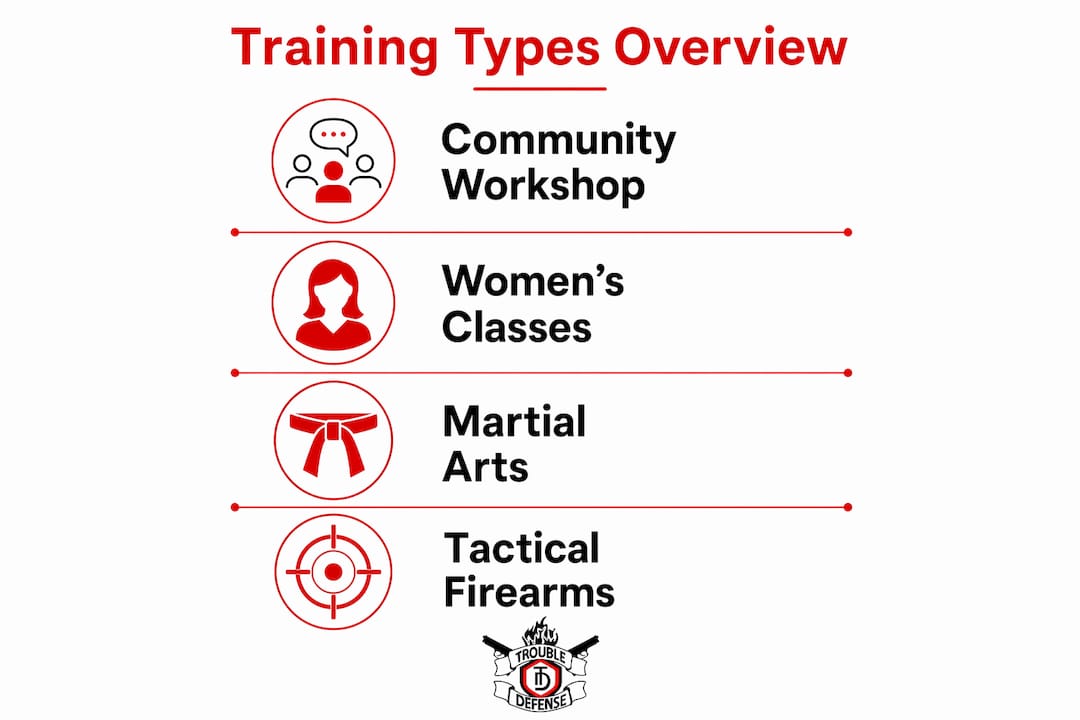
Community personal safety classes focus on awareness, assertive communication, and basic escape techniques. These workshops often run about two hours and accept participants as young as 11. They are the best starting point for anyone with no prior training. Many are offered free or at low cost with advance registration required.
Women’s self defense classes combine lecture and hands-on practice in a structured format. A typical class opens with 15 minutes of instruction followed by 45 minutes of applied technique work. Class time extends by 15 minutes for every additional 10–15 participants above 30. This format keeps instruction personal and effective.
Martial arts training builds long-term physical conditioning, discipline, and a deep technique library. Disciplines like Brazilian Jiu-Jitsu, Muay Thai, and Krav Maga each offer real-world applicability. The tradeoff is time. Proficiency takes months to years, which makes martial arts a strong complement to, not a replacement for, foundational self protection courses.
Tactical and firearm-based programs are the most advanced category. These courses stress-test your skills through realistic drills and scenario-based training. Trouble Defense offers self-defense firearm training across Virginia, Maryland, and DC, with NRA-certified instructors and programs for beginners through experienced practitioners.
| Program type | Best for | Duration | Key focus |
|---|---|---|---|
| Community workshop | Beginners, all ages | 2 hours | Awareness, de-escalation |
| Women’s self defense class | Women, beginners | 1–2 hours | Hands-on technique, confidence |
| Martial arts training | Long-term skill building | Months to years | Physical conditioning, technique depth |
| Tactical/firearm course | Intermediate to advanced | Half-day to multi-day | Stress drills, real-world scenarios |
When evaluating any program, check three things: instructor credentials, whether drills are pressure-tested, and whether the training environment feels supportive rather than intimidating.
Which basic self defense techniques should beginners master first?
Beginners should focus on a small set of techniques that are easy to remember and hard to mess up under stress. The goal is not a full fighting system. The goal is enough skill to create an opportunity to escape.
- Palm strike to the nose or chin. The palm heel strike uses the base of your hand, not your knuckles. It is harder to injure yourself and delivers significant force to vulnerable facial targets.
- Groin kick. A front kick to the groin works against most attackers regardless of size difference. It requires no fine motor skill and creates immediate pain response.
- Eye gouge or thumb press. Targeting the eyes is legal in genuine self defense and stops most threats instantly. Even the threat of eye contact causes flinching and creates escape opportunity.
- Wrist release. When grabbed by the wrist, rotate your arm toward the attacker’s thumb. The thumb is the weakest point of any grip. This technique works on first attempt with minimal practice.
- Tactical breathing. Also called box breathing, this technique involves inhaling for four counts, holding for four, exhaling for four, and holding again. It lowers heart rate and restores fine motor control within seconds.
Pro Tip: Drill each technique 50 times per week for one month. Repetition is what moves a skill from conscious thought to automatic response. You will not have time to think during a real encounter.
Balance and movement matter as much as strikes. Keep your feet shoulder-width apart and never cross your feet when moving. Staying balanced prevents takedowns and keeps you mobile. Practice moving backward and sideways while maintaining your stance.
How to practice and reinforce self defense skills for real-world application
Knowing a technique and being able to use it under stress are two completely different things. Pressure-tested drills are the bridge between classroom knowledge and real-world application. Stress inoculation, which means practicing while physically elevated, teaches your nervous system to function when adrenaline hits.
For home defense training specifically, solo drills are more effective than team-based tactics. Solo shooter drills focus on angles, threat identification, and environmental awareness in residential settings. Law enforcement team tactics do not translate for a single civilian in a home. Train for your actual situation.
Post-engagement awareness is a critical phase that most basic courses skip entirely. Scanning for secondary threats and identifying a safe exit after an encounter is as important as the initial response. Tunnel vision after a confrontation is a documented stress response. Training for it specifically reduces that risk.
Common mistakes to avoid in your practice routine:
- Overcomplicating your technique set. Five techniques practiced 500 times beat 50 techniques practiced 10 times each.
- Skipping scenario training. Static drilling builds muscle memory. Scenario training builds decision-making. You need both.
- Ignoring verbal skills. De-escalation and assertive communication prevent most physical encounters. Train these as seriously as physical techniques.
- Inconsistent practice. Two short sessions per week outperform one long session per month. Frequency builds retention.
For tactical shooting training, the same principles apply. Realistic drills under time pressure and with decision-making demands produce skills that transfer to real situations. Trouble Defense builds this into every course structure.
Key Takeaways
Effective self defense training combines situational awareness, simple gross motor techniques, and pressure-tested practice to build skills that hold up when it matters most.
| Point | Details |
|---|---|
| Awareness comes first | Situational awareness prevents most threats before physical skills are ever needed. |
| Simple techniques win | Gross motor strikes and escapes outperform complex moves when adrenaline degrades fine motor control. |
| Pressure-test your skills | Scenario drills and stress inoculation are required to make techniques usable in real encounters. |
| Post-encounter training matters | Scanning for secondary threats and planning exits is a critical skill most basic programs skip. |
| Consistency beats intensity | Short, frequent practice sessions build stronger retention than occasional long training blocks. |
Why mindset is the real foundation of personal safety
I have seen a lot of people walk into training expecting to learn how to fight. What they actually need to learn is how to think. That shift is harder to teach than any physical technique, and it matters far more.
The practitioners I have watched develop real personal safety confidence are not the ones who can throw the hardest punch. They are the ones who spotted the threat early, made a calm decision, and either avoided the situation entirely or responded with exactly enough force to create an exit. That is what good training produces.
Veteran-led instruction brings something specific to this process: the understanding that stress response is trainable. You do not have to be born calm under pressure. You practice it until it becomes your default. That is the same principle behind military and law enforcement training, and it applies directly to civilian personal safety.
My honest recommendation is to start with awareness and de-escalation, add a small set of physical techniques, and then pressure-test everything through scenario drills. Do not skip steps. Do not jump to advanced tactics before the basics are automatic. The fundamentals of firearm safety follow the same logic. Build the foundation right, and everything else becomes easier to learn.
— Dee Parker
Trouble Defense offers structured training for every level
Trouble Defense LLC is a veteran-owned firearms training academy based in Fairfax, VA, serving the entire DMV area including Virginia, Maryland, and Washington DC. Every program is led by NRA-certified instructors who build real-world readiness through hands-on, personalized instruction.
The course catalog covers Virginia CCW certification, Maryland Wear and Carry permits, DC concealed carry training, women’s firearm training, youth firearm safety education, and adaptive programs for individuals with disabilities. Whether you are starting from zero or refining advanced skills, Trouble Defense structures training around your actual needs. Browse the upcoming training calendar to find a class that fits your schedule, or explore the full range of firearm training services to find the right program for your goals.
FAQ
What is self defense training?
Self defense training is the structured practice of awareness, de-escalation, and physical techniques designed to protect you from threats. Effective programs combine mindset development with pressure-tested physical skills.
How long does it take to learn basic self defense?
A beginner can learn functional basic techniques in a single two-hour workshop, but consistent weekly practice over several months is required to make those skills automatic under stress.
What self defense techniques work best for beginners?
Palm strikes, groin kicks, wrist releases, and tactical breathing are the most effective starting techniques. These rely on gross motor movements that hold up under adrenaline, unlike complex joint locks or precision strikes.
Are women’s self defense classes different from general classes?
Yes. Women’s self defense classes are structured around common threat scenarios women face and typically combine lecture with hands-on practice in a supportive, focused environment.
Does Trouble Defense offer training for beginners?
Trouble Defense offers programs for every experience level, from complete beginners to experienced practitioners, including Virginia CCW classes, women’s firearm training, and adaptive programs across the DMV area.

I like that the article emphasizes mindset and awareness instead of focusing only on physical techniques. A lot of people assume self-defense starts with learning moves, but recognizing potential threats and practicing simple, repeatable skills can make a huge difference in real-world situations. It would also be interesting to hear more about how often beginners should train to keep those skills sharp.
I like that the guide emphasizes awareness and mindset alongsideBlog Comment Creation Guide physical techniques, since avoiding a dangerous situation is often the safest outcome. It might also be helpful for readers to remember that regular, realistic practice is what builds confidence, because even simple skills can fade if they aren’t reinforced over time.