A firearm safety training timeline is the structured sequence of instruction steps, certification milestones, and refresher intervals that guides gun owners from their first safety class through ongoing skill maintenance. Whether you are preparing for a Virginia CCW class, a Maryland Wear and Carry permit, or simply want to handle a firearm responsibly at home, following a clear gun safety timeline removes guesswork and keeps you legally compliant. State laws vary widely, NRA certification standards define course benchmarks, and skill fade is a documented risk without regular practice. This guide walks you through every stage of the firearm certification process so you can plan with confidence.
What does a firearm safety training timeline guide cover?
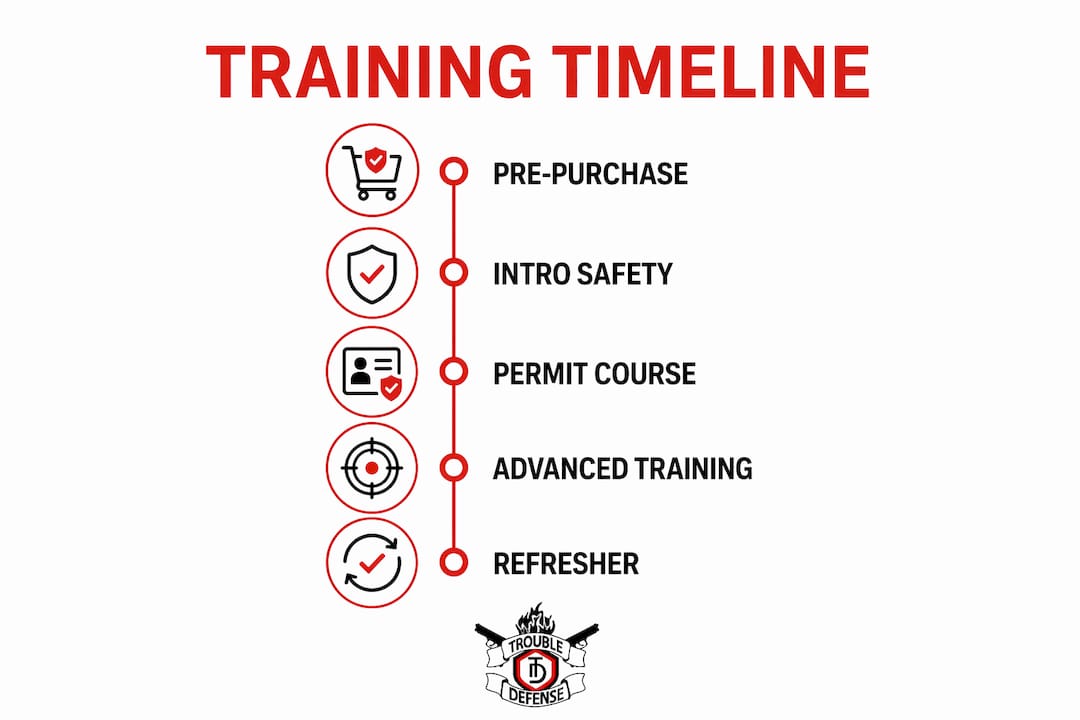
A firearm safety training timeline covers four core phases: pre-purchase orientation, foundational certification, permit-specific training, and recurring refresher courses. Each phase has a defined purpose, a typical time commitment, and legal implications depending on your state. Skipping phases or treating training as a single event is the most common mistake new gun owners make. A structured firearm education guide prevents that error by mapping milestones before you ever step onto a range.
The timeline also accounts for state-mandated deadlines. Some jurisdictions require proof of training within a specific window before a permit application is accepted. Planning your firearm training schedule around those windows keeps your application on track and avoids costly delays.
What are the typical stages and durations of firearm safety courses?
Most gun owners move through three course tiers. Each tier has a different time commitment, cost range, and skill focus.
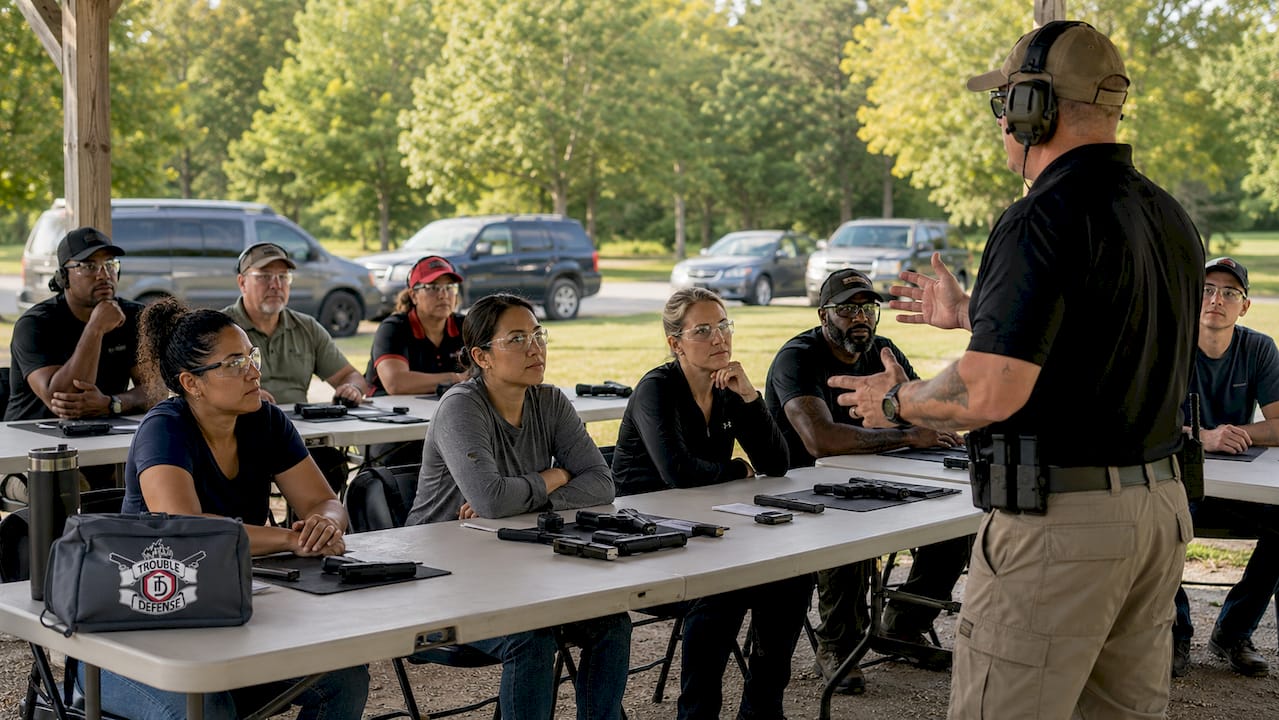
Tier 1: Introductory safety courses cover the four fundamental safety rules, safe storage, and basic handling. These run approximately 4 hours and are classroom only. They are the right starting point for anyone who has never handled a firearm.
Tier 2: Permit certification courses add a live-fire component. Live-fire assessments typically involve 25–50 rounds fired at distances of 3–15 yards, with a passing accuracy score of 70%. Total course time ranges from 4 to 16 hours depending on the state.
Tier 3: Advanced and specialized courses include defensive shooting, tactical scenarios, and active shooter response. These run from a half day to multiple days and may require 1,000 rounds of ammunition, which significantly increases the total cost.
| Course type | Typical duration | Live fire | Primary purpose |
|---|---|---|---|
| Introductory safety | 4 hours | No | Safe handling and storage basics |
| Permit certification | 4–16 hours | Yes | State CCW or purchase permit compliance |
| Advanced defensive | 1–3 days | Yes | Scenario-based skill building |
| Refresher course | 2–4 hours | Optional | Skill maintenance and legal renewal |
Standard course costs range from $200 for a half-day class to $600 or more for multi-day intensive programs, not counting ammunition. Budget planning is part of any realistic shooting safety training schedule.
Pro Tip: Choose a course that matches your intended firearm type. A course built around pistol carry is not the right foundation if you are purchasing a shotgun for home defense. Effective training accounts for your specific goals and equipment from day one.
How do state requirements shape your gun safety timeline?
Firearm safety training requirements are state-regulated with significant variation in mandates and timelines. Approximately 50% of states issuing concealed carry permits require training, and about 10 states require training before a firearm purchase. Several states have adopted permitless carry, which removes the legal training requirement for carrying but does not eliminate the practical need for it.
The states Trouble Defense serves in the DMV area each have distinct mandates that directly affect your planning timeline.
| Jurisdiction | Required training hours | Format | Renewal requirement |
|---|---|---|---|
| Virginia | No state minimum for CCW | Varies by course | No mandatory renewal training |
| Maryland | 16 hours initial | In-person with live fire | 8 hours on renewal |
| Washington DC | 16 hours | In-person with live fire | Required for renewal |
| Tennessee (reference) | 90 minutes minimum | Online accepted | Varies |
| Colorado (reference) | 4–12 hours | In-person | Varies |
Maryland requires 16 hours of initial training with 8 hours on renewal. That is one of the most demanding requirements in the country. DC mirrors Maryland’s 16-hour standard. Virginia has no state-mandated minimum hours for its concealed handgun permit, but courts expect demonstrated competency. Research your local laws before you schedule anything. Starting with the wrong course wastes both time and money.
Pro Tip: Contact your state police or attorney general’s office directly to confirm current training hour requirements. Laws change, and a course that met the standard last year may not satisfy a 2026 permit application.
How do you build a personal firearm training schedule?
Taking foundational safety training before purchasing a firearm reduces risk and builds handling confidence from the start. Pre-purchase courses let you understand ergonomics, safe storage requirements, and legal responsibilities before you own a gun. That knowledge shapes better buying decisions.
After purchase, a well-structured gun handling timeline follows a clear line of progression. Experts recommend moving from Level 100 introductory courses to intermediate defensive skills before attempting advanced tactical training. Jumping ahead skips the muscle memory and decision-making habits that lower-level courses build.
Here is a practical sample schedule for a new gun owner in Virginia or Maryland:
| Month | Milestone | Action |
|---|---|---|
| Month 1 | Pre-purchase orientation | Complete a 4-hour introductory safety course |
| Month 2 | Firearm purchase | Buy firearm after completing orientation |
| Month 3 | Permit certification | Complete state-required CCW or Wear and Carry course |
| Month 6 | Intermediate skills | Enroll in a defensive pistol or scenario-based course |
| Month 12 | First refresher | Schedule a 2–4 hour refresher to address skill fade |
| Month 18 | Advanced training | Add tactical or active shooter response training |
Refresher training every 12–18 months is the standard expert recommendation, even when no legal renewal is required. Cognitive and physical readiness both decline without regular practice. Treating your training as ongoing skill development rather than a one-time checklist is the single most important mindset shift new gun owners can make.
Pro Tip: Block your refresher dates on your calendar the same day you complete your initial certification. Scheduling in advance removes the friction that causes most gun owners to let 18 months become 3 years.
What challenges should you expect when following a training timeline?
Skill fade is the most underestimated risk in any firearm training schedule. Physical accuracy and decision-making speed both decline faster than most gun owners expect without regular range time. The most common mistake is treating initial certification as permanent competency.
Legal compliance lapses are the second major risk. Permit renewals have deadlines, and missing them can invalidate your carry authorization. Certificate tracking and renewal alerts are not optional for anyone who carries regularly.
Common challenges and how to address them:
- Course availability: Rural areas and smaller jurisdictions often have limited class schedules. Book courses 4–6 weeks in advance, especially for Maryland Wear and Carry or DC concealed carry training.
- Cost management: Multi-day courses with ammunition can exceed $600. Break training into phases across multiple months to spread the expense.
- Instructor quality: Choose programs with certified NRA instructors and clear progression paths. Unstructured range time does not replace structured instruction.
- Motivation gaps: Many gun owners complete initial certification and disengage. Scheduling the next course before finishing the current one maintains momentum.
- Documentation loss: Misplaced certificates delay permit renewals. Store copies in at least two locations from the day you receive them.
Pro Tip: Set a calendar reminder 90 days before your permit renewal deadline. That window gives you enough time to find a course, complete it, and submit documentation without rushing.
How do you verify and document your training completion?
Certification documentation must be carefully stored and is often required during licensing or permit renewal processes. Some states require proof of training to be presented within specific timeframes after course completion. Missing that window can restart the entire application process.
Most courses issue a paper certificate and, increasingly, a digital record. Both formats serve different purposes. Paper certificates satisfy in-person submission requirements. Digital records allow quick retrieval during online permit applications or renewals.
Documentation best practices:
- Photograph your certificate immediately after receiving it and store the image in a secure cloud service such as Google Drive or iCloud.
- Keep the original paper copy in a fireproof document safe at home.
- Record the course date, instructor name, and course number in a dedicated notes file alongside the certificate image.
- Track expiration dates for any time-limited certifications, including Maryland HQL and DC carry permits.
- Confirm submission requirements with your issuing agency before submitting copies. Some agencies require notarized originals.
Maintaining digital and physical copies in secure storage protects against loss and simplifies verification. The firearm safety documentation process is straightforward when you build the habit from your first course.
| Documentation step | Recommended action | Retention period |
|---|---|---|
| Receive certificate | Photograph and upload to cloud storage | Indefinitely |
| Store original | Place in fireproof home safe | Indefinitely |
| Log course details | Record date, instructor, and course ID | Indefinitely |
| Track renewal dates | Set calendar alerts 90 days before deadline | Ongoing |
| Confirm state requirements | Verify submission format with issuing agency | Per application |
Key Takeaways
A structured firearm safety training timeline, built around state requirements and refresher intervals, is the most reliable path to legal compliance and lasting firearm competency.
| Point | Details |
|---|---|
| Start before purchase | Complete a foundational safety course before buying a firearm to build handling confidence early. |
| Know your state’s rules | Maryland requires 16 hours; Virginia has no minimum; DC mirrors Maryland. Research before scheduling. |
| Plan refreshers proactively | Schedule refresher training every 12–18 months to prevent skill fade and maintain readiness. |
| Document everything | Store digital and physical certificate copies from day one to avoid permit renewal delays. |
| Follow a progression path | Move from introductory to intermediate to advanced courses in sequence for the best safety outcomes. |
Why I think most gun owners underestimate the timeline
Most new gun owners walk out of their first certification course feeling prepared. I understand that feeling. Completing a course is a real accomplishment, and the confidence boost is genuine. But confidence and competency are not the same thing, and the gap between them widens every month you skip range time.
What I have seen repeatedly is that gun owners who treat certification as the finish line are the ones who struggle most when they return for a renewal course two or three years later. The physical mechanics feel unfamiliar. The decision-making under mild stress feels slower. That is not a character flaw. It is simply how motor skills work without reinforcement.
The gun owners who stay sharp are the ones who build training into their calendar the same way they schedule a dental checkup. They do not wait until their permit renewal forces them back into a classroom. They show up every 12 months, sometimes more often, and they treat each session as a chance to find a gap in their skills rather than confirm what they already know.
The other thing I would push back on is the idea that a single course type covers all your needs. A Virginia CCW class and a Maryland Wear and Carry course are not interchangeable. An introductory safety course and a defensive shooting scenario class serve completely different purposes. Matching the right course to the right stage of your development is what separates gun owners who are genuinely prepared from those who are merely certified.
If you are in the DMV area, Trouble Defense offers adaptive and specialized programs that meet you at your current skill level and build from there. That kind of structured progression is what a timeline is actually for.
— Dee Parker
Trouble Defense can help you build your training timeline
Trouble Defense LLC, based in Fairfax, VA, offers a full range of courses that map directly onto every phase of a responsible gun safety timeline. From introductory safety classes for first-time owners to Virginia CCW certification and Maryland Wear and Carry training, every program is taught by certified NRA instructors with over 300 five-star Google reviews backing their approach.
Trouble Defense also offers women’s firearm training, youth firearm safety education, adaptive programs for individuals with disabilities, and DC concealed carry training. Use the Trouble Defense training calendar to find upcoming classes and lock in your next milestone before your schedule fills up. Personalized timeline planning assistance is available for anyone who wants guidance on which course to take next.
FAQ
What is firearm safety training?
Firearm safety training is structured instruction covering safe handling, storage, legal responsibilities, and shooting fundamentals. Courses range from 4-hour classroom sessions to multi-day live-fire programs depending on the state and permit type.
How long does the firearm certification process take?
The timeline varies by state. Maryland requires 16 hours of initial training; Virginia has no mandated minimum; DC requires 16 hours. Most gun owners complete their initial certification within 1–3 months of starting the process.
How often should you take refresher training?
Experts recommend refresher courses every 12–18 months to prevent skill fade, even when no legal renewal is required. Cognitive and physical readiness both decline without regular practice.
What documents do you receive after completing a firearm safety course?
Most courses issue a paper certificate and a digital record. Both should be stored securely. Some states require proof of training to be submitted within a specific timeframe during permit applications or renewals.
Do all states require firearm safety training?
No. Approximately 50% of states issuing concealed carry permits require training, and about 10 states require training for firearm purchase. Several states have permitless carry laws that remove the legal training requirement, though the practical need for training remains.