
Women firearm training benefits are defined by three core outcomes: increased personal safety, genuine confidence through competence, and the ability to make informed decisions about self-defense. These are not abstract promises. They are documented results from structured, skills-based instruction. The industry term for this category of instruction is defensive firearms training, and the women-only format has become one of its fastest-growing segments. Whether you are a complete beginner or someone who owns a firearm but has never taken a formal class, the benefits of firearm training for women extend well beyond the range. Trouble Defense, a veteran-owned training academy in Fairfax, VA, has seen this transformation firsthand across hundreds of students in the DMV area.
1. women firearm training benefits start with a safer learning environment
The single biggest barrier keeping women out of firearm training is not lack of interest. It is fear of judgment in a mixed-gender class. Women-only programs reduce psychological barriers like anxiety about asking basic questions or being the least experienced person in the room. That shift in environment changes everything about how fast a student learns.
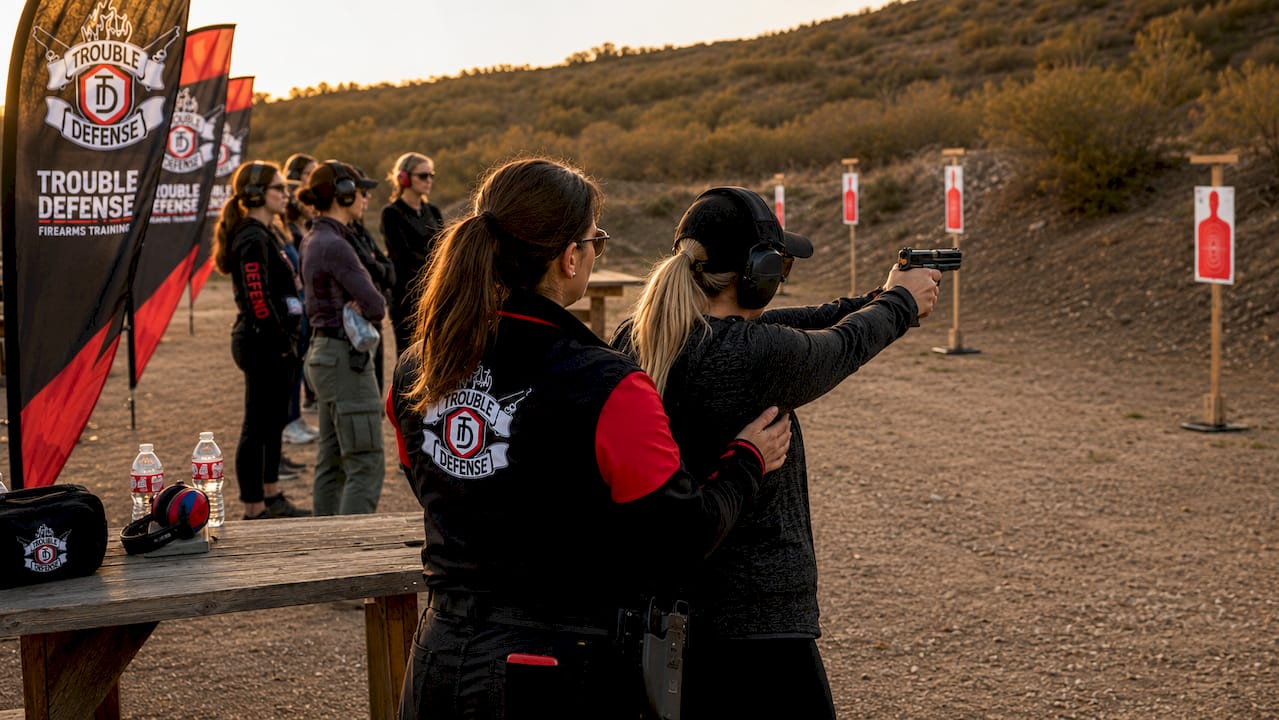
Women-only gun class benefits go beyond comfort. When students feel safe asking questions, they absorb information faster and retain it longer. The Jones County Sheriff’s Office runs women’s firearm safety and marksmanship classes specifically because their instructors recognized that mixed classes were leaving female beginners behind. That model works because it meets women where they are, not where the average class assumes they should be.
A supportive environment also builds camaraderie. Students encourage each other, share experiences, and hold each other accountable for safe habits. That peer dynamic is something you rarely find in a general-enrollment course.
- No judgment for asking foundational questions about grip, stance, or loading
- Instructors pace the class to the group’s actual experience level
- Participants with zero prior experience are the norm, not the exception
- Hands-on practice time is maximized because no one is rushing ahead
Pro Tip: When evaluating a women-only shooting class, ask the instructor what percentage of students are first-timers. A high percentage signals the class is genuinely beginner-friendly, not just marketed that way.
2. Women Firearm Training Benefits confidence comes from competence, not encouragement
Confidence with firearms is earned through demonstrated competence, not through motivational language or a single afternoon at the range. This distinction matters because many women leave a one-time class feeling excited but not truly capable. Real confidence requires mastering the fundamentals repeatedly until they become automatic.
The core fundamentals are trigger control, grip, sight alignment, and stance. Each one requires focused repetition to internalize. A student who practices these correctly over several sessions builds muscle memory that holds up under stress. A student who only hears about them once does not.
“The best shooters commit to the process over time, transforming fear into capability through consistent, focused practice.” — Sentinel Combatives
Here is how a structured skill-building progression looks in practice:
- Firearm safety rules — Learn the four universal rules before touching a firearm
- Grip and stance — Establish a stable, repeatable shooting platform
- Sight alignment and sight picture — Understand how to aim accurately before firing
- Trigger control — Practice the press without disturbing the sight picture
- Dry fire practice — Build muscle memory at home without live ammunition
- Live fire fundamentals — Apply skills on the range with immediate instructor feedback
- Scenario-based drills — Practice under mild stress to simulate real conditions
Firearm proficiency is perishable. Skills degrade without regular reinforcement. Experts recommend consistent, manageable sessions over occasional intense ones. Monthly practice maintains safety and proficiency far better than a single annual range visit.
Pro Tip: Schedule your next training session before you leave your current one. Treating firearm practice like a standing appointment, rather than a spontaneous decision, is the single most effective habit for long-term skill retention.
3. firearm safety training reduces fear through education
Fear of the unknown is the largest barrier preventing women from entering firearm training. Education removes that barrier directly. When you understand how a firearm functions mechanically, what makes it safe, and what causes accidents, the object stops being mysterious and starts being manageable.
This is the core principle behind firearm safety training for females: demystify the tool before asking anyone to use it. Structured instruction covers how a firearm loads, fires, and clears. It covers what can go wrong and exactly how to prevent it. That knowledge replaces anxiety with a clear mental framework.
Understanding firearm mechanics supports informed decisions about personal safety regardless of whether you choose to own a firearm. The goal of education is not to push ownership. The goal is to give you the tools to stay safe and prepared on your own terms. That reframing is one of the most important shifts in modern defensive firearms training.
4. physical and mental benefits beyond the range
Firearm training delivers physical and mental benefits that most people do not anticipate before their first class. The physical demands of shooting, including maintaining a stable stance, controlling recoil, and sustaining focus over a full session, build coordination, grip strength, and body awareness. These are transferable skills.
Programs like Pistols and Pilates pair physical fitness training with pistol instruction to develop both simultaneously. The combination improves body control, breathing regulation, and the physical foundation needed for accurate shooting. It also makes the training experience more engaging for women who are already active.
The mental benefits are equally significant:
- Stress inoculation — Repeated exposure to controlled pressure builds composure under real stress
- Situational awareness — Training sharpens your ability to read environments and identify risks
- Decision-making speed — Scenario drills improve your ability to assess and respond quickly
- Reduced anxiety — Competence in self-defense reduces baseline fear in daily life
Empowerment through gun training is not a marketing phrase. It is a measurable psychological outcome. Women who complete structured defensive firearms training consistently report feeling more confident in public spaces, more aware of their surroundings, and less reactive to fear-based thinking.
5. informed decisions about firearm ownership and home safety
Training does not require you to own a firearm. What it does is give you the knowledge to make a responsible, informed choice about whether ownership is right for your household. That distinction separates quality instruction from sales-driven programs.
Secure firearm storage using quick-access safes, lockboxes, and cable locks is a core component of responsible ownership. Training programs that include storage education produce safer homes. Project ChildSafe, a national firearms safety program, provides free gun locks and storage resources specifically to help households with children or vulnerable individuals reduce accident risk.
| Storage Method | Best For | Key Benefit |
|---|---|---|
| Quick-access safe | Bedside or home defense use | Fast retrieval, secure from children |
| Lockbox with cable | Travel or vehicle storage | Portable and tamper-resistant |
| Full-size gun safe | Long-term home storage | Maximum security for multiple firearms |
| Cable lock | Temporary or rental situations | Low-cost, widely available |
Women gun ownership advantages include the ability to make these storage decisions with full knowledge of the tradeoffs. A trained owner knows which storage method fits her living situation, her household composition, and her response-time needs. An untrained owner is guessing.
6. self-defense training builds lasting personal safety skills
Self-defense training for women covers more than shooting. It includes threat recognition, de-escalation awareness, and understanding the legal framework around the use of force. These layers of knowledge make the training genuinely useful in real life, not just on the range.
Women-focused firearms instruction helps participants overcome anxiety through patient instruction, individualized feedback, and peer support. Beginners gain confidence not because they are told they can do it, but because they actually do it, repeatedly, with guidance. That experience of succeeding at something difficult is what produces lasting self-assurance.
For women in Virginia, Maryland, and DC, completing a certified defensive firearms course also opens the door to concealed carry licensing. Trouble Defense offers Virginia CCW certification and Maryland Wear and Carry training for students ready to take that step. Carrying legally requires both the license and the consistent practice to back it up.
7. women-only classes build community and accountability
One underrated benefit of women-only shooting class formats is the community they create. Students who train together regularly hold each other accountable, share resources, and often continue practicing together outside of class. That social structure supports long-term skill maintenance in a way that solo training cannot replicate.
Effective instruction for women includes patience, treating mistakes as learning opportunities, and actively encouraging questions. Instructors who apply these principles create environments where independent capability develops naturally. The student leaves not just trained, but genuinely capable of continuing to improve on her own.
Joining a shooting community also provides access to group range sessions, skill challenges, and peer feedback that accelerates development. The social dimension of firearm training is one of its most powerful and least discussed benefits.
Key takeaways
Women firearm training benefits are most durable when they combine a supportive learning environment, consistent skill practice, and education-based decision-making rather than a single introductory class.
| Point | Details |
|---|---|
| Environment shapes learning | Women-only classes reduce intimidation and accelerate skill acquisition for beginners. |
| Confidence requires repetition | Mastering fundamentals through regular practice builds real capability, not just familiarity. |
| Education reduces fear | Understanding firearm mechanics transforms anxiety into informed, confident decision-making. |
| Storage knowledge matters | Training that covers secure storage produces safer homes and more responsible ownership. |
| Community sustains progress | Women who train together maintain skills longer and build accountability over time. |
Why Women Firearm Training Benefits training is about capability, not conformity
By Dee Parker
The most common misconception I encounter is that firearm training is about convincing women to own guns. It is not. It is about giving women the capability to make their own safety decisions from a position of knowledge rather than fear.
I have seen students walk into a first class visibly anxious, convinced they would be the worst person there, and leave two hours later with a grouping on target and a completely different posture. That shift is not about the firearm. It is about discovering that a skill you thought was inaccessible is actually learnable. That experience changes how a person carries herself.
What I have learned from working with hundreds of students is that the best training environments do not pressure anyone. They create conditions where learning happens naturally. The instructors who get the best results are the ones who treat every question as legitimate and every mistake as data. That approach produces students who can think independently on the range and off it.
Firearm training is a skill accessible to any woman willing to show up and practice. The barrier is almost never physical ability. It is almost always the assumption that the space will not be welcoming. Find the right environment, and that assumption disappears quickly.
— Dee Parker
Train with trouble defense in virginia, maryland & DC

Trouble Defense offers women’s firearm training programs designed specifically for beginners and experienced shooters alike. Classes are led by certified NRA instructors in a supportive, judgment-free environment at their Fairfax, VA facility. Programs cover firearm fundamentals, safety, and concealed carry certification for Virginia, Maryland, and DC residents.
Whether you are picking up a firearm for the first time or looking to sharpen your self-defense skills, Trouble Defense has a class built for your level. With over 300 five-star Google reviews and a track record of producing confident, capable students, it is the DMV area’s most trusted name in women’s defensive firearms instruction. Browse the training calendar and reserve your spot today.
FAQ
What are the main benefits of firearm training for women?
The core benefits are increased personal safety, genuine confidence through competence, and the ability to make informed decisions about self-defense and firearm ownership. Structured training also reduces fear by replacing the unknown with practical knowledge.
Are women-only gun classes better for beginners?
Women-only classes reduce psychological barriers like fear of judgment, which allows beginners to ask questions freely and practice without anxiety. Research from programs like the Jones County Sheriff’s Office confirms that this format accelerates learning for women with no prior experience.
How often should women practice to maintain firearm skills?
Experts recommend regular, manageable practice sessions rather than infrequent intensive ones, because firearm proficiency is a perishable skill. Monthly live-fire sessions combined with dry fire practice at home is a practical standard for maintaining safety and accuracy.
Do i need to own a firearm to take a training class?
No. Quality training programs, including those at Trouble Defense, provide firearms for use during class. Training is about education and skill development, and many instructors emphasize that the goal is informed decision-making, not pushing ownership.
Can firearm training help with anxiety and personal confidence?
Yes. Completing structured defensive firearms training consistently produces measurable reductions in fear-based thinking and improvements in situational awareness. The experience of mastering a difficult skill directly builds the kind of confidence that carries over into daily life.


