Beginner gun classes are structured training programs that teach firearm safety, handling, and shooting fundamentals through a blend of classroom instruction and live-fire practice supervised by certified instructors. The industry term for this foundational training is “basic firearm safety education,” and quality programs follow recognized standards set by organizations like the NRA. Whether you are a first-time gun owner, a woman seeking personal safety training, or someone fulfilling a legal requirement for a Virginia CCW or Maryland Wear and Carry permit, the right class gives you both the knowledge and the confidence to handle a firearm responsibly.
1. What to expect in a beginner gun class
Beginner gun classes combine classroom safety instruction, legal education, and supervised live-fire practice to build foundational skills and confidence. That blend matters because reading about firearm safety and actually handling a loaded firearm under supervision are two very different experiences.
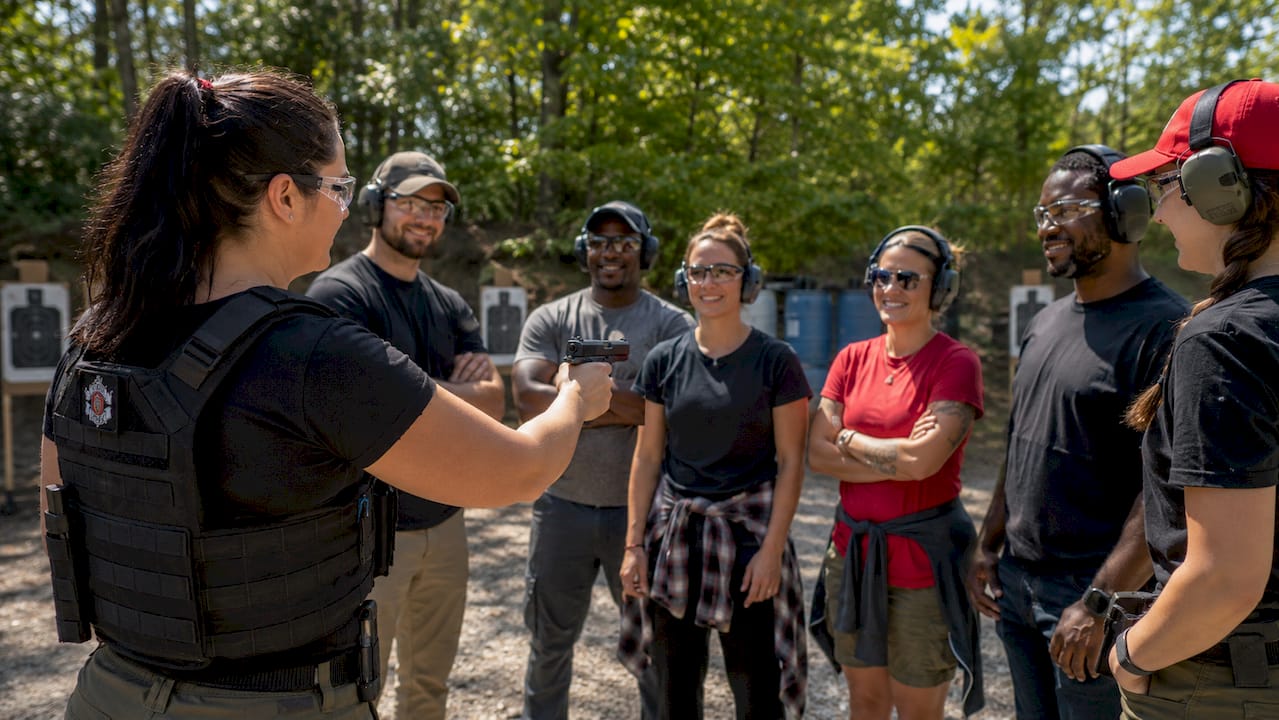
The classroom portion covers the four fundamental safety rules: treat every firearm as loaded, never point the muzzle at anything you are not willing to destroy, keep your finger off the trigger until ready to shoot, and know your target and what is beyond it. Instructors also walk you through firearm mechanics, local laws, and safe storage requirements. Firearm safety is the cornerstone of responsible ownership, and these rules form the core of every quality beginner curriculum.
The live-fire session puts those rules into practice. You will work on muzzle control, trigger discipline, and range etiquette under direct instructor supervision. Most half-day classes run three to five hours total, splitting time roughly evenly between the classroom and the range.
- Classroom safety rules and legal responsibilities
- Firearm mechanics and safe storage
- Supervised live-fire drills with instructor feedback
- Range etiquette and communication protocols
- Debrief and Q&A with the instructor
Pro Tip: Wear closed-toe shoes and avoid low-cut shirts. Hot brass casings eject from the firearm and can land on exposed skin, which is distracting and potentially dangerous during live fire.
2. Key features to look for when choosing beginner gun classes
Certified instructors with NRA, USCCA, or law enforcement credentials provide a clear, progressive curriculum that separates quality beginner classes from casual range time. Credentials are not just a marketing detail. They signal that the instructor has passed standardized testing on both teaching methods and firearm safety protocols.
A balanced curriculum is equally important. The best programs dedicate time to both theory and hands-on exercises rather than rushing students to the firing line. Look for courses that cover legal responsibilities alongside shooting mechanics, since understanding your rights and obligations as a gun owner is as critical as grip and stance.
“The difference between a good class and a great class is whether the instructor can adapt to each student’s pace. A credential tells you the instructor met a standard. A small class size tells you they can actually apply it.”
Small class sizes give beginners more personalized feedback, which is critical for learning firearm handling safely and effectively. A class of four students gets dramatically more one-on-one coaching than a class of twenty.
Additional features worth evaluating:
- Progressive course offerings so you can advance from basic handling to defensive shooting
- Rental firearms and equipment for students who do not yet own a gun
- Local legal compliance, including recognition for Virginia CCW, Maryland HQL, and DC concealed carry requirements
- Multi-state training options for students who travel or live near state borders
- Specialized tracks for women, seniors, or individuals with disabilities
3. Popular types of beginner gun classes and who they’re best for
Not every introductory shooting class serves the same student. The right format depends on your goal, your schedule, and your comfort level.
Basic safety and handling courses are the starting point for most first-time gun owners. These classes focus entirely on the fundamentals: safe storage, loading and unloading, and basic marksmanship. They are ideal for anyone who just purchased their first firearm and wants to handle it correctly before anything else.
Women-focused firearm training addresses the specific concerns many women bring to the range for the first time. These courses emphasize confidence-building, proper grip for smaller hands, and personal safety scenarios. Women’s firearm training creates a supportive environment where students can ask questions without feeling judged, which accelerates learning significantly.
Concealed carry courses combine beginner handling skills with the legal and practical knowledge required to carry a firearm in public. In Virginia and Maryland, these courses satisfy state permit requirements. Students learn not just how to shoot, but when the law permits defensive use of a firearm.
- First-time owners: basic safety and handling courses
- Women seeking personal safety: women-focused training programs
- Permit applicants: Virginia CCW or Maryland Wear and Carry courses
- Travelers: multi-state firearm training covering PA, FL, and GA
- Older adults: senior-focused beginner programs emphasizing confidence and comfort
Pro Tip: If you are unsure which class type fits your goal, call the training academy before enrolling. A five-minute conversation with an instructor will tell you more than any course description page.
4. Common challenges for beginners and how classes help overcome them
Many beginner students struggle with nervousness and lack of confidence, and quality classes create a supportive environment to overcome these challenges. Nervousness is normal. A good instructor expects it and builds the lesson plan around it.
Recoil is one of the most common surprises for new shooters. Students often expect it to be more violent than it is, which causes them to flinch before the shot breaks. That flinch throws off accuracy and can become a hard habit to break. Instructors address this by starting students on lighter-caliber firearms and building up gradually.
“Accuracy comes from consistency, not force. New shooters who slow down and focus on one correct repetition learn faster than those who rush through fifty sloppy ones.”
Choosing the right handgun size also matters more than most beginners realize. Full-size handguns are recommended for beginners over compact models because they are easier to handle and control during initial training. A larger frame absorbs recoil better and gives you more surface area to grip, which directly improves your first sessions.
Common beginner challenges and how structured classes address them:
- Nervousness: Instructors normalize anxiety and use a step-by-step introduction to the range environment
- Recoil sensitivity: Classes start with appropriate calibers and build confidence before moving to larger rounds
- Grip and stance errors: Live-fire supervision catches and corrects technique before bad habits form
- Range etiquette confusion: Classroom instruction covers commands, safety signals, and communication protocols
- Inconsistent trigger pull: Dry-fire drills under supervision build muscle memory before live rounds
5. Cost considerations and preparation tips for beginner gun classes
Tuition for beginner courses typically starts around $200 for half-day programs, with full-day or specialized certification programs costing two to three times as much. That range reflects real differences in curriculum depth, instructor time, and range access.
Ammunition and range fees are separate costs in most programs. Budget an additional $30–$80 for ammunition depending on caliber and round count. Eye and ear protection are mandatory at every range. Many academies rent or loan this gear, but owning your own is more hygienic and often more comfortable.
| Expense | Typical Cost | Notes |
|---|---|---|
| Half-day tuition | $200+ | Excludes ammunition and range fees |
| Full-day or certification | $400–$600 | Includes more range time and curriculum depth |
| Ammunition (per session) | $30–$80 | Varies by caliber and round count |
| Eye and ear protection | $20–$60 | One-time purchase; rentals often available |
| Rental firearm | $15–$30 | Available at most training academies |
Many academies provide rental firearms and equipment to accommodate students who do not yet own a gun. This removes a significant barrier for first-time students who want to try before they buy.
Pro Tip: Read Google reviews before booking any class. Look specifically for comments about instructor patience and class size. A five-star rating with 300+ reviews tells you far more than a polished website.
Key Takeaways
The best beginner gun classes combine certified instruction, foundational safety rules, and supervised live-fire practice to build both skill and confidence in new firearm owners.
| Point | Details |
|---|---|
| Certified instructors matter | Look for NRA, USCCA, or law enforcement credentials to confirm curriculum quality. |
| Small class sizes improve learning | Fewer students mean more personalized feedback and faster skill development. |
| Full-size handguns suit beginners | Larger frames absorb recoil better and are easier to control during initial training. |
| Budget beyond tuition | Add $30–$80 for ammunition and factor in range fees and protective gear costs. |
| Match class type to your goal | Women’s training, CCW courses, and basic safety classes each serve different needs. |
What I’ve learned from watching hundreds of beginners take their first class
Most people walk into their first firearm safety course expecting to feel out of place. They picture experienced shooters watching them fumble with a gun they barely know how to hold. That almost never happens. What actually happens is that everyone in the room is in the same position, and a good instructor makes that obvious within the first ten minutes.
The biggest mistake I see new students make is choosing a class based on price alone. A $99 group session at a crowded range is not the same as a structured course with a certified NRA instructor and a curriculum that progresses logically. You get what you pay for, and in firearm training, cutting corners on instruction has real consequences.
The second mistake is choosing the wrong gun size for initial training. I have watched students struggle through entire sessions with compact carry pistols because they thought that was what they would eventually carry. Start with a full-size handgun and build your skills there. You can always move to a smaller frame once your fundamentals are solid.
The students who progress fastest are not the ones with prior experience. They are the ones who show up with patience, ask questions without embarrassment, and focus on quality repetitions over shooting as many rounds as possible. Firearm training is a skill, and skills are built slowly and deliberately.
— Dee Parker
Trouble Defense offers beginner firearm training across Virginia, Maryland, and DC
Trouble Defense is a veteran-owned firearms training academy based in Fairfax, VA, with over 300 five-star Google reviews. The academy’s certified NRA instructors teach beginner firearm classes designed for first-time gun owners, women seeking personal safety training, and students fulfilling legal requirements for Virginia CCW, Maryland Wear and Carry, and DC concealed carry permits.
Every course at Trouble Defense balances classroom instruction with supervised live-fire practice in a supportive, judgment-free environment. Specialized programs include women’s firearm training, adaptive training for individuals with disabilities, and multi-state CCW courses recognized across several states. If you have questions about which course fits your situation, the Trouble Defense team answers them directly. Browse the full list of firearm safety training answers or contact the academy to enroll.
FAQ
What do beginner gun classes typically cover?
Beginner gun classes cover firearm safety rules, basic mechanics, legal responsibilities, and supervised live-fire practice. Most programs blend classroom instruction with hands-on range time to build both knowledge and confidence.
How much do beginner gun classes cost?
Tuition for half-day beginner courses typically starts around $200, with full-day or certification programs costing two to three times more. Ammunition, range fees, and protective gear are usually separate expenses.
Do I need to own a gun to take a beginner class?
No. Most training academies provide rental firearms and equipment for students who do not yet own a gun. This makes it easy to learn proper handling before committing to a purchase.
What is the best handgun for a beginner to train with?
Full-size handguns are recommended for beginners because they are easier to control and absorb recoil more effectively than compact models. Starting with a larger frame helps new shooters build accurate technique faster.
Are there beginner gun classes specifically for women?
Yes. Women-focused firearm training programs address confidence-building, grip adjustments for smaller hands, and personal safety scenarios in a supportive environment. Trouble Defense offers dedicated women’s firearm training in Fairfax, VA, serving the broader DMV area.