Defensive shooting drills are structured exercises that simulate real threat conditions to build accurate, fast, and controlled firearm performance under stress. Understanding how defensive shooting drills work means recognizing that static range practice and real defensive encounters are fundamentally different challenges. The fight-or-flight response degrades fine motor skills, narrows vision, and slows decision-making. Drills counter that degradation by introducing stress elements like shot timers, reactive steel targets, and movement commands. Tactical training standards from organizations like the NSSF confirm that quality hits under pressure matter far more than raw speed, making structured drill practice the foundation of any serious defensive shooting training program.
How defensive shooting drills work: the core mechanics
Defensive shooting drills work by forcing your nervous system to perform precise firearm tasks while your body is in a stress state. That stress state is the key variable. Without it, you are practicing a skill that does not transfer to real encounters.
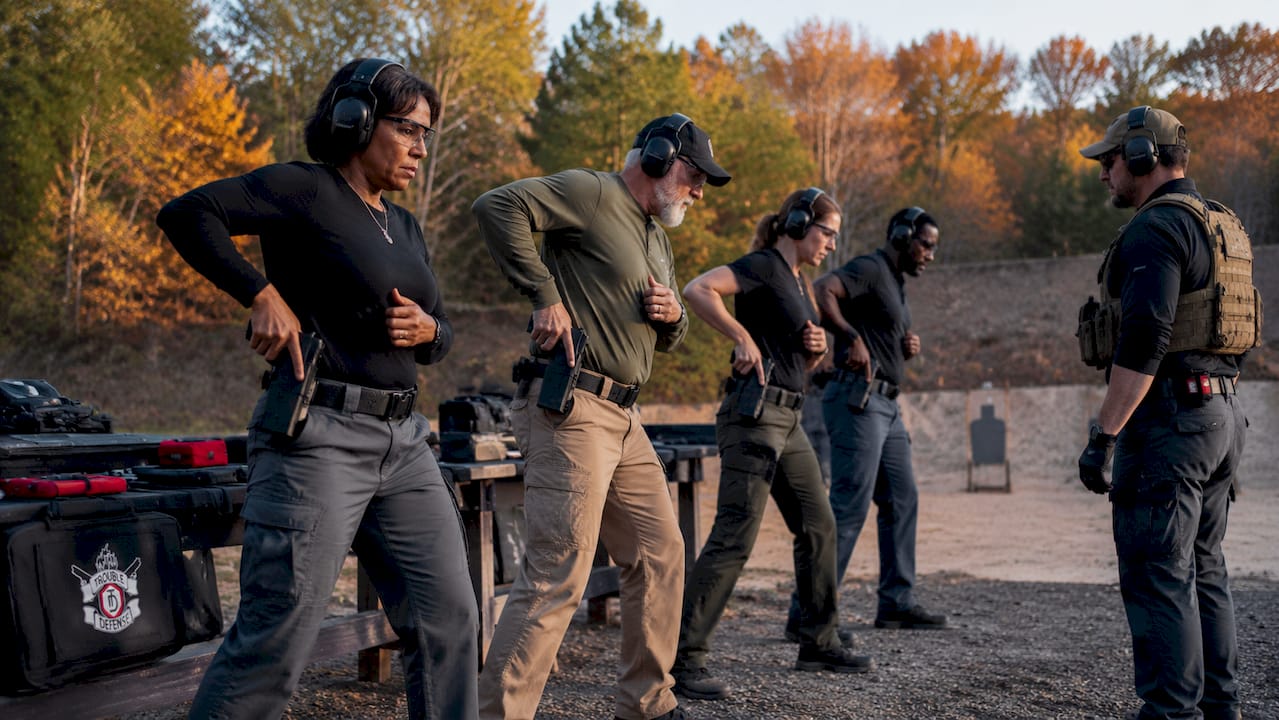
The fight-or-flight response reduces fine motor control and narrows peripheral vision. Stress degrades fine motor skills and tunnel vision sets in fast. Drills integrate shot timers, whistle commands, and steel targets specifically to recreate those conditions in a controlled environment. The auditory feedback from a steel target hitting tells you instantly whether your shot placement was correct, which accelerates learning.
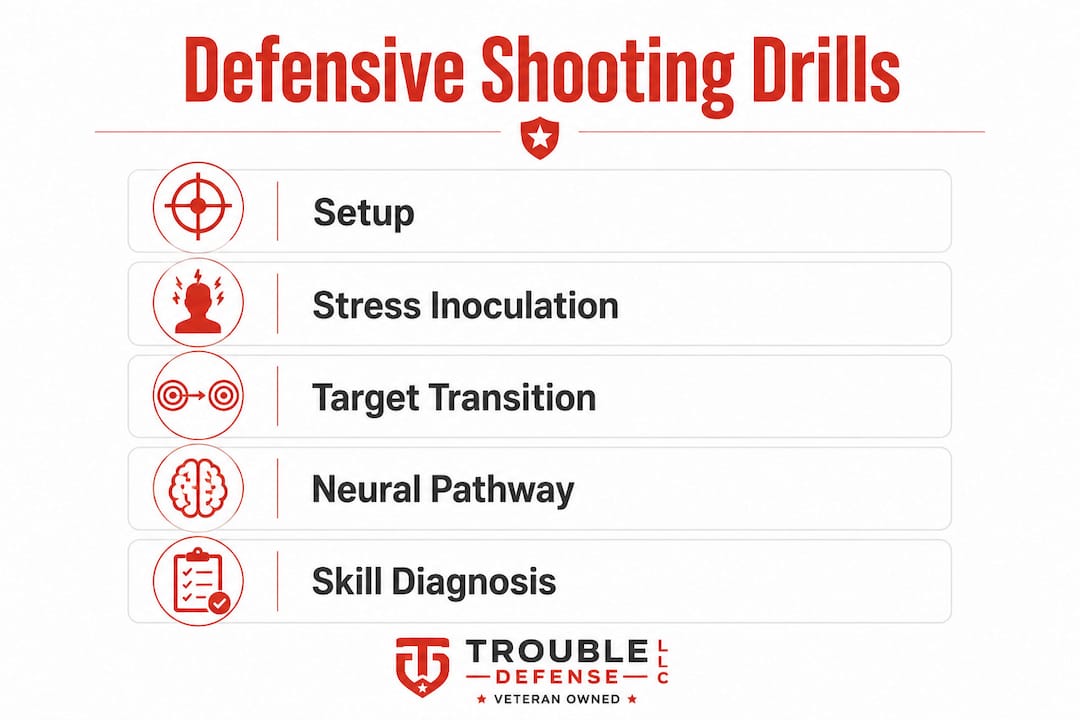
Neural pathway development is the physiological goal. Repetition under stress builds the same automatic responses that experienced shooters rely on when a real threat appears. The brain encodes the sequence of draw, sight alignment, trigger press, and follow-through as a single fluid action rather than a series of conscious steps. That encoding only happens when the drill includes a stress component.
Pro Tip: Add a 10-second burst of physical activity, like jumping jacks or push-ups, before drawing. Your elevated heart rate will simulate the physiological state of a real encounter far better than a calm, rested draw.
What physiological and psychological effects do defensive shooting drills address?
The body’s stress response is the primary obstacle in a defensive encounter. Adrenaline floods the system within seconds, causing tunnel vision, auditory exclusion, and a sharp reduction in fine motor control. These are not character flaws. They are hardwired survival responses that every shooter must train against.
Defensive shooting exercises address these effects directly by building what trainers call stress inoculation. Repeated exposure to timed, reactive drills teaches the brain to maintain sight picture and trigger control even when the heart rate spikes. Drills build precision under pressure by pairing stress triggers with the exact motor skills needed for accurate fire.
The psychological side is equally important. Shooters who have never practiced under any form of time pressure or decision-making demand tend to freeze or rush when a real signal appears. Drills that use colored target commands or go/no-go signals force the brain to process information and act simultaneously. That cognitive load is the point.
Here are the core physiological and psychological challenges that well-designed drills address:
- Fine motor degradation. Grip pressure, trigger control, and magazine manipulation all suffer under stress. Drills that include reloads and target transitions train these skills to survive adrenaline.
- Vision narrowing. Tunnel vision causes shooters to lose awareness of secondary threats. Drills with multiple targets at varied positions counter this directly.
- Decision paralysis. Go/no-go target signals train the brain to process threat identification and fire or hold simultaneously.
- Auditory exclusion. Shot timers and verbal commands keep the shooter engaged with external information even when the brain wants to shut it out.
- Cognitive overload. Moving while reloading while identifying a target is a multi-task demand. Drills build the capacity to handle it without process failure.
What are the top defensive shooting drills and how do they build specific skills?
The best defensive shooting drills each target a specific skill gap. Knowing which drill addresses which weakness lets you build a focused training plan rather than repeating the same exercise indefinitely.
- Mozambique Drill. Two shots to high center mass, then one precise shot to the ocular cavity. Completion under 1.5 seconds from a concealed holster at 7 yards is the standard. This drill builds the critical skill of transitioning from a body shot to a precise head shot when a threat continues advancing.
- Bill Drill. Six rounds into the A-zone of a target at 7 yards as fast as possible while maintaining accuracy. The Bill Drill isolates recoil management and grip consistency under speed. If your shots walk off the A-zone, your grip is failing under recoil.
- 1-2-3 Drill. One shot at a close target, two shots at a mid-range target, three shots at a distance target, all in sequence. This drill combines ballistics, visual processing, and motor control to challenge the shooter across multiple distances in a single string of fire.
- El Presidente. Three targets, two shots each, a 180-degree turn from a surrender position, then a reload and two more shots per target. El Presidente is one of the most complete diagnostic drills available because it tests draw, target transitions, recoil management, and reload speed in one sequence.
- Color React Drill. A partner calls a color corresponding to a specific target zone. The shooter must identify and engage the correct zone without hesitation. The NSSF uses this format to teach disciplined shot execution over speed-chasing.
Pro Tip: Use anatomical targets instead of plain paper circles. Shooting at a realistic human silhouette with labeled zones trains your eye to find critical hit areas under stress, not just the center of a paper square.
| Drill | Primary skill | Distance |
|---|---|---|
| Mozambique | Precise target transition | 7 yards |
| Bill Drill | Recoil management and grip | 7 yards |
| 1-2-3 Drill | Visual processing across distances | 3–15 yards |
| El Presidente | Full sequence under pressure | 10 yards |
| Color React | Decision-making and shot discipline | 5–10 yards |
How do drills diagnose and improve skill gaps across experience levels?
Defensive drills are diagnostic tools first and performance tests second. Every failed rep tells you something specific about your mechanics. That information is more valuable than a clean run.
Video and shot timers reveal process failures that shooters cannot feel in the moment. A timer shows you that your draw is slower than you thought. Video shows you that your trigger finger is jerking rather than pressing straight back. Without that data, you repeat the same errors indefinitely. Professional trainers at Trouble Defense use both tools to pinpoint exactly where a shooter’s process breaks down, whether during the draw, the reload, or the transition between targets.
“If basic firearm manipulation requires conscious thought during drills, the shooter is behind the CQB power curve.” — Rick Hogg
Static range performance differs significantly from dynamic, stress-based drills. A shooter who groups tightly at 10 yards from a static position may fall apart completely when asked to move laterally, engage two targets, and reload under a timer. Dynamic drills differ vastly from static practice because they add cognitive load and physical demand simultaneously.
Beginners and advanced shooters both benefit from this diagnostic process, just at different levels. Drills help beginners diagnose the realities of self-defense situations that theory cannot teach. Advanced shooters use the same drills to find the ceiling of their current skill and push past it. The drill does not change. The standard does.
What best practices maximize the effectiveness of defensive shooting exercises?
Getting the most from defensive shooting exercises requires discipline in how you run them, not just how often you run them.
- Run drills cold. Cold drills show true performance under realistic conditions. Your first rep of the day, without a warm-up, is the most honest data point you will collect. Real defensive encounters do not come with a warm-up period.
- Prioritize quality hits over clock time. Rushing to beat a timer while missing the target reinforces bad habits. Experts focus on deliberate sight picture under stress rather than speed alone. Speed is a byproduct of clean mechanics, not a goal in itself.
- Incorporate movement and reloads under physical strain. Rick Hogg’s training philosophy holds that firearm manipulation must become automatic. Drills that force you to move laterally, reload behind cover, and re-engage a target build that automaticity.
- Repeat consistently. Neural pathways develop through repetition over time, not through marathon sessions once a month. Short, focused drill sessions three to four times per week outperform long, infrequent range visits.
- Pair drills with legal and tactical education. Knowing when to shoot matters as much as knowing how. Combine defensive shooting scenarios with your drill practice to build both the physical skill and the judgment to apply it correctly.
Pro Tip: Keep a drill log. Record your times, hit percentages, and notes on what broke down each session. Patterns in that log will show you exactly which skill to prioritize next.
Key takeaways
Defensive shooting drills build accurate, controlled performance under stress by training the nervous system to maintain mechanics when the fight-or-flight response degrades fine motor skills and decision-making.
| Point | Details |
|---|---|
| Stress inoculation is the goal | Drills use timers, reactive targets, and movement to simulate the physiological state of a real encounter. |
| Top drills target specific skills | The Mozambique, Bill Drill, and El Presidente each isolate a different weakness in your defensive skill set. |
| Drills are diagnostic tools | Video analysis and shot timers reveal grip failures, trigger jerks, and slow reloads that shooters cannot self-identify. |
| Cold reps give honest data | Running drills without a warm-up shows your true baseline performance under realistic conditions. |
| Quality beats speed | Disciplined shot execution builds the neural pathways that produce speed naturally over time. |
Why most shooters are training for the wrong version of a fight
The shooters I see struggle most are not the ones with bad fundamentals. They are the ones who have trained their fundamentals exclusively on a static range, at a comfortable pace, with no stress and no consequence for a miss. They are technically competent and tactically unprepared.
The gap between static accuracy and dynamic performance is the most underestimated problem in self-defense training. A shooter can group five rounds inside two inches at 10 yards and still fumble a reload under a timer. That is not a marksmanship problem. That is a stress exposure problem.
What I have found actually works is treating every drill as a conversation with your own mechanics. When you miss the A-zone on a Bill Drill, the drill is telling you something specific. When your El Presidente time spikes on the reload, the drill is pointing at a process failure. The shooters who improve fastest are the ones who listen to that feedback instead of dismissing a bad rep as a fluke.
Combining drills with legal and ethical training is not optional for anyone carrying a firearm. Knowing how to shoot is one skill. Knowing when to shoot, and when not to, is a completely separate skill that drills alone cannot teach. The importance of defensive shooting extends well beyond the range. Build both sides of that equation.
— Dee Parker
Trouble Defense offers defensive shooting training in Virginia, Maryland, and DC
Trouble Defense LLC trains shooters from complete beginners through advanced tacticians at its Fairfax, VA academy, with programs covering Virginia CCW classes, Maryland Wear and Carry permits, and DC concealed carry training. Every course is led by certified NRA instructors who use the same drill-based, stress-inoculation methods described in this article.

Trouble Defense also offers women’s firearm training, adaptive programs for individuals with disabilities, youth firearm safety education, and active shooter response training. The self-defense training programs are built for the DMV community, with a flexible training calendar and over 300 five-star Google reviews backing the results. Check the training calendar and book the course that fits your current skill level.
FAQ
What is the purpose of defensive shooting drills?
Defensive shooting drills train shooters to maintain accuracy, speed, and decision-making under the physiological stress of a real encounter. They build neural pathways that keep firearm mechanics automatic when the fight-or-flight response degrades fine motor control.
Are defensive drills only for advanced shooters?
Defensive drills are valuable at every skill level. Beginners use them to diagnose the gap between classroom theory and applied self-defense skills, while advanced shooters use them to identify and push past their current performance ceiling.
How often should you practice defensive shooting drills?
Short, focused drill sessions three to four times per week produce better results than infrequent marathon range visits. Consistent repetition is what builds the neural pathways required for automatic, reliable performance under stress.
What is the Mozambique Drill?
The Mozambique Drill requires two shots to high center mass and one shot to the ocular cavity, completed in under 1.5 seconds from a concealed holster at 7 yards. It trains the critical skill of transitioning to a precise head shot when center-mass hits fail to stop a threat.
How do shot timers improve defensive shooting training?
Shot timers add a stress component that static range practice cannot replicate. They reveal the true speed of your draw and reload, and they create the time pressure that forces your nervous system to perform mechanics automatically rather than consciously.