Firearm violations are defined as legal infractions involving the unlawful possession, handling, storage, or transfer of firearms, and they range from minor administrative errors to serious federal felonies. Understanding the types of firearm violations safety training is designed to prevent gives you a clear advantage as a gun owner. Federal law under 18 U.S.C. 922 sets the baseline for prohibited persons and acts, while state laws in Virginia, Maryland, and Washington DC add their own layers of requirements. The right firearm safety course does not just teach you to shoot. It keeps you on the right side of the law.
1. What are the most common types of firearm violations?
Firearm violations fall into four broad categories: carrying without a permit, possession by a prohibited person, unsafe storage or transport, and improper handling. Each category carries its own legal weight, and the consequences scale sharply based on intent and harm. Firearm Violations and Safety Training.
Improper handling acts as an umbrella offense covering everything from reckless discharge to pointing a weapon at another person. Whether a charge lands as a misdemeanor or felony depends on the specific circumstances, including whether injury occurred and where the incident happened.
Under Section 922(g), prohibited persons include convicted felons, domestic violence misdemeanants, unlawful drug users, and individuals subject to qualifying restraining orders. Possession by any of these individuals is a federal felony carrying up to ten years in prison. That penalty applies even when the person claims they did not know they were prohibited.
Common firearm violations include:
- Carrying without a permit in a state that requires one
- Possession by a prohibited person under 18 U.S.C. 922(g)
- Unsafe storage that allows access by minors or unauthorized users
- Improper transport such as carrying a loaded firearm in a vehicle without authorization
- Straw purchases, where one person buys a firearm on behalf of another
- Falsifying ATF Form 4473 during a purchase transaction
- Carrying in a prohibited location such as a school zone or federal building
- Intoxicated use or possession of a firearm
Pro Tip: If you are unsure whether your prior record affects your eligibility to own a firearm, consult a licensed attorney before purchasing. A disqualifying conviction does not always look like a felony on paper.
2. How possession by prohibited persons creates federal exposure
Possession by a prohibited person is the most prosecuted federal firearm offense in the United States. The charge does not require that the firearm was used in any crime. Simply having it in your home, car, or on your person is enough for federal prosecution.
The prohibited categories under 18 U.S.C. 922(g) are broader than most gun owners realize. A person convicted of a misdemeanor crime of domestic violence, even decades ago, is permanently barred from firearm possession. Active restraining orders in domestic cases trigger the same prohibition.
This is where firearm safety certification and legal compliance education become critical. A qualified instructor will walk you through eligibility questions before you ever touch a trigger in a training context.
3. Why improper handling charges are highly localized
Most states prosecute improper handling under reckless endangerment statutes or general weapons offenses rather than a single unified law. That means the same act, such as firing a warning shot, can be a minor infraction in one state and a felony in another.
Virginia, Maryland, and DC each treat these situations differently. Maryland has strict reckless endangerment standards. Virginia prosecutes brandishing as a Class 1 misdemeanor that escalates to a felony if committed in a public place. DC has some of the most restrictive firearm laws in the country.
Active compliance requires ongoing knowledge of state-specific storage and transport laws, which legislatures update regularly. A firearm safety course taken five years ago may not reflect current law in your state.
4. Types of firearm safety training programs and what they cover
There is no federal firearm safety training mandate. States vary widely, with about 10 requiring training before a purchase and roughly half requiring it for concealed carry permits. That gap creates real risk for gun owners who assume they are covered when they are not.
Standard firearm safety courses cover loading, unloading, malfunction clearing, safe storage, use-of-force law, and scenario-based self-defense education. Suicide prevention is a growing addition to many curricula, though it remains voluntary in most states.
Training duration ranges from 90 minutes to over 16 hours depending on the program and state requirement. Concealed carry courses typically run 4–8 hours and combine classroom instruction with live-fire qualification.
The main firearm safety training types include:
- Classroom instruction: Covers laws, safe handling rules, and storage requirements. Required in many states as a prerequisite for purchase or permit.
- Live-fire courses: Hands-on range training that builds real competency. Most concealed carry permits require a live-fire component.
- Online courses: Accepted in some states for the knowledge portion but rejected in others for permit applications.
- Concealed carry permit training: State-specific courses that satisfy CCW or Wear and Carry licensing requirements.
- Specialized courses: Women’s firearm training, adaptive training for individuals with disabilities, youth safety education, and security-focused instruction.
Pro Tip: Always verify that your chosen course is approved by your state’s Department of State Police or equivalent agency before enrolling. Completing an unapproved course means starting over.
5. How training gaps directly cause firearm violations
The link between inadequate training and firearm violations is direct. Gun owners who skip formal instruction are more likely to make storage errors, carry in prohibited locations, and misunderstand use-of-force law.
ATF guidance makes clear that even unintentional administrative errors, such as incomplete Form 4473 entries, can result in criminal liability. Dealers who commit willful regulatory violations risk losing their Federal Firearms License entirely. Individual buyers face the same accountability standard.
Training closes these gaps by teaching you exactly what documentation is required, what questions on a purchase form mean, and what your legal obligations are after you take ownership. A good instructor does not just teach you to handle a firearm safely. They teach you to own one legally.
Key violations that training directly prevents:
- Carrying in a prohibited location due to unfamiliarity with local law
- Improper vehicle transport of a loaded firearm
- Failure to store firearms securely in homes with children
- Misunderstanding use-of-force thresholds in self-defense situations
- Administrative errors on purchase documentation
6. Comparing training types by suitability and legal acceptance
Not every training format satisfies every legal requirement. Choosing the wrong course can leave you without a valid certification even after investing time and money.
Some states, like Alaska, reject online or correspondence courses for permit applications entirely. Applicants must complete a locally approved, in-person course for their permit to be valid. That standard reflects a broader trend toward requiring demonstrated, hands-on competency rather than just a knowledge test.
| Training type | Duration | Legal acceptance | Hands-on experience | Best for |
|---|---|---|---|---|
| Classroom only | 2–4 hours | Varies by state | None | Purchase requirement states |
| Live-fire course | 4–8 hours | Widely accepted | Yes | CCW applicants, new owners |
| Online course | 1–3 hours | Limited; rejected in some states | None | Supplemental knowledge only |
| Concealed carry course | 4–16 hours | Required for CCW in most states | Yes | Permit applicants |
| Specialized course | Varies | Varies | Yes | Women, adaptive learners, security professionals |
Pro Tip: In Virginia and Maryland, confirm your instructor holds current NRA certification or equivalent state credentials. Trouble Defense instructors carry NRA certification and are familiar with DMV-area permit requirements.
7. Situational recommendations for avoiding violations through training
The right training depends on your specific risk profile as a gun owner. A new owner in a household with children faces different priorities than a concealed carry applicant or a security professional.
About 29 states currently allow permitless concealed carry, which creates real confusion about when training is legally required versus simply recommended. Even in permitless carry states, training reduces the risk of violations that stem from ignorance of local ordinances and use-of-force law.
Targeted training recommendations by situation:
- New gun owners: Start with a basic firearm safety course covering storage, handling, and documentation requirements.
- Concealed carry applicants in Virginia: Complete a Virginia CCW class that includes live-fire qualification and use-of-force instruction.
- Maryland residents: The Maryland Wear and Carry permit requires a state-approved course with a live-fire component. The Maryland HQL (Handgun Qualification License) has its own separate training requirement.
- Households with children: Prioritize safe storage training and consider a dedicated gun safety course for families.
- Women seeking personal protection: Women-specific courses build confidence in a supportive environment and address carry scenarios relevant to daily life.
- Individuals with disabilities: Adaptive firearm training programs accommodate a wide range of physical needs without compromising safety or legal compliance.
- Security professionals: Specialized security firearms training covers duty-specific scenarios and legal liability that general courses do not address.
Staying current matters as much as getting certified. Laws change, and a course completed years ago may not reflect 2026 requirements in Virginia, Maryland, or DC.
Key takeaways
Proper firearm safety training is the single most effective tool for preventing violations, because it closes the knowledge gaps that turn honest mistakes into criminal charges.
| Point | Details |
|---|---|
| Violations span a wide range | Offenses range from administrative errors to federal felonies carrying up to ten years in prison. |
| No federal training mandate exists | About 10 states require training before purchase; roughly half require it for concealed carry permits. |
| Course approval matters | Some states reject online courses for permit applications; always verify approval before enrolling. |
| Training prevents specific violations | Proper instruction directly reduces storage errors, improper carry, and use-of-force misunderstandings. |
| DMV laws differ significantly | Virginia, Maryland, and DC each have distinct requirements that demand state-specific training. |
Why I think most gun owners underestimate the legal risk
Most people who walk into a firearm training class are focused on the shooting part. That is understandable. But after years of working with students across Virginia, Maryland, and DC, what I have seen is that the violations that derail responsible gun owners almost never happen on the range. They happen in a parking lot, at a state line, or on a purchase form.
The misconception I hear most often is that passing a background check means you are fully compliant. It does not. Background check eligibility and legal carry authorization are two different things. A person can legally purchase a firearm in Virginia and then unknowingly commit a violation by transporting it through Maryland without understanding that state’s transport laws.
The DMV area is particularly unforgiving on this point. You can cross from Virginia into DC in under 20 minutes, and the legal environment changes completely. Firearm safety training types that address multi-state carry scenarios are not a luxury here. They are a practical necessity.
What I tell every student at Trouble Defense is this: the goal of training is not just certification. The goal is to make sure you never need a lawyer because of a firearm decision you made. That standard is achievable, but only if you take the legal education component as seriously as the trigger work.
— Dee Parker
Trouble Defense offers certified training for every compliance need
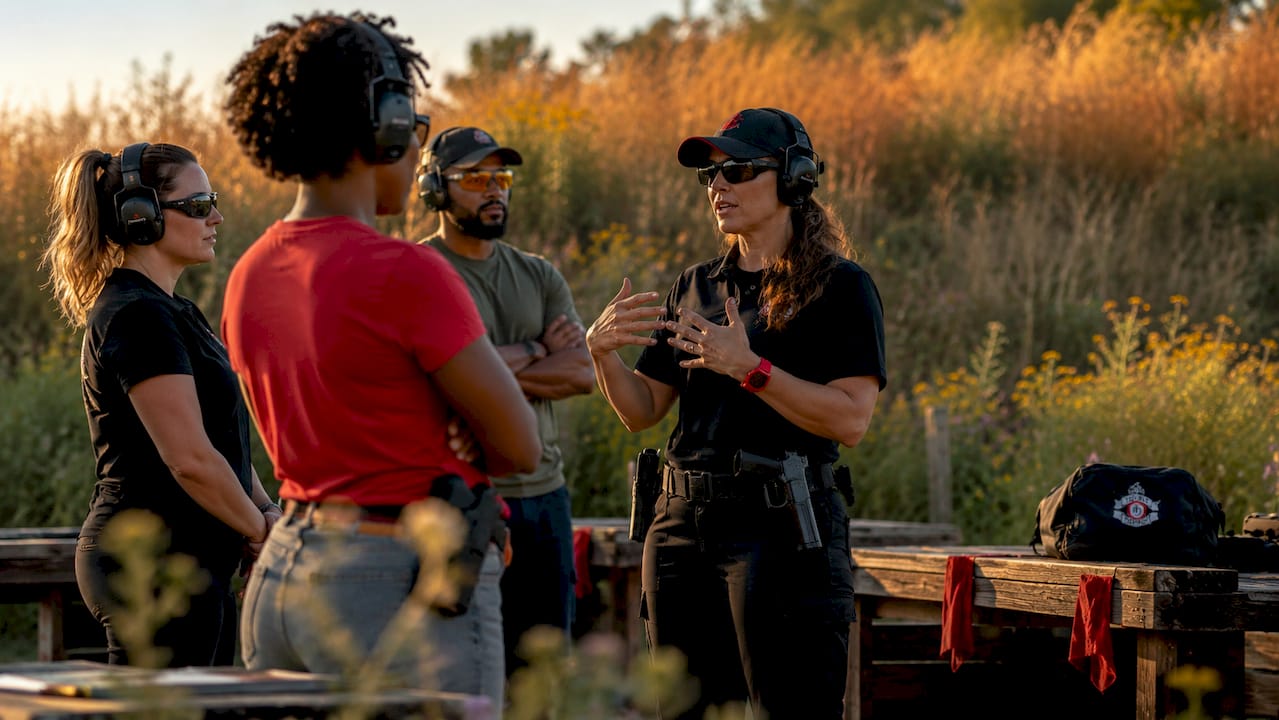
Trouble Defense is a veteran-owned firearms training academy based in Fairfax, VA, serving students across Virginia, Maryland, and Washington DC. Every instructor holds NRA certification, and every course is designed to meet state-specific permit and compliance requirements.
Whether you need a Virginia CCW certification, a Maryland Wear and Carry course, women’s firearm training, or adaptive instruction for individuals with disabilities, Trouble Defense has a program built for your situation. The training calendar lists over 10 classes available in Virginia, with options for beginners through experienced carriers. With over 300 five-star Google reviews, Trouble Defense is the DMV area’s most trusted name in firearm safety education.
FAQ
What are the most common firearm violations?
The most common firearm violations include carrying without a permit, possession by a prohibited person under 18 U.S.C. 922(g), unsafe storage, improper vehicle transport, and falsifying purchase documentation. Each carries distinct penalties ranging from misdemeanors to federal felonies.
Is firearm safety training required by federal law?
No federal firearm safety training mandate exists. About 10 states require training before purchase, and roughly half require it for concealed carry permits, making state law the controlling standard.
Can I use an online course to satisfy my concealed carry permit requirement?
Not always. Some states, including Alaska, reject online or correspondence courses for permit applications and require in-person, state-approved instruction. Check with your state’s licensing authority before enrolling.
What does a standard firearm safety course cover?
Standard courses cover safe handling, loading and unloading, malfunction clearing, storage requirements, use-of-force law, and increasingly, suicide prevention. Concealed carry courses add scenario-based self-defense education and live-fire qualification.
How does training reduce the risk of firearm violations?
Training teaches gun owners the specific legal requirements for storage, transport, carry, and documentation in their state. That knowledge directly prevents the administrative errors, improper carry incidents, and use-of-force misunderstandings that lead to criminal charges.