Judicial firearm education is a structured training requirement designed to serve two distinct purposes: protecting judges from escalating personal threats and ensuring defendants in weapon-related cases meet legal compliance standards. Courts across the United States increasingly mandate this training as both a security measure and a rehabilitative tool. Since october 2025, 166 threats against federal judges have been tracked, a figure that has pushed legislative bodies to formally endorse specialized firearm training for the judiciary. Understanding why judges require firearm education means recognizing that the issue operates on two separate tracks: one for the bench, one for the defendant.
Why judges require firearm education: the legal and policy framework
Courts mandate firearm education through two distinct legal channels. The first applies to defendants. The second applies to judges themselves, through legislative action and institutional policy.
Court-ordered education for defendants
Court-ordered firearm education is a compliance-based requirement tied directly to case outcomes. Completion of mandatory courses is often a make-or-break condition of diversion agreements, enabling formal dismissal of charges. A defendant who fails to complete the assigned course on time risks a probation violation or a negated plea deal. That consequence makes these courses far more than a formality.
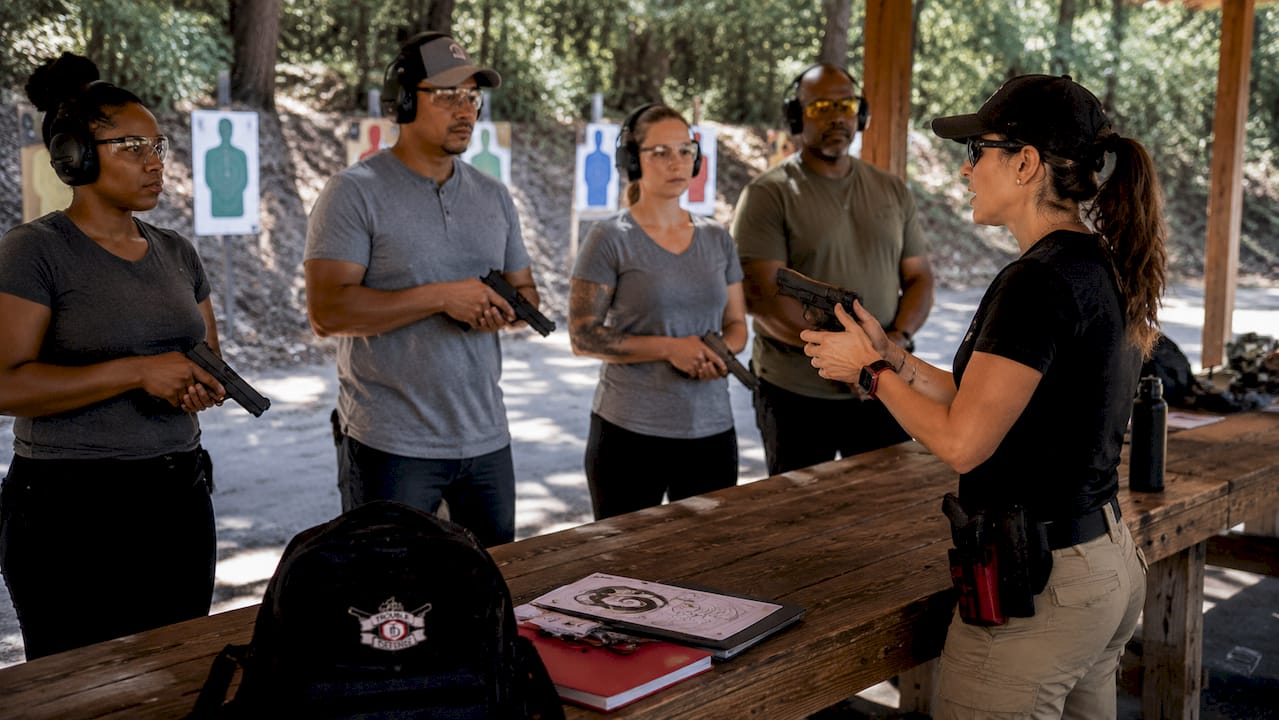
Courts use firearm education as part of sentencing, probation, and pretrial diversion programs. The courses cover safe storage, legal obligations, and proper handling. Terminology matters here: a “firearm safety course” and a “weapon safety course” carry different legal meanings in some jurisdictions, and submitting the wrong certificate can invalidate compliance. Legal professionals advising defendants must verify the exact course type the court has specified.
Pro Tip:Always confirm the exact course title and provider requirements with the assigned court before enrolling a client. A mismatched certificate can restart the compliance clock.
Legislative mandates for judges
On the judicial side, several states have moved to formalize firearm training for court officials. Oklahoma, for example, requires handgun qualification for judges seeking certification to carry on court premises. Federal legislative proposals have gone further, endorsing bills that allow judges to carry concealed firearms with proper training credentials. These policies reflect a recognition that traditional security infrastructure does not adequately protect elected or appointed judges, particularly at the state level.
The key distinction between court-ordered defendant education and judicial carry certification is intent. Defendant courses are rehabilitative. Judge training is protective. Both require formal certification, but the legal frameworks governing each are entirely separate.
How does firearm education enhance judicial security amid rising threats?
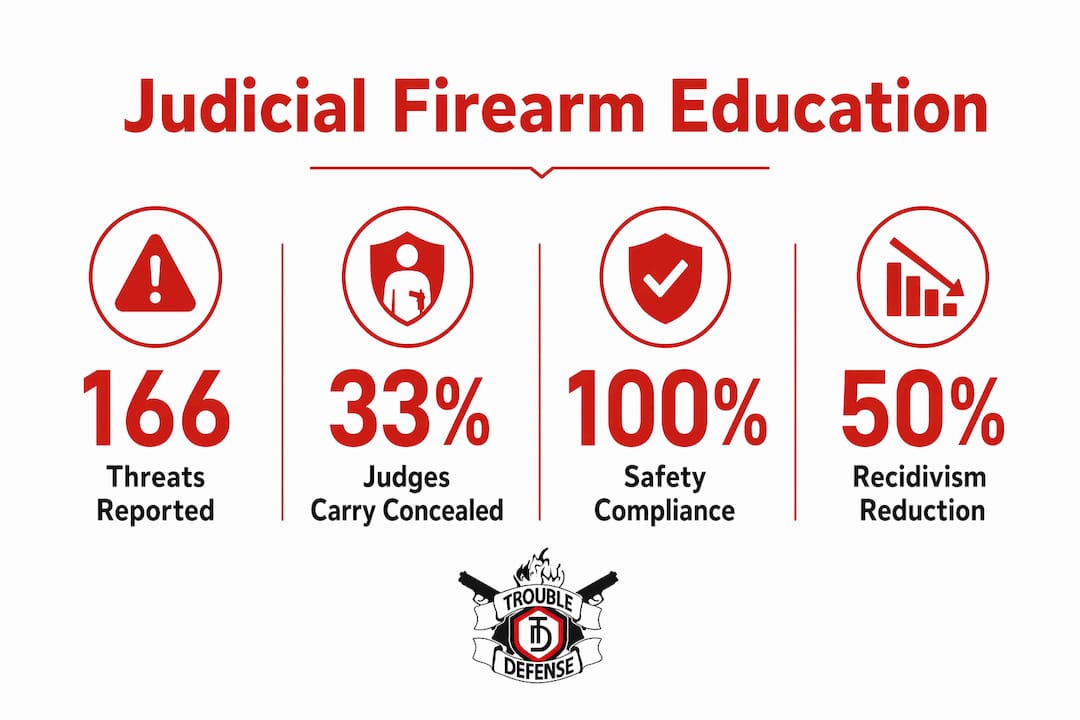
The security case for judicial firearm training is grounded in documented threat data. Since october 2025, 166 threats against federal judges have been formally tracked. That number reflects only federal cases. State-level threats are tracked inconsistently, which means the actual figure is likely higher.
A 2024 judicial survey found approximately 33% of state-level judges carry concealed firearms for personal protection due to inadequate state-provided security. That is one in three sitting judges making an independent decision to arm themselves, without institutional guidance or standardized training. The gap between federal and state judicial protection is significant and growing.
The security training vacuum
Judges often face a security training vacuum upon election or appointment. Federal judges receive structured security briefings and law enforcement coordination. State judges frequently do not. Many turn to private security consultants or self-funded firearm training to fill that gap. This creates a disparity where a judge’s safety depends largely on personal initiative and financial resources rather than institutional support.
Structured firearm education addresses several specific security needs for judges:
Threat recognition: Training programs that include active threat protocols help judges identify and respond to escalating situations before they become violent.
Carry competency: Judges who choose to carry concealed firearms need verified proficiency, not just a permit. Qualification courses confirm that competency on record.
Coordination with law enforcement: Formal training creates a shared language between judges and their security details, improving response coordination.
Legal awareness: Judges who carry must understand the use-of-force laws in their jurisdiction. Training programs cover this directly.
Judges often lack institutional guidance on active-shooter protocols, which makes formalized education not just useful but necessary. The judiciary’s participation in firearm education is a pragmatic response to a protection gap that traditional court security has not closed.
Why is firearm education a rehabilitative tool for defendants in weapon-related cases?
Court-ordered firearm education for defendants is not punitive. Its purpose is to reduce the likelihood of future illegal behavior by building legal awareness and safe handling skills. Mandatory firearm education improves legal awareness and reduces the chance of future illegal firearm-related behavior by covering proper handling, safe storage, and legal obligations.
The rehabilitative model works because it addresses the root cause of many weapon-related offenses: ignorance of the law and unsafe practices. A defendant who completes a certified course leaves with a concrete understanding of what is legal, what is not, and how to store and handle a firearm without creating risk for others.
How courts structure rehabilitative firearm education
Courts integrate firearm education into case outcomes through several mechanisms:
Diversion agreements: Defendants complete a certified course in exchange for charge dismissal. No completion means no dismissal.
Probation conditions: Firearm education is assigned as a condition of supervised release. Violation of this condition can result in revocation.
Plea deal requirements: Some plea agreements include firearm course completion as a binding term. Failure to comply can reopen the case.
Pro Tip:For legal professionals managing weapon-related cases, build course deadlines into your client’s calendar at the time of sentencing. Courts rarely grant extensions, and missed deadlines carry serious consequences.Court-ordered firearm education must meet specific course criteria. Failure to comply accurately can result in probation violations or negated plea deals. This means the provider, curriculum, and certificate format all matter. A generic online course may not satisfy a court’s specific requirements. Legal professionals should verify compliance standards before recommending any provider to a client.
The effectiveness of firearm education in reducing recidivism is supported by evidence showing that defendants who complete structured courses demonstrate better understanding of legal firearm responsibilities. That understanding translates directly into fewer repeat offenses.
Mechanism
Purpose
Compliance Consequence
Diversion agreement
Charge dismissal upon completion
Charges reinstated if course not completed
Probation condition
Supervised release requirement
Revocation for non-compliance
Plea deal term
Binding agreement condition
Case reopened for failure to comply
What are the practical implications for judges and legal professionals?
Firearm education shapes judicial conduct, courtroom security policy, and how legal professionals manage weapon-related cases. International organizations like UNODC have formalized judicial training on firearms to strengthen court capacity, covering investigation, prosecution, and forfeiture disposal of weapons. That model reflects a broader recognition that judges and prosecutors who understand firearms make better decisions in firearms cases.
Implications for courtroom security
Judges who complete carry qualification courses operate with a clearer understanding of use-of-force thresholds. That clarity matters in a courtroom setting where the line between lawful response and overreach is narrow. Formal firearm safety certification also creates a documented record of competency, which protects both the judge and the institution in the event of an incident.
Implications for legal professionals advising defendants
Legal professionals handling weapon-related cases carry a practical responsibility to understand firearm education requirements. Specific implications include:
Knowing which course types satisfy court requirements in each jurisdiction.
Advising clients on enrollment timelines relative to sentencing or probation start dates.
Verifying that course providers are approved by the relevant court or jurisdiction.
Understanding the difference between a firearm safety course and a weapon safety course when both terms appear in court orders.
Ongoing education is not optional for legal professionals in this space. Firearm laws change at the state level frequently, and court-approved provider lists are updated without broad announcement. Staying current requires deliberate effort, not passive awareness.
The bench deserves the same standard it holds defendants to
The most consistent observation I have made working in the firearms training space is this: the judiciary holds defendants to a high standard of firearm education compliance, yet the institutional support for judges themselves remains thin. A defendant who misses a court-ordered course faces real consequences. A judge who carries a firearm with no formal training faces almost none, at least not from the institution.
That asymmetry is not a criticism of judges. Most of the judges I have encountered who carry do so because they have assessed their own risk honestly and acted on it. The problem is that personal initiative should not be the primary safety mechanism for a sitting judge. Structured, certified training should be the baseline, not the exception.
The 33% of state judges who carry concealed firearms for self-protection are making a reasonable choice in a difficult environment. What they deserve is the same quality of institutional support that federal judges receive. Until that gap closes, private training programs fill a critical role. The judiciary’s increasing participation in firearm education is not a trend. It is a correction.
Why Judges Require Firearm Education Legal Guide optimized
— Dee Parker
Trouble Defense firearm training for legal professionals
Legal professionals and judges in Virginia, Maryland, and Washington DC have a reliable training option in Trouble Defense, a veteran-owned firearms training academy based in Fairfax, VA. Trouble Defense offers certified firearm safety training designed for professionals who need documented competency, not just a basic permit.
Trouble Defense’s NRA-certified instructors deliver hands-on instruction across a range of programs, including Virginia CCW classes, Maryland Wear and Carry permits, DC concealed carry training, and active shooter training. The training calendar lists 10 or more scheduled classes in Virginia, making it straightforward to find a session that fits a demanding professional schedule. With over 300 five-star Google reviews, Trouble Defense is the trusted choice for legal professionals who take firearm competency seriously. Contact Trouble Defense to schedule your training today.
FAQ
Why do judges require firearm education?
Judges require firearm education for two reasons: personal security amid rising threats and institutional compliance with carry certification standards. Since october 2025, 166 threats against federal judges have been tracked, driving legislative support for formal training programs.
What is court-ordered firearm education for defendants?
Court-ordered firearm education is a mandatory compliance requirement assigned as part of diversion agreements, probation, or plea deals in weapon-related cases. Completion is often required for charge dismissal, and failure to comply can result in probation violations.
How does firearm education reduce recidivism?
Firearm education reduces recidivism by building defendants’ understanding of legal obligations, safe storage, and proper handling. Defendants who complete certified courses are less likely to repeat firearm-related offenses because they leave with concrete legal knowledge.
What happens if a defendant does not complete a court-ordered firearm course?
Failure to complete a court-ordered firearm course can result in probation revocation, reinstatement of dismissed charges, or violation of a plea agreement. Courts rarely grant extensions, making timely enrollment critical.
Are firearm safety courses and weapon safety courses the same thing?
No. These terms carry different legal meanings in some jurisdictions, and submitting the wrong certificate can invalidate court compliance. Legal professionals should confirm the exact course type required by the court before enrolling a client.

 Courts use firearm education as part of sentencing, probation, and pretrial diversion programs. The courses cover safe storage, legal obligations, and proper handling. Terminology matters here: a “firearm safety course” and a “weapon safety course” carry different legal meanings in some jurisdictions, and submitting the wrong certificate can invalidate compliance. Legal professionals advising defendants must verify the exact course type the court has specified.
Pro Tip: Always confirm the exact course title and provider requirements with the assigned court before enrolling a client. A mismatched certificate can restart the compliance clock.
Courts use firearm education as part of sentencing, probation, and pretrial diversion programs. The courses cover safe storage, legal obligations, and proper handling. Terminology matters here: a “firearm safety course” and a “weapon safety course” carry different legal meanings in some jurisdictions, and submitting the wrong certificate can invalidate compliance. Legal professionals advising defendants must verify the exact course type the court has specified.
Pro Tip: Always confirm the exact course title and provider requirements with the assigned court before enrolling a client. A mismatched certificate can restart the compliance clock.
 A 2024 judicial survey found approximately 33% of state-level judges carry concealed firearms for personal protection due to inadequate state-provided security. That is one in three sitting judges making an independent decision to arm themselves, without institutional guidance or standardized training. The gap between federal and state judicial protection is significant and growing.

 Trouble Defense’s NRA-certified instructors deliver hands-on instruction across a range of programs, including Virginia CCW classes, Maryland Wear and Carry permits, DC concealed carry training, and active shooter training. The training calendar lists 10 or more scheduled classes in Virginia, making it straightforward to find a session that fits a demanding professional schedule. With over 300 five-star Google reviews, Trouble Defense is the trusted choice for legal professionals who take firearm competency seriously. Contact Trouble Defense to schedule your training today.


