If you own firearms in Virginia, 2026 is shaping up to be one of the biggest years for gun law changes in recent memory. With new leadership in Richmond and multiple firearm-related bills signed into law, Virginia gun owners, concealed carry holders, instructors, and firearm businesses need to stay informed.
Some of these new laws focus on so-called “assault firearms,” magazine capacity limits, safe storage requirements, and expanded background checks. Whether you agree or disagree with the changes, understanding the law is critical to protecting your rights and staying compliant.
Major Virginia Firearm Law Changes for 2026
1. New “Assault Firearm” Restrictions
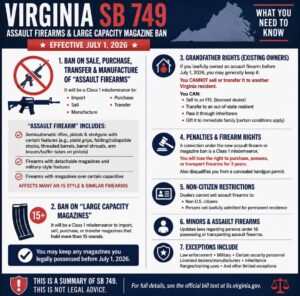
One of the biggest changes involves restrictions on certain semi-automatic firearms categorized by lawmakers as “assault firearms.” Beginning July 1, 2026, Virginia will prohibit the future sale, transfer, manufacture, and importation of specific semi-automatic rifles and pistols that meet certain feature requirements.
The law generally targets firearms with:
- Detachable magazines
- Collapsible or folding stocks
- Threaded barrels
- Certain pistol grips or tactical-style features
- Magazines exceeding 15 rounds
According to state officials, firearms legally owned before July 1, 2026, are grandfathered in and may still be possessed and transported legally.
Gun rights organizations, including the National Rifle Association, have already filed lawsuits challenging the constitutionality of the new restrictions.
2. Magazine Capacity Restrictions
Virginia’s new legislation also places restrictions on magazines holding more than 15 rounds in certain situations.
This is a major shift for many Virginia gun owners because standard-capacity magazines for common firearms like Glock pistols and AR-platform rifles often exceed this limit.
Gun owners should pay close attention to:
- Where they carry
- Transportation rules
- Public property restrictions
- Concealed carry limitations involving larger magazines
3. Expanded Background Checks
Virginia lawmakers also moved to strengthen universal background check enforcement in 2026. Private firearm sales that previously operated in legal gray areas are now expected to go through the same background check process used by licensed dealers.
This change was designed to close what lawmakers referred to as the “Lynchburg loophole.” The updated law directs the Virginia State Police to resume enforcement of background check requirements on private sales.
For gun owners, this means:
- More private sales may require FFL involvement
- Documentation becomes more important
- Informal transfers could carry additional legal risk
4. Minimum Age Increased to 21 for Certain Firearms
Virginia also raised the minimum age requirement from 18 to 21 for purchasing handguns and certain semi-automatic firearms.
There are limited exemptions for:
- Military personnel
- ROTC participants
- Certain law enforcement trainees
This change could significantly impact younger adults who previously could legally purchase firearms at 18 years old.
5. New Safe Storage Requirements
Another major law focuses on firearm storage inside homes where minors are present.
The new rules require firearms to be:
- Stored in a locked container, cabinet, or compartment
- Made inaccessible to minors
- Or secured with approved locking devices
The law also recognizes certain gun locks and safes as compliant storage methods.
For firearm instructors and responsible gun owners, this highlights the growing importance of:
- Home defense planning
- Child access prevention
- Proper firearm education
- Safe storage training
What This Means for Virginia Concealed Carry Holders
Virginia remains a shall-issue concealed carry state, but concealed handgun permit holders should closely monitor these changes.
Areas that may affect CCW holders include:
- Magazine restrictions
- Firearm feature definitions
- Public carry rules
- Transportation laws
- Sensitive location restrictions
As laws evolve, permit holders should regularly review updates from the Virginia State Police and qualified firearm instructors.
Lawsuits and Legal Challenges Are Already Happening
Several gun rights groups immediately challenged the new laws after they were signed.
Many legal experts believe the courts may eventually decide:
- Whether the firearm restrictions violate the Second Amendment
- Whether magazine bans are constitutional
- How Virginia’s laws align with recent Supreme Court rulings like Bruen
Because of this, some parts of the law could change again depending on court decisions.
Final Thoughts
Whether you support these laws or oppose them, one thing is certain: Virginia firearm laws are changing fast.
Gun owners should:
- Stay educated
- Train regularly
- Understand transportation and storage laws
- Review concealed carry responsibilities
- Follow legal updates closely
For responsible gun owners, knowledge is just as important as marksmanship.
If you are unsure how these laws affect your firearm setup, concealed carry practices, or training needs, consider working with a certified firearms instructor who stays current on Virginia firearm legislation.